Week Ending 2/20/26
One down, one to go?

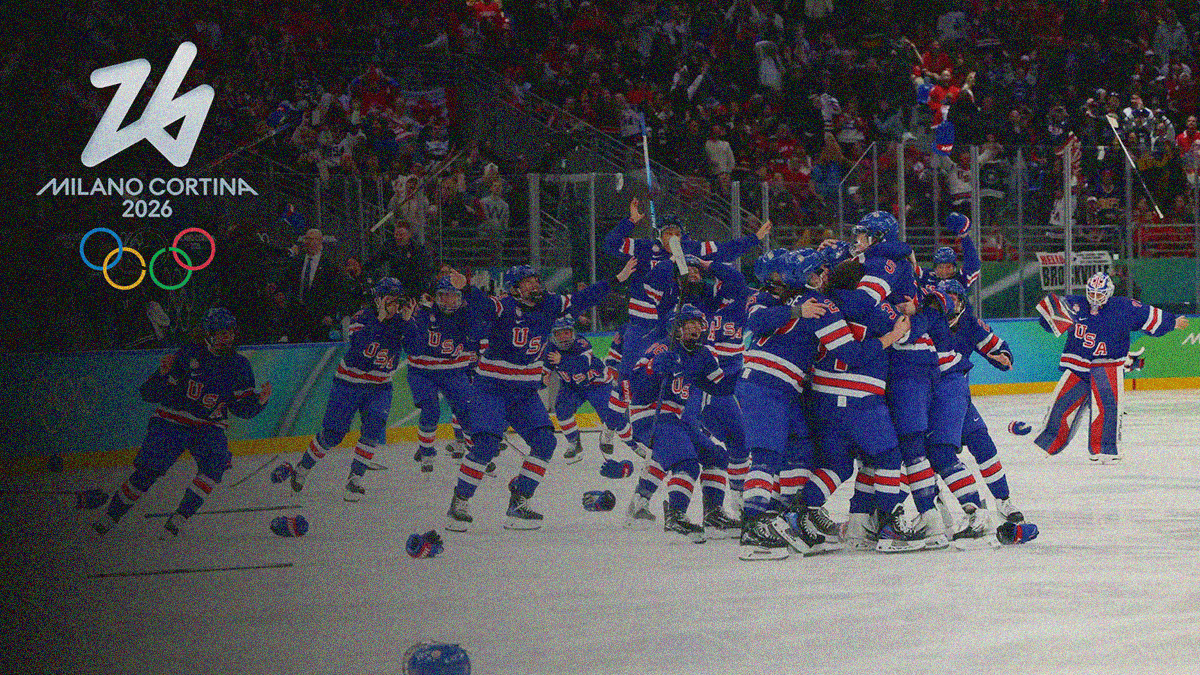
What a game.
The whole tournament (like all but one since women's hockey became an Olympic sport) was trending towards another USA v Canada match-up in the Gold Medal game and we got it. The difference, perhaps for the first time, however, was that the USA was the heavy favorite. They beat Canada 5-0 in group play (albeit without Canadian captain Marie-Philip Poulin), outscored their opponents 31-1 heading into the final, and were riding an Olympic record five-game shutout streak.
So, of course, Canada struck first. Early in the second period. Shorthanded.
Beyond a few spurts here and there, Canada really slowed down the Americans' speed. That experienced line-up was proving its worth as you wondered if all those American first-time Olympians were feeling the nerves. Give US goalie Aerin Frankel some MVP votes because it seemed like every Canadian counterattack was a Grade-A shot she needed to come up big to stop.
Not all the votes, though. Yes, she kept them in the game by never letting in that second goal, but can you really deny USA's own "Captain Clutch" (it's actually Poulin's nickname) from MVP honors after tipping Laila Edwards' point shot into the net while the goalie was pulled? In what's presumably her final Olympic game? A day after getting engaged to speedskater Brittany Bowe? This gold was all about Hilary Knight dragging her team back into the fight.
Oh, and don't forget defenseman Megan Keller's sick move to undress the Canadian defender for a May Day level OT breakaway winner.
Just when we thought nothing could beat three straight OT games on the men's side during Wednesday's quarterfinals, the women—who made USA v Canada a must-see rivalry well before the American men caught up to the Canadian men's level—proved us wrong.
Now let's see if today's men's semifinals and the weekend's subsequent medal games can keep that drama going. Finland and Slovakia will surely have something to say about letting the other USA and Canada through.

2026 Oscar-Nominated Short Films

I reviewed all fifteen 2026 Oscar-Nominated Shorts over at The Film Stage:
Beam Me Up, Sulu
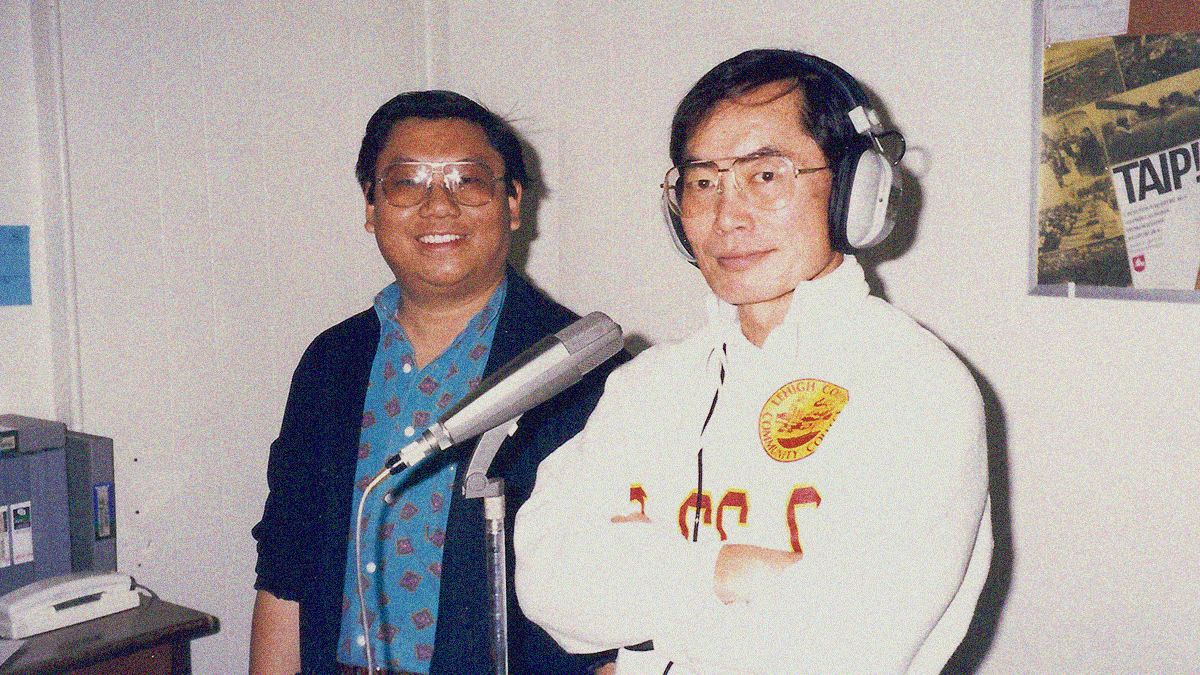
While Stan Woo's "Star Trek" fan film Yorktown: A Time to Heal is the jumping off point for Timour Gregory and Sasha Schneider's Beam Me Up, Sulu, this is not strictly a documentary about its creation. Yes, we meet Stan and a handful of others from the project—namely director Austin Hunza (as Da Han), DP Gaston Biraben, and actor Steve Goodpaster—to explain its process and their experience, but we're also provided an informed dissection of Gene Roddenberry's legacy.
It starts with George Takei and what earning the role of Lt. Cmdr. Hikaru Sulu meant to him as someone who spent almost five years in a Japanese internment camp post-Pearl Harbor. It continues with his enthusiasm to pay his success forward for someone as passionate as Stan by agreeing to star in his student film and stretches even further to historians contextualizing Takei's representation within the entirety of "Star Trek's" treatise on diversity and equality.
That then spills over into the convention space and cosplay as a means to honor the show, meet new friends, and feel like you belong. Gregory and Schneider focus on the timelines of America's struggles with the "other" when depicting Asian heritage, Hollywood's penchant for racist stereotypes, and the shifting tide of politics moving from subtext to text. There's also a brief look at the evolution of fan films from backyard fun to amateur sound stages.
Stan becomes the sort of poster child for all these things as an Asian American who took a shine to "Star Trek" and particularly the Sulu character as a symbol of a future worth striving to create. His ability to recruit like-minded creatives, roll the dice to approach Takei and James Shigeta into acting in his film, and unwittingly ride the wave that was born from his unfinished project's almost mythical status in the Trekkie world before finally seeing the light of day.
As Woo muses via archived footage, the result is like "a fanzine in celluloid" that was never meant to win awards or make money (it's legally unable to do the latter). It was always a means to play with phasers in costume in a way that justified doing so to outside viewers courtesy of a camera inherently legitimizing whatever crazy scene someone might stumble onto. So, he's probably not mad when an audience member is captured saying he hated it post-premiere.
The cultural significance of Yorktown: A Time to Heal can never be reduced by its quality. Even Rod Roddenberry, the current steward of his father's IP, admits as much since he knows the fans have kept this world alive for six decades. Let them have fun. Let them pass down their love of the characters and stories to their friends and families by way of inserting themselves into the mythology. "Star Trek's" entire message is about finding ways to exist together.
These through lines make Beam Me Up, Sulu a relevant addition to the property's expansive media footprint by contextualizing the big picture aspects of the show's legacy with the personal impact necessary to help make its dream of a true meritocracy real. The talking heads connect Stan's journey to the larger phenomenon and the interviews with the Yorktown players (including Takei and the late Shigeta's friend to speak on his behalf) connect them back.
But there's also a conscious effort to zoom out and give a platform to others indelibly marked by the "Star Trek" universe on-screen and off. Garrett Wang talks about admiring Takei before becoming the next generation's Sulu on "Voyager". Alexander Siddig, Christina Chong, and Gray Tal speak on how their characters fit that same mold. And I loved all the fans explaining how "Star Trek" impacted their lives for the better. It's a wonderful display of cause and effect.
So, come for Stan's anecdotes about how he schmoozed Takei at a political fundraiser and Shigeta's manager with a VHS tape and stay for the reminder that anyone who says '"Star Trek" went woke' has either never seen an episode or is devoid of even the most rudimentary notion of media literacy. The show and everything it spawned has always been about forging a diverse community upon a platform of acceptance, respect, and love.
7/10
The 'Burbs – Season One
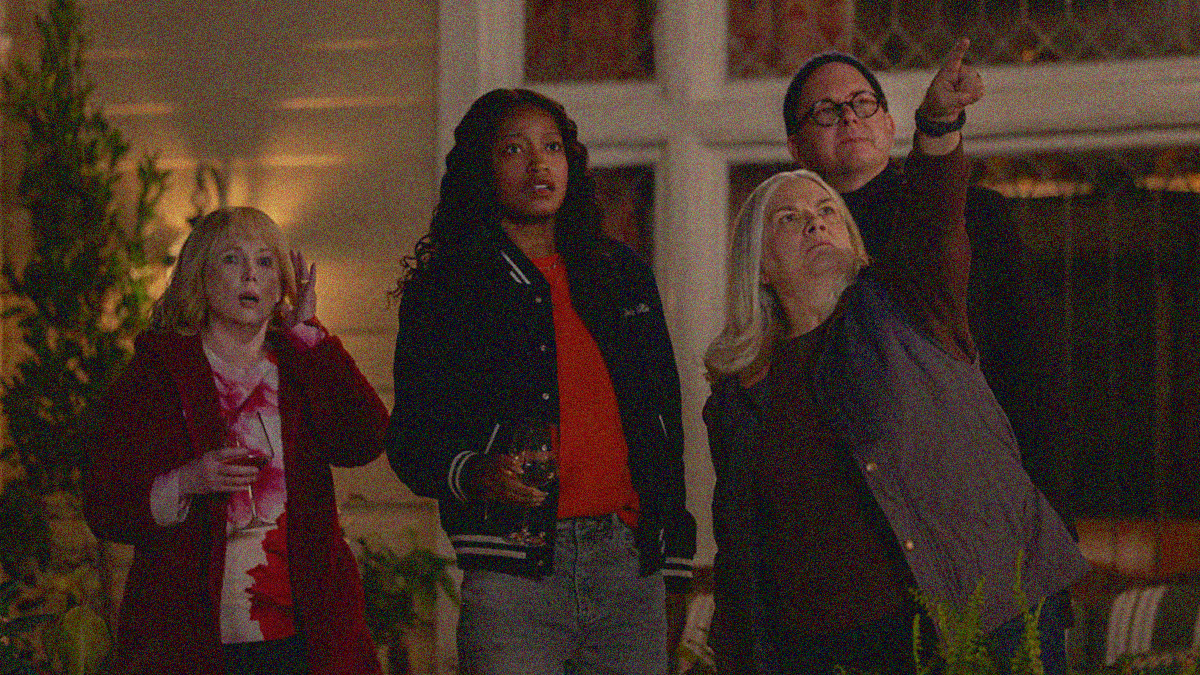
I wasn't sure what to expect going into Celeste Hughey's television adaptation of The 'Burbs. Was it going to be a requel? Or was it just a full reboot spring-boarding off Dana Olsen's original move script to create something new? Seeing Wendy Schaal's name in the first episode's credits had me thinking it might be the former before a photo of Tom Hanks standing in for someone not named Ray Peterson officially confirmed the latter.
This was a welcome development because it meant Hughey's goal was to build something wholly her own—especially with the intentional decision to cast a Black woman in the lead. I watched Joe Dante's film a few days ago and it proved impossible to ignore just how white it was, so Keke Palmer's inclusion is a major departure and thus perfectly positioned to say more about suburban life beyond just the cliquish nature and rampant boredom-inducing paranoia.
It's therefore not out of the realm of plausibility that the show might reveal Hinkley Hills was a sundown town wherein POC inhabitants still don't sit well with the old guard. Maybe things would get flipped on their heads with Samira (Palmer) and her husband Rob (Jack Whitehall) becoming the new Klopeks that everyone else worries about since they've introduced a racial element the incumbant white supremacy can't handle. A huge part of the Klopeks being de facto pariahs was their cultural "otherness."
Could Hughey still go there if Peacock renews the show for future seasons? Sure. I don't think she will, though. Not after the core mystery came to light during the course of these eight episodes. But that doesn't mean race isn't important. There are some interesting things said courtesy of Rob's childhood friend Naveen (Kapil Talwalkar) explaining what it was like growing up there as part of the sole POC family. There's a profiling police call, a few "I'm saying 'Black' in a neutral way" gags, and a very conscious undercurrent of white privlege.
So, don't think Palmer's inclusion is simply a means for hollow representation. It is a thematic choice and the show doesn't gloss over that fact despite minimizing it at times. It's also used as a catalyst for deflection once the mystery starts to unravel because it's an easy topic with which to mark characters as nefarious or reveal trusted allies. Because actions speak louder than words and Hughey uses both to steer our noses towards and away from different scents depending on when she's ready to unearth a new development.
The main intrigue stems from an event that occurred twenty years prior when Rob and Naveen were in high school and living with the parents. A young girl went missing and rumors have it that she may have been murdered and buried in the basement of the large Victorian estate known as the Hickley House. So, when Rob moves back into his childhood home with new wife Samira and their baby (Naveen had already moved back), that estate had already become run-down from disuse. Now, suddenly out of nowhere, it's put on the market.
Samira is thus revealed as the Hanks character once her "baby brain" and stir crazed energy (after being plucked from the big city to the suburbs on maternity leave from her law office) hits overdrive. What really happened? Why does Rob seem to know more than he's letting on? How come the new friends she makes (Julia Duffy's Lynn, Paula Pell's Dana, and Mark Proksch's Tod) all arrived after the Grants moved away and don't therefore have first-hand knowledge of the drama? The wheels start turning and the hypothesizes start forming.
Rob isn't a one-dimensional spouse like Carrie Fisher, though. Yes, he's the skeptic trying to get Samira to listen to reason, but his own secrets force us to wonder if he might actually be her target. And once Gary (Justin Kirk) appears, buying the abandoned home overnight and acting very shady, Rob will become just as paranoid as his wife. The show wields this duality throughout the cast to keep us on our toes insofar as its rug pulls are concerned. Whose secrets are benign? Whose are criminal?
It's a smart murder mystery revision with enough twists and turns to lead us astray so the final reveal feels as surprising as it can. We learn more about the eccentrics (Lynn's hostess who refuses to let anyone into her home, Dana's former Marine who refuses to leave the cul-de-sac, and Tod's emotionless voyeur with seemingly infinite resources), the murdered girl, and Gary's creepiness. And we discover more about this "safest neighborhood in the world" via its retiring stewards, Agnes (Danielle Kennedy) and Bill (Randy Oglesby) Festersen.
There's also a mystery woman (Erica Dasher), an ambitious teen (Kyrie Mcalpin), and a bully from Rob and Naveen's past (Max Carver) to contend with as each new open door inevitably introduces another closed one. Rather than just frustrate the characters (and us), though, the absurd comedy following closely behind helps diffuse the tension. A lot of the jokes come straight from the movie too whether sardines, pooping dogs, or a whole lot of unjustified snooping.
While the tone is fun as a result, I'd be lying if I said it worked perfectly. There are many instances where the show really leans into its "sitcom-ness." I think it's because Hughey is going for the same caricatured farce Dante used, but it comes off a bit too over-the-top—like we're watching the full-length version of a throwaway sitcom parody playing in the background of a different show. But maybe that's just me. Maybe I've been "prestige-pilled" to the point of turning my nose at the medium doing what it's always done.
Regardless, I had a good time. There's enough purpose to the race commentary to augment the whodunnit, enough connective tissue to the original to satisfy my nostalgia itch (there's one more cameo from the old cast that I didn't mention), and enough kooky supporting players to enjoy watching Palmer embrace Samira's manic conspiracy theorist knowing she's amongst tin-foil friends. And while final episode's penchant for long cut to blacks is very annoying, the many loose ends born from them do nicely set-up a second season.
7/10
Four Minus Three

"As with the entire film, Goiginger does a wonderful job centering Barbara and her experience of the accident. This whole journey rests on Pachner’s shoulders as a result and the actor does not disappoint."
– Full thoughts at jaredmobarak.com

This week saw xXx: Return of Xander Cage (2017) added to the archive (cinematicfbombs.com).
Nina Dobrev dropping an f-bomb in XXX: RETURN OF XANDER CAGE.

Opening Buffalo-area theaters 2/20/26 -
• Assi at Regal Elmwood
• Bambukat 2 at Regal Elmwood
• Bendito Corazón at Regal Transit, Quaker
• Do Deewane Seher Mein at Regal Elmwood
• EPiC: Elvis Presley in Concert at Regal Transit (IMAX)
• Hey Bhagawan at Regal Elmwood
• How to Make A Killing at Dipson Flix, Capitol; Regal Elmwood, Transit, Galleria, Quaker
• I Can Only Imagine 2 at Dipson Flix, Capitol; AMC Maple Ridge; Regal Elmwood, Transit, Galleria, Quaker
• Kokuho at North Park Theatre; Regal Quaker
"The most interesting characters are often those with the most flaws and Kikuo has plenty. Kokuhô, however, does not thanks to a great cast, impeccable direction, and poignant kabuki plays to tie it all together." – Full thoughts at HHYS.
• Midwinter Break at Dipson Amherst; AMC Maple Ridge; Regal Transit, Quaker
• Oscar Nominated Animated Shorts at Dipson Amherst; Regal Quaker
• Oscar Nominated Documentary Shorts at Dipson Amherst
• Oscar Nominated Live Action Shorts at Dipson Amherst; Regal Quaker
Reviews of all 15 Oscar Short nominees at The Film Stage.
• Psycho Killer at Dipson Capitol; Regal Galleria, Quaker
• Redux Redux at Regal Transit
"Despite the science fiction premise and pulpy violence, this is first and foremost a character study. It’s McManus and Marcus providing authentically complex performances that refuse to shy from the survival instincts [they rely upon]." – Full thoughts at HHYS.
• This Is Not a Test at Regal Elmwood, Transit, Galleria, Quaker
Streaming from 2/20/26 -
• The Astronaut (Hulu) - 2/20
• Dead of Winter (HBO Max) - 2/20
• Firebreak (Netflix) - 2/20
• The Orphans (Netflix) - 2/20
• Pavane (Netflix) - 2/20
• Mistress Dispeller (Criterion Channel) - 2/24
"It’s a testament to Lo for going into the film with an awareness of the ethical tightrope she’d need to walk and Wang’s professionalism and empathy to treat each piece of her clients’ puzzles with the care necessary to never exploit their intimacy." – Full thoughts at HHYS.
• The Bluff (Prime) - 2/25
• The Summer Book (Prime) - 2/26
"The Summer Book is a sweet yarn about love that isn’t afraid to let its heavy emotions breathe. While that’s great for its impact to land once they finally face what they’ve been avoiding, it also leads the whole to drag for a lot of its runtime." – Full thoughts at HHYS.
Now on VOD/Digital HD -
• 28 Years Later: The Bone Temple (2/17)
• Beam Me Up, Sulu (2/17)
Full thoughts are above.
• The Choral (2/17)
"The teen sex comedy antics can’t help but feel weird nonetheless considering the subject matter. But a lot of what occurs is worthwhile. Especially the futility." – Full thoughts at HHYS.
• Ghost Train (2/17)
• Hellfire (2/17)
• Kill Bill: The Whole Bloody Affair (2/17)
• Mercy (2/17)
• No Other Choice (2/17)
"Park and company do a great job juggling all these threads into a coherent whole with fun connections that lead to hilarious misunderstandings and wild epiphanies insofar as how to better commit the crimes." – Full thoughts at HHYS.
• Sheepdog (2/17)
• A Useful Ghost (2/17)
• Diabolic (2/20)
• Lazarus: The Awakening (2/20)
• One Mile: Chapter One (2/20)
• One Mile: Chapter Two (2/20)

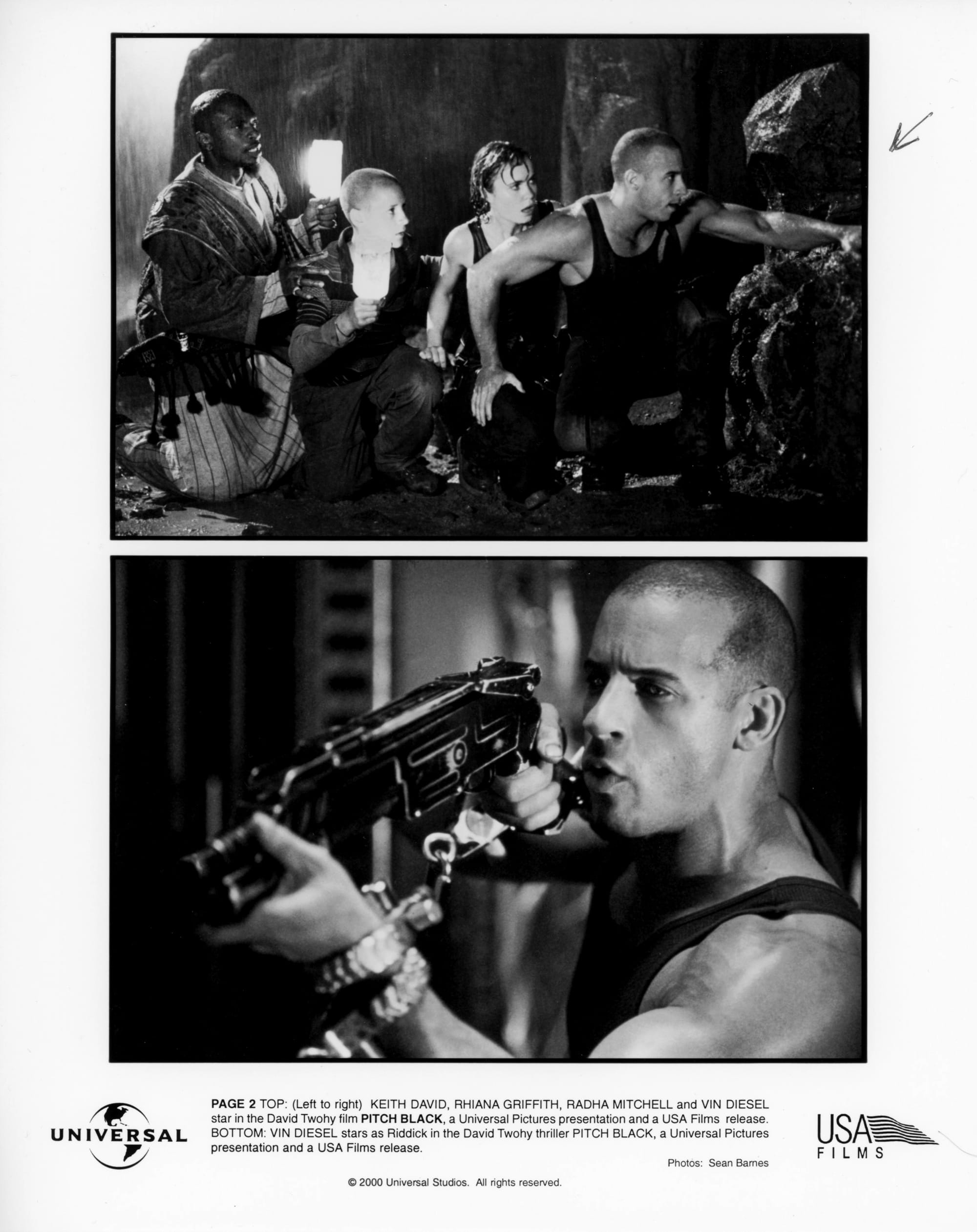
Pieces from the Pitch Black (2000) press kit.