Week Ending 3/20/26
Val AI


People want to believe that resurrecting actors from the dead via deep fakes and generative AI is a new topic of conversation over the past five years, but Hollywood has been doing this for much longer.
The first instance I can remember is 2004's Sky Captain and the World of Tomorrow with a digitized Laurence Olivier populating Kerry Conran's fully digitized world. Rather than have an actor perform against the void like Jude Law, Gwyneth Paltrow, Angelina Jolie, and others, they manipulated archival footage to place the dead-for-thirteen-years Olivier into frame.
There's a difference from that to what's happening now with AI voices and images—including the latest news that Val Kilmer will be appearing posthumously in Coerte Voorhees' As Deep as the Grave. Animators and engineers brought Olivier back to life. Now it's just a computer program building that approximation for the filmmaker via text prompts. It's ghoulish either way, but it's now also taking jobs from the people who used to allow that ghoulishness to take place.
A lot is said in Variety's article about how much Kilmer wanted to be in this film, how hands-on his daughter Mercedes was during the AI process (with a shoehorned sentence about son Jack being "supportive" to cover all bases), and that Voorhees paid the estate as though the actor actually came to set, but it reads as more of a preemptive excuse than a legitimization. Kilmer already had the AI voice created for himself, so why not do the same to his image?
The damning info to me, however, is the part about budgetary constraints. That they would generally recast the part, but don't have the money to roll cameras again (the character was written out due to Kilmer's illness and has now been written back in because Voorhees felt the latest cut suffered from his absence). So, AI is admittedly being used for the exact reason the industry went on strike. They can't/don't want to pay human beings to create the footage that the filmmaker deems necessary to finish his film.
It therefore goes beyond compensation and into the reality that the goal posts have been moved. And you just know that studios will soon be testing the boundaries of that shift to see if they can move them even further.

Dead Lover

Grace Glowicki's sophomore feature Dead Lover (co-written with partner Ben Petrie) is an obvious labor of love crafted with a DIY aesthetic via a darkened soundstage and exaggerated production design, make-up, and gore. Shot on 16mm by experimental filmmaker Rhayne Vermette, most of its special effects are also practically added in post. It's a lo-fi romantic farce following a lonely gravedigger (Glowicki) desperate to avoid dying alone.
That goal is easier hoped for than assured, however, since her occupation (and dare I say identity) leaves her smelling so odious that no one would ever come close enough for an embrace. The old knitting circle ladies (Petrie, Lowen Morrow, and Leah Doz) laugh and gossip about her delusion while she attempts to concoct a perfume to mask her scent. Her first attempt at seducing the local priest (Doz) fails. Her next target ... surprisingly proves responsive.
He is a poet (Petrie) and the brother of the gravedigger's latest corpse—an opera singer (Doz) mourned by her swashbuckling husband (Morrow). He's a romantic whose words about love give the gravedigger pause ... long enough to watch him run into the woods too distraught to realize wolves on are his tail. Their romance is therefore born out of her heroics in saving him. And, rather than disgusted, he becomes aroused by her scent. It's two weirdoes yumming each other's yuck.
Long story short: their passionate night together ends with a note wherein he promises to return after dealing with medical issues preventing him from giving her the brood of children she so craves. We learn about her mercurial emotions as a result and ultimately find her desperation reaching a fever pitch upon the poet's tragic demise. With only his ring finger returned to her, the gravedigger decides to grow his body back from it like a lizard does its tail.
As you can tell from the repeated actor names above, Dead Lover's entire cast consists of just four principal players. Glowicki portrays the gravedigger (alongside her director duties) while Petrie, Morrow, and Doz play the rest—regardless of gender. And since it's all shot in-studio with isolated spotlights (an intentional decision to lean into the minimalism of "black-box theatre and German expressionist cinema") cuts and composites easily double them up.
The finished product won't be for everyone due to its silent era aesthetic, humor hinging on repetitive escalation, and yearning to be as idiosyncratic as humanly possible with performances that are both intentionally broad (Morrow's widower is fantastic) and/or absurd (Doz's opera singer, eventually reanimated, channels Vincent D'Onofrio from Men in Black). So, use the finger's "growing" scene as your tonal litmus test for what follows. Do you laugh or groan?
Despite my reaction being the former, I'd be lying if I didn't say my overall feeling was more appreciation than enjoyment. These types of experimental productions aren't the easiest for me to push through, so I definitely found watching at home to be a luxury with the ability to pause and take brief breaks to rest my eyes. Its ingenuity, on-screen excitement, and comical depravity ensured that I was never at risk of stopping altogether, though.
I still wanted to find out where it all would lead because every new plot progression was hardly what I expected it to be. Glowicki and company are constantly pushing the envelope by jumbling up identities and desires until even the characters are confused about where their love resides and with whom. Bodies, minds, rage, and libidos become so swapped and misdirected that bloodshed ends up being the only outcome.
So, rather than rebirth simply being the solution to reversing death, death itself becomes a necessary evil to achieve that rebirth. There's probably a "Ship of Theseus" quandary hiding underneath the genre trappings too as the usual abstract representation of a person being their soul gets replaced by their ring finger (its veins said to lead to the heart) instead. That appendage is where our love resides. The rest of us is merely the vessel holding it in place.
6/10
Jury Duty Presents: Company Retreat
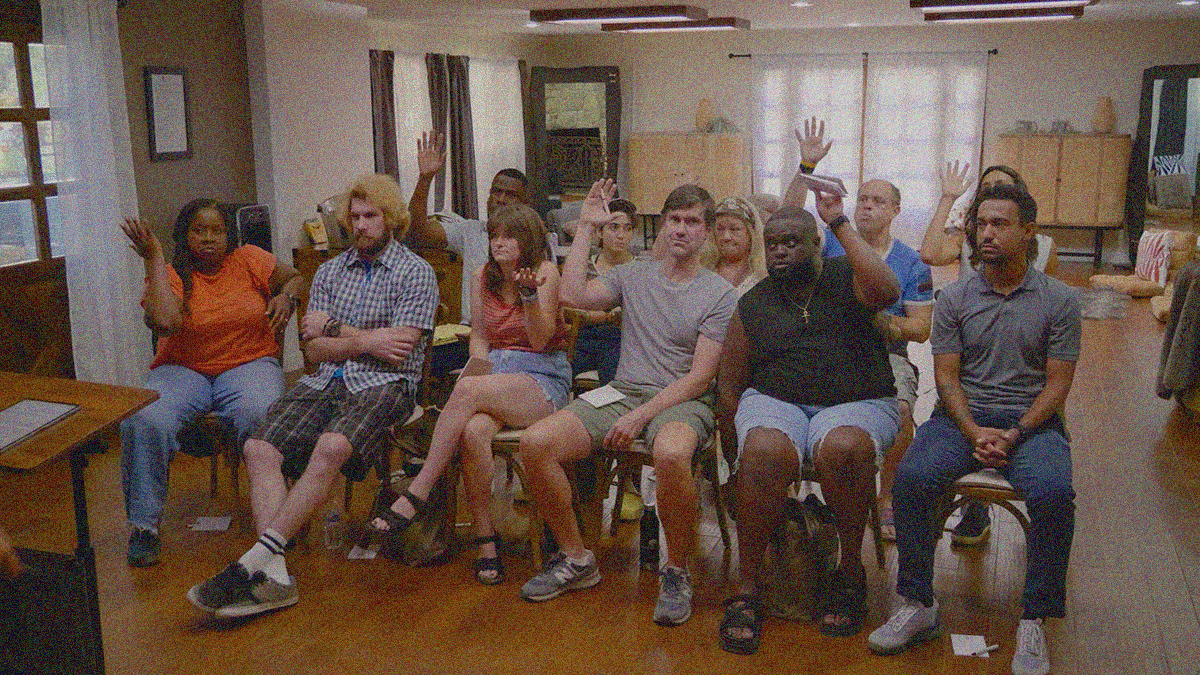
I honestly didn't expect Lee Eisenberg and Gene Stupnitsky to get a second season of "Jury Duty" off the ground due to the need to repeat its insane logistics and combat the reality that the show's success would make finding a new "hero" to legitimately play along difficult. But I said the same thing after Borat and Sacha Baron Cohen never stopped duping unsuspecting marks. Mankind is both easily manipulatable and not as "in the know" as you hope you are.
This was proven during "Company Retreat" as I recognized both Lisa Gilroy (from Dropout fame) and Ian Roberts (from "Upright Citizens Brigade" fame). I laughed that this Truman Show scenario would never work on me because I know too many actors, but that's part of its challenge. Finding great talent removed far enough from the mainstream to not be recognized. Timing is everything too since Gilroy was apparently in "Jury Duty" too. I simply didn't know her then.
The real trick here, though, isn't finding someone who wouldn't know the people you hired. That's easy. There are a lot of Americans who truly don't have time or money to recognize improv comedians that don't generally appear on movie posters. No, you must also have enough of a grasp on your mark's psychological make-up to hope they possess the empathy, trust, and humor to roll with the chaotic punches being thrown and pass the climactic morality test to come.
They hit a home run with Ronald Gladden back in 2023. So much so that you must wonder if lightning could ever strike twice to want to risk catastrophic failure. Because you need the non-actor's consent when all is said and done. Being lucky enough that they never suss out the artifice of it all doesn't mean they'll also be wholesome enough to make the correct final decision. And if they don't? If they're proven to be a "bad" person? Maybe the show never airs.
Well, lightning did strike twice because Anthony Norman might actually be the nicest and most supportive human being in the world. It's one thing to just be a stranger amongst strangers in a jury pool who wants to take the job seriously in hopes that others would if they were the defendant. It's another to be a stranger amongst a close-knit group with a built-in history that loves each other. Most interlopers would quietly do their job, keep their distance, and not rock the boat.
That's not Anthony. We probably shouldn't be surprised since he applied (along with ten thousand others) for a position that demanded social interaction. Yes, he's a temp meant to assist the head of HR of a family-owned and operated small business, but the week specifically coincides with their team-building retreat. And since his boss Kevin (Ryan Perez) is the emcee, Anthony is being thrust into a very public-facing, cheerleading role. He embraces it.
It takes a special person to do so. The machinations of the writing play a part in pushing Anthony to fulfill that role according to its whims (each day was scripted in ways that would hopefully inspire him towards a goal without outright forcing him into it), but the whole still requires his buy-in. And the show does itself no favors with a premise centering on the owner (Jerry Hauck's Doug) passing the company over to his extremely unqualified son (Alex Bonifer's Dougie Jr.).
What a swing. Credit Bonifer's endearing performance to ensure his likability and earnestness trumps his ineptitude because his castmates do little to help when sales (Erica Hernandez) and accounting (Stephanie Hodge) are constantly undercutting his potential. It's a testament to Anthony's grasp on the job description that he gravitates towards Dougie as a hype man. He's here to help make the retreat smooth and successful. And Dougie needs the most.
Is the result still just a complex game of chicken like its predecessor? Yes. Of course. How far can Jimmy (Jim Woods) push his ally schtick before it's too much? How much sexual innuendo flies before Anthony starts to wonder if the whole thing is an elaborate game a la Super Troopers and saying "meow"? No one can really be as wholesomely innocent as Emily Pendergast's Amy or doofy as Rob Lathan's "Other" Anthony (You were first, dude!), right?
That's the thing, though. They can. They are. We know people exactly like this in our own lives. People who genuinely can't get out of their own way, who have no concept of reality, and who inexplicably grow on you despite their obnoxious tendencies. The skill these actors show to make it feel as though they love each other regardless of their shortcomings is necessary for Anthony to open himself up to wanting to love them too. Authenticity is everything.
Is that funny to say considering this entire thing is a ruse? You bet. But that's why the show appeals to me. It's why I can look past its inherently cringe flaws insofar as it exploits and toys with its "hero" for entertainment purposes without their conscious consent. Because while the premise and plotting are fake (Wendy Braun's private equity firm waits in the wings to scoop the company up if Doug decides Dougie can't do the job), the humanity isn't.
We are watching about four hours of television culled from over thirty-five hundred hours of footage. I love the season finale's behind the scenes glimpses because you see moments like the entire cast just having a great time playing Uno with Anthony. Is there anything there that adds to the show? No. But it's crucial to the relationships being forged. It's crucial to getting the actors to want to support Anthony and for him to back them when the stakes are highest.
Having those stakes become a David versus Goliath battle between human dignity and corporate greed all while streaming on a platform owned and operated by one of the vilest Goliaths to ever live (Hi, Jeff Bezos! Yes, I mean you.) only widens my smile. And Anthony's refusal to back down to the futile machinery of that reality gives me faith that maybe we'll survive this era of despair after all. There are still regular people willing to fight for what's right.
7/10
Touch Me
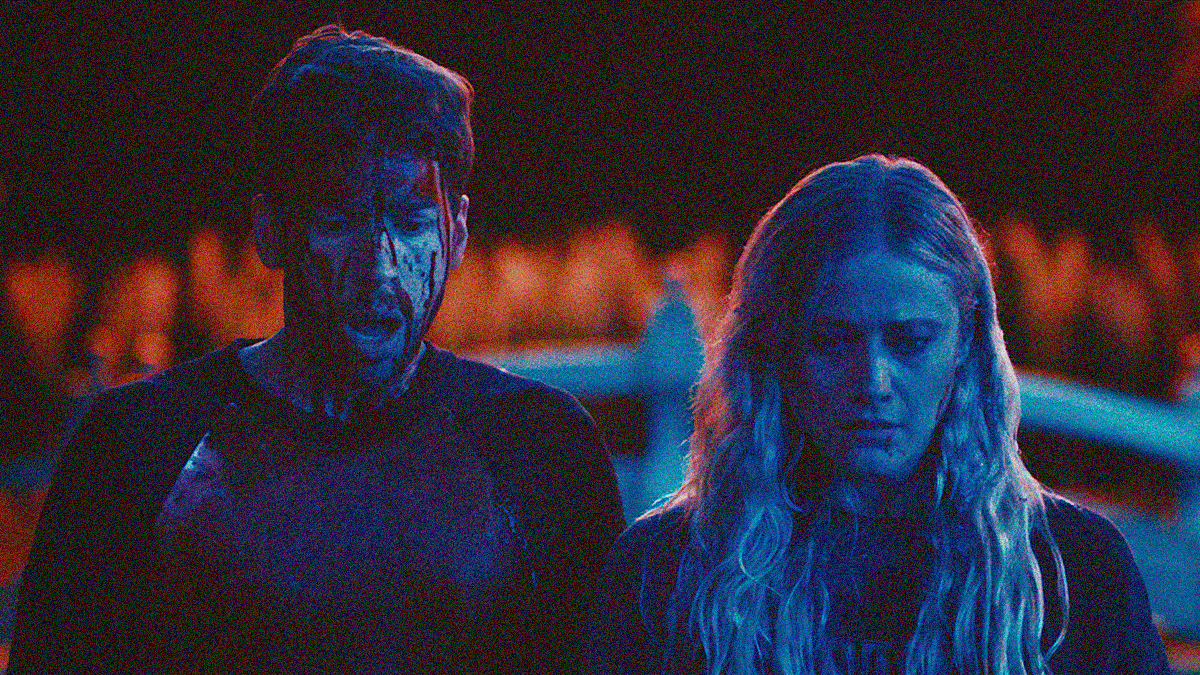
Joey's (Olivia Taylor Dudley) psychologist asks her to tell an outlandish story that intentionally hides the truth of her trauma as a means of exposure therapy. The idea is that the crazier it sounds, the greater her ability will be to stop letting it rule her every waking moment. So, she talks about the violent night shared with a man she thought she loved as though he was an alien who didn't realize his addictive and abusive hold. She ran only to discover she had nowhere to go.
This yarn gives us pause because we've been made to believe Addison Heimann's Touch Me is quite literally about a woman who can't kick the anxiety-calming drug secreted from an extraterrestrial's tentacle-like appendages. Is what we're about to watch therefore a fantasy? Or is Joey's actual trauma too weird to be made weirder and she's merely feeding this doctor the truth under the guise of a lie? We'll soon find out when Brian (Lou Taylor Pucci) arrives.
Because there he is wearing that stupid track suit. There he is touching her face with a glowing light that soothes the chaos in her mind. Unless, of course, that also isn't real. That Joey only thinks she saw Brian queuing up behind her because of the PTSD. It's honestly tough to know where the line between farce and tragedy lies when the reality of Joey's life is marred by a bathroom geyser of excrement and extremely rude barista-abusing strangers.
It's through that plumbing issue's reveal of the dire straits confronting both Joey and her best friend Craig (Jordan Gavaris) that we can fully embrace the film's tone since their only solution (being that her trauma won't allow her to keep a job and his won't let him ask his parents for help since it was their negligence that allowed his suffering to happen in the first place) is to go to Brian's compound and prove to the audience that he is in fact real, sex-crazed, and an alien.
Written at a time when Heimann wished there was some way to alleviate his OCD while also going through what he calls a "profoundly sad friendship breakup," Touch Me unfolds as a madcap descent towards Joey's personal rock bottom. Not only must she go back to the ex that exacerbated an already heavy dose of psychological scarring yet to be fully revealed, but she's also forced to bring her BFF into that nightmare. And neither is strong enough to survive it.
Not alone anyway. Not when Brian's allure both sexually and medicinally gets them so addicted that they'll do anything—including throw the other overboard—to maintain their supply. They'll weaponize that craving to let jealousy rule their every maneuver, tricking each other and Brian to take him for themselves. It shouldn't be surprising, though, since Brian's human assistant Laura (Marlene Forte) is just as crazed. It's a loony bin built upon narcissistic satisfaction.
I'm not well-versed in 60s and 70s Japanese cinema, so I must take Heimann's word for the fact that he uses that visual style to tell his tale. I do see it, though, with the shifting aspect ratios, extreme camera angles, and pervasive Japanese touchstones whether language, weaponry, or botany. To me its homage supplies flourishes a la Kill Bill: Volume 1 ... just much less overt. It adds to the comedy too with Pucci and Forte embellishing their actions in over-the-top ways.
We need that humor because the narrative itself gets very dark. I'm not talking about the Lovecraftian alien whose libido is so powerful that it risks exploding the heads of its human mates either. I mean the source of Joey and Craig's trauma as well as the unfortunate epiphanies they conjure upon following through on their emotions to realize their love and compassion for the other can never outweigh the damage their codependency has otherwise wrought.
Gavaris lends some great comic relief thanks to his character always using jokes to mask his pain. We laugh with him in his attempts to not fall completely apart and laugh at Pucci and Forte for really leaning into the extremes of their respective characters' demands (his immaturity and her entitlement). And all the while Dudley breaks our hearts as she desperately tries to not be a bad person despite constantly falling prey to her worst impulses.
But that's the thing, right? Those impulses are as much a drug as narcotics, pharmaceuticals, and space slime. Craig's insecurities leading him to need constant validation. Joey's guilt and anger manifesting as self-loathing and resentment to lead her to give it to him and distract herself from her own. The emotionally parasitic cycle of relationships mirroring the actual parasitic cycle of an alien's ambitions. The stranger things get, the more real the message becomes.
7/10
Tow
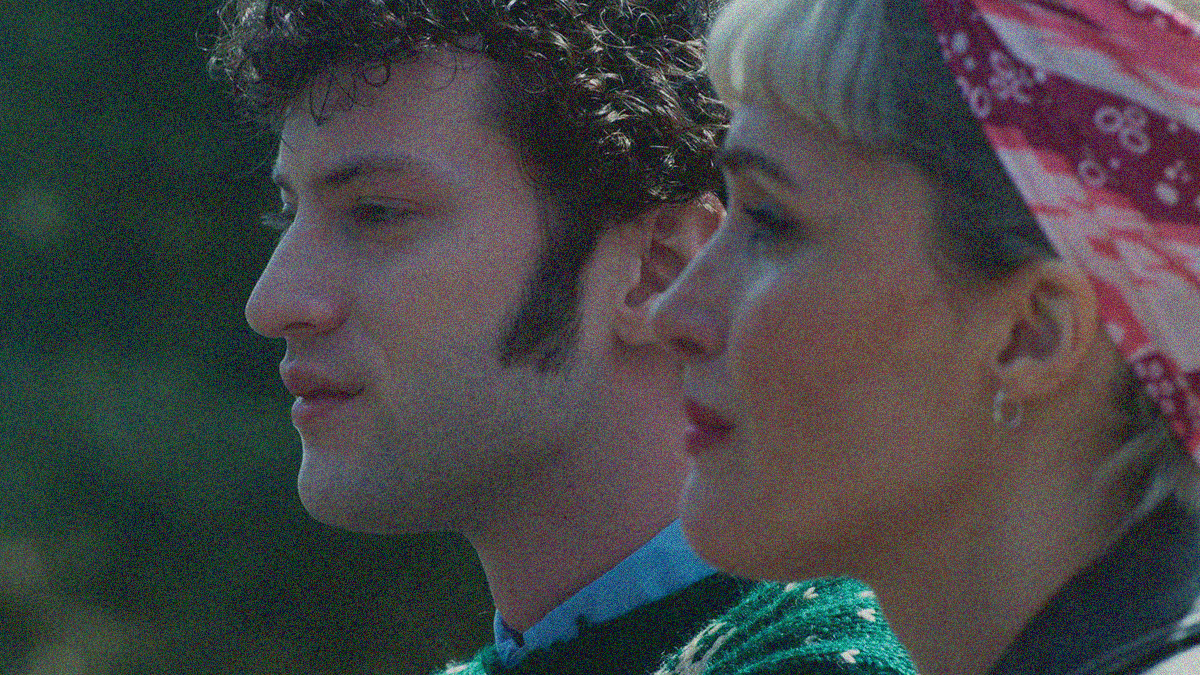
Based on the true story of Seattleite Amanda Ogle, Stephanie Laing's Tow depicts one woman's struggle for justice against a corrupt system weaponized by people too entitled to realize (and/or too heartless to care) that their bureaucratic games legitimately ruin lives. Because everyone caught up in this ordeal knows Ogle is the victim. They understand she's correct and would prove victorious in a perfect world. Sadly, the one we live in is anything but.
Written by Brant Boivin and Jonathan Keasey, the film introduces us to Ogle (Rose Byrne) as she ultimately exploits that same system from the opposite direction. Alone, unemployed, and desperately clinging to sobriety, she finds herself living out of her 1991 Camry and moving about the city to use electricity and wi-fi at restaurants and squat in parking lots—always spacing locations out to never test the patience of those inevitably forced to send her away.
In a cruel twist of fate, the day Amanda finally secures a job is the day she loses everything. It's not because she rolled the dice and parked somewhere illegally either. No, it was sheer bad luck that the car she needed for that new job got stolen while she was in the interview. Whereas you might presume the vehicle would simply be given back upon its recovery, however, the predatory nature of capitalist society demands the towing company get paid for its retrieval.
Again, in a perfect world, that bill wouldn't fall to the aggrieved party. One could argue it doesn't in this imperfect world either since a process for reimbursement does exist. You just need to pay it out of pocket first. And therein lies the problem here. Amanda can't. The only way she could is to get the car back first and earn a salary. Since that's an obvious nonstarter, she's forced to figure out how to fight the entire situation through the same system that lets it happen.
I think my favorite part of the film is its depiction of those caught in the web with their hands tied. Does it perhaps absolve their complicity in certain situations? Sure. But there is something to knowing the tow driver (Simon Rex) is sympathetic to the injustice and the courthouse clerk (Ura Yoana Sánchez) will go the extra mile to try and expedite a process that was built to obfuscate and frustrate its victims into just giving up.
Well, Amanda Ogle isn't going to comply. Is it to set an example and perhaps ensure someone else won't go through the same nightmare in the future? No. It's a point of pride. She refuses to be used, abused, and bullied into submission. She's been through too much (yes, Amanda will eventually share her story at an AA meeting when the time is right). It's the same pride that prevents her from admitting she's unhoused. One isn't separate from the other.
Does it mean she's going to make matters worse before they can get better? Or course. Amanda has been surviving by the skin of her teeth for long enough to know that nobody is going to save her but herself. Yes, she's lying to her kid (Elsie Fisher's Avery) and the woman running the shelter that she cons into entering (Octavia Spencer's Barbara) to buy time. Yes, she's making enemies of those standing in her way (Corbin Bernsen's lawyer). Impulse and instinct are all she has.
Well, that and an unlikely ally in twenty-four-year-old non-profit attorney Kevin Eggers (Dominic Sessa). Just as she tirelessly works to secure a court order for the release of her car, he puts everything he has into picking up the baton when her successful yet naive machinations hit a wall. Does he also make some mistakes? Altruism unfortunately doesn't protect him from his inexperience. Tenacity (and a surprisingly ample budget), however, can force a trial date.
The whole can prove a bit muddled as a result. The first half of the film focuses on Amanda's plight and the American reality that it's nearly impossible to pick yourself back up financially when the bottom drops out. This is the strongest material due to its refusal to candy-coat how bad things can get for Amanda and those suffering similar fates (Demi Lovato, Ariana DeBose, and others). The shame. The deceit. The self-inflicted wounds. It's a sobering journey.
The second half is conversely about the courtroom battle ... or the hundreds of days leading up to the hope of having that battle. This section is condensed (with over-the-top dog glamour shots to mark the passing of time and remind us of the frivolity afforded by a wealth disparity often condoned by those closer to losing everything than they are to being billionaires), more prone to the comedy within the tragedy, and populated by necessary self-reflection.
We need the latter, but I'm not certain it's granted the room to really hit considering it unfolds via brief flashes of emotional upheaval alongside those of judicial extortion and gags. The fact the script literally ends on a punch line proves this was probably intentional—that the humor was a goal rather than a necessity to soften edges. I get that desire to entertain, but it does sometimes feel like Tow isn't giving its subject quite as much respect as it deserves.
That's not to say the cast isn't. There are some really powerful moments shared thanks to DeBose and Lovato. Spencer does well to balance the scales between compassion and firmness when it comes to running a shelter. And Rex adds a lot as far as wanting to help despite knowing he might be living out of his own car if he does. I liked Fisher too, but the script does them no favors by constantly using their emotion to serve plot (Amanda's actions) over their own character.
Byrne is great, though. She embodies the "Rosie the Riveter" ethos that Barbara points out is necessary to survive her situation in the outside world, but also the pain and guilt beneath that façade when it's finally allowed to show. The scene where Amanda does share with the group is the standout moment because the whole thing is working towards that release, but also because Byrne imbues it with an authenticity that rises above the obvious pathway there.
6/10
Two Prosecutors
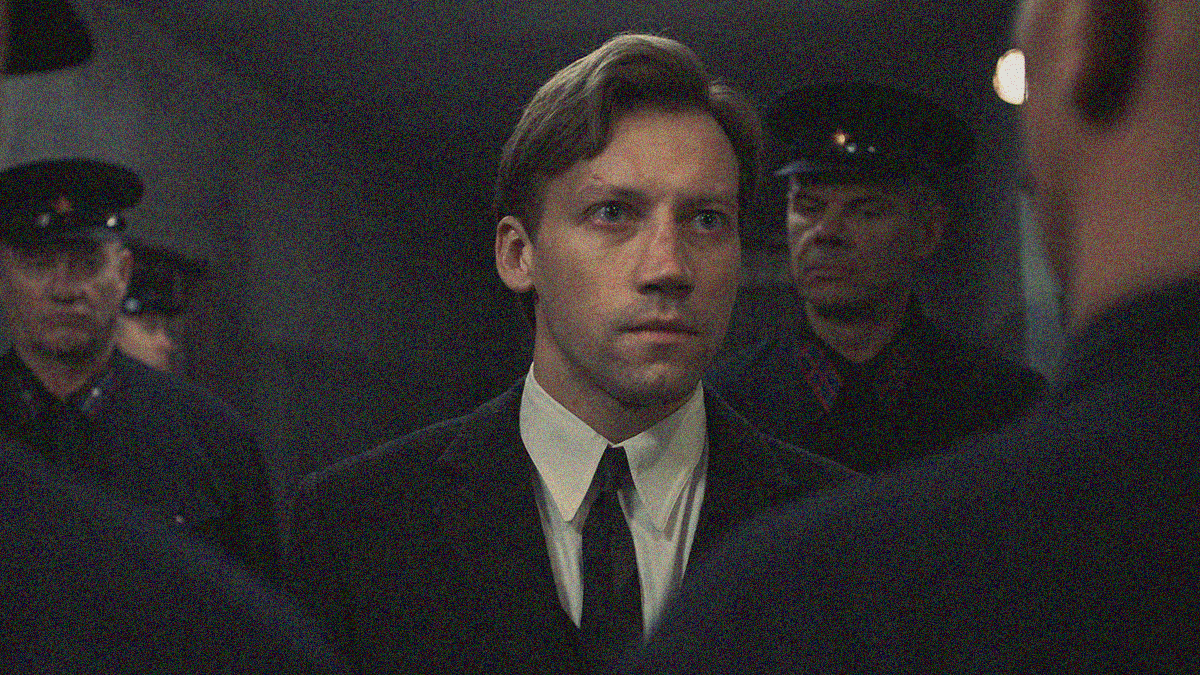
The hindsight provided by living almost a century after the events depicted in the film left me with no choice but to laugh when an old prisoner reads aloud the notes he's been tasked to destroy by fire. Written by fellow inmates, each one begs Joseph Stalin to save them. That they've been imprisoned unjustly by the NKVD (The People's Commissariat for Internal Affairs) despite them all being Bolsheviks loyal to him. They don't realize he's the one who ordered it.
So, when a young prosecutor (Alexander Kuznetsov's Kornyev) arrives at the prison with one of the notes that should have been destroyed, we must wonder more about the nightmare awaiting his naive idealism in chasing its request for an audience than how it broke containment. Because nothing is going to save its author (Aleksandr Filippenko's Stepniak). The chaos ensuing from an outsider just knowing he's being held captive guarantees that.
The question is therefore whether Kornyev will ever see the light of day again himself. Even though he's the protagonist of Sergey Loznitsa's Two Prosecutors (adapted from Georgy Demidov's novella), I braced for him to be shot in the back of the head the moment the duty assistant (Andris Keiss) leaves him alone in his office. The lack of that inevitable execution erodes my preconception instead. Maybe Stalin isn't aware. Maybe Kornyev's position will keep him safe.
Or, as this Kafkaesque existential journey with a wry smile soon posits, the NKVD just like to play with their food before eating it. Because, as I said, Stepniak is already dead despite the painful breath that resides in his lungs. Sure, they could do the same to Kornyev right now without facing any consequences, but why not first see what he does with what he learns to deduce whether he might be useful to the cause. It's no skin off their back.
The film's progression through its series of bureaucratic black holes and intentional tactics meant to wear down the Soviet Union's last honorable citizen is thus toeing the line between farce and thriller. So much of the runtime is composed of scenes with Kornyev waiting in silence, ignorant towards whether that waiting will ever end. In one instance he's even purposefully made to believe it's his turn before being comically rebuked.
We're truly given a front row seat to the chaos and confusion of living through Stalin's Great Purge. The way Kornyev still believes his party membership means something. How Stepniak assures him that making Stalin aware of what's happening will end it. This is a secret arm of the government turning on those it deems a threat while its victims continue holding onto the delusion that they are on the same side. That an unknown third actor is to blame.
It's the sort of mental gymnastics we see today whenever the media finds a Trump voter being persecuted by the very campaign promise they voted for because they thought the persecution was for the "bad ones." They say they voted for criminals to be deported, not their neighbors. They say they misunderstood crystal clear messaging that half the country parsed the second it was uttered. The words "then they came for me" are never not prescient.
So, we're watching Two Prosecutors in a constant state of unease. Just like Stepniak cannot truly trust that Kornyev isn't a NKVD plant, we cannot trust that there's not a second game built upon the first. What if the prison handed that letter directly to the new young prosecutor as a loyalty test. Dare him to visit the prisoner. Dare him to wait long enough to actually see him. Dare him to go over his superiors' heads with his account. Let him hang himself.
Because that's exactly what Stepniak reveals is happening inside the prison with torture-induced self-incriminating confessions that give the NKVD cover when finally executing them. Why couldn't it also be happening outside? The paranoia moves from "Will Kornyev be allowed to leave?" to "Will anyone he runs to for protection actually be an ally?" Every interaction is a "Can I trust you?" stare down. The answer is invariably "No." and yet the best of us try anyway.
That's the point of fascism. To beat you down so often that you stop believing there will ever be a chance to exit out the other side. It makes you unable to trust reality. It erodes the truth. It places you in a cage of your own making that's built on the fear that fighting back is worse than staying quiet. You can't therefore help but be inspired by Kornyev's perseverance and bravery even as you lament his inability to recognize he lost the second he entered those prison gates.
Credit Kuznetsov's performance for constantly getting us to embrace the hope he keeps conjuring for himself. We want him to be right. We want him to be a beacon of light revealing other incorruptible souls rather than the death knell of justice. Yes, we know in our hearts that he's forever walking into lion's dens populated by strangers boring holes into him or knocking him off-balance with kindness, but maybe it's not already too late. Not just for him. For us too.
8/10

This week saw F1 (2025), and Zootopia 2 (2025) added to the archive (cinematicfbombs.com).
Brad Pitt drops an f-bomb in F1.

Opening Buffalo-area theaters 3/20/26 -
• Bershama at Regal Elmwood
• Dhurandhar: The Revenge at Regal Elmwood, Transit, Galleria
• The Pout-Pout Fish at Dipson Flix, Capitol; Regal Elmwood, Transit, Galleria, Quaker
• Project Hail Mary at North Park Theatre; Dipson Amherst, Flix, Capitol; AMC Maple Ridge; Regal Elmwood, Transit, Galleria, Quaker
• Ready or Not 2: Here I Come at Dipson Flix, Capitol; AMC Maple Ridge; Regal Elmwood, Transit, Galleria, Quaker
• Tow at Regal Quaker
Thoughts are above.
• Ustaad Bhagat Singh at Regal Elmwood
• Vampires of the Velvet Lounge at Regal Transit, Quaker
• Youth at Regal Elmwood
Streaming from 3/20/26 -
• 1000 Women in Horror (Shudder) - 3/20
• Is This Thing On? (Hulu) - 3/20
"The drama is sound, the comedy softens its heavy emotions, Arnett gets to act, Dern is great, and Cooper brilliantly takes the piss out of himself to laugh at everyone who believes he directs solely to win a Best Actor Oscar." – Quick thoughts at HHYS.
• King Ivory (Hulu) - 3/20
• Peaky Blinders: The Immortal Man (Netflix) - 3/20
• The Rise of the Red Hot Chili Peppers: Our Brother, Hillel (Netflix) - 3/20
• Wicked: For Good (Peacock) - 3/20
"My wish is for this same story to be told from the Grimmerie’s vantage point of providing characters the worst version of their desires en route to remaking Oz in its own nightmarish image." – Quick thoughts at HHYS.
• Zeta (Prime) - 3/20
• Sisu: Road to Revenge (Netflix) - 3/21
• Mercy (Prime/MGM+) - 3/22
• She Loved Blossoms More (Shudder) - 3/22
"I was left with a sense of respect for the bold insanity if not actual enjoyment. The pacing can crawl and the obtuseness can frustrate, but you must appreciate the actors going all-in and the impressive special effects." – Full thoughts at HHYS.
• Sentimental Value (Hulu) - 3/23
"[Nora and Agnes'] circumstances were the same, but their experiences weren’t. Reinsve and Lilleaas are constantly revealing this truth through their characters and performances." – Full thoughts at HHYS.
• Resurrection (Criterion Channel) - 3/24
"In an industry increasingly asking filmmakers to conform for their paycheck, Gan reminds us of what can be done with the medium when they’re allowed to dream." – Full thoughts at HHYS.
• Anaconda (Netflix) - 3/25
• Pretty Lethal (Prime) - 3/25
• Primate (Paramount+) - 3/25
• Caterpillar (Netflix) - 3/26
• The Red Line (Netflix) - 3/26
Now on VOD/Digital HD -
• All That's Left of You (3/17)
"And the dialogue is full of memorable lines that get to the core of Dabis’ humanist messaging. Because while it is an unavoidably political film in its content, love and empathy are what resonate most." – Full thoughts at HHYS.
• By Design (3/17)
"By Design has a lot to say and does so in a dryly comic way that both appeals to audiences with its satirical metaphors and alienates them via its performance art affectations, interpretative dance, and glacial pacing." – Full thoughts at jaredmobarak.com.
• Forbidden City (3/17)
• Magellan (3/17)
• Preschool (3/17)
"Preschool truly lives and dies by how you embrace Duhamel and Socha in these very flawed yet relatable roles. This is the sort of comedy that demands its performances elevate the plot’s rote machinations and I believe they do exactly that." – Full thoughts at HHYS.
• Scarlet (3/17)
"I applaud Hosoda’s desire to heal rather than harm, but Claudius probably isn’t the literary figure for that pursuit. How he brings it to life is gorgeous, though." – Quick thoughts at HHYS.
• U Are the Universe (3/17)
"[We're] witnessing a real microcosm of life through the eyes of an introvert who escaped Earth to avoid the sadness of living alone only to ultimately discover the dignity of dying together." – Full thoughts at HHYS.
• The Cure (3/20)
• Golden (3/20)
• Late Shift (3/20)
• Mr. Burton (3/20)
• The Well (3/20)
"The Well doesn’t necessarily travel new road within the sub-genre, but it executes the template effectively. [It reminds] us to aspire to be the martyr whose sacrifice saves another rather than the killer quick to sacrifice another for themselves." – Full thoughts at HHYS.

Pieces from the Leaving Las Vegas (1995) press kit.