Week Ending 3/27/26
This one isn't that confusing, actually


My first experience with the idea of boycotting "problematic" artists was my father saying he wouldn't spend money on movies starring Tim Robbins or Sean Penn because he didn't agree with their politics (he'd still watch them, though, if someone else foot the bill). It meant nothing. It was merely a way for him to talk about himself through his disdain for their off-camera exploits. Because those actors already got paid before the finished product reached him. This was a decade in which they weren't getting backend deals since A-listers still made everything up front.
Did he care about Penn's abuse allegations? Only insofar as they projected bad moral character onto his liberal politics. Rumors have swirled about him for years despite Robin Wright and Madonna refuting that he ever hurt them. But people still don't like that he won an Oscar earlier this month or that he was even nominated for it. And what about Josh Brolin for that matter? Those weren't just rumors. I guess his public contrition was enough for forgiveness as he's never worked as much as he has this past decade. Second chances can be earned. Publicists can calm the waters. And we have been known to forget.
Then there's Woody Allen. Can you separate the art from the artist in his case? Sure. Is there a line wherein it's okay to enjoy everything you enjoyed before discovering what he was and not okay to enjoy everything after? Maybe. If it helps you sleep better at night. The only reason we must ask is because he's never been convicted of a crime (unlike the current President of the United States for instance). So, he never stopped working and thus created many such possible demarcations every time the story hit the news cycle again.
How about Jonathan Majors? Or anything with anyone who is currently relegated to working for the Daily Wire (like Gina Carano, etc.) because Hollywood won't touch them with a ten-foot pole? It's truly all a matter or your personal threshold and what you're willing to give up to assuage your own feelings of guilt. There's no right answer. At the end of the day, we'd need to tear down gallery walls to expunge every problematic figure from our artistic history. It's why this phenomenon can often be cleared up with a simple contextual disclaimer.
Unless you're talking about JK Rowling in the year 2026.
Why? Because she is actively and purposefully using the money she receives from the Harry Potter franchise to aggressively fund anti-trans legislation. We aren't dealing with a past crime litigated in court (real or public opinion) that resulted in a verdict with her. You can let the market dictate whether Allen secures financing and your heart to decide whether Majors deserves a chance at redemption. What you cannot do is voluntarily give Rowling new money (either directly or indirectly via streaming views to show Warner Bros. that she deserves it) without actually becoming complicit in her actions.
It's not therefore about Rowling's work or your love for it at all. It's about allowing a harmful artist to exploit that work and love as a weapon to help enact that harm. Because Rowling isn't shy about what she's doing. She's not standing on the sidelines with campaign donations. She is extremely vocal about directly using her fortune to erase trans women (and, by extension, trans men) from existence.
So, feel free to say you'll keep loving Chinatown despite Roman Polanski fleeing to a country without extradition to avoid a rape charge. Feel free to say you'll keep loving the Harry Potter books despite what Rowling has proven she always was. Hell, feel free to play Hogwarts Legacy and watch the new Harry Potter series if you want. Just know that, in the case of those latter two enterprises, you better not also condemn Rowling's present-day actions as a means of separating them from her art without also condemning yourself first. Because in this specific case, every revised iteration of that old art is literally bankrolling that harm you say you abhor.
What do I think about the new series trailer? Nothing. I didn't watch it.

Alpha
**Potential Spoilers**
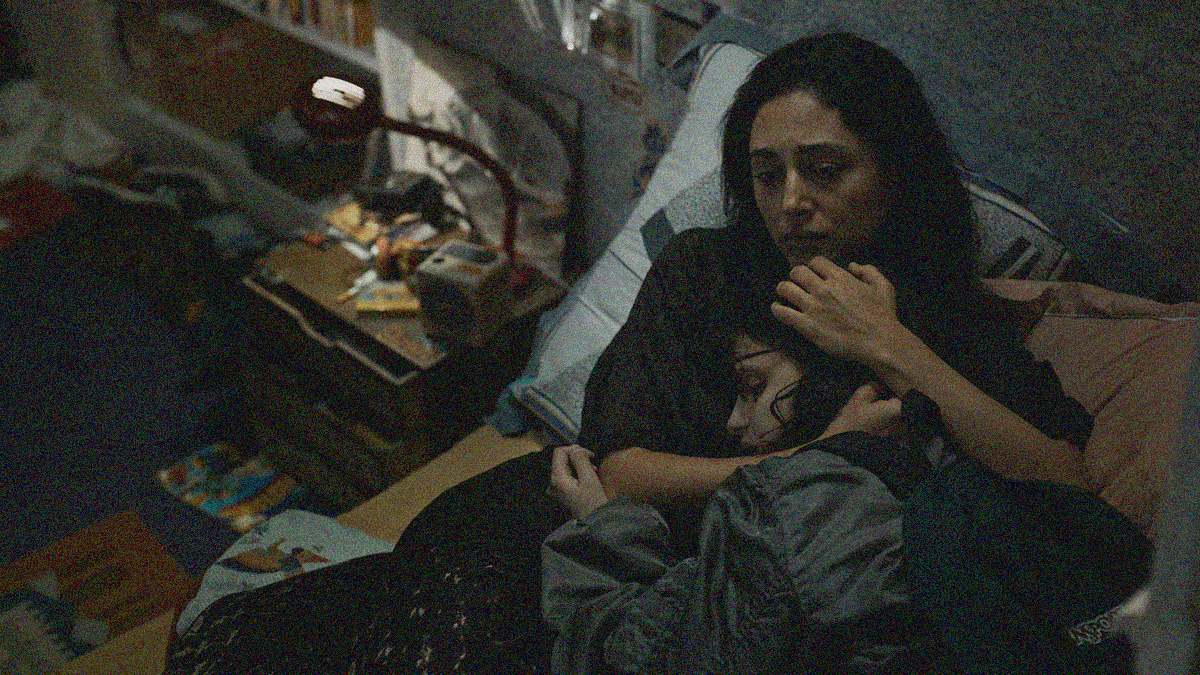
It's weird to say considering Julia Ducournau's previous films, but her latest is a lot. Of course it is. That's what she does. But it's not "a lot" in the same sense. It's not as much about the genre trappings and metaphorical transmutations as the sensory and emotional experience unfolding. With loud music (including almost full Portishead and Nick Cave tracks), gorgeous marble-skinned special effects, and extreme anguish, Alpha isn't for the faint of heart.
I therefore wonder if it's proving to be a The Village type situation as far as the response being so varied with many critics hailing it an irrefutable misfire. How much of that backlash is a product of what people expected from Ducournau rather than what she actually delivers? How much of their discomfort is about the subject matter skewing closely to a real-world tragedy rather than the way in which she uses it? Because I think it works very well at face value.
But I also wasn't as high on Titane as those same critics were. Much like with that M. Night Shyamalan film (as well as its follow-up Lady in the Water), perhaps I'm simply on a different wavelength wherein my tastes for Ducournau skew the opposite direction from original consensus. Because Alpha is not an AIDS movie. Maybe she could have moved away from all similarities to that epidemic completely, but I do think that familiarity is necessary for its full potency.
This is a fictional world ravaged by an incurable communicable disease that gradually turns its victims into marbleized stone. How it transmits is exactly how HIV transmits—bodily fluids. So, when thirteen-year-old Alpha (Mélissa Boros) returns home drunk after a party in which a stranger used an unsanitary needle to tattoo her arm, her mother (Golshifteh Farahani) is justifiably scared and enraged. What if her daughter just signed her own death warrant?
Not only is Mom (the character is nameless) a doctor well-versed in the disease considering she and her nurse (Emma Mackey) are the only two people willing to treat the infected, but she's also experienced its effects first-hand via her brother Amin (Tahar Rahim). Our assumption from the opening prologue is that he passed away years ago, so it's strange when Mom appears to talk to him after cleaning Alpha's wound. It's stranger still when he starts living with them.
Ducournau begins playing with time here to explain the discrepancy between what we assumed and what we're seeing. She does this via flashbacks that are easily distinguished by Mom's hair (curly in the 80s and straight in the present-day 90s). We watch how her love for her junkie brother kept him alive even when he obviously wanted to die. We learn about the "Red Wind" their mother believes infected him. And we understand the origins of Mom's fear for Alpha.
In many ways, the teen is discovering these same things with us. How Mom interacts with Amin. How she treats Alpha. While the film is very much from Alpha's perspective (especially in the ways she's treated as a pariah at school due to the uncertainty of her blood test), this is very much Mom's story. She is the constant. She is the protector. She is the jailor. She is the one desperate to save those who cannot be saved. Alpha might be next. So, the trauma floods back.
I don't want to ruin anything, but it's not difficult to understand what's going on beyond what seems to be a straightforward narrative taken at face value. If you're not asking yourself why Amin seems to be showing no signs of the disease despite how much time has passed, you might as well stop watching because you're obviously not invested in what Ducournau is showing you. I personally thought I was going crazy when he keeps disappearing from frame at Eid.
What makes that unspoken truth tough to accept, however, is that the film maintains Alpha's perspective. If what we assume is happening is happening, the film should be from Mom's instead. So, we presume we're wrong. Otherwise, it appears like Ducournau has made a grave error. What we cannot fully grasp until the climactic overlap reveal is that this was all done with intent. Yes, this is Mom's trauma, but its intense influence has ensured it becomes Alpha's too.
This reality leads to some unforgettably powerful moments. The climax is at the top because it's when everything clicks into place, but there are many beforehand too—even if you aren't yet aware of why. Some if it is merely a result of Ducournau's directorial prowess (the pool scene) and some the dynamic between subject matter and cast (the waiting room scene). Some is a byproduct of the AIDS mirror reminding us how easy it is for mankind to lose its humanity.
Regardless of whether you think it all works in the end, you cannot deny the effects, sound (and song selection), production, or performances. Boros (nineteen playing thirteen) is impeccable as our entry point into this world's paranoia and grief. Finnegan Oldfield (as Alpha's English teacher) does a lot with very little screen time. And Farahani is fantastic as the mother and sister who refuses to let go—not because of love, but her fear of losing it.
But it's Rahim who proves the best of them all. Even without the weight loss, he embodies Amin's plight with the empathy and authenticity necessary to ensure the character never becomes a one-dimensional pawn of burden. He's so much more as a representation of the suffering endured by countless victims to countless diseases that we as a society are so quick to sweep under the rug and the face of strength in one's acceptance of that fate.
8/10
Kontinental '25
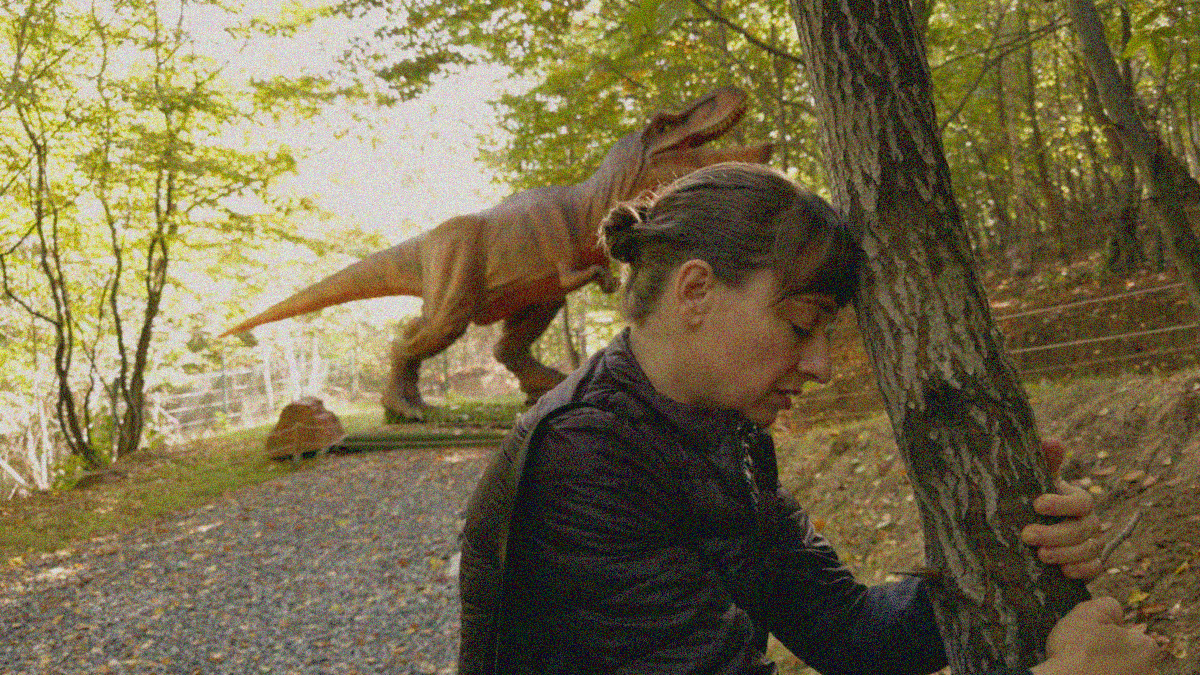
The themes behind Radu Jude's latest film Kontinental '25 find clearest focus during a phone call between Orsolya (Eszter Tompa) and her former student Fred (Adonis Tanta). She's asking him to meet for a drink in Cluj and hoping he's still there since she, despite working in the city, lives in the suburbs. More than that, however, Orsolya lives in the "poor" suburbs. A place where cheap housing and an explosion of new residents have caused its name to conjure sneers.
Orsolya is badmouthing the place she lives because of its influx of impoverished Romanians yet cannot help throwing pity parties every chance she gets for the guilt felt from being an indirect cause of an unhoused man's (Gabriel Spahiu's Ion) death (take a drink each time she explains the cause). She sees herself as empathetic and charitable when it suits her despite constantly reverting to the same sense of superiority as that of her friends, mother, and online trolls.
Because there's more at play here than just socio-economic disparity. There's also the rampant capitalistic corruption of corporations strong-arming their way into permits and contracts. There's the ethnic-based bigotry that sees Romanians slandering her in the press for being Hungarian (even though the city she works in, Transylvania, was stolen from Hungary) and the hollow nationalism of Hungarians who look down upon Romanians as lazy peasants.
Everything we see and hear is thus predicated on the conditions placed upon them by the people doing the seeing and hearing. Orsolya's mother bleeds Hungary regardless of never leaving her Romanian home for it since words are easier than actions. Orsolya isn't innocent from holding Romanians to the same racist standards as her mother even as she lambasts Hungary for being a fascist state in Putin's pocket. Jude exposes their hypocrisy via their selfishness.
And he does it as he always does with characters quick to name-drop and heavily quote sources as varied as the Bible and Wim Wenders' Perfect Days. Besides opening scenes of Ion mumbling to himself on the streets picking up recyclables and asking for work/money before ultimately killing himself when Orsolya evicts him after already brokering a one-month extension, the film follows her as she confronts her complicity while others absolve her.
They all have their own reasons since none want to think about their own shame. Orsolya's husband wants her to forget it all so they can have a nice holiday in Greece. Dorina (Oana Mardare) wants her to buy back her innocence by donating to a non-profit like she does to buy back her own after calling the police on an unhoused man in her neighborhood. And Fred just wants to spew the Zen axioms that remain unused in his brain from college.
Even Father Serban (Serban Pavlu) has an agenda when comforting Orsolya's uncertainty. He interprets scripture to suit his needs in the moment and goes out of his way to explain why her own caution with certain passages is incorrect. God isn't punishing those with nothing by creating a world where they can never hope to rise from the gutter. God is merely using their helplessness as an example to lead His sermons. Because that's so much better.
Fans of Jude will enjoy the comedic philosophizing and contradictory actions on-screen just as detractors will discover one more example of why they can't understand his appeal. The filmmaker is nothing if not consistent in his ambitions and style to present long-takes of clunky dialogue meant for us to begin conversations with ourselves. (I've just realized that Jude and Onur Tükel would probably be best friends ... if they aren't already.)
I once again land in the middle with an appreciation of what he's doing despite not quite getting on his level to find it successful beyond reproach. His point is always clearly elucidated (I love that Orsolya ultimately visits all the same places Ion did in the prologue) and the actors embrace the dialogue and emotions to lean into the tragedy of our current world and the absurdity of it getting worse. Soon it will just be empty buildings and unmarked graves.
6/10
A Magnificent Life
While Sylvain Chomet has done live action work, his name is synonymous with the animation style that helped make The Triplets of Belleville and The Illusionist so unforgettable. So, it's no surprise that Nicolas Pagnol, Ashargin Poiré, and Valérie Puech would approach him to at least consider creating the animation portions of their planned documentary on Nicolas's grandfather Marcel Pagnol. It is a shock, however, to learn Chomet pitched the opposite.
You can't blame him for doing so since his reasoning was sound. Films that try and combine documentary and animation do often feel strange and in conflict with themselves. What none of them could have foreseen, though, is that interest in the proof of concept was solely on the side of the latter. So much so that Chomet pivoted to using the research to write a script that could be fully animated as a fictionalized biography of a man in conversation with himself.
A Magnificent Life therefore opens at a late crossroads for Marcel Pagnol (Laurent Lafitte—despite watching the English dubbed version, I will be using the French actors' names since I cannot find an accurate cast list for the others). His latest play has debuted to little applause and he wonders aloud if the world has pushed him into retirement when a woman at Elle magazine convinces him to write a serialized memoirs for their readers. He reluctantly agrees.
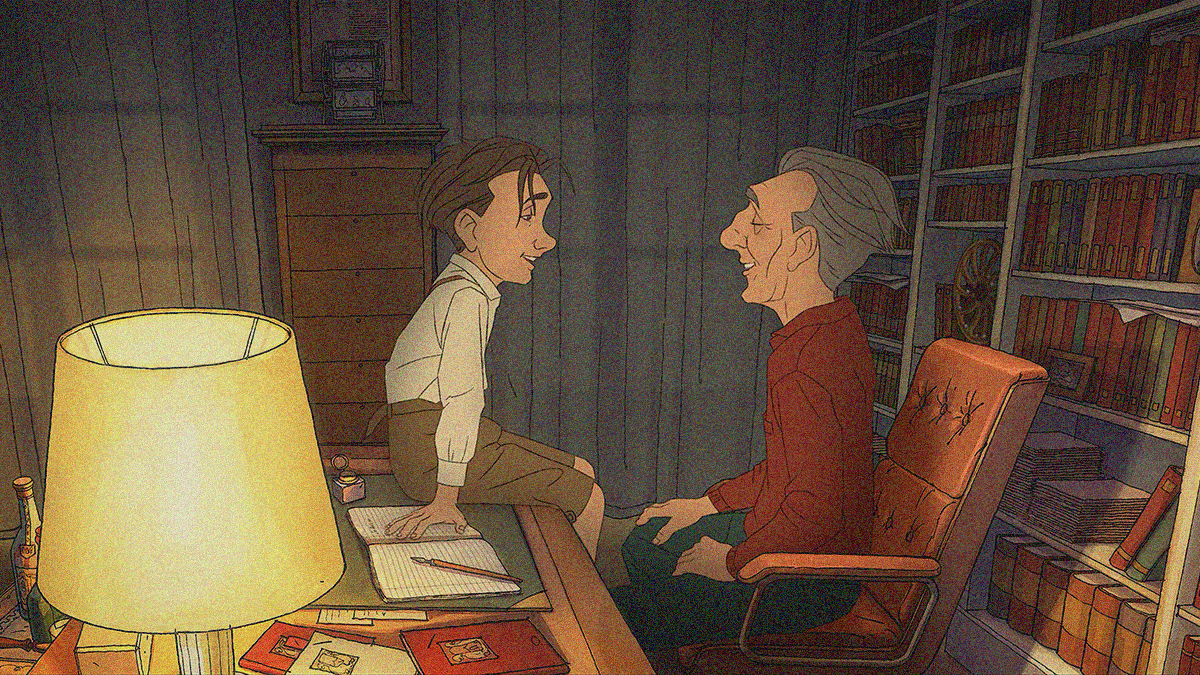
It's the moment that Marcel is forced to actually supply a manuscript that the decision to use animation to tell this rather straightforward tale of a French icon comes into focus. Unable to find the words (or memories to conjure them), it's the spirit of himself as a boy at the age when his mother died who gives him the push he needs to start writing. Soon we will discover this "boy" has been a sort of guardian angel (along with others who passed away) guiding his every success.
We learn about Marcel's childhood in Marseille and dreams to be a millionaire. We meet the father who tried to steer him away from the arts, the old friend he reunites with in Paris who opens the door to the theater, and the actor who would stay by his side through it all (Raimu, voiced by Thierry Garcia). There's the anxiety of writing, the risk of shifting to cinema, and the artistic struggle that comes from refusing to work with the Nazis during WWII.
There's also the revolving door of girlfriends, a partnership with Paramount, and the juxtaposition of educated Parisians finding the ability to enjoy a play populated by the inscrutable country folk of Pagnol's home through comedy. Characters come and go. Family and friends arrive and die. And all the while that little "boy" is actively steering fate when he's not sitting on the rooftop laughing so loudly that Marcel's first wife believes the pigeons are after them.
The animation style remains the same as Chomet's earlier films with detailed sets and expressive characters. There are a couple wonderful transitions (I loved the shift leading into Marcel's mother's funeral) that render the medium a necessity, but he could very easily have made this live action if he desired. Although I do like that the character design allowed each real-life person to look themself. It helps when actual footage of the films is played to know who's who.
I assume the final result is a nice adaptation of Pagnol's memoirs as Marcel's admission of using dialogue to tell his stories comes to life by way of his sixty-year-old self and child self reminiscing together to transport us back to Marseille, Paris, London, Monaco, and everywhere in-between. It also does well not to gloss over the hardships and tragedies since each death giving birth to another guiding spirit lends an inspiring outlook as far as being reunited later in the afterlife.
It's just a fun depiction of the hard work, ingenuity, and dumb luck intrinsic to a career in the arts. Being a fan of cinema (and theater) surely helps too, as Marcel lived at an important crossroads in its evolution. That jump from stage to talkies and his understanding that the transition could augment the emotion and humor of a performance clearly positions him as a crucial steward of the craft. I'm adding the Marseilles Trilogy to my Criterion Channel watchlist right now.
7/10
The Serpent's Skin
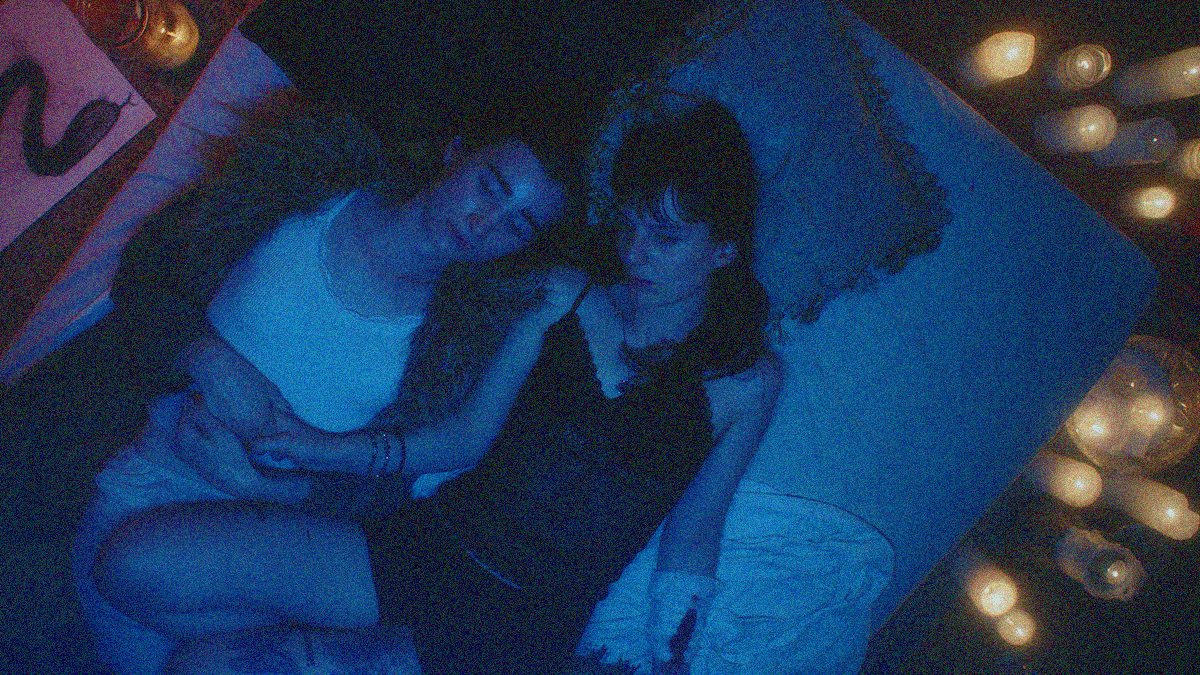
The latest self-styled "transgender film" from Alice Maio Mackay begins as Anna (Alexandra McVicker) flees her transphobic hometown to live in the city with older sister Dakota (Charlotte Chimes). It's there, during an attempted robbery on the first day of her new job at a record store, that Anna experiences her unfiltered supernatural powers. She's always known she was different and able to feel and do things, but only now does she realize just how dangerous she is.
With The Serpent's Skin, Mackay and co-writer Benjamin Pahl Robinson are less interested in explaining their central mythology than letting it simply unfold with as much ambiguity as necessary to keep us as in the dark to what might happen next as their characters. Visual overlaps and crosscuts portray the connection between Anna and Gen (Avalon Fast) before they meet and images of an ouroboros threatens their happiness before causing real pain.
The whole plays with the trans-ness and queerness of the plot, cast, and crew insofar as giving Anna and Gen abilities passed down through generations yet lost by time. It leans into the duality of good and evil, weaponizing the notion that some people have of the "other" being something they must fear. These two women seek to defend themselves from a world that seeks to harm them and yet they don't fully understand the source of that strength.
They are being forced to confront the consequences of their powers and the reality that using them for good doesn't necessarily excuse the bad things that occur as a result. Anna isn't going around "popping" the brains of random strangers who look at her the wrong way, but there remains a cost to "popping" malicious predators regardless of the benefits that arise from taking them off the street. So, you must also ask if the powers themselves can take the wheel.
Enter Danny (Jordan Dulieu), Dakota's neighbor and willing participant to usher Anna into the complex with a one-night stand. He's a sweet guy despite what the woman living beneath his apartment thinks due to the constant noise born from his sexual exploits. We're shown this truth so many times that his sudden turn towards hostility can only be the product of an external force. Why has he gone demonic? Can Anna and Gen stop him? Are they the cause?
Mackay cares little about a three-act structure, so don't presume to know what's happening, where things are going, or if you'll ever get any answers. The film moves as though its floating on pure stream of consciousness wherein scenes push Anna into corners to see how she reacts rather than providing something to solve. Everything just flows. Sex to new connections. New relationships to fresh coincidences. Unexplained phenomena to self-sacrifice.
The Serpent's Skin is therefore happening to its characters and Mackay and Robinson are brainstorming their responses. Danny becoming an antagonist isn't a foreshadowed heel turn, but a random development to confront. It's another case of duality wherein his actions don't align with his personality. He's a good guy doing bad things outside his control just as the women are good people doing bad things inside theirs. The world is too complex for any binaries.
While Mackay's films are very intentionally not looking for mainstream appeal in their subject matter, the narrative structure might even alienate some of those coming to it with that fact in mind. Scripts that keep escalating without a release can be tiring—especially when nothing about them even alludes to there being an end in sight. We're pretty much being led into a brick wall wherein the climax is less of an escape through rebirth than just a return to calm.
Because the point isn't about stopping the evil running rampant in town. It's not about teaching Anna to control her powers or even giving those powers purpose. Plot itself is an afterthought to the desire to give these characters agency over their lives in a place that seeks to control, subdue, and erase them. It might even be about their restraint from actually becoming what the world believes them to be already. They're fighting hate with love instead.
That it all arrives through an obvious homage to 90s-era supernatural fare (the "Buffy" talk becomes unavoidable after seeing the make-up work for their vampire) is the draw. We get the genre trappings and music video-esque sex scenes for nostalgia and familiarity. By supplying its messaging via universally understood packaging, maybe its intent can be better absorbed too. The final product is quite messy, but its earnest desire to open minds is not.
6/10

This week saw Rules Don't Apply (2016) added to the archive (cinematicfbombs.com).
Matthew Broderick dropping an f-bomb in RULES DON'T APPLY.

Opening Buffalo-area theaters 3/27/26 -
• Aadu 3 at Regal Elmwood
• Alpha at Regal Elmwood
Thoughts are above.
• The AI Doc: Or How I Became an Apocaloptimist at Dipson Amherst; Regal Elmwood, Transit, Quaker
• Bershama at Regal Elmwood
• Bunny!! at Regal Galleria
• Forbidden Fruits at Regal Elmwood, Transit, Galleria, Quaker
• Holy Days at Regal Transit, Quaker
• A Magnificent Life at Regal Transit
Thoughts are above.
• The Mummy Returns 25th Anniversary at Dipson Flix, Capitol
• Prathichaya at Regal Elmwood
• Stand By Me 40th Anniversary at Regal Transit, Quaker
• They Will Kill You at Dipson Flix, Capitol; AMC Maple Ridge; Regal Elmwood, Transit, Galleria, Quaker
• You're Dating a Narcissist! at Regal Quaker
Streaming from 3/27/26 -
• 53 Sundays (Netflix) - 3/27
• Bambi: The Reckoning (Prime) - 3/27
• BTS: The Return (Netflix) - 3/27
• Mike & Nick & Nick & Alice (Hulu) - 3/27
• The Mortuary Assistant (Shudder) - 3/27
"All we need is a healthy mistrust of what we see and gnarly practical effects. With that realism, some nice cinematography to enhance the jump scares, and The Mimic’s memorable creature design, it’s easy to invest in the ride." – Full thoughts at HHYS.
• Crime 101 (Prime) - 4/1
• Day of the Fight (Paramount+) - 4/1
• Eat Pray Bark (Netflix) - 4/1
• The Housemaid (Starz) - 4/1
Now on VOD/Digital HD -
• Past Life (3/23)
• GOAT (3/24)
• I Can Only Imagine 2 (3/24)
• Jimpa (3/24)
• Mimics (3/24)
• Nirvanna the Band the Show the Movie (3/24)
• Operation Taco Gary's (3/24)
• Redux Redux (3/24)
"Despite the science fiction premise and pulpy violence, this is first and foremost a character study. It’s McManus and Marcus providing authentically complex performances that refuse to shy from the survival instincts [they rely upon]." – Full thoughts at HHYS.
• Send Help (3/24)
• Sirât (3/24)
"Laxe pulls no punches portraying our lives as the kick to the teeth they often are. A torturous wasteland made bearable by the found families with whom we choose to walk through it." – Quick thoughts at HHYS.
• Tied Up (3/24)
• White With Fear (3/24)
• Youngblood (3/24)
"Now that’s how you do a remake. Rather than glorify the misogyny, hazing, violence, and homophobia, this Youngblood uses it all as a reason to evolve. To be better than the past." – Full thoughts at HHYS.
• Really Happy Someday (3/25)
"Lalama delivers a fantastic performance in the lead role—really expressing the inner conflict that exposes how comfort and joy aren't the same." – Full thoughts at HHYS.
• Refuge (3/26)
• Wardriver (3/26)

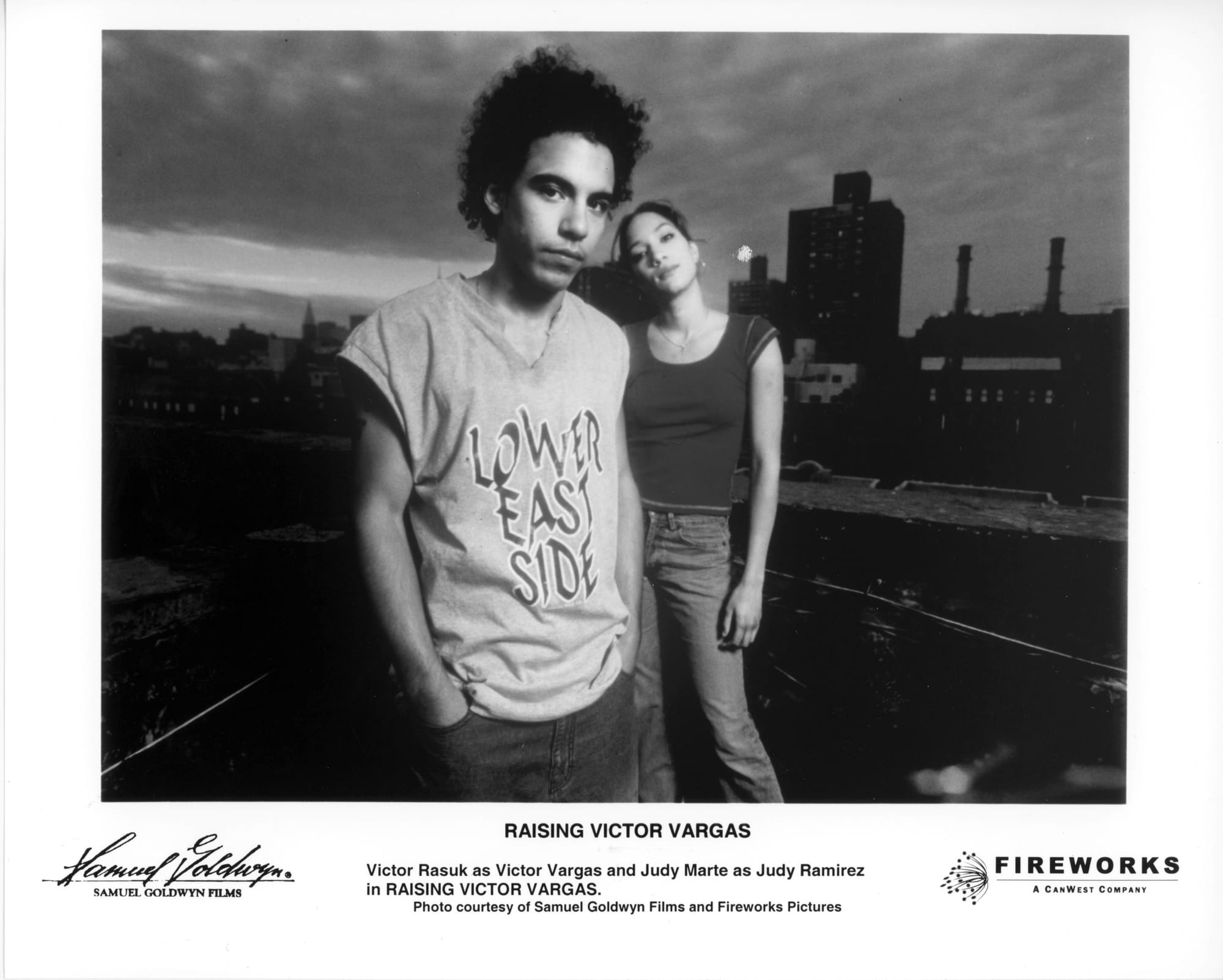
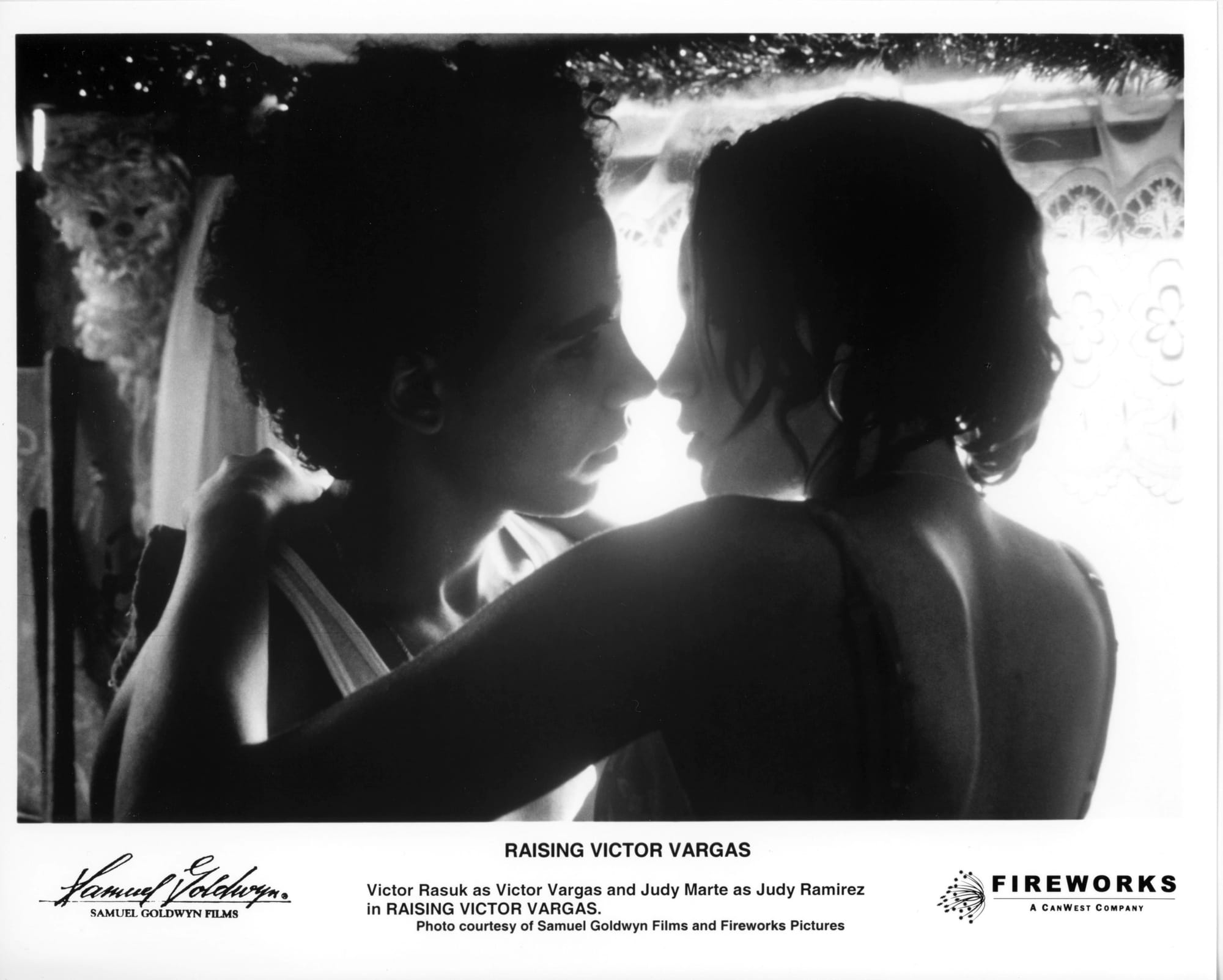
Pieces from the Raising Victor Vargas (2003) press kit.