Week Ending 4/24/26
The Sabres are trending


Sabres on the warpath. Wagon keeps rolling. Bell of the ball?
You knew the Buffalo Sabres' Cinderella ascent from bottom of the conference in December to division champs for their first playoff bid since 2011 was going to be the story of the 2026 Stanley Cup Playoffs, but did anyone think the team would get this much media saturation?
It's not even about that Game One comeback win with the crowd going wild either since many of the people talking about the Sabres now were at that game. They chose to make Buffalo their Round One destination regardless of the outcome because the story of their inclusion in the big dance was enough. The What Chaos! boys attended courtesy of producer Shawn DePaz's ties to the city. Jesse Pollock from BarDown hit up Anchor Bar before getting chirped by people pre-game. Wyatt Russell attended after running into Lake Erie to make good on his Lake Hour bet. Even Brian Burke drove down.
That's a lot of external platforms ready and willing to give the Sabres kudos for a miracle year and the city a well-deserved showcase to let out fifteen years of emotions to the world. Add Josh Allen shotgunning a beer after beating the arena drum before Game Two and Chad Michael Murray donning a white buffalo hat and it's almost enough to wash the sour taste of ESPN laughing about their own inability to say Ukko-Pekka Luukkonen. I'm just glad we get local broadcasts for the first round to avoid that travesty a little while longer. (TNT is innocent. I actually watched their pregame last night instead of MSG.)
It's been fun to see the city shine even if it only lasts a couple weeks. It's been even better to remember what Sabres playoff hockey feels like. It's nice to root for a team after so many years of just hoping to watch great hockey. Can they go all the way? The City of Good Neighbors is nothing if not quick to fall victim to a delusion or prepared to absorb calamity. So, why not? Here's hoping.

D(e)ad
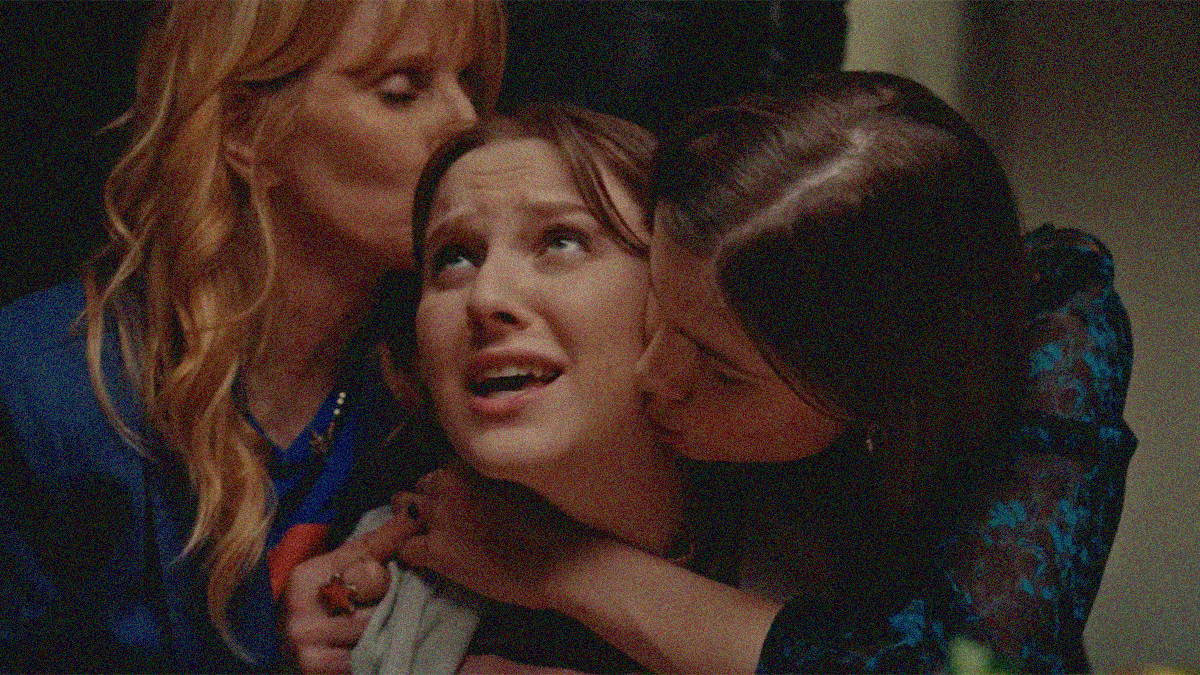
While it's easy to call Tillie (Isabella Roland) the "avoider" once she successfully cuts her problematic father (Craig Bierko's Daniel) out of her life, context quickly reveals the reason for that drastic act was because she finally had enough being the "avoided." His narcissism led to neglect (he couldn't be bothered to put her before himself) and indifference (she refused to put herself behind him). He let her slip away. It's neither her fault nor her responsibility to fix.
So, having him die and haunt everyone else in the world but her while making her the only person with something real to say to him therefore proves a perfect premise for catharsis. Perfect for the comedy that ensues from Tillie feeling slighted, Daniel being obnoxious, and the family frustratingly getting caught in middle to deal with him right when it seemed they thought they'd escaped. And perfect for portraying the shared duality of "unfinished business."
Written by Roland and directed by Claudia Lonow (Isabella's real-life mother and Tillie's on-screen fictional mom Frankie), D(e)ad (a wonderfully constructed title) proves a family affair thanks to the latter's Brooklynite parents (JoAnne Astrow and Mark Lonow) joining in the same role. Roland's Dropout friends (Vic Michaelis, Zac Oyama, and husband Brennan Lee Mulligan) round things out for a new school/old school improv comedy showcase (acting chops will vary).
The laughs are plenty, the absurdity obvious, and the heart never far behind courtesy of tough subject matter that demands an authentic journey of self-reflection above the humor. Because Tillie needs closure regardless of the wall of apathy she's built and Daniel needs to understand the damage he wrought despite being beyond redemption. The goofiness sells tickets, but the truth of its "acceptance isn't forgiveness" messaging is what resonates.
7/10
Erupcja
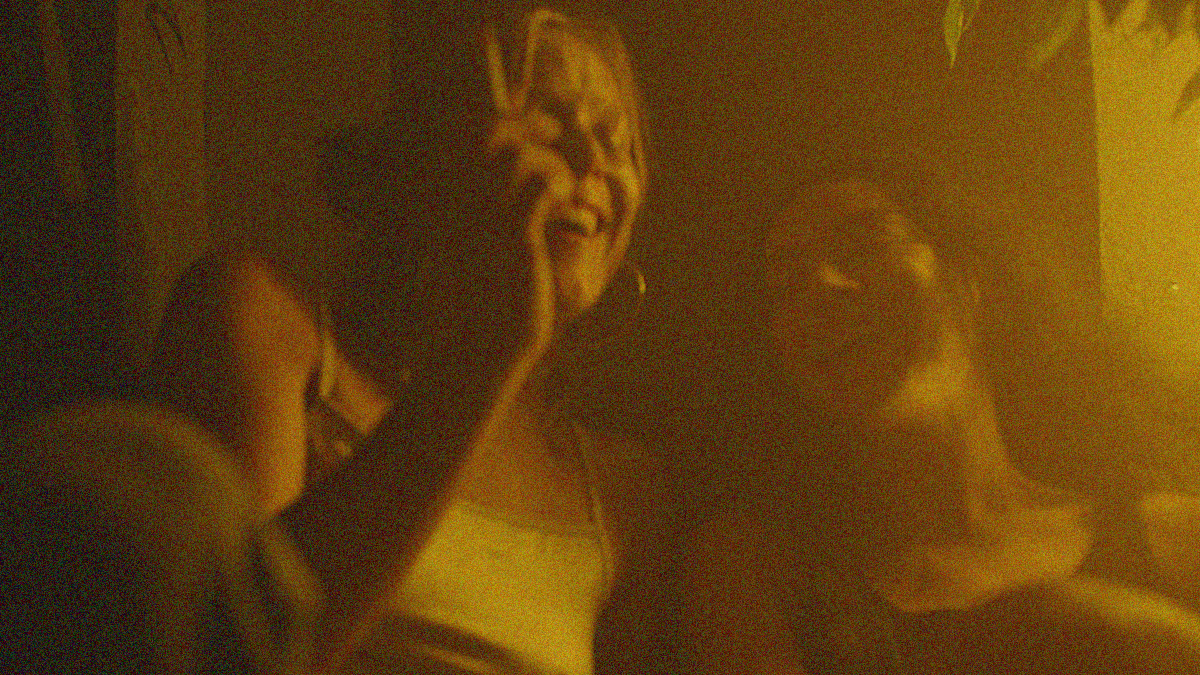
"We have fun with the ladies. Suffer the disappointment of their significant others. And find solace in Nel and Rob’s mutual desire to keep orbiting Bethany despite the heat. Sometimes we become too mesmerized to remember to run."
– Full thoughts at The Film Stage.
Humboldt USA

No one has had more named after him on Earth than Alexander von Humboldt, yet few people know who he was. I had zero clue despite living in a suburb of Buffalo, NY—a city where the Kensington Expressway was literally carved out of Humboldt Parkway, destroying a serenely green portion of the region to ease automotive travel and increase air pollution in the 1960s. To me it was just a name like any other. To filmmaker G. Anthony Svatek it's a scientific legacy.
His essay film Humboldt USA is therefore a way into how the 19th century German "queer naturalist and visionary ecologist" impacted spaces well outside the realm of his studies and era. Svatek focuses on three American namesakes to do so: Nevada's Humboldt County, California's Humboldt Redwoods, and Buffalo's Humboldt Parkway. Using the scientist's own anti-colonial words about "interconnectedness" and nature, we glimpse inside their respective histories.
It's an intriguing experiment wherein Humboldt becomes a thematic through line if not the actual subject himself. Svatek is extrapolating via hypothetical questions to discover if people in power might have utilized Humboldt's concepts to enact policies and actions that went against his ethos. How the results might therefore prove antithetical to him despite becoming synonymous via a shared name. And how people strive to counter the damage wrought today.
You have cowboy environmentalists rescuing bighorn sheep to reintroduce them into Nevada reservations. Chris Birke and Emily Soward use machine learning technology to better connect to the Redwood ecosystem as a means of "talking to the trees" despite that same technology exacerbating mankind's isolationism and the destruction of forests. And Buffalonians Terry Robinson and Marcia Ladiana fighting New York's "toxic tunnel" project.
Svatek moves back and forth in a constant rhythm to create a three-act triptych. First, we meet those in each place from Nevada to California to Buffalo. Then we learn a bit about their process to enact change in the same order. And, finally, we find ourselves facing the potential impact of their work. Nevada shows actual results. California progresses to a point where the idea might bear fruit. And Buffalo reminds us how the machine is often still stronger than our idealism.
There are also some supporting characters adding personality on a smaller scale like Buffalo's Angel Artis working and teaching at the local Science Museum and Redwoods park ranger Griff Griffith having a lot of fun making TikToks to try and breakthrough the algorithm to reach a new generation of environmentalists. The latter epitomizes Svatek's thesis in many ways by exposing how social media's ability to connect the world is throttled for capitalist gains.
Humboldt USA proves a fascinating work that seeks to have its audience ask their own questions about what's on-screen and similar happenings they might have seen themselves. It asks us to look beyond the simplicity of a "good" idea (putting a roof over the Kensington to restore green space) and consider whether the ramifications are worse (even higher pollution). Where does progress become exploitation? When is a name not just a name?
6/10
Summer Lost
Julie's (Michaela Walton) wedding weekend is not going well. Her maid of honor just canceled because her father had a stroke. Her brother (Ryan Austin's Nick) just admitted that he mentioned the event to an aunt and therefore probably gave their own estranged father a heads up to make a problematic appearance. And the groom (Zach Strum's Patrick) has pretty much proven he can't be trusted to follow even the simplest instructions.
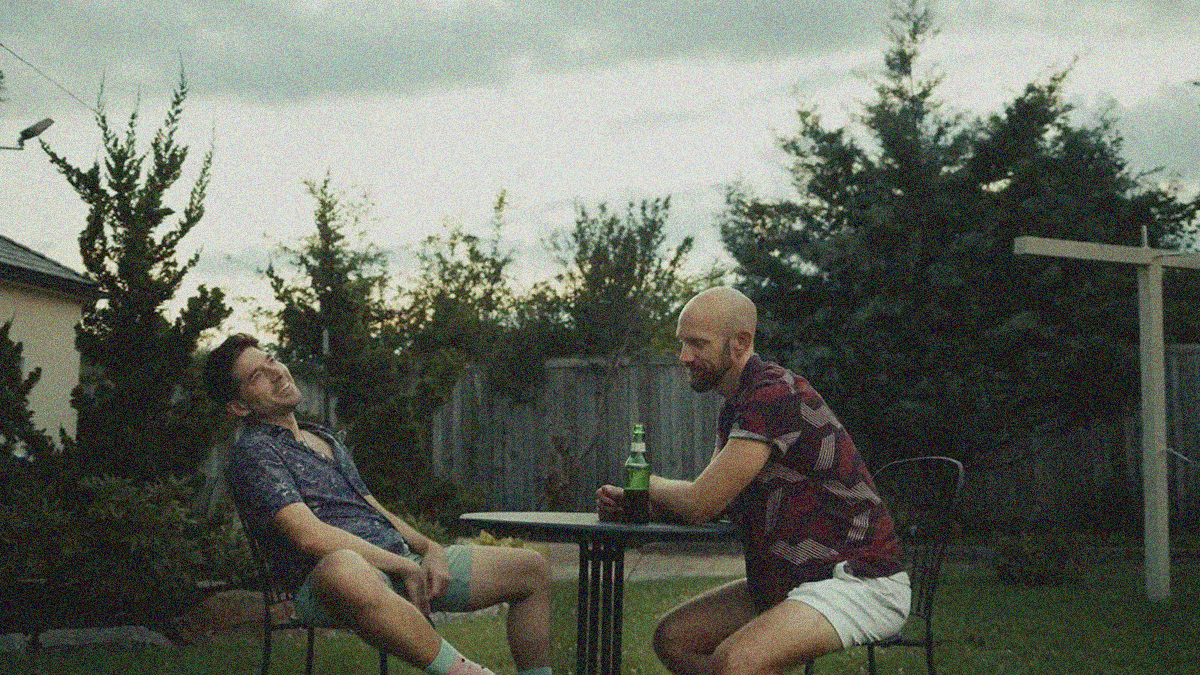
Despite this implosion, however, Julie still takes the time to check in on the wellbeing of both Nick and the sole guest invited to attend (Eduardo José Paco Mateo's Jordi). We actually meet the latter first as he wakes from a dream that leaves him (and us) disoriented considering it seems he was thinking about someone he hasn't met yet. We can't therefore ignore the air of destiny once he shakes Nick's hand. Two grieving men perhaps finding a moment of joy.
Writer/director Timothy Hall uses Julie as our entry point into Jordi and Nick's lives during the first act of Summer Lost. In order to distract herself from her own struggle, she worries about them—as much out of a desire to see them happy and to guess whether they'll survive without her if she just calls this whole celebration off. It almost feels like she planned this wedding as a covert meet cute. Get her two favorite men in a room and watch sparks fly.
So, don't be surprised when she disappears without a second thought. Julie is simultaneously the catalyst for the romance that follows and Hall's device to let the film find its stride before giving us all the information necessary to fully comprehend the dynamic at play. Because there's a version of this plot wherein we discover one of the characters is a ghost if not for her third party interacting with both potential candidates separately from the other.
The cyclical nature of the narrative and its superficially confusing shifts in perspective are therefore intentional. The doubling of names. The sorrow of loss. Jordi's voiceovers playing atop lower fidelity footage that seem to be capturing a time that either occurred before the wedding excursion or will still after. Because the tragic fact at the center of the story is a terminal diagnosis that carries memory loss. There is no past or future for Jordi. There's only today.
Our investment is as much about the blossoming romance as the timeline. Are we watching Jordi and Nick meet for the first time? Will we discover this has all happened before? Does it even matter? Hall is neither trying to trick us nor being withholding. He's merely answering that third question with a resounding, "No." He's revealing the power of love as an emotion that transcends reason and fear. He portrays it as an inevitability.
It's how he portrays that sense of fear too considering what a relationship with a dying man guaranteed to forget his lover means for the survivor. How he does so just might not be how you assume. Not because Jordi doesn't battle his impulse to leave Nick and save him from the pain of what's coming. That's here too. I mean the care with which Hall treats Nick's own insecurities. How it's Nick who tries to push Jordi away before he knows of the threat.
We're watching a man afraid of becoming a coward like his father and another who refuses to be afraid of his mother's tragic fate with illness. The former fears living because he might let those he meets down. The latter fears not living because he knows he's doing it on borrowed time. It's a perfect match insofar as Jordi having the lust for adventure to coax Nick from his head and Nick knowing that true love means not running away when things get too hard.
Summer Lost isn't just the nonlinear gimmick of its premise. It's a romance that seeks to highlight the honesty in love's complex and often messy drama. Hall is keen to supply external examples to do so that infer upon the main duo's psyche (Nick's father), add levity (a Motherboy to make Lucille Bluth proud), and foreshadow how unavoidable frustrations can be survived if you're willing to do the work (Julie and Patrick). Each is relevant to Jordi and Nick's coupling.
In the end, it's the compassion, fun, and uncertainty traversed by Mateo and Austin during multiple moments upon the timeline of Jordi and Nick's life together that rise to the top. Their performances feel authentic in their shyly awkward interactions as much as their emotionally charged heart-to-hearts. We can sense their intrinsic bond when they've just met as deeply as when they've been together for months ... and when they meet for the first time again.
7/10
The Travel Companion
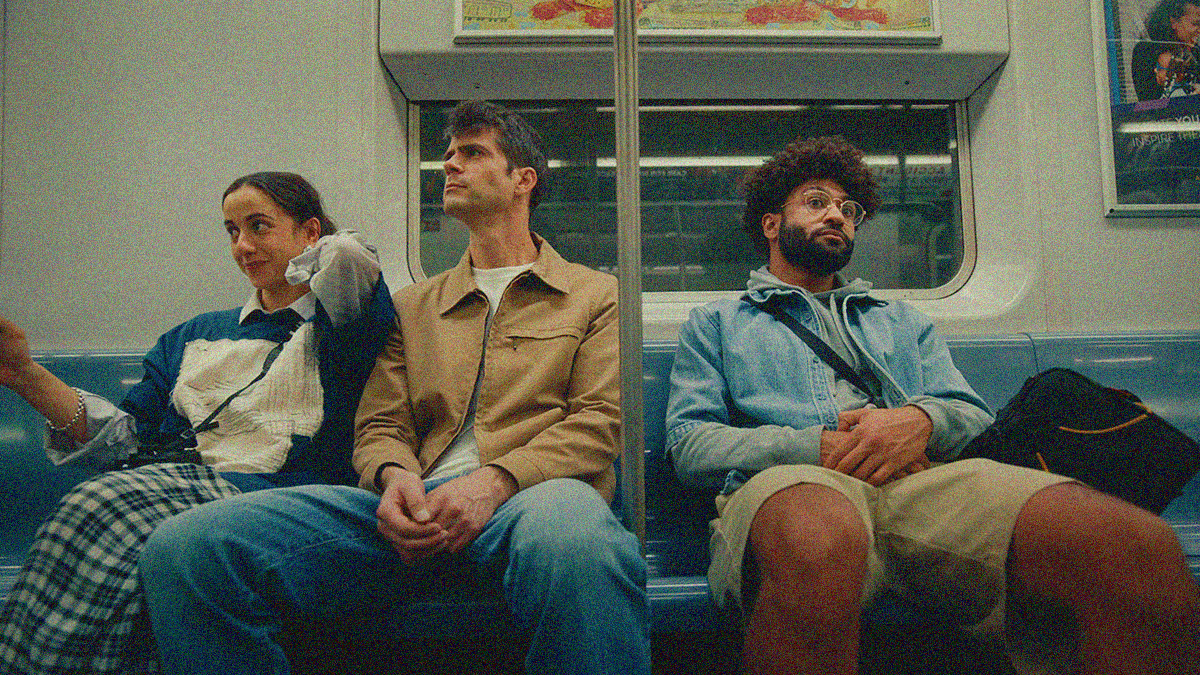
The world is out to get Simon (Tristan Turner). At least, that's his interpretation of what's happening. It's the industry not noticing him that's forced him to milk screening his thesis short at festivals for two years. It's the grind to survive in New York City that's prevented him from drilling down and focusing on his new idea. And now it's his best friend and roommate's girlfriend who's stealing the one thing Simon did have: free airline travel to feed his procrastination.
Alex Mallis and Travis Wood (who write alongside Weston Auburn) have crafted a comedic look at how we often become so wrapped up in our artistic ambitions that we stop being able to recognize it's not the world's responsibility to care about them too. Based on Wood's own experiences, The Travel Companion presents a character that literally cannot see past his own nose. Despite what many believe, you don't need to be born into privilege to be entitled.
No, anxiety about money can sometimes prove just as fertile an environment as having money when it comes to forming a myopic viewpoint of life. While a nepo baby can demand things because they've only ever known unfettered access, a dreamer will demand them because they believe they've put in the time and effort to deserve that access. The latter see their own luck as a reward for doing it "the right way" and the luck of others as blatant theft.
Why does Simon deserve to be Bruce's (Anthony Oberbeck) travel companion (a special designation airline employees are allowed to give one person—usually a spouse—that grants them unlimited, free stand-by flights)? Because he's known him since third grade. He's put in the time. He buys him a sandwich after work. He pretends to care about his life in the pauses between talking about himself. So, who does Beatrice (Naomi Asa) think she is to take it away?
Well, not only is she Bruce's increasingly more serious girlfriend, but she's a budding filmmaker as well. It was Simon's latest screening where they both meet her, so he of course isn't against playing the not-quite-true card that he set them up as a reason why keeping his travel companion label is actually just common decency as a thank you for opening them up to love. It therefore only makes him angrier when her career starts to take off at the exact same time.
Beatrice quickly becomes the epitome of everything he hates rather than the proof that it's possible to achieve everything he loves because jealousy is easier to embrace than humility. Once that interpretation solidifies in Simon's brain, it proves impossible to stop the descent into Hell that awaits. His penchant for solipsistic tangents increases as he begins to put both feet in his mouth every time he talks instead of just one.
It's an uncomfortable phenomenon fostering a second-hand embarrassment that evolves as the film progresses. Because it's visible in the opening scene wherein a festival programmer invites the filmmakers of a shorts block to the front of the theater only to have Simon awkwardly be left out from talking. There's a self-deprecating nature to this example, though, as Bruce laughs with him about the absurdity of the scenario and Simon's admitted creative stasis.
Simon's loquaciousness is endearing at this point of the story because we are still able to accept the filter he's presented about his life. It's still a joke—one that he's in on. The more we spend time with him, however, the more that seems like us giving him a benefit of the doubt he did not earn. We begin to realize his entire outlook is one where he is the sun and everyone around him exists to either prop him up or tear him down (sometimes in succession).
It can get pretty off-putting once Simon inevitably crosses that point of no return where forgiveness is concerned. That's not inherently a bad thing, but I've always found it difficult to stay invested in this type of story when there's no desire to let the main character get out of his own way. This is especially true when you have Beatrice right there to prove it doesn't need to be that way. I prayed she and Bruce would love themselves enough to escape his orbit.
That also is a relevant direction as a commentary on our ability to push our biggest champions away because they had the gall to live their lives on their own terms rather than ours, but I keep getting stuck on the directors talking about Simon and Bruce's friendship being "beyond its expiration date." That makes it seem like there's been a mutual miscommunication rather than a clear example of one side proving he's exploited their relationship the whole time.
I think that disparity is why The Travel Companion never quite sat perfectly for me. It's good and I like a lot of what it says, but there's a sense that we're meant to feel sorry for Simon that simply didn't jive with my experience with what's on-screen. That instead of realizing he's the wall preventing himself from growing, he's decided to conquer the wall they built to keep him down by building his own. It's the tale of a misanthrope morphing into his final form.
6/10
Two Women
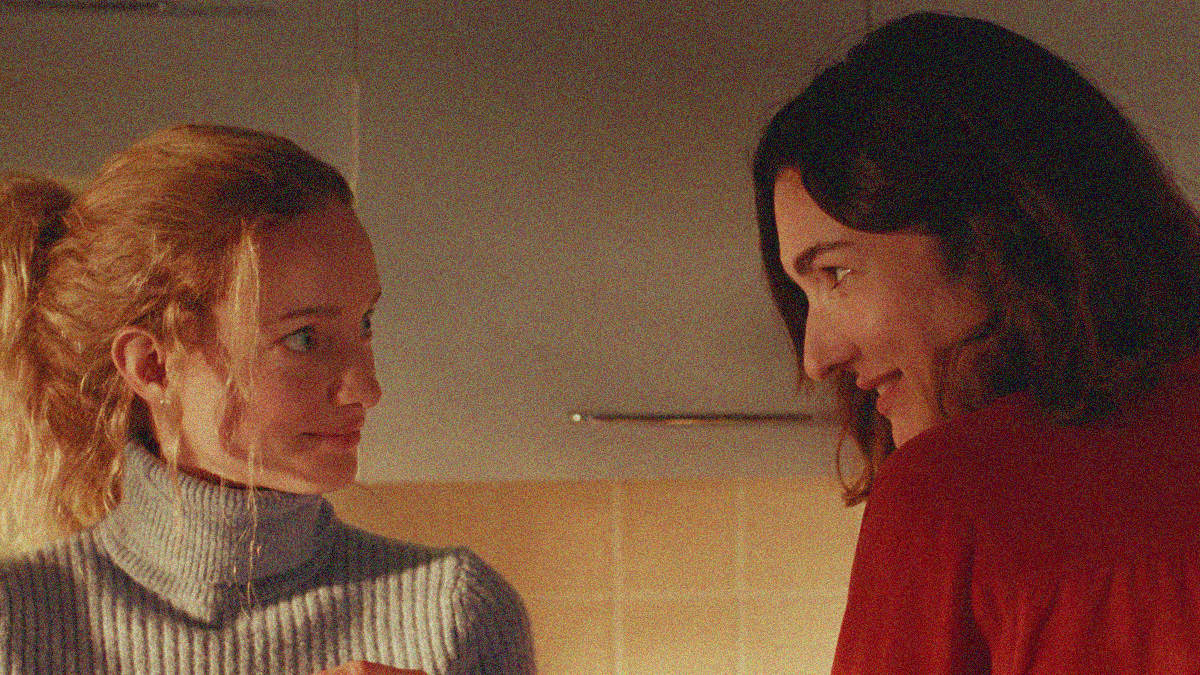
Sex is on Violette's (Laurence Leboeuf) mind as she tells her husband (Félix Moati's Benoit) about the crow she heard. He's not sure what she's talking about, so she starts to approximate the sound with a knowing look. Finally, she admits she really thinks it's the neighbor with whom they share a bedroom wall. Benoit is uncomfortable with the insinuation and leaves for a work trip shaking his head. Violette finds it frustratingly provocative enough to find out if it's true.
She's unaware that Florence (Karine Gonthier-Hyndman) and her boyfriend David (Mani Soleymanlou) haven't had sex in years. This admission isn't made with embarrassment, however. It's simply a fact. And since Violette and Benoit haven't since their baby's birth, the two women are able to laugh about it and joke that the crow might actually be young Jessica (Sophie Nélisse) across the apartment complex courtyard. They still hire an exterminator just in case.
This corvid call is the catalyst for everything that follows in Chloé Robichaud's Two Women, adapted by Catherine Léger from her own play that itself was inspired by the 1970 Claude Fournier comedy Two Women in Gold. Its similarity to orgasmic moans allows Violette and Florence the ability to admit their recent celibacy and discover that it's less a product of desire than situation. Yes, children can become a hindrance, but so too can pills, deception, and apathy.
Because it only takes one look at that exterminator (Maxime Le Flaguais) for both to discover their libidos are intact. Violette has no choice but to fantasize since Benoit is never home. Florence doesn't either since, despite her choice to stop taking anti-depressants with the goal of having sex, David has no interest. He thinks celibacy made their relationship better and decides to start taking anti-depressants to keep it up. Acting on that fantasy is therefore their only hope.
It's impossible not to laugh as these two couples traverse the landmines riddling their unions now that stagnancy has set in. As is common in such stories, we watch the women confide in each other, the men doing the same, and their collective inability to stop being withholding from their respective partners. Because what is the obvious result of finding what they want outside their coupling? Joy. Enough to make those couplings joyful again too.
That's the magic of liberation. It's as though a weight has been lifted once Florence and Violette break free from the social constraints of monogamy to rekindle their sexuality on their own terms now that their men have already done the same without them (Benoit via an affair with Juliette Gariépy's pragmatically blunt co-worker Eli and David with his greenhouse plants). Is the extramarital sex with a revolving door of tradesmen sustainable? Who cares?
This isn't about sustainability. It's about escaping the prisons their homes have become now that motherhood paused their careers (the hamster is more than a pet metaphorically). It's about tearing down the hypocrisy of the patriarchy (Benoit finding out things about his wife through his mistress that he should have already known and getting angry how they make him look). It's about putting themselves first ... even if they discover that means going back to the status quo.
That last part is what makes the film so great. There are no moral judgments happening. No need for punitive measures. The reasons they've all strayed might not be equal, but the result is. So, the sex (or botany in David's case) is as much a therapeutic necessity as the prescription drugs. It allows them to take stock in what they have and what they want in order to figure out if an overlap remains. Is it realistic? Maybe not. But that's never been a prerequisite for a sex romp.
Where do the emotional and psychological benefits of their unions rate? Is looking the other way on the affairs worth not dissolving their love? Does the hollowness of those affairs (either planned in the women's case or discovered in Benoit's) remind them that they are already with someone to whom they're sexually attractive on top of the familial bond? There's no right answer and the film refuses to pretend the opposite.
Gonthier-Hyndman and Leboeuf are both fantastic as they seek to balance the scales of their lives. The way they go overboard flirting with the men they've invited into their homes under false pretenses to ensure there's no confusion about consent (well ... at least for those who aren't oblivious like Fabien Cloutier). Their interactions with each other upon discovering a kindred spirit desperate to live. And their newfound lack of inhibition bleeding into their day-to-day.
Moati and Soleymanlou are great too in their obliviousness and self-sabotage. The nameless men being used as disposable sex objects all embrace the gender-swapping of the trope. And Gariépy's unwaveringly confident cool really stands out as both an overall aspiration as far as knowing what she wants and not being afraid to pursue it and the epitome of a weak man's (like Benoit) worst nightmare (a woman they can't control). Robichaud and Léger cover all their bases.
8/10

This week saw Little Murders (1971) added to the archive (cinematicfbombs.com).
Vincent Gardenia drops an fbomb in LITTLE MURDERS.

Opening Buffalo-area theaters 4/24/26 -
• Desert Warrior at Regal Elmwood, Transit, Galleria, Quaker
• Fight Club 4K Remaster at Regal Elmwood, Transit, Galleria, Quaker
• Fuze at Scene One Market Arcade; Regal Elmwood, Transit, Galleria, Quaker
"Every maneuver places us front of mind to surprise, reward, or confuse. It’s a highly addictive candy bar of a movie that should satisfy anyone’s sweet tooth." – Full thoughts at The Film Stage.
• Ginny Wedss Sunny 2 at Regal Elmwood
• I Swear at Dipson Flix, Capitol; Scene One Market Arcade; Regal Elmwood, Transit, Galleria, Quaker
"It’s a delicate subject handled with great sensitivity, humor, and intelligence by Jones. Bringing this film into the world only helps expand the reach of [John's] quest to educate, inspire, and protect." – Full thoughts at HHYS.
• Michael at Dipson Amherst, Flix, Capitol; AMC Maple Ridge; Scene One Market Arcade; Regal Elmwood, Transit, Galleria, Quaker
• Mother Mary at Dipson Capitol; Regal Elmwood, Transit, Galleria, Quaker
• Original Sound at Regal Transit
• Over Your Dead Body at Dipson Flix, Capitol; Scene One Market Arcade; Regal Elmwood, Transit, Galleria, Quaker
• Rakkhosh at Regal Elmwood
• Whisper of the Heart 4K at Regal Transit
Streaming from 4/24/26 -
• Agon (MUBI) - 4/24
• Apex (Netflix) - 4/24
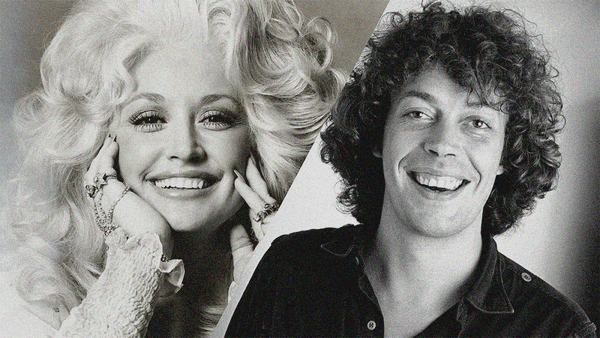
• Dolly (Shudder) - 4/24
• Marty Supreme (HBO Max) - 4/24
"There's too much happening. Yes, it conveniently meshes to give each insane cameo purpose, but more as an exhilarating stunt than anything else. That's great for a technical showcase, but I could only invest in Odessa A'zion's Rachel. Intentionally so." – Quick thoughts at HHYS.
• No Other Choice (Hulu) - 4/24
"Park and company do a great job juggling all these threads into a coherent whole with fun connections that lead to hilarious misunderstandings and wild epiphanies insofar as how to better commit the crimes." – Full thoughts at HHYS.
• Sound of Falling (MUBI) - 4/24
"I couldn’t quite vibe with the pacing or structure due to never quite knowing who was talking. But my God was this a gorgeous work of sensory cinema." – Quick thoughts at HHYS.
• Silent Night, Deadly Night (Shudder) - 4/28
• Je m’appelle Agneta (Netflix) – 4/29
Now on VOD/Digital HD -
• Weekend at the End of the World (4/20)
• Late Shift (4/21)
• I Live Here Now (4/21)
"I Live Here Now never tries to hide its metaphor yet still ensures our interpretation comes from within rather than from the filmmaker. Your mileage may therefore vary, but you cannot deny its power." – Full thoughts at The Film Stage.
• The King of Color (4/21)
• Protector (4/21)
• The Serpent's Skin (4/21)
"By supplying its messaging via universally understood packaging, maybe its intent can be better absorbed too. The final product is quite messy, but its earnest desire to open minds is not." – Full thoughts at HHYS.
• Tow (4/21)
"The scene where Amanda does share with the group is the standout moment because the whole thing is working towards that release, but also because Byrne imbues it with an authenticity that rises above the obvious pathway there." – Full thoughts at HHYS.
• Dirty Hands (4/24)
• My Own Normal (4/24)
• Pretty Ugly: The Story of the Lunachicks (4/24)
• Sound of Falling (4/24)
"I couldn’t quite vibe with the pacing or structure due to never quite knowing who was talking. But my God was this a gorgeous work of sensory cinema." – Quick thoughts at HHYS.
• The Wolf and the Lamb (4/24)

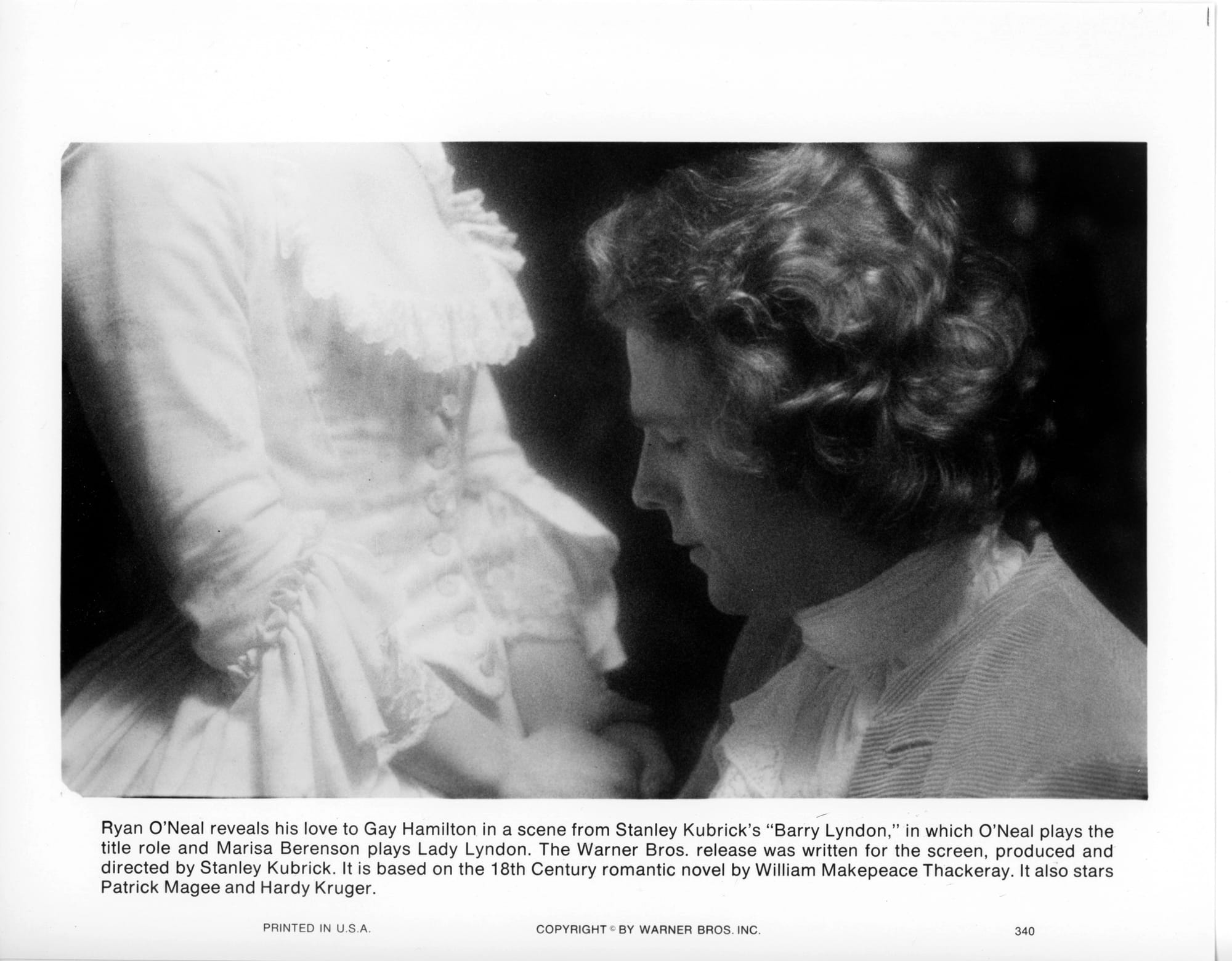
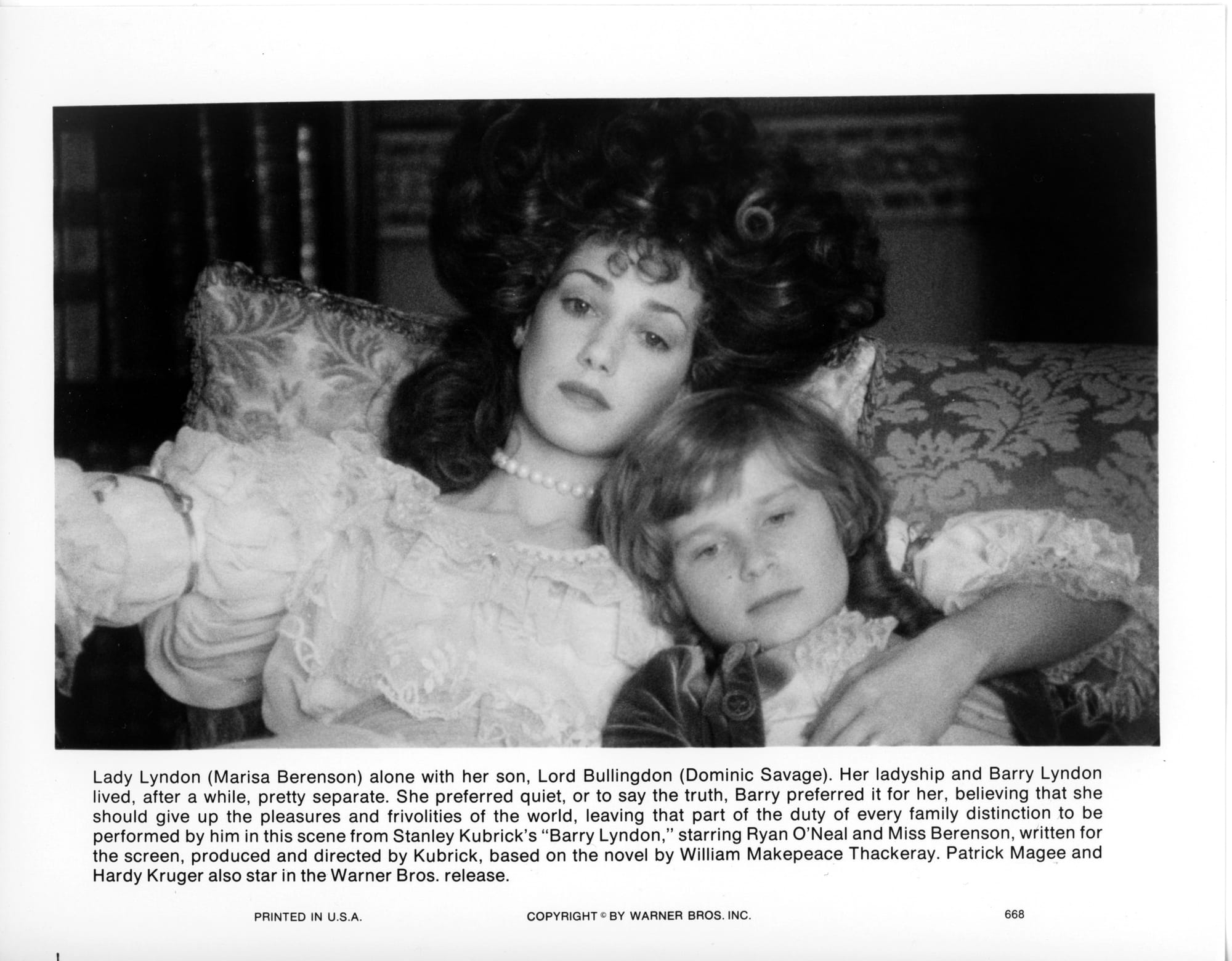
Pieces from the Barry Lyndon (1975) press kit.