TIFF 2026: Day Eight
Market woes


A lot has been said about TIFF 2026 due to its full shift towards an industry market. I say "full" because there have been market screenings for years. I remember watching some in 2020 when the festival went virtual because we had access to all titles. The change was that all market pass holders were now allowed to attend press screenings as though they were members of the press.
Even that is reductive since certain passes could already do that. My main gripe was therefore less about the who than it was the when. Because this new marketplace for non-festival titles to sell in Toronto also meant fewer screens for festival selections. In order to fit them in, press screenings were reduced to one per title (beyond a select few Canadian productions). Yes, some hot tickets had a second showing added this week, but that used to be an additional third in years past.
So, did anything really change? Like really, really? I know my experience didn't. This was my twentieth year and it felt just like the past four post-COVID shutdown. Even the people complaining about the new phone verbiage were wrong to blame it on the market since that verbiage changed at least three years ago. TIFF has been skewing towards buyers and sellers over press and public for quite some time.
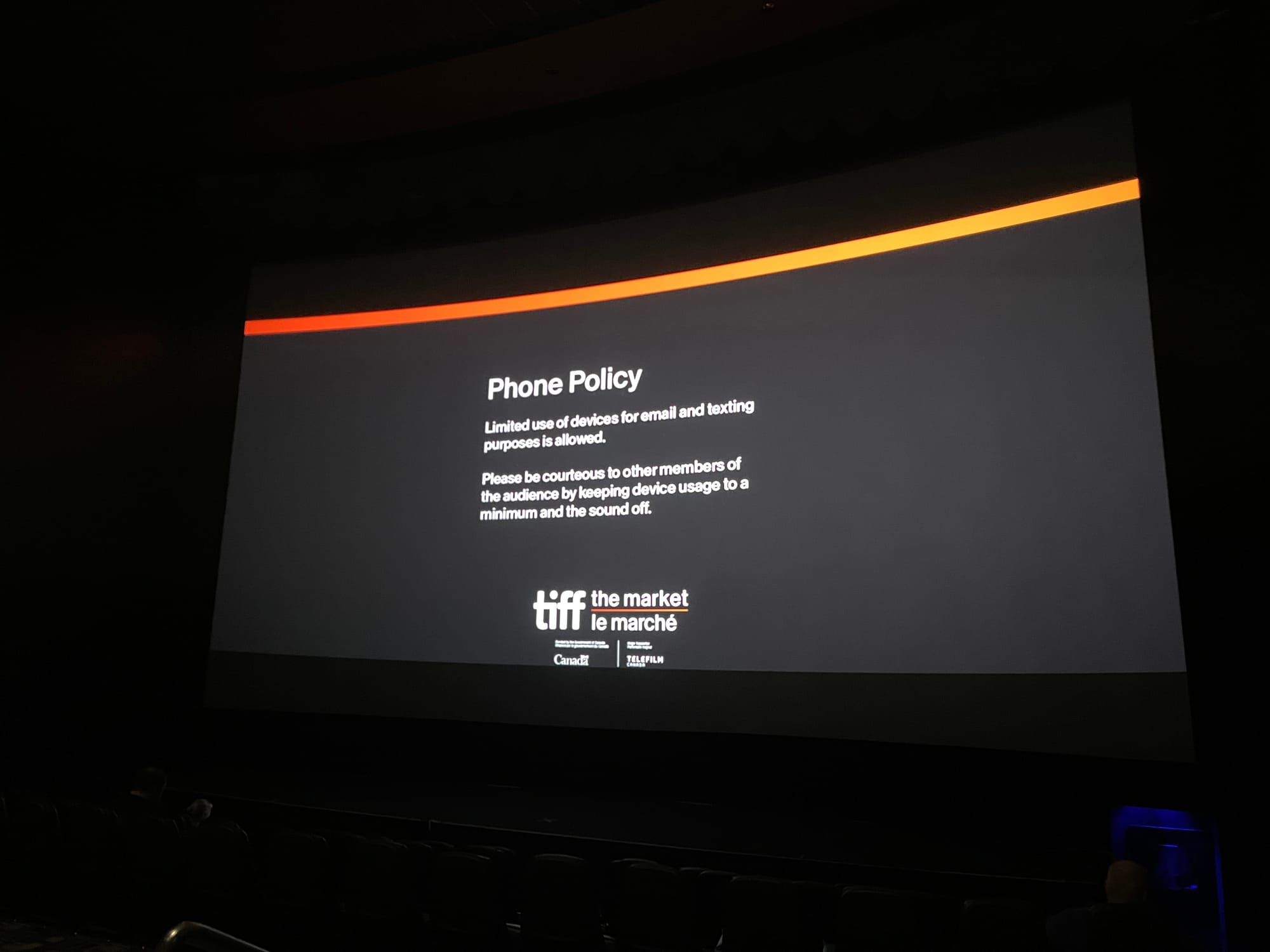
What I will get behind, however, is the changing atmosphere in press screenings due to the influx of influencers earning badges. While not to the extent described here since Your Mother Your Mother Your Mother is ostensibly playing for laughs, I'd be lying if I didn't scratch my head at just how loud those laughs were. So loud that I missed a ton of dialogue—proving the filmmakers didn't anticipate the moment to be treated like a studio romp that times their pauses.
It didn't ruin the experience. I was laughing too. Not as though I was being paid for the decibel level, but funny is funny. And I can still fear what this might mean moving forward ... even though, again, it's not necessarily new.
One of my worst movie-going experiences was September 30, 2005 at an AMC here in Buffalo. The film was A History of Violence—a title best served by an indie theater audience. Well, on this opening night in an almost sold-out multiplex, the crowd went wild. I thought I was in an episode of "The Twilight Zone" the way they were guffawing. Was it earnest? Ironic? I don't know. I've never let myself watch it again to find out if it truly was the comedy of the year.
Today's schedule:
• Bleeding Hearts, d. Andrew Morgan | TIFF Docs | United States of America | English
• Happily Ever After, d. Feng-I Fiona Roan | Special Presentations | Taiwan | Chinese

Conversation with the Sea
حوار مع البحر
CENTREPIECE
North American Premiere | September 16 | Palestine | Arabic, Hebrew, English
_____
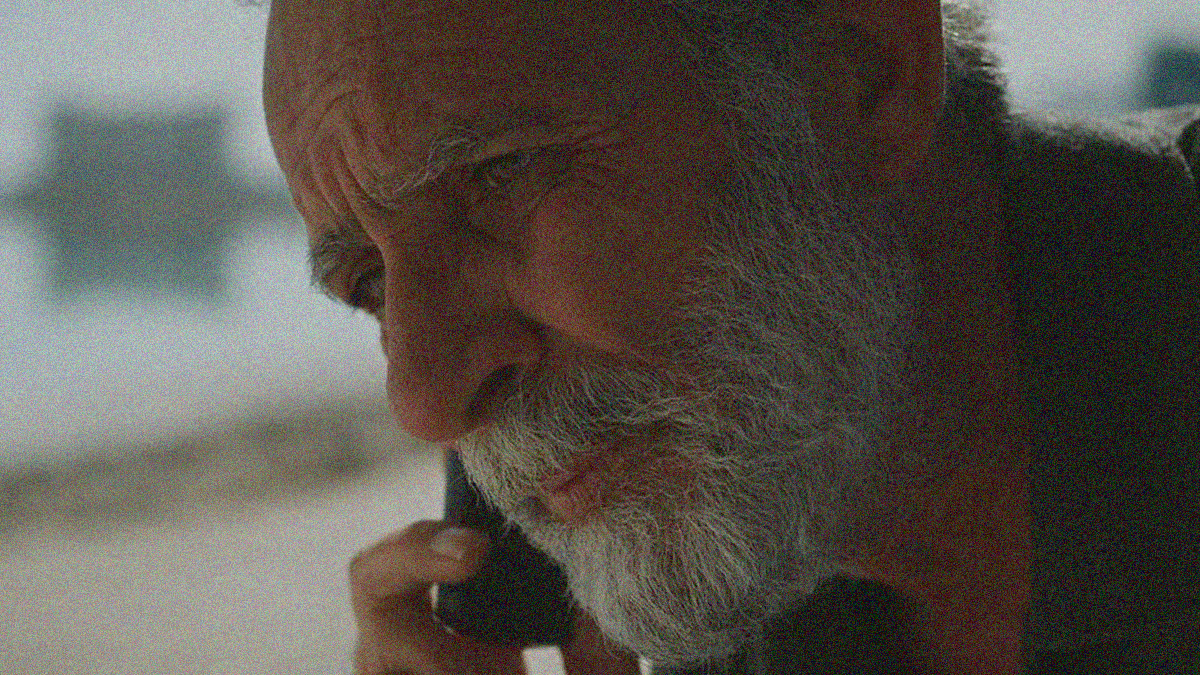
When Kamal Hamed (Kamel El Basha) answers a knock at his door to find an Israeli officer accompanied by two IDF soldiers, you can imagine his paranoia as far as asking why they want him to sign the papers they've delivered. We know they wouldn't explain what was in the letter regardless of whether they could because doing so would mean showing this Palestinian a shred of humanity. They simply turn and impatiently walk away instead.
It's the first of many instances of micro and macro aggressions shown to Kamal by the many Israelis he meets along his journey to discover the truth of what happened to his son Wael twenty years prior. Because this isn't just a movie about a father coming to terms with the guilt and regret of his past. It's also a story centered upon the violence of living within an occupied Apartheid state and the ways in which it destroys your body, mind, and soul.
Muayad Alayan's Conversation with the Sea (co-written by his brother Rami) is ignited by Kamal's receipt of that letter. It's a court order telling him he owes a substantial amount of money in Wael's name—years of unpaid social security taxes and interest. The Israeli government threatens to send a collection agency to Kamal's home if he doesn't comply, but it's all a big misunderstanding. Wael died before ever reaching the age necessary to owe anything.
The whole ordeal is frustrating because Kamal shouldn't need to prove his son's death to an institution that tells the world it knows everything going on within its borders. He understands the truth that his son being an Arab meant they never bothered to ensure the correct protocols were followed. And, since they absolve themselves of any wrongdoing, they don't think it's their responsibility to figure out the truth now. It's on Kamal to confirm the error.
Frustration soon turns to anguish because doing so means opening old wounds. That's not to say they were ever closed considering Kamal still lives in a neighborhood of people who hate him while his daughter Wafa (Bahira Ablassi) refuses to pick up the phone when he calls. But whatever peace he had found by accepting that fate is now thrown completely out the window upon realizing what he knew about Wael's demise might not have been accurate.
Kamal wasn't there to see it first-hand. He took it on faith that his late wife identified the body and buried him according to custom. But what if she were wrong? What if she lied? To look at the police photos of Wael's drowning is to see a body so mangled that he cannot recognize his son's face. Either that means this "accident" was actually a cover-up for a potential murder or he might still be alive somewhere. Maybe that fine is Kamal's to pay after all.
So, he searches for answers with the help of a sympathetic lawyer (Amer Hlehel's Fathi) who understands the nuance of his tragic existence. It's on this quest that we start to fill in the contextual blanks of why Kamal wasn't around courtesy of the justifiably angry figures from his past that he must speak with to uncover new clues. Where he was. What he did. Why it feels disrespectful since he never bothered to inquire until now.
We also begin sensing what life as an Arab in Jerusalem means. The mix of beauty and sadness Kamal and Einat (Rebecca Esmeralda Telhami as someone who might have been present the day Wael died or disappeared) both speak about. The juxtaposition the "great view" out Kamal's window with the concrete walls separating the city's two classes of citizens. The knee-jerk impulse by Israelis to see Kamal darkening their door and choose hostility as a response.
Some of it is overt, like a woman demanding to see his ID card or a man shoving him off his porch. Some is insidious like a grinning man inviting Kamal into his home to wait before treating him to faux intellectual arguments about Palestinians based on the false premise that assimilation is good ... all while showing off his authentic Gazan wine cask like a trophy. Kamal can't even ride a bus without wondering if the IDF will raise their AK47s at him.
It's that same fear that inevitably assisted in the confusion surrounding Wael's tragedy. Truth in a place like Israel is dictated on who is talking rather than the facts. One cannot simply worry about seeking justice when that very act can be twisted into the sort of rebellious defiance that finds them going to jail for speaking. So, Kamal must break through the subterfuge with a little bit of luck to achieve his goal and, hopefully, lift a weight from his heart.
El Basha delivers a devastating performance in the lead. The ways in which he is compelled to constantly look downwards with a sheepish unease to not incite a quarrel with entitled Israelis who hate him for his skin color, language, and religion or incensed neighbors who hate him for his actions. The desperation and pain of a father yearning for forgiveness despite knowing he doesn't deserve it. The determination to see this thing through no matter what.
Conversation with the Sea is an emotionally complex drama that pulls no punches when it comes to judging its flawed protagonist because he should be judged regardless of the external complications that drove him to do what he did. Give Alayan a ton of credit for portraying the harsh reality of living in Israel as a Palestinian (much like himself) without simply using it as a catchall excuse. Life isn't that easily drawn. It often messily confuses survival with cowardice.
A later montage of characters staring solemnly into the distance reminded me of the "Wise Up" scene in Paul Thomas Anderson's Magnolia. All these brief glimpses of tortured souls (Palestinians and Israelis alike) trying to exist in a world that demands they walk on eggshells from birth. It closes with a calmer Kamal giving voice to his shame after finally realizing he let his anger at the world spill over onto his family. He let them win. Never again.
8/10
Djinn Wedding
Cinlerin Düğünü
PLATFORM
World Premiere | September 16 | Turkey | Turkish
_____
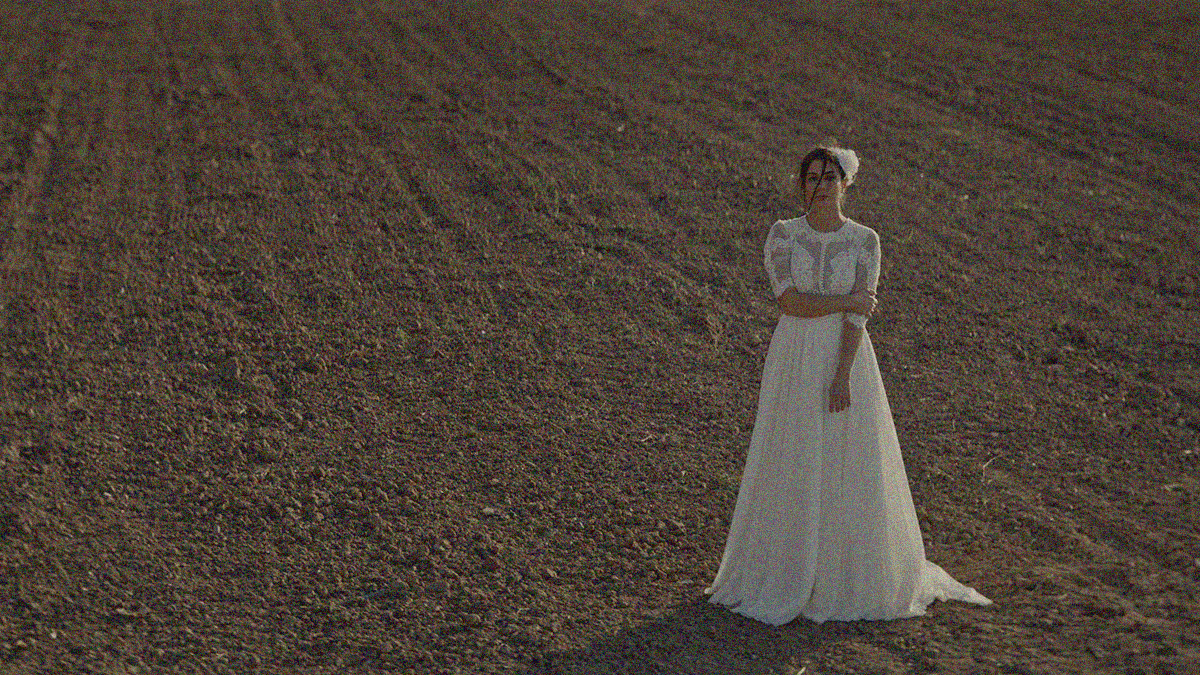
Time passes quickly in the remote Anatolian village that serves as the setting for Ferit Karahan's Djinn Wedding. Faster for us than the characters, surely. As each new chapter unfolds, a decade or more is wiped from the slate. When we first meet Ahmet's (Baki Davrak) family, they are moving into their new home with only two children. When we see them next, two have become four. From there it's a wedding. From there a funeral. And there's always a shooting star.
That star brings death ... and a horse. Could it be an omen? A djinn in animal form to guide its victims to the afterlife? Whichever the case, darkness follows this family everywhere due to their decision to claim a home that wasn't theirs to claim. No money exchanged hands and Ahmet's wife can sense the house still belongs to its former caretakers. Knowing it will therefore consume them as punishment, she begins eating from its deteriorating walls first.
From this prologue comes Chapter One: Angels. In it we find Deniz, Ceren, Halit, and Yasin playing by a stream with clear instructions from their father to not return home. We assume it's a punishment, but perhaps it's really a kindness considering the only thing they'd find is their mother on her deathbed surrounded by mourners. Is she a casualty of their theft? A victim of bad luck? The product of poverty? The vignette is less about her than the children.
Because this is where we catch our initial glimpse at their dynamic. Deniz and Ceren holding the responsibility as elders with the former holding the other two as lesser siblings being that they came much later. Halit's fear of his father causing him to stutter whenever speaking to him. And Yasin's developmental disability already proving an albatross Halit openly resents. They understand the hardship of their lives and wish for an escape.
Cue Chapter Two: Djinns. Here we witness the titular wedding with Ceren (Demet Özdemir) as the bride and Deniz (Ilhan Sen) traveling home to attend. The latter has already left to go to school thanks to Ahmet selling the majority of their land to pay for it. The former has chosen marriage less for love than her own opportunity to leave the countryside behind for the big city. And Halit (Kaan Yildirim) is left as the family mule earning to support them all.
It's this portion of the film that Karahan is really able to introduce the myriad ways life can kick you while you're already down. Now that the children are old enough to make their own decisions, they are forced to suffer the consequences. Because they've all sinned in some way. They've all done something to disappoint the collective whether it be family, community, or God. And they are all about to learn secrets others have kept from them.
Some of the latter are noticed right away. Some take a round of repetition via Chapter Three: Chains to fully comprehend the meaning of a revelation we might have dismissed as just a weird bit of dialogue. A supposed classmate of Deniz relaying how he's never seen him on campus versus the more cryptic "I was almost your mother." Religion, customs, and curses are talked about and lamented. Even the Imam (Erol Babaoğlu) gripes about his flock.
Most of what everyone says is a lie or taken as one. Many presume the worst or are willing to perform it. Greed plays a big role whether the Imam calling attention to the car he can't afford by complaining how everyone thinks he can't afford it or Halit feeling cheated by the fact he seems to be the only person earning money while everyone else spends it. When Deniz does choose to be altruistic, he ends up getting punched in the face for his trouble.
Are they all victims? To a point. If they admitted how they in turn also victimize others as badly or worse. But they never will because that's exactly what Karahan seeks to dissect. He's trying to find an answer to the question, "Can a person who refuses to acknowledge their own darkness ever truly change their fate?" And as the film progresses, no one really does. They just keep sleepwalking through lives that eventually leave them jaded, angry, and alone.
One character might prove the exception, but their prize is death. Maybe it's a relief since they are its cause. Or maybe it's merely another selfish act that sees them playing the victim while leaving everyone else to be victims of their choice. The fact that they have no legs to stand on themselves ends up rendering the purpose moot. Because each character steered the ship to its demise in equal measure. They've all made choices that destroyed another's hope.
Unless there's something supernatural at play. Shadows dancing around a bonfire at the sound of a gun or djinns possessing characters to spread their evil to anyone who gets too close. Karahan talks about the power of folklore to explain the unexplainable rather than replace fact with fiction. His motifs (the meteor, horse, etc.) aren't catalysts for horror as much as markers for the horror that is already unfolding. It's easier to blame ghosts than yourself.
Djinn Wedding therefore proves as confounding in parts as it does mesmerizing in others. The acting is superb across the board. The cinematography is filled with slow pans mirroring the sense of defeat felt by everyone. And the script is chock full of cyclical lines of dialogue and corresponding actions that will have you fearing for those on the receiving end—innocent souls trapped in a life set to beat them down suddenly saddled with the same curse as the giver.
But it's not about the people. It's about the place. It's about the harsh reality of being born in the Middle East amidst war and oppressive regimes with no means of escape due to corruption, economic duress, and a lack of education. In many ways Ahmet's four children represent the four futures at their disposal. Four different short straw variations: health, gender, circumstance, and expectation. The djinns can retire. We create our own suffering now.
8/10
Memories of a Forest
Erinnerungen eines Waldes
DISCOVERY
International Premiere | September 16 | Germany, Austria | German
_____
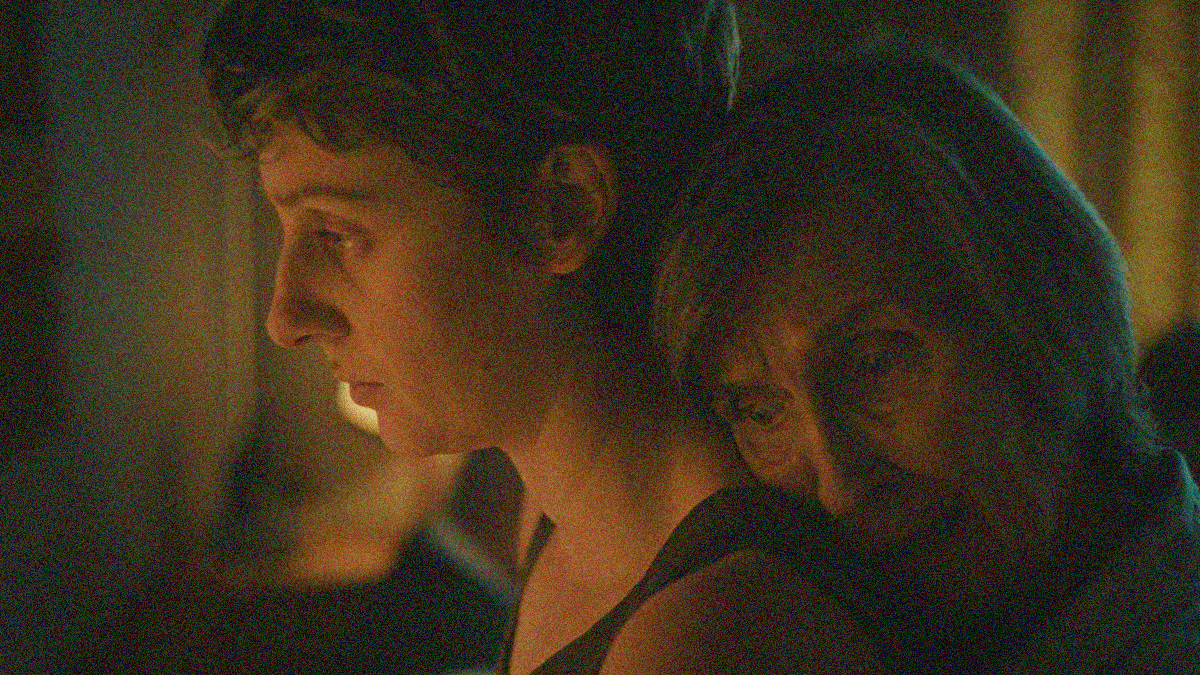
Frieda (Julia Windischbauer) is on the cusp of seeing all her hard work payoff when she receives a phone call from her mother (Johanna Orsini's Johanna). Just days from handing in her thesis and being offered a job at the university that's contingent on its timely receipt, she's forced to return to the village where she grew up to mourn the death of her grandmother. The plan is to spend two nights, attend the wake, and get back to work on her new life.
Considering the cold reception she's met with by her mother at the train station, I don't necessarily blame her for wanting to get out as soon as possible. The sole person to hug Frieda that first night is Margarete (Linde Prelog), but only because she's old and confused and thinks she's her grandmother finally arriving for some yet unknown appointment. Does Johanna resent her daughter for leaving? Has the grief taken over? Or is it the product of an arduous life?
We're unsure at the start of Katharina Rabl's Memories of a Forest (co-written by Karla Cristóbal) because Frieda mostly exacerbates the already icy dynamic when it's discovered she will be inheriting the family forest rather than her mom. As with most of the tension on-screen, however, Johanna's reaction to the news is less out of jealousy than utility since she and Alex (Dominik Warta) are struggling to make ends meet.
Would they ever ask Frieda for help? Absolutely not. Whether pride or custom (Johanna is a stickler for the latter, even making Alex print their own death notices to pass out to the neighbors), they simply argue behind closed doors until Frieda decides for them. She will spend the next couple days felling trees to sell the lumber and pay for the funeral. She'll embrace this duty to the family and harbor no regrets upon leaving shortly afterwards.
That's easier said than done, however, when the extra time ensures Frieda stumbles upon new information about their shared past and troubling future. It all comes back to Margarete and her inability to stop thinking Frieda is her friend arriving decades ago. Because it's not just that they look alike or share the same "stubbornness" as an acquaintance notes. No, it's because Rabl has crafted this narrative as a mirror upon two distinct yet similar decisions to stay.
It's through the gradual reveal of Frieda's grandmother's past through old letters and the stark reality that this forest meant to provide new generations with financial stability has been caught in an environmental crisis halving its value. Themes of inheritance, preservation, and hope unearth feelings of divestment, destruction, and regret. What if Johanna's disposition towards Frieda is a product of the relationship she had with her own mother?
We see what life could have been. Margarete's grandson Friedrich (Lukas Walcher) and Frieda obviously have a history that could have seen them caring out the legacies of both their grandmothers. But she's in Vienna now. He's married with a child. Whereas we can tell they are thinking about what might have been while spending time in the forest, Johanna isn't. This isn't a clichéd drama where she's trying to get them together to fulfill her own fantasy.
On the contrary. Johanna doesn't act as if she wants Frieda to stay at all. What we initially believe is animosity is inevitably revealed as something else in a very memorable record scratch expression upon hearing Frieda has decided to put her life on hold to stay. We anticipate a smile. Words to the effect of "finally you're thinking about us." We receive a look of disappointment instead. Horror even. Suddenly, it clicks. Johanna doesn't want her daughter suffering her fate.
It's a heartbreaking discovery within a film that holds many. That doesn't mean Memories of a Forest isn't still an extremely optimistic and hopeful story, though. It simply wields this undercurrent of truth to push mother and daughter to a place where they are able to have a real conversation and figure out where the other is coming from. And it allows certain discoveries to recontextualize long-held assumptions. No detail is too small to cause a crucial ripple effect.
Windischbauer and Orsini are great in these roles that seem to diverge and contract with each passing day as motivations and desires align or separate. It's Frieda's grandmother who serves as the catalyst to this ebb and flow despite her absence since she remains a driving force in both their lives via the forest, her surprise burial request, and a choice made long ago. Will Frieda make the same one? That's the million-dollar question.
Don't take it literally, though. Just because the decision faced seems similar as far as returning to the family farm to fulfill obligations doesn't mean they're the same. Because Frieda's grandmother didn't choose it despite her desires. Johanna thinks that was the case and has acted accordingly her entire life. What if she chose it because it was what she truly wanted? If that's true, Frieda's decision isn't about a place. It's about a life. Wherever it leads will become home.
7/10
The World Before
첫세계
PLATFORM
World Premiere | September 16 | South Korea | Korean
_____
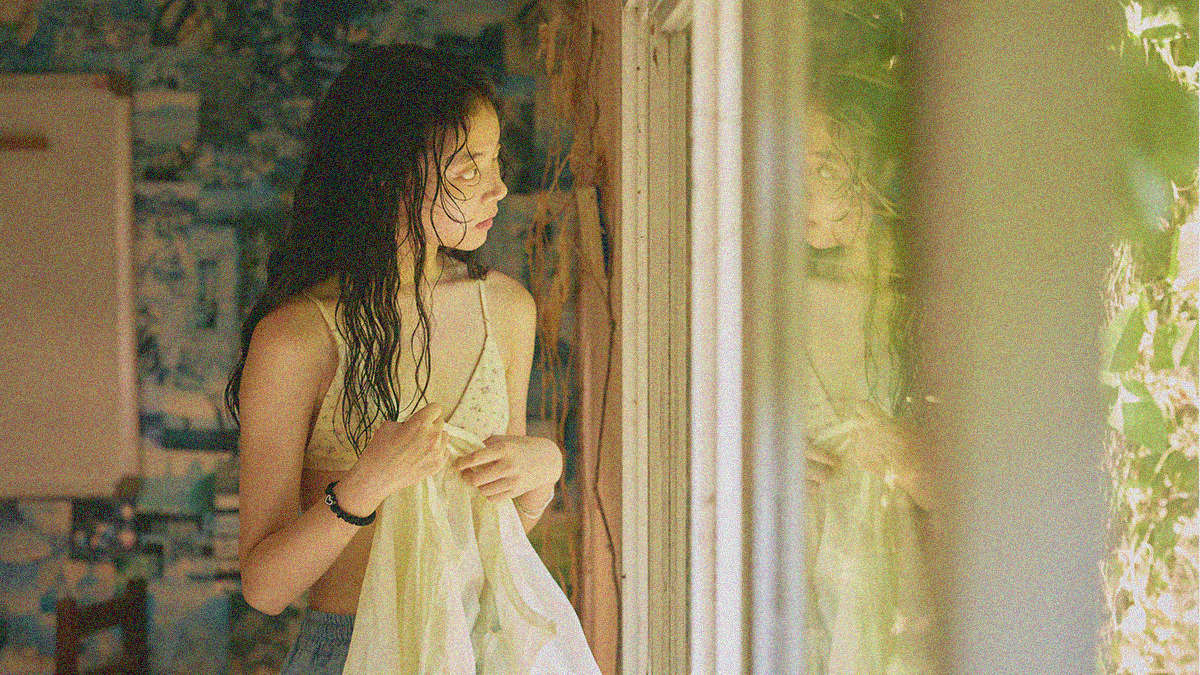
On a small fishing island in South Korea, Jin (Sim Su-bin) often finds herself spending time with her childhood best friend's grandmother. The old woman will be sitting by herself down the road from her house so that the teen can't help but see her there after school. So, she helps Gyu-tae (Oh Chi-woon) collect and walk her back upon which she offers Jin food. He apologizes, but she's happy to oblige. To sit and eat in silence.
Writer/director Yoon Dan-bi takes us from this nicely drawn moment of human connection to the tragic revelation that the woman has passed away. While Gyu-tae mourns the loss of his mother, an unlikely figure appears on road. It's Du-jae (Kim Eo-jin), returned from Seoul after five years away due to his mother having cheated out some villagers of money. Gyu-tae tells his nephew to stay with him, but he decides to take up residence alone at his grandmother's instead.
The funeral that starts The World Before is therefore the motive to get Du-jae and Jin back together. They haven't missed a beat with an easy laughter and genuine affection born from years of being inseparable since birth. The only difference now is that Jin feels more than kinship. She looks at Du-jae and finds herself lost in romantic thoughts. Her friends see it. Her little sister Min (Lim Seol) does too. But embarrassment has Jin giggling off the accusations.
What follows is the sweetly innocent journey of two young souls with history working towards their inevitable first kiss. It's not a spoiler to say this because the act itself becomes almost an afterthought to its circumstances. Yes, those of that specific evening, but also the days prior as their parallel trajectories unfold with conflicting intent. Because, while they do both enjoy each other's company, we can tell she searches him out for him. He seeks her for an escape.
It might not be intentional, but it is true. Du-jae has a lot on his mind with his uncle now trying to keep him under wing, his memories of this place having been changed immensely in those short few years, and the potential that his mother might return at any moment—and the uncertainty of how that would make him feel after she abandoned him. What he needs is a friend to take his mind off that storm in his head. Jin, perhaps naively, wants more.
The film takes on a wonderfully quiet tumult as a result. Especially since Jin finds herself getting jealous when Du-jae hangs out with Hye-jin (Jung Saet-byeol)—even if he always chooses her in the end. We can see the teen almost putting a time clock on making a move in case she misses her chance. So, she often finds herself daring him to see her watching from afar. To show him what she wants without saying it aloud.
Yoon is playing with the complexity of an opposite-sex friendship by presenting examples of why Du-jae and Jin should remain platonic while also ensuring we invest in hoping romance blooms. They are two effectively drawn characters that have the sort of interiority necessary to be three-dimensional people on their own, but also a longing for more. They're simply at an age where one or two years is massive. Their affection is shared, but their needs aren't.
So, the film ends up being a welcome look at what can be a painful lesson. The sorrow of feeling rejected when the truth is much more complicated. Du-jae is searching for reminders of home—of the "world before" everything fell apart. He finds that in Jin and doesn't want to let go. That in turn only amplifies her crush since he's going out of his way to see her. But he is her present. Where he sees that little girl, she sees this grown man.
More than a summer fling, they're sharing a profound moment of growth. A relationship they both know they can trust at a time where that's in short supply (Jin's older friends leaving for college; Du-jae losing his grandmother while being unsure of his mother's whereabouts). Would they both benefit from actually talking about these things? Sure. But when does that ever happen? Jin gleans what's happening from eavesdropping on her parents instead.
This is why that kiss isn't the climactic moment you might assume. No, that comes later with the tearful embrace of two people who understand the other's pain above their own desire. There are a lot of mentions of the island, economy, and family too, but none of that is fleshed out quite as well as this central dynamic. It becomes color for their unique road that mixes an ocean of nostalgia and fantasy together despite it all.
7/10

Pulled from the archives at cinematicfbombs.com.
Proof screened on September 12, 2005 at TIFF.