Week Ending 10/23/26
Anomaly is watching


Spooky season in Western New York means the latest installment of Anomaly is on the horizon. The Rochester genre festival runs from November 11-15 this year with screenings at both The Little and The Dryden.
The first three titles were announced a couple weeks ago and they include my favorite film out of Fantasia Fest 2026 with Kasper Kalle's No Rest For The Wicked. Alongside that gem are Jake Kuhn and Noah Stratton-Twine's The Peril at Pincer Point (which also played Fantasia) and Xu Zao's Light Pillar (which played at TIFF).
Details on a second trio hit inboxes this week too with new releases in Nicky Murphy's I Love Paris (Fantasia alum) and Anthony Oberbeck's Little Doors (Calgary Underground Film Festival alum) joining a 35mm screening of Hark Tsui's 1983 wuxia classic Zu: Warriors from the Magic Mountain.
All access passes are available from their website now with advance individual tickets going on-sale as soon as the rest of the line-up is revealed. So, keep your eyes peeled (no pun intended) on Anomaly's social accounts.

What I Watched
Atonement
IN THEATERS (LIMITED)
_____
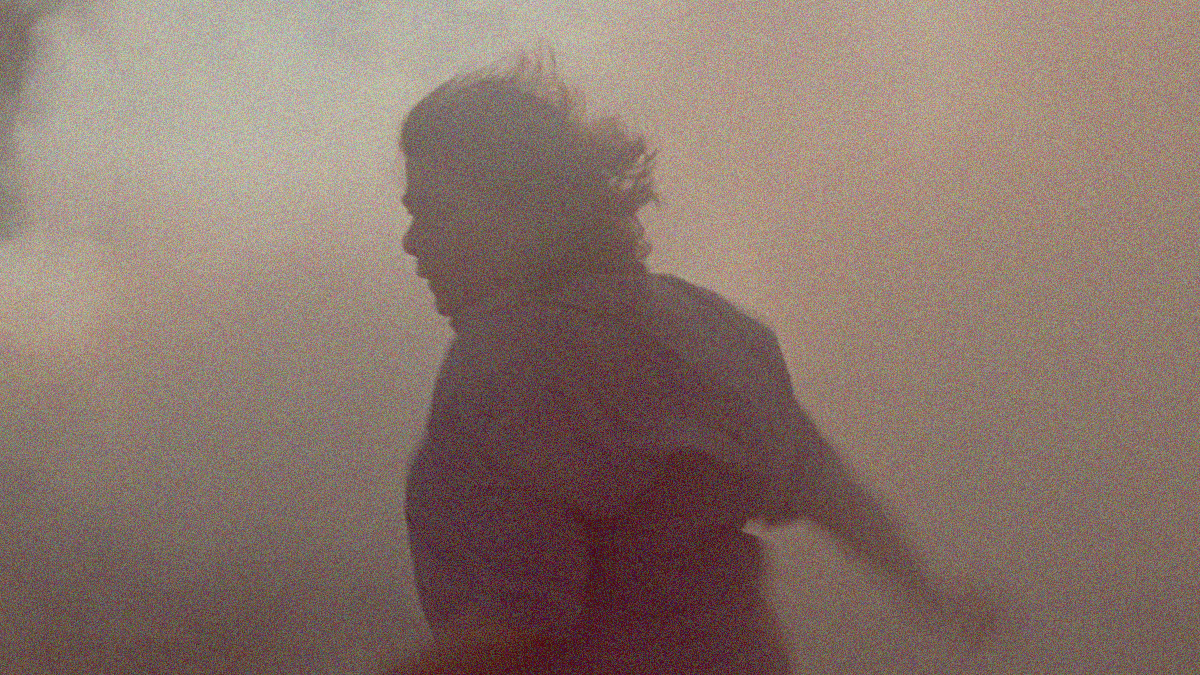
My Undesirable Friends: Part II – Exile kept coming to mind while watching Reed Van Dyk's Atonement. A scene in the former shows the Russian ex-pats reckoning with the complexity of whether they can label young Russian troops forced to kill Ukrainians by Putin's regime as victims too. Yes, it's true that some soldiers have gone against their will and might not even know what they're fighting for, but is now the time to voluntarily sympathize with the enemy?
It's not an easy question to answer since you could argue that time will never arrive—fair or not. So, while I can objectively empathize with a character such as Lou D'Alessandro (played by Boyd Holbrook and based upon ex-Marine Lu Lobello) considering what the military industrial complex does to its enlistees and how it subsequently forgets about them when they return home broken, I can't subjectively see his story as anything but self-serving.
I must therefore commend Van Dyk and company for appreciating that reality and never shying from it. The script goes so far as to get us to not really like the journalist (Kenneth Branagh's Michael Reid, based on Dexter Filkins) who's been following the central story of an innocent family being shot at by American troops in Iraq since 2003. He's so oblivious that he's genuinely shocked to hear how his helping Lou might increase the real victims' suffering.
And there I go using a word like "real" as if Lou isn't in pain. Or course he is. But there's a difference between the pain of the man who ignorantly killed three men (just because he didn't know the identity of his target doesn't mean it was accidental) and the pain of the surviving family members who watched them die. Mariam (Hiam Abbass) and Nora Khachaturian (Gheed) shouldn't be forced to carry the emotional burden of the man who destroyed their lives.
So, while Atonement is an extremely affecting film that does well to consider the messiness of the situation and platform fantastic performances (Holbrook and Abbass shine), it's difficult not to wonder if a feature film wasn't the best route to present it as anything but a reductive "both sides" argument. This is especially true since its assumption that our empathy for the Khachaturians is implicit leads them to focus more on Lou to (perhaps artificially) even the scales.
It's not even, though. We shouldn't disregard Lou's anguish (PTSD is real and our country doesn't come close to doing enough to help those struggling with it), but we also shouldn't diminish or exploit the Khachaturians' plight to prove as much. Thankfully, things eventually play out in a way that renders the whole film as more of a commentary on war itself and how we've sadly normalized it to the point where futility often outweighs accountability.
7/10
Morelife

WORLD PREMIERE AT TWIN CITIES FILM FESTIVAL
_____
"Whitman is very good in his portrayal of tired and angry youth in desperate need of a release. But Crawford steals the show with a mix of pure-hearted paternal protector and quietly unwavering resignation … all while wearing a rubber fish mask."
Full thoughts at jaredmobarak.com
One in a Million
IN THEATERS (LIMITED)
_____
There's a great moment during their first year in Germany where Tarek talks about experiencing democracy at work after having endured oppression in Syria for his entire life. He acknowledges the differences in cultures and appreciates all the parts of Europe that he wishes he could bring back to the Middle East to help evolve past the violence. But he adds a caveat. He wants to adopt the "good" differences. Well, "good" is subjective. Especially for a product of patriarchy.
Itab Azzam and Jack MacInnes' One in a Million (the couple met eleven-year-old Israa and her family in Turkey while they were leaving Itab's Damascus to go to Jack's London) is full of these collision points between where its subjects came from and where they are now. That shift in perspective wherein Tarek's abuse was his right in Syria and a crime now. Or his wife Nisreen finding a taste of freedom of choice in Germany she never believed possible in Aleppo.
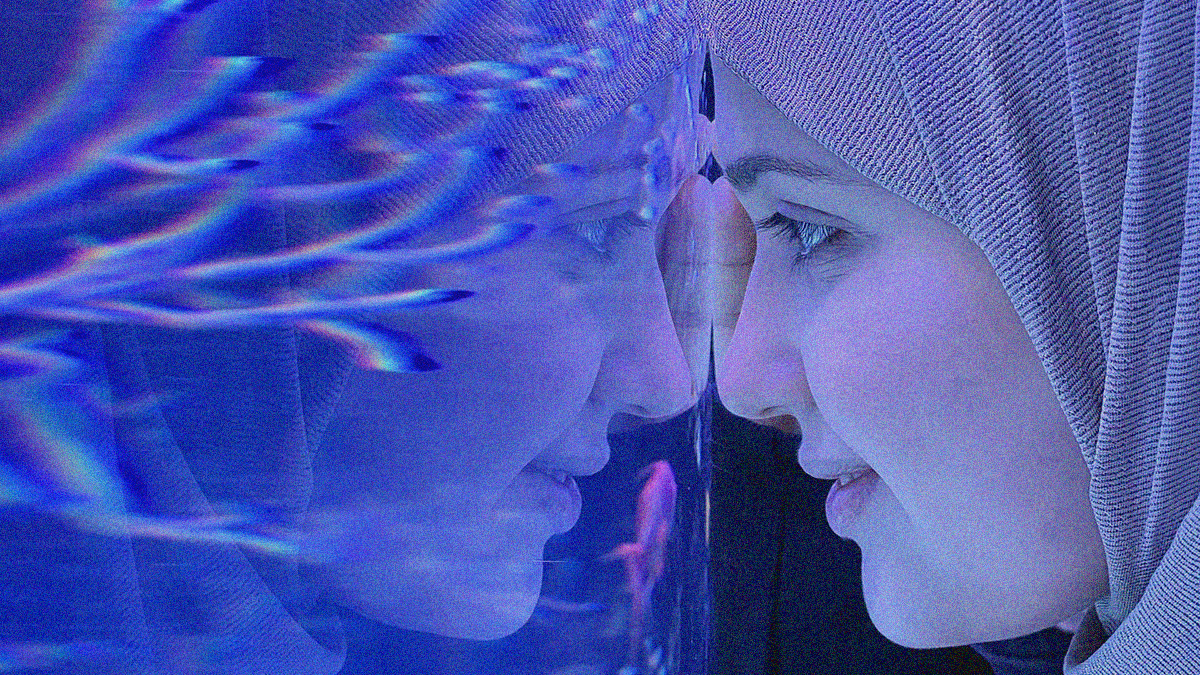
The most glaring example for this American, however, is the trajectory of Israa's life from daddy's girl to independent European to hijab-wearing wife. I preface this with me being American, because I couldn't help but cringe when she decided to wear the scarf. Not the choice itself, but the circumstances that led to it. From an outsider perspective, it's easy to project cynicism that Israa might be leaving one abusive relationship for another. But it's also unfair.
To the filmmakers' credit, they do well to present the facts without getting too involved (beyond the edit, of course, since we have no idea how much the narrative was massaged to distill a decade into less than two hours). This fact allows me to wince with worry while also demanding I listen when the people on-screen refute my assumption. That's not to say Nisreen isn't trepidatious too. It's only to agree that Israa earned the right to make her own decisions.
We must simply also understand the role trauma plays in doing so. Because this family survived war. They survived an almost two-thousand-mile journey from refuge in Turkey to settling down in Germany. They survived the culture shock of awakening to new possibilities and sometimes choosing to embrace the past. It's a crisis of identity that cannot be solved overnight and there's no better proof then following their evolution together and, more crucially, as individuals.
8/10
Wicker
IN THEATERS (LOCALLY AT DIPSON AMHERST; REGAL ELMWOOD, TRANSIT, GALLERIA, QUAKER)
_____
The Fisherwoman (Olivia Colman) has no interest in marriage. She's lived her entire adult life alone after being orphaned at a young age and deals with her neighbors' ridicule (the persistent smell of fish and ratty clothes) while enjoying quiet evenings at home mending the traps and nets she wields to earn a living. So, when she commissions The Basketmaker (Peter Dinklage) to weave her a husband, it's not about love. It's actually about retaliation.
Adapted from Ursula Wills' short story The Wicker Husband, husband and wife duo Alex Huston Fischer and Eleanor Wilson are quick to reveal the world in which they've created for this fable by opening with a wedding. While the concept is steeped in patriarchal traditions on its own, they've embellished things further to that end to ensure the satire resonates. Instead of a ring, the bride gets a collar. Instead of love, she embraces duty.
The decision for all the characters in Wicker to be named after their occupations is part of the commentary too since The Fisherwoman is the only woman who has an occupation to be named for. The others are either "daughter" of their father's job or "wife" of their husband's. They don't resent it, though. It's quite literally their identity. So, when The Tailor's Wife (Elizabeth Debicki) is called The Doctor's Daughter, she's the first to demand a correction.
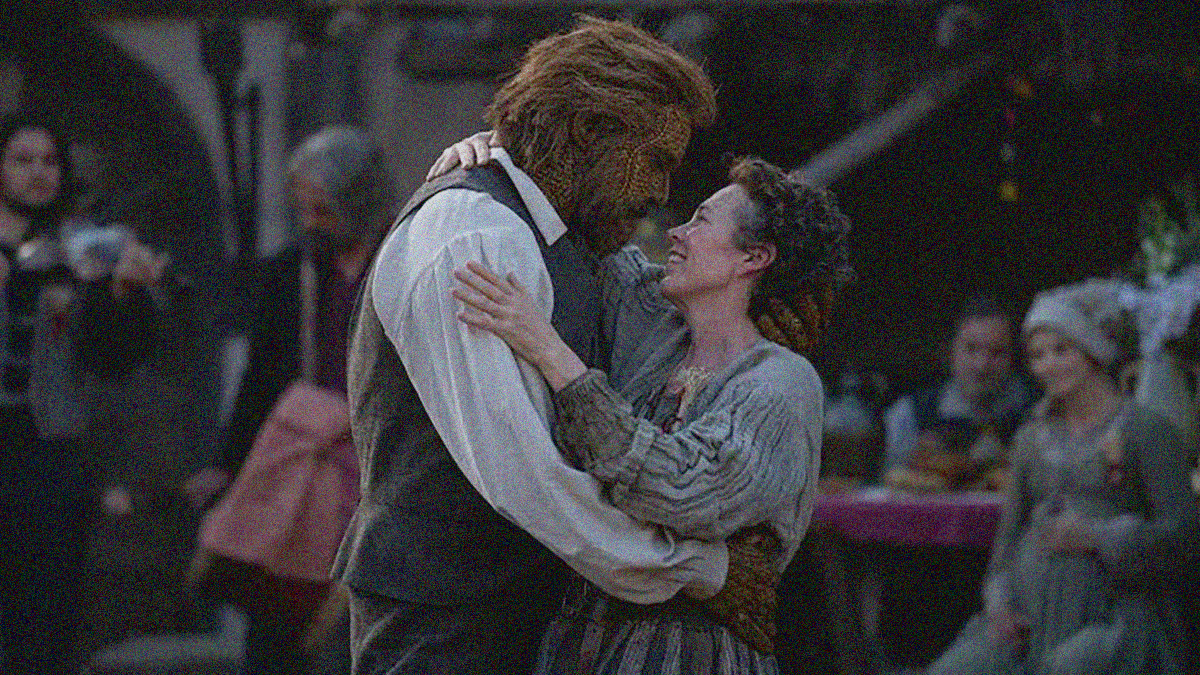
That's why The Fisherwoman's plan is so good—better than even she could conceive. The point was to mock the very institution of marriage by pretending to marry an inanimate object. The fact that The Basketmaker was able to craft a living creature (Alexander Skarsgård's The Wicker Man) with his own wants and desires therefore changes the game. Not only by letting his client experience real love, but also by showing the villagers what love is.
The Wicker Man satisfies his wife sexually and emotionally. Yes, his literal existence is to serve her (the exact opposite of what this village holds to be true for marriage), but that doesn't mean his love doesn't also make him want to serve her. The Fisherwoman maintains her autonomy. She continues to work while he fixes up the house. She keeps her "name" and identity while also allowing happiness to alter her hygiene and demeanor. External jealousy is inevitable.
The women (Ella Bruccoleri's Baker's Wife and Emily Lloyd-Saini's Innkeeper's Wife) fantasize about this new "man" and yearn to feel the joy and respect he gives The Fisherwoman with every breath he takes. The men (Ben Ashenden's Baker and Kiell Smith-Bynoe's Innkeeper) become enraged with shame because it's easier to hate The Wicker Man for exposing the one-sided nature of their unions than it is to actually prove their love the way he does.
There's one exception to this rule: The Bottle Washer (Gustav Lindh) and his new bride, The Bottle Washer's Wife (Marli Siu). They are still young enough to want more from their lives. Young enough to still want to show love as much as receive it. Unfortunately, while the time period is as ambiguous as the fantastical is made real, the era is far enough in the past that we know trying to be better isn't necessarily safe. So, anger abounds either way.
And that's sadly where the true damage of this archaic existence (that's still all too familiar to our own today) appears via paranoia. As one chapter heading states: it's easier to believe the bad than it is the good. Cue the justified yet petty indignation of The Tailor's Wife. Here is a woman who knows more about medicine than her father (Richard E. Grant) and wants to apply herself to help her husband (Nabhaan Rizwan) run the business. Alas, she's just a woman.
The Tailor's Wife proves a tragic figure as a result. Rather than covet what The Fisherwoman has in a husband like the others do, she covets her freedom to be someone outside of any man's shadow. So, she tries to change things. She proves her worth with a doctor's stitch. She asks her husband to let her learn his trade like The Fisherwoman has let The Wicker Man learn hers. But these men were taught about life from their fathers. They can't comprehend her desire.
So, she does what humans have for millennia. She seeks to bring The Fisherwoman back down to their nightmarish existence rather than keep working to reach hers. And, since this man's world has fostered a healthy distrust in even the closest people to their hearts, The Fisherwoman is helpless from believing the lies. It's why the most profound words spoken on-screen are from The Basketmaker explaining how The Wicker Man is different.
The only world he's ever known is through The Fisherwoman's eyes. He wasn't corrupted by entitled and greedy men to believe a woman's entire purpose was to serve him. The Wicker Man knows only a woman's kindness and his own pleasure in pleasing her. He knows only the desire to co-exist as equals and enjoy the beauty life has to offer rather than languish in the depression that mankind has wrought for itself. It's the heart-warming core of this hilarious lark.
Because the message arrives through the comedy. It makes sense when Fischer and Wilson admit a large portion of the writing process was roasting each other in the context of our society's failings. Add a remarkable cast carried by Colman and Debicki (with Skarsgård and Dinklage providing fantastic support) and the sort of awe-inspiring practical effects we've come to expect from Weta and Wicker is truly firing on all cylinders to entertain and edify in equal measure.
8/10
Cinematic F-Bombs
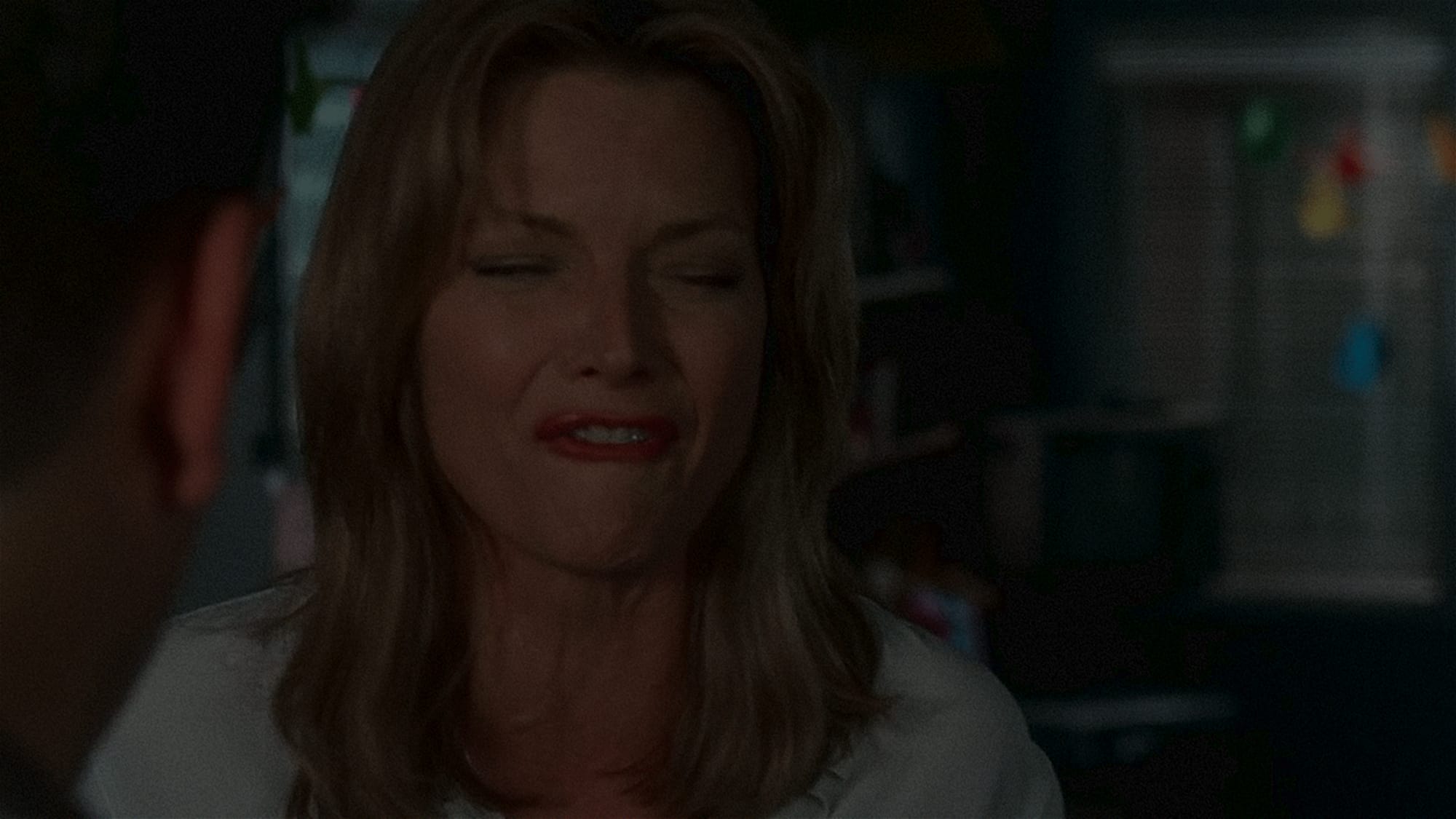
This week saw White Nights (1985) added to the archive (cinematicfbombs.com).
Gregory Hines dropping an f-bomb in WHITE NIGHTS.

Movie Listings
Opening Buffalo-area theaters 10/23/26 -
• 418 at Regal Elmwood
• Clayface at Dipson Flix, Capitol; AMC Maple Ridge; Scene One Market Arcade; Regal Elmwood, Transit, Galleria, Quaker
• Klara and The Sun at Dipson Flix, Capitol; AMC Maple Ridge; Regal Elmwood, Galleria, Quaker
• Pehla Pyaar Doosri Baar at Regal Elmwood
• A Talent for Murder at Dipson Capitol; Scene One Market Arcade; Regal Transit, Galleria, Quaker
• Wicker at Dipson Amherst; Regal Elmwood, Transit, Galleria, Quaker
Thoughts are above.
• Wildwood at Dipson Flix, Capitol; AMC Maple Ridge; Scene One Market Arcade; Regal Elmwood, Transit, Galleria, Quaker
Streaming from 10/23/26 -
• The Cycle (Shudder) – 10/23
• Finding Emily (Peacock) – 10/23
• The Invite (HBO Max) – 10/23
• One Spoon of Chocolate (Hulu) – 10/23
• Paralyzed by Hope: The Maria Bamford Story (Netflix) – 10/23
• Kordell Stewart: Slash & Burn (HBO Max) – 10/27
• Drive – The Pretenders (Prime) – 10/28
• Hanging By a Wire (Paramount+) – 10/28
• Minions & Monsters (Peacock) – 10/28
• You, Me, Us (Netflix) – 10/29
Now on VOD/Digital HD -
• Butthole Surfers: The Hole Truth and Nothing Butt (10/20)
• By Any Means (10/20)
• Goody Goody (10/20)
• The Musical (10/20)
• Steal This Story, Please! (10/20)
• Tiny Fugitives (10/20)
• The Weight (10/20)
"These supporting characters also have more complex backstories than you might expect. It provides an effective political backdrop to color the genre trappings. Each one is battling his/her oppressors—namely, men with badges." – Quick thoughts at HHYS.
• The Man Who Saves the World? (10/21)
"Kudos to Polsky for somehow wading through it all with a straight face and open mind because it means we can too. Something we forget in today’s world of celebrity “geniuses” is that actions always trump image." – Full thoughts at HHYS.
• The Exit State (10/23)

Press Kit Archive
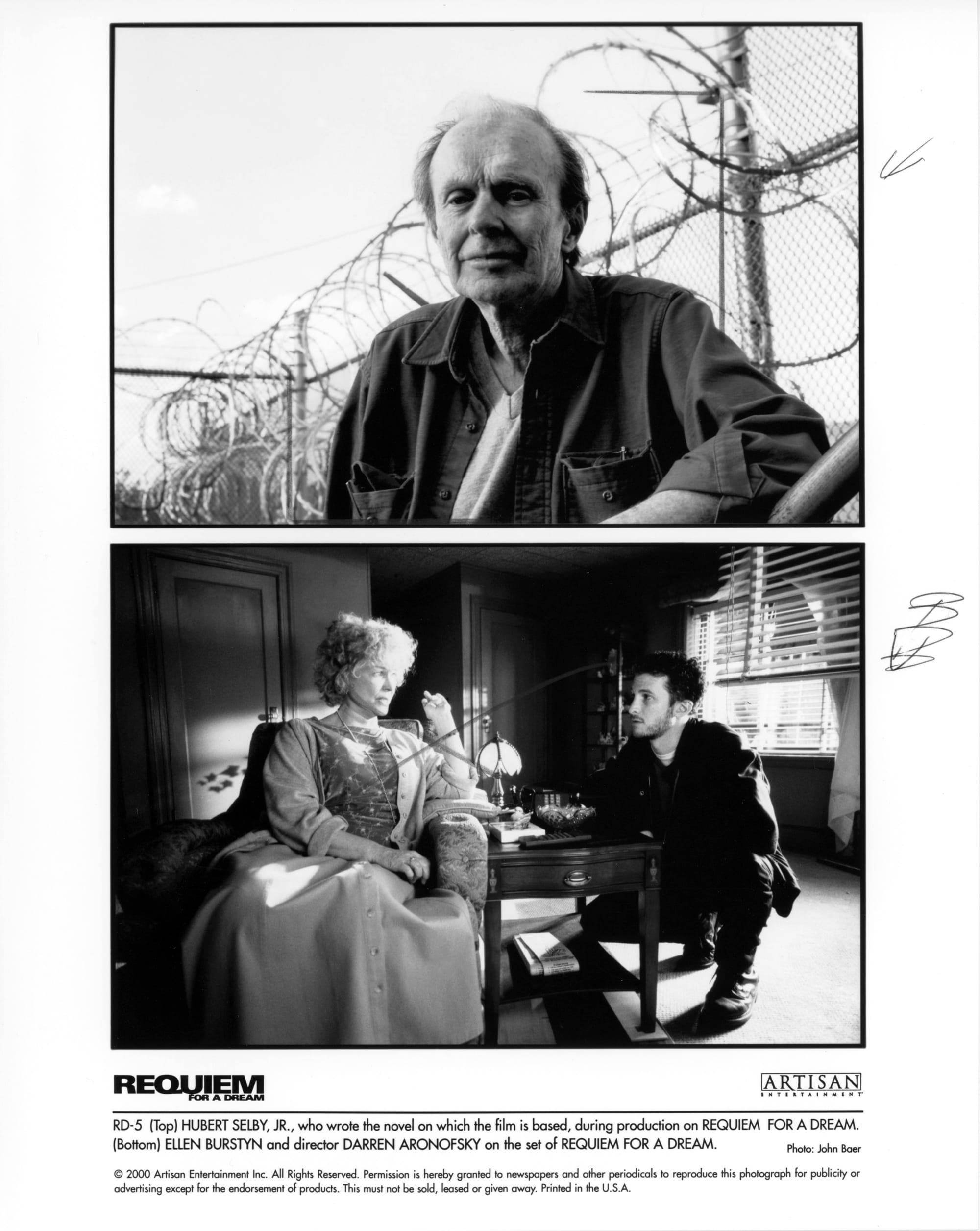
Pieces from the Requiem for a Dream (2000) press kit.