TIFF 2026: Day Six
Home sweet home


After a great few days in Toronto, the adventure now continues in Buffalo moving forward. With twelve films watched and reviewed on the ground, my total has reached thirty-seven TIFF titles seen.
Can I get back to fifty like last year? I don't know. With three more today and at least two a day moving forward once I go back to the day job, it's definitely possible. I'll start sending some emails to see what else might be accessable to add to the queue. Hopefully a hidden gem or two I didn't initially flag myself.
Today's schedule:
• Djinn Wedding, d. Ferit Karahan | Platform | Turkey | Turkish
• Tehran, Under the Skin, d. Afsaneh Salari | TIFF Docs | France, Iran, Sweden | Persian
• Ba's Book, d. Ashley Duong | TIFF Docs | Canada | Vietnamese, English

Babies
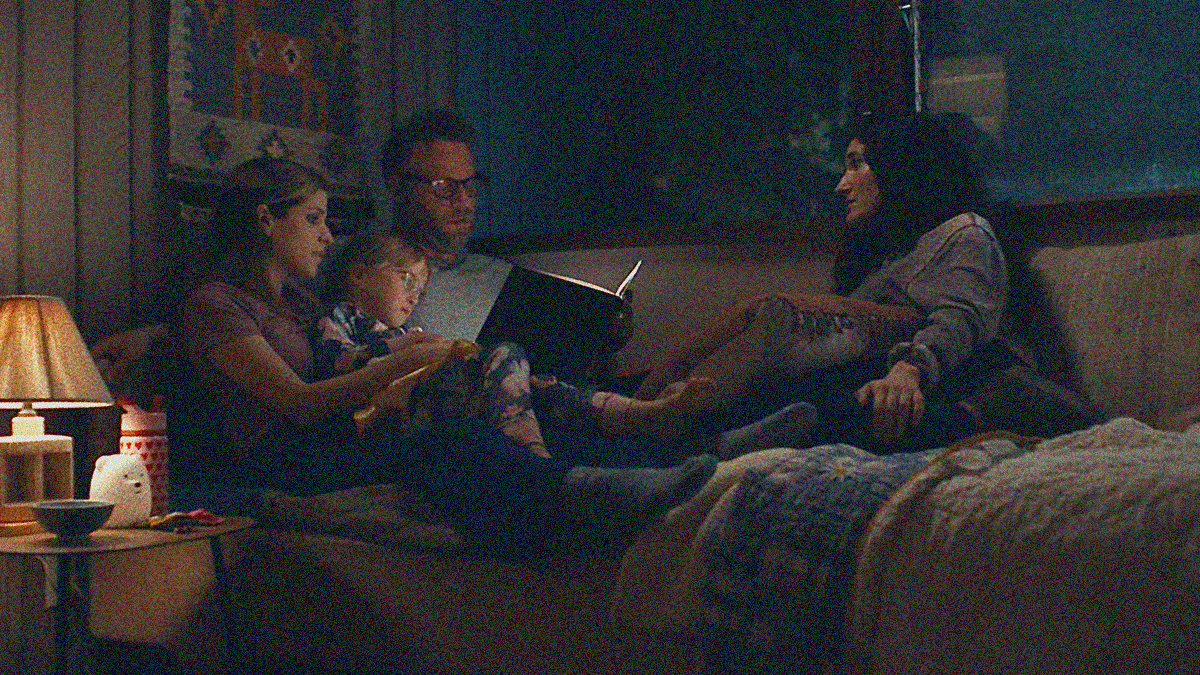
GALA PRESENTATIONS
World Premiere | September 12 | United States of America | English
_____
"Rogen said it best when mentioning Ron Howard’s Parenthood as a big influence for the structure she sought insofar as presenting the myriad ways in which love and parenting manifest."
Full thoughts at The Film Stage
Furies
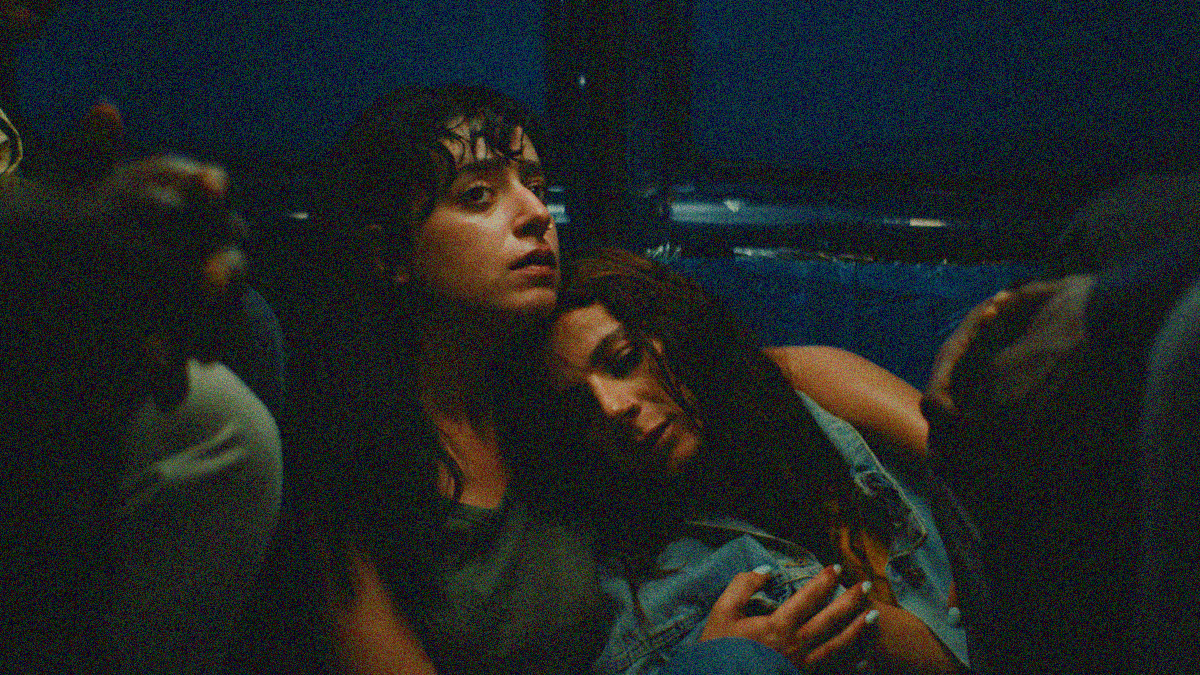
CENTREPIECE
North American Premiere | September 14 | Lebanon, Brazil | Arabic
_____
Director Rami Kodeih begins his feature narrative debut Furies with some context about the Lebanese liquidity crisis of 2019—one whose impact remains on-going. Rampant bank corruption saw billions of dollars stolen and a nationwide freeze on withdrawals that led to uprisings and robberies with the culprits hailed as folk heroes. Because the citizenry didn’t see them as stealing from the banks. They were reclaiming what the banks stole from them. When the lira loses ninety-eight percent of its value overnight, people get desperate.
You can’t blame them either when most have a legitimate case to get their savings returned via an exemption—Kodeih and co-writer Nora Mariana included. The couple had no access to their funds on the cusp of Nora needing surgery, so a heist became their joke response. They didn’t do it (that I know about), but you can’t let that premise just die on the vine. So, they gave life to sisters Maro (Rym Mroue) and Dalia (Maria Nakouzi) instead. A protective single mother divorcee and an impulsive cancer patient in need of a miracle.
We enter an incendiary Beirut three years into the crisis. I mean that literally too with an opening scene of Maro appealing to a bank teller that ends with a man attempting to set himself on fire in the lobby. The sisters try to do things the correct way. They get the doctor notes and affidavits proving what the money is for and the manager even agrees everything is in order. He explains, however, that he still can’t help because there isn’t any cash on the premises. But Maro has seen him go in and out of the vault multiple times. There must be something inside.
As the plan takes shape thanks to a serendipitous encounter with the bank property’s flirtatious superintendent, other pieces start falling into place. His apartment will act as their shared wall entry point. Their mechanic friend with a checkered history from the civil war (Issam Bou Khaled’s Sunshine) is willing to assist. And the extremely volatile Hamza’s (Hasan Akil) debt to a group of politicos should get him on board too. The latter will inevitably screw them over, so keeping him under control until the money is in-hand proves paramount.
Kodeih nicely interweaves a lot of Lebanese history into this power-keg of a suspense film. We learn about those politico gangsters, witness the lingering tensions between Christians and Muslims decades after the conflict, and meet the regular people who are simply trying to survive. As Dalia states, the whole system is corrupt considering the hospital has no interest in upholding its oath to heal. No money means no surgery. So, an event outside her control years prior seals her death warrant with zero recourse. This is truly their one and only shot.
The lead-up is as much about showing us the evolving machinations of the robbery via stakeouts and rehearsals (if Hamza ever decides to put his ego aside and do what these women ask) as it is fleshing out the leads. Dalia’s illness is the pressure point for the decision, but Maro’s life hasn’t been easy either. She barely gets to see her young son and her husband took her hairstyling business in the divorce to sell. If not for Dalia lending her balcony as a salon, Maro might have taken drastic measures earlier.
Mroue and Nakouzi are great. They give these women life with vibrant personalities and a Thelma and Louise sense of agency to keep going no matter what roadblocks get in the way. One of my favorite pieces of the film, however, is Khaled’s Sunshine. To meet him is to find a kindly older gentleman who takes care of his neighbors. Unassuming, compassionate, and patient (especially with Hamza). When the two men perform their “decoy” argument to mask the heist’s noise, however, we discover the complexities of why.
Furies is inherently a drama that’s filtered through an entertaining thriller lens to keep us engaged. Yes, we want to see the robbery and experience the ups and downs of unavoidable wrenches that present themselves, but we also want to watch these sisters flourish. We want them to be able to live the lives they deserve while also reveling in the fact that doing so would be a giant middle finger to the state. Because getting away with this heist will only embolden others to follow suit and take back what’s theirs too.
7/10
Future Tense
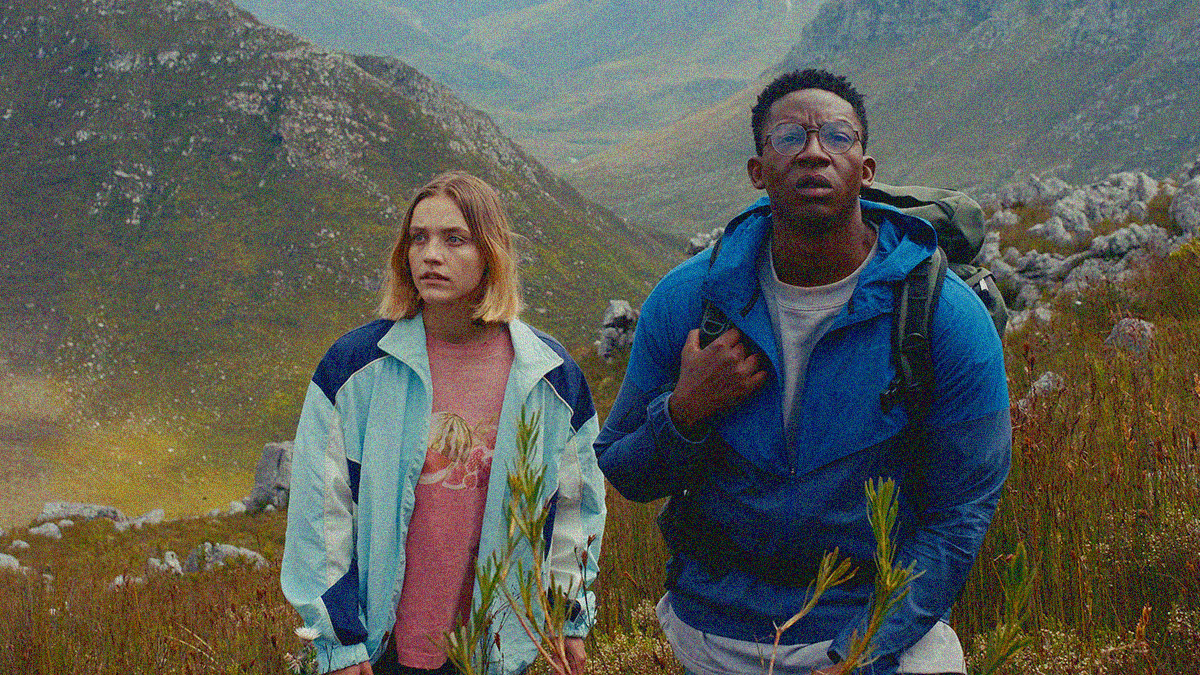
CENTREPIECE
World Premiere | September 14 | South Africa, Australia | English, Xhosa, Afrikaans, Dutch
_____
When Lwando (Lawrence Maleka) wins two tickets to the past courtesy of the latest wealthy vacation fad known as Platonia, he asks his girlfriend Tara (Kristen Raath) to come along. It should be a romantic excursion on a modern estate in the Overberg mountains of 1647—save the armed troops on the perimeter of this "nature preserve" to ensure the timeline remains unaffected. But what if it's also an opportunity to correct an historical wrong?
As is the case with most of the best time travel movies these days, the sci-fi conceit becomes secondary to the characters wielding it in Jenna Cato Bass' Future Tense. The majority of the film sees Lwando and Tara hiking to their fateful destination for three days, discussing the reasons he took her here (past events) and those that led her to accept the invitation (future possibility). It might be the first time they've ever truly spoken about what they want.
One could say it's because their present is a nightmare. The world in which they live is worse than our own with cities being evacuated and those with the means to do so immigrating somewhere safer. Tara's own students tell her she should just stay in the past. That she should save herself from the nightmare of this existence. So, it becomes easier to think about what was and what could be rather than acknowledge what is. It's comforting to dream of escape.
All we know about these characters when we meet them on the day they're set to travel is courtesy of quick vignettes of their first date (Tara was late, Lwando asked big questions) and their morning preparations (her on the phone with her mother talking about a decision that must be resolved, him visiting another woman—Qondiswa James' Wanda—about a decision that's already been made). They're the sort of cryptic contextual nuggets with the potential to incite.
And then it happens. Lwando causes a disturbance, wakes Tara, and rushes them from their anachronistic lodgings to run through the South African expanse set before them. He knows the "continuity" police will be after them, so he gives her an out to stay and blame him for the chaos. But he still hasn't told her why he's doing what he's doing, and that unknown is more important than giving herself up. She has the luxury to believe she can still come back later.
Therein lies the largest difference between these characters. Whereas some films put an interracial relationship at their center for the sake of representation, Bass does it with narrative intent. This is a South African time travel story. You cannot ignore the topic when Apartheid is ever-present in its historical fabric. It initially comes up with jokes about "killing Hitler" as Lwando laughs that "white people always go there first." The generational trauma soon follows.
It's in the realization that Lwando's best chance to be allowed the space to see his plan through was to be accompanied by a white woman. It's in the recognition that Tara's whiteness stops being an inherent shield against injustice once she's aligned herself with a terrorist. Lwando can't swim. Tara still believes extreme acts to force change are unnecessary. Both of them want the world to be better, they just can't agree on the means thanks to the disparity of their privilege.
Future Tense therefore becomes a forum for them to finally engage with this truth. With nowhere else to go but forward towards Lwando's bid to change the trajectory of Africa forever, all pretenses disappear. Their secrets and fears spill forth to expose the things they've left unsaid for too long—the things they let the other project false meaning onto because it was easier than admitting what they actually felt. Maybe this trip to save the world can also save them.
Or, perhaps, it will be the thing that breaks them. Because history isn't just reliant upon the big swings. Those are the ones that affect global power and an increasing wealth disparity, but it's the tiny moments like missing an alarm or forgetting a condom that pushes each of us onto new pathways individually. One choice might not seem like much, but it impacts every single person you would have encountered and everyone who did instead as a result.
So, Bass does this wonderful thing where she replays moments we've already seen with details changed. Sometimes it's a vantage point. Sometimes it's a completely different outcome. Sometimes it's with the benefit of knowing now what we didn't know the previous time. She wants us to ask the question of whether the choices Tara and Lwando made were for the reasons they stated or if those reasons were merely the justification for selfish desire.
You can't blame them if it's the latter. You can only hope that they will be honest enough with themselves to be honest with each other. That's when they can look inwards and choose what's next without regret. Sure, it might still bring sorrow, but that's okay. You're allowed to be sad about what could have been knowing it wouldn't have worked. You can't let yourself be angry about what should have been because you thought you could make it work.
The rich aren't going to regret their decisions. Just like Lwando states, space stopped being their salvation once they developed time travel. That's when they let it become the middle class's dream because they could go backwards and start again at home. They could colonize the land better than they did the first time (starting earlier and being more ruthless in their extermination). It's why MAGA looks to erase progress. The past is their imperial haven.
What Lwando and Tara find is therefore exactly what you'd expect. Because one side having the determination to change everything means the other side does too. Can anything ever change as a result? A cynic would say no. An idealist, however, would point out that anything changed once can be changed again. If they want the past, we can take the future. And if you fail your first try, go back and try again. The fight only ends when there's no one left to fight it.
8/10
Kick On

MIDNIGHT MADNESS
World Premiere | September 14 | Australia | English
_____
With Lee (Kaitlyn Boyé) preparing to leave Australia for Peru, her brother Zack (Nikita Chronis) and their best friends Eden (Markella Kavenagh) and Drew (Ras-Samuel) decide to make a night of it. So, when the drugs run out and a fight breaks out to punt them from the club, the quartet must pick their next destination out of desperation. Zack knows it's a bad idea, but a Russian mob boss's son (Nikolai Nikolaeff's Ray) is the only connect available.
Maybe he'll prove to be a good guy who's merely been saddled with his father's reputation by name alone. Maybe Ray is someone they can even become friends with once his affinity for Julius Caesar has him waxing on about loyalty in a drug-fueled haze. He's not and they won't, but it's a convenient lie to let their phones get confiscated as Jase (Julian Weeks) locks the apartment door behind them. At least they'll get a free bump of Ketamine for the trouble.
The rest of Nick Kozakis' Kick On, as written by Phillip Klimek, takes place in this location as joyful highs lead towards dangerous paranoia. Ray eventually grabs a shotgun, his cousin Yuri (Thom Green) tries to calm him down, and Stav (Tyrone Ngatai) is unceremoniously marked as the first of many bodies to hit the ground. Add a stolen stash of cash and the inevitable arrival of Daddy (Jacek Koman's Fedi) and Axel (Eddie Baroo) and the violence escalates quickly.
What started as a fun outing turns into a survival nightmare with Zack punching way above his weight class taking everyone here. With tweakers looking for an easy score and Ray's entourage giving their allegiance to other people, trust is a nonstarter. Truces get canceled with shotgun blasts. Tempers flare to necessitate turning faces into ground beef via gnarly prosthetics. And Ray is finally given an opportunity to prove his mettle ... or confirm Fedi's disappointment.
That's pretty much it beyond a subplot concerning Eden's sister dying from cancer. The filmmakers try and make this point into a motivating factor for what unfolds, but Stav was already itching to light the fuse regardless of what Eden does to strike the match. Either way, that initial murder changes the rules by turning these four bystanders into witnesses. It forces Ray's hand to respond. No matter how much he likes them (especially Eden), it's his mess to clean-up.
The main draw is the make-up and effects work. Heads explode. Feet are turned into Hamburger Helper. And bodies are torn by every sharp piece of metal in the vicinity whether knives, a decorative hatchet, or the lid of an open tin can. It's as enjoyable to see how the next bit of brutality will look as it is discovering who the culprit will be. Ray's impulsiveness too often leads him to assume everyone is his Brutus. His responses to that feeling ensure he's not wrong.
Everything Kick On lacks in plot (Kozakis and Klimek introduce a cop to reiterate how connected Fedi is, but the thread is forgotten as suddenly as it appears) is adequately compensated by the gore quotient. Between Ray's erratic behavior and Eden's fight or flight instinct always choosing the former, it's not long before we realize this adventure is ending with one survivor if any. So, cue the carnage and enjoy the ride.
6/10
The Life and Deaths of Wilson Shedd
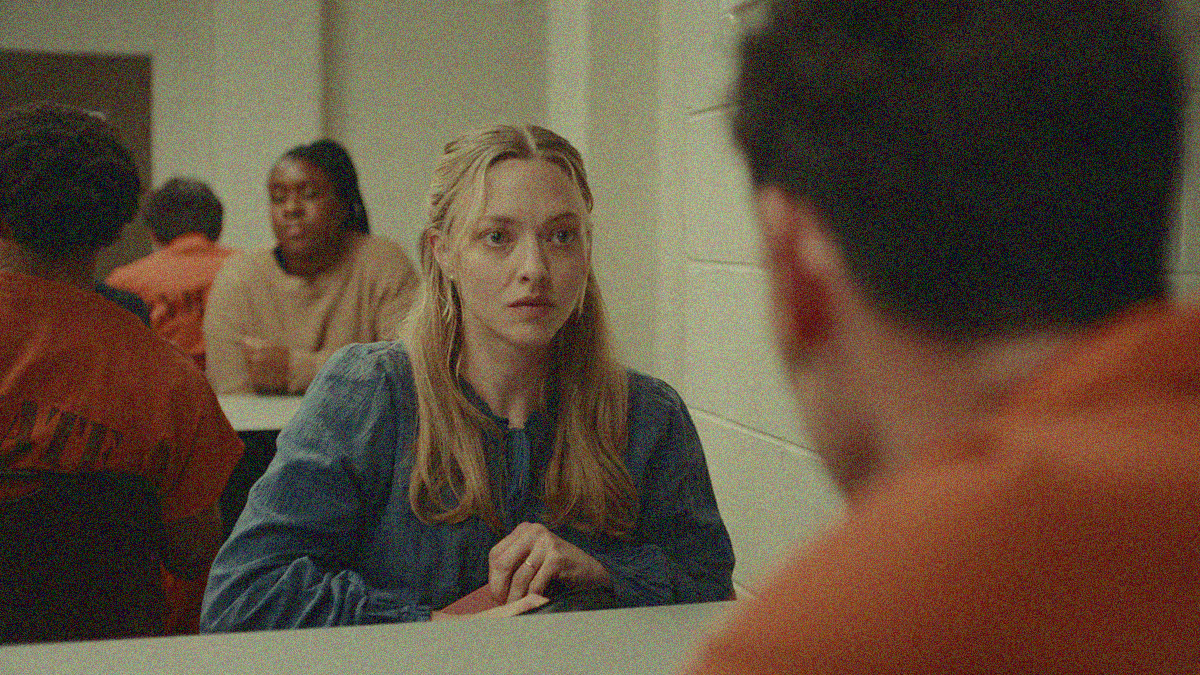
GALA PRESENTATIONS
World Premiere | September 13 | United States of America | English
_____
In desperate need to escape her house and abusive drunk husband (Grant Harvey’s Kenneth) while waiting for a high school teaching opening, Karen (Amanda Seyfried) accepts a creative writing course gig at the local prison. While she’s done volunteer work like this before, the person in charge (Tim Blake Nelson’s Briggs) wants to make certain she’s ready for what’s coming—even after assuring that these inmates earned their enrollment through good behavior. She’s honestly just ready to dive in and talk about literature again.
The first day unfolds pretty much like you’d expect when an attractive woman enters a room full of violent offenders. Vaughn (Kraig Dane) pushes the envelope of his flirtations until Wilson Shedd (Scoot McNairy) comes to her defense at risk of blows. It’s an abundance of testosterone in one room that would have derailed the entire program if not for cooler heads prevailing. Sure, it won’t be the last time a similar outburst occurs, but Shedd really wants this class to work. He needs the escape too. And he remembers enjoying writing back in school.
It’s at this point that Nelson, who also writes and directs, abruptly cuts to Shedd, James (Tobias Segal), and Earl (Nathan Hesse) breaking into a cabin in the woods while still wearing their orange jumpsuits. They’ve obviously broken out of prison and are now on the run hoping to elude the authorities that must be close behind. Before we can wrap our heads around the transition, however, Nelson jump cuts again. This time we meet Jane (Devyn A. Tyler) and John Lawson (William Jackson Harper) watching their two young children perform a school play.
I thought I cracked the device straight away considering the title’s fascinating choice to pluralize a word that shouldn’t be plural in its current context. The Life and Deaths of Wilson Shedd. Only one life, but multiple deaths? And the story centers around a creative writing course? I just knew that we’d eventually discover one or more of these seemingly disparate threads were fiction. Wilson is fulfilling Karen’s assignments and they are in turn being performed on-screen. He will presumably die in all of them and we’ll eventually discover which (if any) was true.
Was making me think this intentional? I don’t know. The only thing I do know after having watched the film is that I was wrong. Everything happening is real, it’s simply structured in a non-linear way. As things progress, we’ll learn story structure is actually the final lesson Karen gives her class. We can assume she’ll explain how it can be used to shield details from an audience while increasing suspense. Nelson knows that Wilson escaping is less interesting than the mystery surrounding how he did it and what he’ll do next.
Because a fourth thread joins the party soon after via Missi Pyle’s prison warden Joan Gardner. She’s in charge of Wilson’s impending execution—a revelation that makes zero sense with what we know since a death row inmate would never have access to Karen’s class. So, does Shedd do something worse than his initial crime after gaining freedom? How do the Lawsons factor in? Could this still be a fictional construct written in his composition notebook? Nelson is forcing us to ask questions, create hypotheses, and pay attention.
It’s a compelling choice that gets the mind moving to process everything and conjure connections, but I must question why he chose to present this specific story in this way. Why tell this version of the story at all considering his motives to call out the carceral system’s corruption and expose the reality that for-profit prisons will never be about rehabilitation? That stuff comes through effectively in both the execution preparations and the start of Karen’s tenure at the prison. It’s not hard to see that the world failed Wilson as much as he failed the world.
Nelson goes much further, though. He delves into the different sorts of relationships that exist around violent yet charismatic people: namely those that could involve a person like Karen. Why would she stay in an abusive marriage without ever pressing charges? Why would she gravitate towards Wilson when he has a history of doing the same things as Kenneth regardless of the eloquent and contrite words he uses to talk about past transgression now? In some ways the film seems to contradict itself by proving rehabilitation doesn’t work.
Because it’s intentionally called out that the reason Shedd takes a shine to Karen is because she doesn’t talk down to them. She has a brother in lockup, so she knows what it does to you. She looks to treat them like human beings because that’s what they remain even after committing unforgivable crimes. So, the thing we should want to happen more is presented in a form that some would say proves it should happen less. That these men cannot be helped. That they will always lie, cheat, and steal to get what they want.
Then there’s the false equivalencies. The graphic physical assault of a woman by a man she lets stay free opposite the murder of a woman out of retribution. Does Nelson show us the former in graphic detail to try and get us to think it’s worse than the latter’s matter-of-fact verbal description? Is he toying with us just to pull the rug later or is his point that context is crucial to defining how all actions can be perceived in infinite ways? There’s talk about religion and forgiveness in its multiple forms too. And literary excerpts from Hemingway and Dickinson.
It’s a lot. Maybe too much. This might also be the point, though, since Nelson seems keen to present everything as a contradiction to something else. That our lives are a series of choices leading us to do things we consciously agree are out of character. And we are forever changed in doing them. There can be no going back. Whether you pulled the trigger, told someone else to pull it, put the gun in their hand, or killed them later in response, death is in you now. Every murder is perpetrated by infinite accomplices who must now all carry its burden.
I love that thought and how you can go backwards to pin blame on everyone down to Wunmi Mosaku’s Gladys for not reporting Kenneth herself or Robert Peters’ security guard Mason for letting emotion cloud a crucial part of his job. The craft is impeccable and the performances are superb (especially Seyfried, McNairy, and Tyler), but these pieces are definitely stronger than the whole. I simply cannot figure out if they’re strong enough to render the whole inconsequential by comparison. A second viewing is surely necessary to decide for sure.
7/10
Love Is the Monster
Amor es el monstruo
CENTREPIECE
World Premiere | September 14 | Costa Rica, Peru, Panama, Chile, Mexico | Spanish
_____
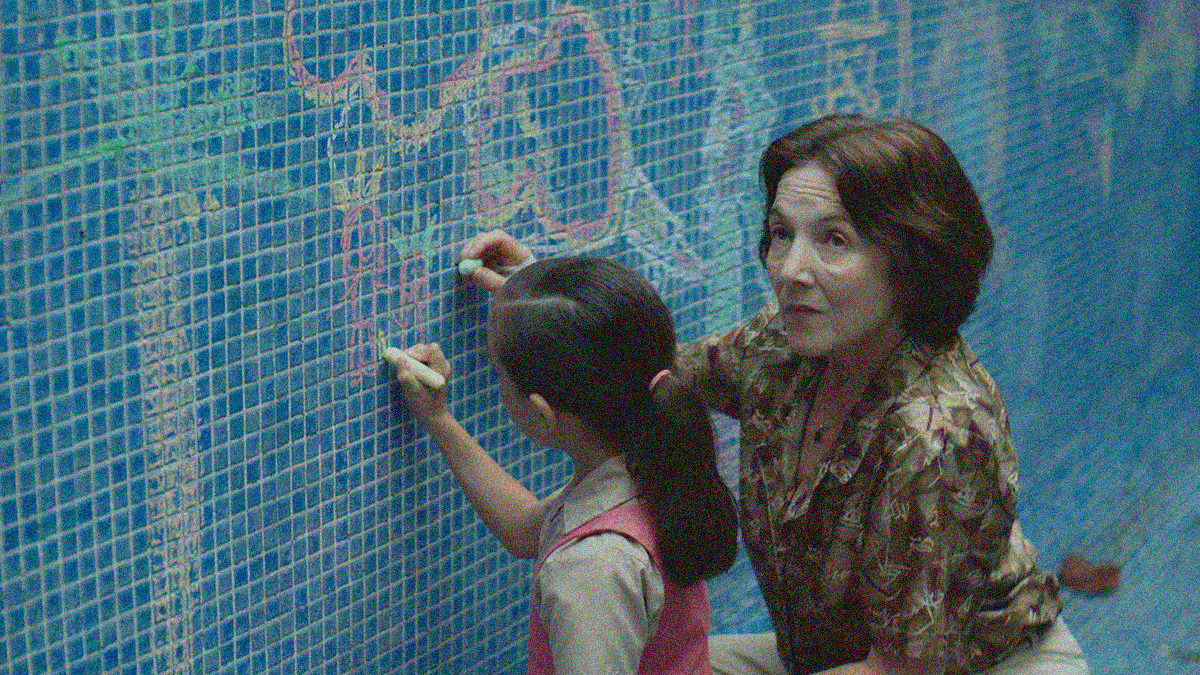
Set in a world overrun by an unexplained virus that "sent the men away" while class divisions grew into full-on segregation thanks to a carefully guarded area known as The Perimeter keeping the rich safe, Neto Villalobos' Love Is the Monster introduces us to a grandmother (Paulina García) who's desperate to spend time with her granddaughter (Gloriana Vargas) before it's too late. So, she decides to give the young girl anything she wants.
Doting on your grandkids is a little different in the dystopia that Villalobos and co-writer Diego van der Laat created. Finding pets means dealing with the black market. Fun activities that break the monotony of Perimeter-sanctioned events means journeying into the outskirts and risking life and limb courtesy of kidnappers who hear the radio voice saying "children are our future" and take it to heart. This abuela's love ensures her nieta will never be safe.
The girl's mother (Natalia Regidor) knows this more than anyone considering her job as manager of the ruling institution places her entire family in the crosshairs. Workers haven't been paid in two months while the rich throw lavish birthday parties when not spending their days at the gun range to ensure their pre-pubescent heirs can defend themselves from the rabble. García's penchant to throw caution to the wind means tragedy is inevitable.
Will they steal Vargas while venturing out to Fantasia against her mother's wishes? How about when García gives the nanny (Ericka Reinkendorf as one of many gun-toting militarized caretakers donning maid uniforms employed by those who can afford it) the slip? The number of times she gets away with her hubristic yearning to live free all but guarantees an ironic comeuppance. It'll end up happening the one time she's actually following protocol.
Everyone García encounters seems to have endured the horror of needing to get their grandchildren back. They talk about the ransom, the uncertainty of ever being contacted, and the fear behind the victim's eyes upon rescue. It's therefore crazy for Regidor to even hope she will somehow be spared. Does that absolve García's irresponsibility? No. But it does bring clarity to why things have devolved this far. Money can't make you immortal.
Love Is the Monster isn't necessarily interested in the socio-political commentary baked into its mythology, though. It acknowledges greed is the bigger evil and touches on the entitlement that causes you to think you can build a fortress populated by disgruntled employees and not know they'll turn on you, but the title reveals the real concern is our inability to admit our weakness or complicity. That we're all somehow special. That "it won't happen to me."
I felt a bit duped by the synopses going around as a result. They all center on García making impossible choices to reclaim her missing granddaughter no matter the collateral damage as if the film is a riff on Taken wherein the entire runtime is that hunt. This isn't the case, though. The majority of the film is familiarizing ourselves with the setting and fractured relationship between García and Regidor. That narrative hook doesn't arrive until act three.
This isn't a slight on the film since its pacing and desire to show how García's character fancies herself as living in both worlds (existing as an outsider while still wielding the privilege afforded by her daughter's position) hits all the right notes. I simply wonder if the producers should try pushing the political aspect above the promise for climactic thrills to avoid frustration setting in after a third glorious opportunity to take Vargas ends without worry.
So, push that image of García as Liam Neeson out of your mind and invest in the hypocrisy, economic strife, and fascism instead. The real intrigue here is the ways in which the Garcías and Regidors of this world ignore the truth for no other reason than convenience. How they presume money solves everything despite the inherent disparity between instant gratification and non-liquid wealth. Improvisation becomes paramount. And it gets dark.
Villalobos and van der Laat do well to flesh out this universe without beating us over the head with all its ins and outs. That vagueness lets us wonder if the men went off to some war or if their "leaving" is a euphemism for death because the disease hits Y-chromosomes faster. And it lets supporting characters like Marianela Protti's hairdresser and Clara Larraín Zegers' mother remind us how being friendly doesn't equate to being friends. This is a ruthless existence.
García expertly traverses this amoral environment. She's always looking for an angle to get what she wants, playing the pity card with her daughter and the ally card with those on the other side of the wall. It works when the transaction serves both sides (babysitting Vargas or paying for services rendered), but the benefit of the doubt only goes so far when your default is the oppressor's side. That's when desperation takes over. When all that's left to sell is your soul.
7/10
Where the River Begins
Donde Comienza el Río
CENTREPIECE
World Premiere | September 14 | Canada, Colombia, Norway | Spanish, Emberá
_____
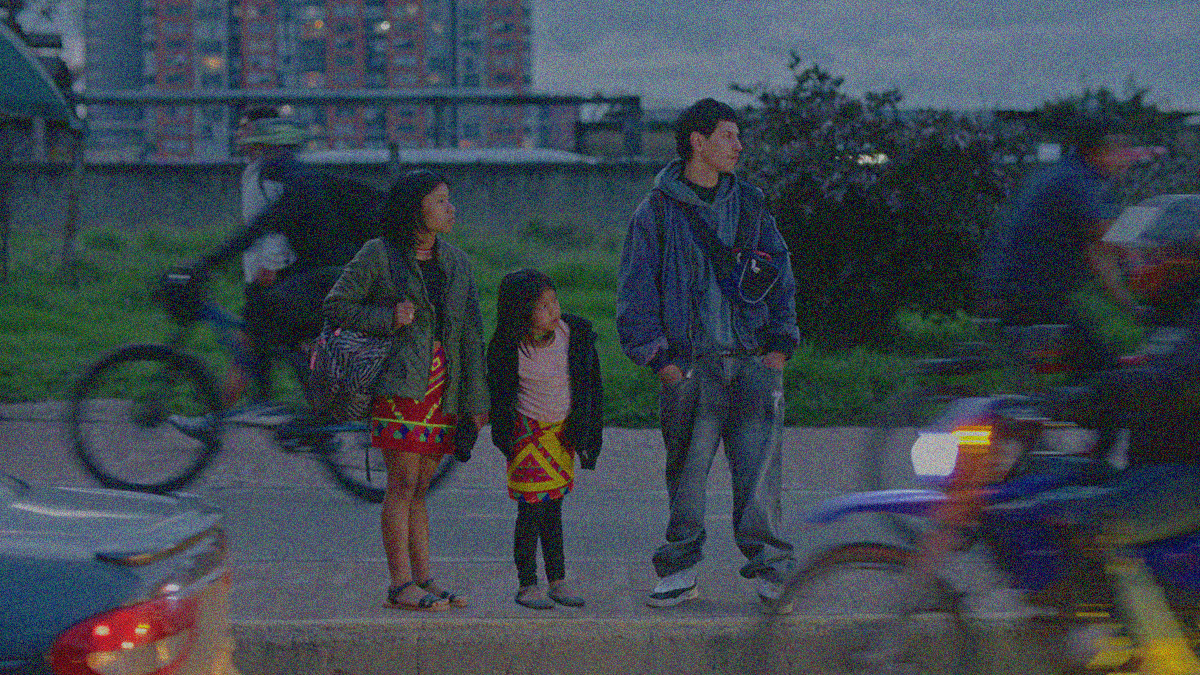
Forced to flee her Emberá village in the Chocó rainforest as a young girl due to paramilitary troops burning it to the ground, Yajaira (Girleza Duave Cerezo) has been forced to raise her mute daughter Maria (Ana Michelle Nama Dumaza) on the increasingly dangerous streets of Bogotá, Colombia. She's already lost her husband and mother to war, so she begs for her small community to do better protecting themselves. Sadly, apathy seems to have taken hold.
So, when a tragic event occurs that shatters her world despite barely registering with the others, Yajaira decides to make the trek home herself. It's not for her own wellbeing since she's embraced city life and cellphones. No, she's doing this for Maria so the girl isn't made to suffer like so many other Colombians forced to survive within gang territory. One of those gangsters (Juan David Junca Linares' Jhon) agrees and asks to join them on their journey.
Written and directed by Juan Andrés Arango Garcia, Where the River Begins exists in the overlap between Indigenous mysticism and European violence. It highlights the fear of the unknown against the self-destructive nature inherent to reclaiming that which was lost through the same means in which it was taken. Jhon isn't being glib when he tells his brother Fredy (Deivid Stib Vaca Merchan) their father wouldn't recognize them today. He rejects what they've become.
It's the same when Yajaira implores her elders to be more vigilant with their youth. To protect kids like Mateo (Arlinson Queragama Arias) from themselves when they refuse to listen and go off into the city alone. Rather than find a way to adapt their identity to this new world, they've simply allowed it to consume them—blindly accepting its horrors as the price of admission. But Yajaira is old enough to remember. She's idealistic enough to still dream.
And we see those fantasies via wonderfully poetic cuts from a reality of Yajaira in everyday clothes to her covered in painted Kipará patterns. Every moment she wishes to hold onto finds itself transformed in this way whether with Maria or Jhon. The more the latter gives himself over to a future living with them in the jungle rather than existing solely in his desire to run from fear, even he begins to dream of the same despite his European heritage.
It all goes hand-in-hand with the notion that the jungle decides their fate. It will either lead them to safety by way of its animals or make certain they never arrive. This becomes the one request Yajaira makes of Jhon. To give himself over to its power. To stop trying to find ways to force himself in or out of situations. Because life in the Chocó isn't going to be easy. There is no electricity or internet to stay connected. The jungle is everything.
This is quickly revealed as a welcome notion considering the racism and abuse they encounter along the way. The threat of paramilitary groups remains even if, as one stranger relays, they've "traded their guns for whiskey." The places they travel on the front half are populated by "white" Latinos disparaging Yajaira as an "Indian" whose only worth is prostitution while the people met on the back half flip the script by dismissing Jhon as a predator.
Don't therefore assume Jhon is a passenger here. Yes, Yajaira is the lead and the one educating him on what must happen for them to find success, but he's just as desperate for a new beginning as he is of being with her. Both of them fled the violence they know will kill them in the end. Both are risking their lives in the hopes they aren't merely walking into worse violence for the trouble. She was forced from Emberá then. He's forced from Bogotá now.
Will they get to where they're going? That's the ultimate question. Don't think Garcia doesn't understand, however, that the answer isn't solely concerned with place. Emberá is less a destination than an idea. It's less about it needing to be home than its potential to let Yajaira and Maria feel safe. Because they are each other's home regardless of where they put down roots. Add Jhon's geographic orphan and they might be complete. The jungle simply makes it possible.
7/10
Wild Wild East
Dziki Dziki Wschód
PLATFORM
World Premiere | September 14 | Poland | German, Polish, Ukrainian
_____
It should come as no surprise that I kept thinking about Hateful Eight while watching director Jan Holoubek's Wild Wild East since he mentions Sergio Leone and George Roy Hill—two of Quentin Tarantino favorites—as major inspirations for how he staged his latest film. While this snowy WWII mystery isn't set in a single building, the remote occupied Polish town of Małe Zalesie is just about as empty as Minnie's Haberdashery when strangers start to arrive.
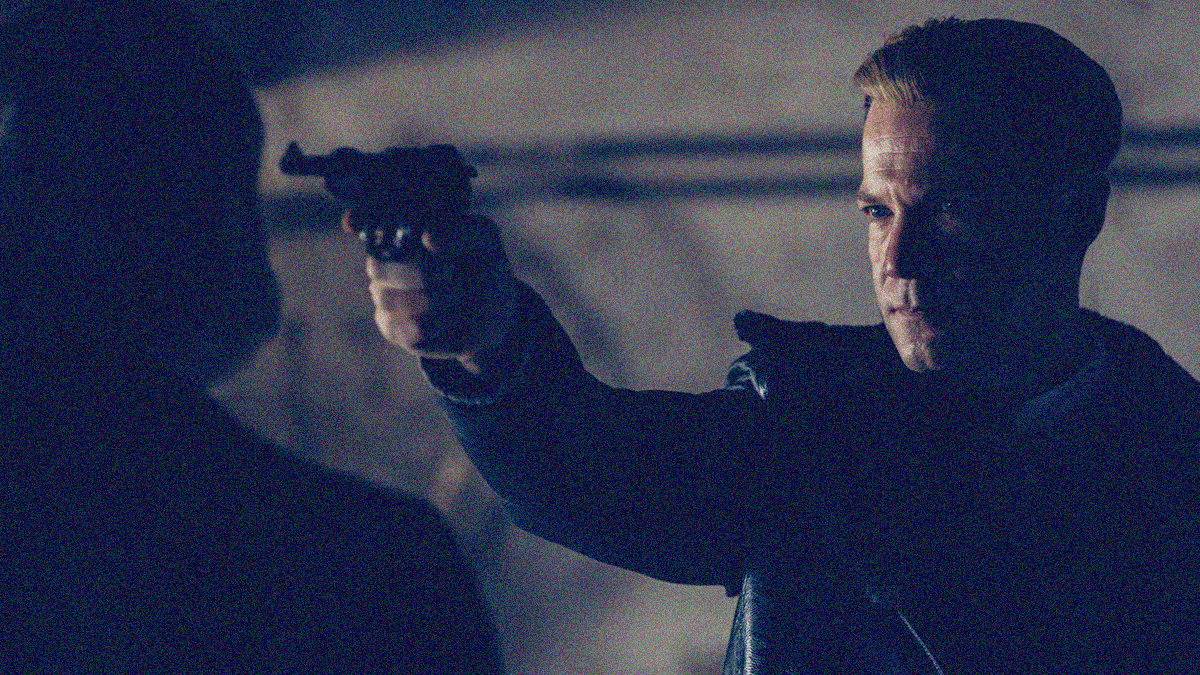
Herr Wolff (Itay Tiran) rides in on horseback through the snow, his blonde hair proving all anyone needs to know to be on their best behavior. While he's not the only German Nazi in the vicinity, these Poles and Ukrainians cannot take the risk that his presence might mean something new—something that threatens their ability to exist in this veritable ghost town. So, they all walk on eggshells as Wolff begins to ask about the long-since disappeared lawyer Kowalski.
We soon discover the reason to be a rumored stash of gold that the man was keeping safe for its Jewish owners. Is that why everyone is so squirrelly? Have they been searching for the treasure too? It would explain the curt nature of the couple now taking residence in Kowalski's office (Piotr Trojan and Joanna Kulig's Wieśniaks). It also accounts for the suspicions lobbed by the town's de facto interim mayor, Kaim (Robert Więckiewicz).
Is the gold even real? Who's this other stranger (Janusz Chabior's Zbir) entering town on foot under the shroud of night so as not to be noticed? Why does Nazi Captain (Jan Bülow's Kurt) curiously just seem to want a new friend for tennis? What is Kaim's orphaned nephew Chłopak (Borys Otawa) after by volunteering to be Wolff's guide through town? What if all these characters have converged for a fantasy only to each find something much worse?
Because there are more secrets than potential wealth as everyone hides or clings to something that gives pause to share. It makes sense considering this is a Polish locale populated by Poles, Germans, and Ukrainians while the ghosts of the Jews who once ran it (the Levi family) remain present on signage everywhere Wolff turns. He can't therefore trust any of them knowing they surely won't trust him back. He can only hope his status in the Reich opens the right door.
Aleksandra Takuska's script and Holoubek's direction lean into this conundrum by ensuring the tension is dialed to eleven for the duration. Each new encounter plays like an old western duel as both parties try to size the other up while each new discovery allows Wolff to shift his trajectory elsewhere. Sometimes it's to someone we haven't met yet. Sometimes its pointing back at someone we just left. One revelation leads to the next until even he becomes exposed.
The result is very entertaining. We know something doesn't add up with Wolff since he seems gun shy in ways Nazis aren't, but we can't quite put our finger on it. Tiran plays the role with an authentically malicious sense of superiority regardless, keeping the others uncertain of what types of horrors he's capable of unleashing on their businesses (legal and otherwise) or bodies. As the suspense rises, however, they all become more embolden to test his resolve.
Everything you can think would be included in a Holocaust film is present whether hidden fugitives, opportunistic traitors, or distraught parents desperate to know what's happened to their sons. The fun is in how these familiar details fit into the puzzle because you never know when the discovery is something Wolff can exploit or something that might prove his undoing. And looming overhead is Kurt's Kommandant's request to meet before he leaves.
Tiran is great in the lead with an effortless entitlement that barely wavers until it all but evaporates when his Wolff finally overstays his welcome. Więckiewicz is a nice straight man who thinks he's in control until those in his employ realize Kaim's iron fist has nothing behind it. And Bülow often takes the spotlight since Kurt's unpredictability has us wondering if he's erratic due to cruelty or turmoil—it'll make sense once we discover his true motivations.
So, sit back and enjoy the pulpy theatrics as clandestine snooping makes way for a pretty substantial body count despite Małe Zalesie's almost nonexistent citizenry since that also means there are few people to notice the bloodshed and make a stink. As long as Wolff can find an ally for any given situation (regardless of whether he'll betray them in the end), he can buy the necessary time to hop to the next conflict. He'll either find the gold or death for the trouble.
Don't get too caught up in the entertainment to forget the backdrop, though. This is still a Holocaust film despite its genre underpinnings. Holoubek and Takuska might use it to color their thrills at first, but they don't hide its impact insofar as why their characters do what they do leading to the climax. So, when their extremely harrowing denouement does put it at the forefront, prepare for utter devastation en route to an unforgettable final wail.
8/10

Pulled from the archives at cinematicfbombs.com.
The Fabelmans screened on September 10, 2022 at TIFF.