TIFF 2026: Day Ten
Winding down


As the festival winds down, there are really just two more developments to keep tabs on. One is Yan Lanouette Turgeon's closing night film Villeneuve: The Rise of a Legend having its world premiere tonight at Princess of Wales (6:00pm) and Roy Thompson (8:00pm). The other is the awards.
How many films are just screening for the first time tonight? Surely not many. Sean Menard's Run Terry Run is another due to its Gala program status. So is Duncan Jones' Rogue Trooper to cap off Midnight Madness. I would feel bad for them having to wait so long, but that also means bona fide Torontonians can attend because all the critics have left.
As for the awards ... is it I Play Rocky's to lose? Will Peter Farrelly repeat after Green Book took the People's Choice in 2018? We shall see tomorrow.
Today's schedule:
• Four Seasons in Java, d. Kamila Andini | Centrepiece | Indonesia, France, Netherlands, Norway, Poland, Saudi Arabia, Singapore | Indonesian, Javanese
• Brace Your Heart, d. Amanda Kernell | Platform | Sweden, Norway, Denmark, Iceland, Bulgaria | Northern Sami, Swedish
• Thirteen in Gaza, d. Hosam Abu Dan | Centrepiece / TIFF Next Wave Selects | Palestine | Arabic

Diary of a Mad Old Man
GALA PRESENTATIONS
World Premiere | September 18 | United States of America | Japanese, Mandarin
_____
As he turns sixty-nine (an intentional number considering it was changed from the source's seventy-seven), Utsugi (Lily Franky) suffers a stroke that leaves him partially paralyzed on his left side. It's yet another setback as a result of aging—one that separates the capabilities of his body from the desires of his mind even further. Because this old man still has urges regardless of whether anyone would help him satisfy them if he still could. It's all that's on his mind.
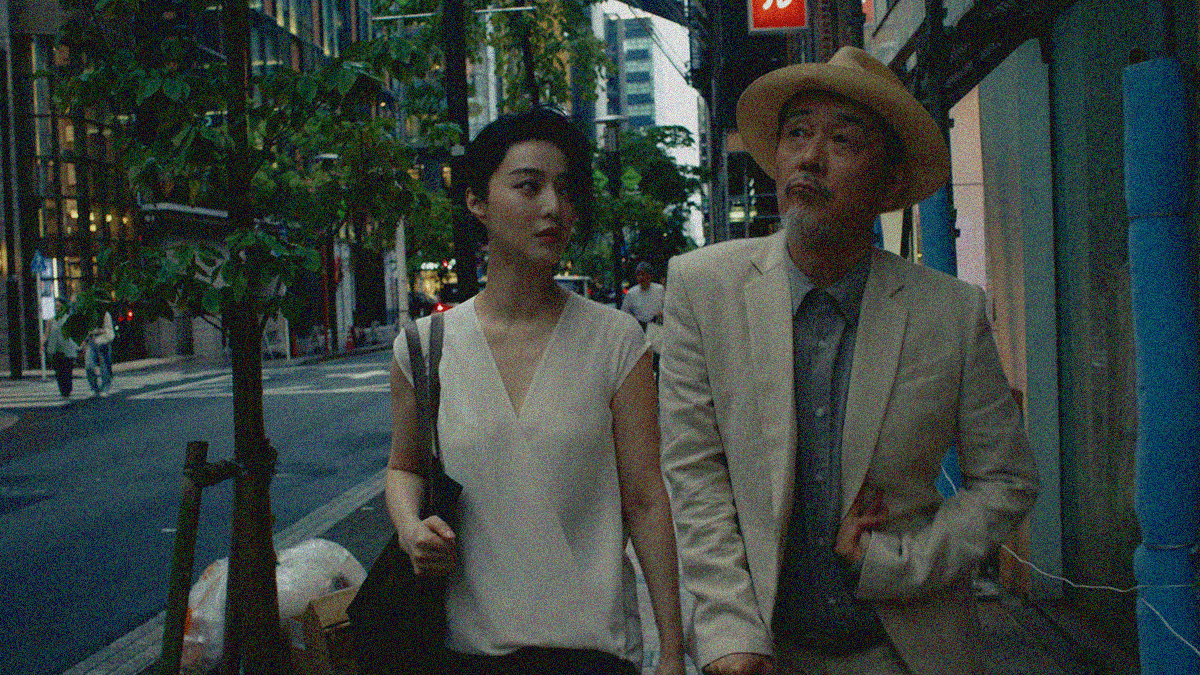
So, in some ways, this ailment is a boon for his sex drive since it guarantees the attention of his women caregivers. Sure, there's his late wife's sister (Yûki Kudô's Hana) fulfilling her oath to keep the family together. But there's also his daughter-in-law Susu (Bingbing Fan)—a Chinese immigrant who works as a hostess at her friend's bar. To have her stretching his arm and leg while wearing a sheer white blouse almost makes the pain worth it.
Heck, as Wayne Wang's Diary of a Mad Old Man (adapted by Kelvin Wyles from Jun'ichirō Tanizaki's acclaimed novel) unfolds, the pain might be part of the appeal. Utsugi doesn't write about any sadomasochism in his diary alongside his memories of finding young Kabuki actors attractive, but he does talk about a desire to embrace pervasion as time goes by. We can begin to guess what his fetish of choice will be once he starts watching Susu shower.
It's a fantastic bit of projection that emboldens him to do so. Susu is literally hanging in his wing of the family's large house (Utsugi owns a kimono business successful enough to begrudgingly pay for his children's mortgages) to watch him and make certain he doesn't fall. So, her declaring that she'll leave the door open while cleaning up is obviously to let him know she'll hear if he needs her. Utsugi wonders if it might have been an invitation instead.
All he craves now is his time with her. As the group readies to spend the summer at their villa like always, Utsugi concocts a lie about needing to catch up on work to stay back—enlisting Susu to remain as his nurse. The two grow close without everyone else as a distraction. They go to jewelry shops, talk about love, and discuss his son/her husband Jokichi (Takumi Saitō). Utsugi grows bolder. Susu appreciates the attention. One thing leads to another ...
Now, don't let your mind go too crazy. The character is impotent in the novel and an early scene of his attempt to masturbate proves this is likewise true in the film. No, Utsugi's desires align with his abilities while pointing towards his goal of adopting that perversion. We see it as his main point of voyeurism tends to turn his eyes to Susu's legs and feet. He writes about aging allowing for a broader scope of sources for his arousal. And he's happy just to look.
As rumors of Jokichi having an affair swirl, Utsugi returns the favor to become Susu's emotional caretaker. Those fatherly affections eventually move past being an admirer of beauty to a deep-seated romantic adoration. He wants to give her what his son won't. He becomes jealous about the men she flirts with at her work. And he all but pretends Hana and the others have ceased to exist. Utsugi now lives and breathes Susu only. She becomes his drug of choice.
We must therefore wonder what her part in all of this is. Everything we see is from Utsugi's vantage, so we neither know if what Susu says is true nor if it's even real considering how far gone he's become. Is she manipulating him? Is she in cahoots with Jokichi to get more money? Or is she just a homesick woman caught in a turbulent marriage who's seeking empathetic companionship from the one place willing to supply it?
There's a brief moment in time where it does start to feel like Wang is taking us to some dark realities, but they are inevitably shown to be outside speculation. It's Hana worrying that Utsugi is being used or Jokichi just being a pretty horrible dude in general. And just because Susu fosters Utsugi's lust doesn't mean she's in love with him too. Not answering his calls could simply be a case of her not being under any obligation to answer them.
Because this isn't her story. It's his fantasy. It's Utsugi's descent into sexual depravity as he loses his capacity for shame and decorum in the presence of Susu's attention. It's the gradual escalation of his desire to push boundaries and see where it might take him. Maybe a slap in the face. Maybe the permission to caress her skin. Maybe the dream to have her feet engraved on his tombstone so she can dance upon his body for eternity.
It's an invigorating journey possessed with as much sensuality as comedy considering the age gap and familial relationship between its principal characters. Fan is great as the unwitting muse, but it's Franky who shines as the source of paternal and romantic advances towards her. We watch as his body and mind dissolve into putty at her touch until losing all semblance of dignity. His Utsugi doesn't care, though. This fantasy is keeping him alive.
7/10
Gail
TIFF DOCS | UNHIDEEN GEMS PRESENTED BY REDBREAST
World Premiere | September 12 | Canada | English
_____
Who is Gail Lichtman? I think we get a good idea of who we're about to spend the next ninety minutes with during an early scene at a shoe store where she's preparing to buy new boots for the frozen tundra of a Canadian Our Lady Peace tour. The gentleman at the shop measures her feet to be size ten. She agrees. He puts one on her foot only for her to say it's way too big. He says, "Let's get a 9 1/2 then." Her response? "9 1/2 won't work!"
The employee desperately tries to get through to her that the size isn't as important as the fit, but she is so fixated on the number that she presumably refuses to purchase a pair until she finds one that satisfies both criteria. It's the sort of real, unfiltered moment that fills up Michael Maxxis' documentary Gail from start to finish. A complicated and frustrating interaction born from a life of them. It's why she needs OLP as her north star of hope and love.
I didn't know going in how involved the band would prove. I guessed extensively (as evidenced by producer credits for singer Raine Maida, bassist Duncan Coutts, and manager Jason Murray), but only to provide access. If I'm being honest, the first VIP visit saw Maida looking like he'd rather be anywhere else. But that doesn't seem to be the case since this was all his idea. When brainstorming ways to document the OLP 30 tour, he suggested filming Gail instead.
And why not? She's been a die-hard since the beginning with over one hundred and fifty shows under her belt if you combine Maida solo gigs with the band's concerts. That's not a small feat for anyone, but this is an MTA subway worker in the Bronx who had to cross the border for most of them. As someone born and raised in Buffalo, hearing Canadian bands like OLP, Moist, Matthew Good, and The Tea Party is easy. In New York City? During the 90s? Not so much.
Gail did, though. She connected to the music and the lyrics with claims that songs like "Hope" (from Naveed) and "Life" (from Spiritual Machines) saved her from debilitating bouts of depression. She made it her duty to show her support and spend tens of thousands of dollars to inject herself into their space for photo opportunities, autographs, and conversations. Is it a parasocial relationship at the end of the day? I'd say yes. Although the band does know her name.
More than that, they have her number. They called Gail to center this movie around her. Sure, that can be fudged via intermediaries, but there are some moments on-screen that make it seem they aren't. Are they all friends? No, but I don't think the band laments having to give her a hug before almost every show on this tour. If there's one thing missing here, it's a bit more transparency on this point. Because the film does try to make what occurs feel unplanned.
That's not to say it isn't, though. I'm sure Gail asking for a VIP ticket to the Halifax show was off-the-cuff, but the band saying "yes" holds different meaning when you realize they're producing the film documenting the question. In some respects that line seems intentionally blurred to ensure certain events don't feel manufactured. As such, it's difficult not to assume they definitely are. Not where it concerns Gail. Just where it concerns the band reaching out to her.
For Gail's part, this is an extremely brave undertaking. She has a very big personality that will (and does) prove abrasive to some. Her emotions move like a tidal wave to the point where she breaks down in a hotel lobby and says she isn't going to go to that night's show. And she's constantly talking to people who want nothing to do with engaging in the conversation. The potential for this film to mock her is therefore huge. It took trust to believe they wouldn't.
Not being disrespectful doesn't mean not amplifying the inherent humor in how she lives her life, though. Maxxis is never afraid to inject a sight gag or cut that begs the audience for a laugh like when Gail is going on and on as though she is close personal friends with her cab driver only for the camera to cut to him looking straight ahead as though he hasn't absorbed a single word. It's the sort of move that shows everyone is on the same page.
That's important because self-awareness is necessary to really let viewers endear themselves to Gail as an authentic person with a relatable humanity as opposed to a caricature putting on an act. I don't think anyone watching would deny this is her uncensored self. Between the over-sharing, hypocrisy, fatigue, stress, and joy turning on a dime from one second to the next, it can't be anything but honest. I'm not sure Gail has a disingenuous bone in her body.
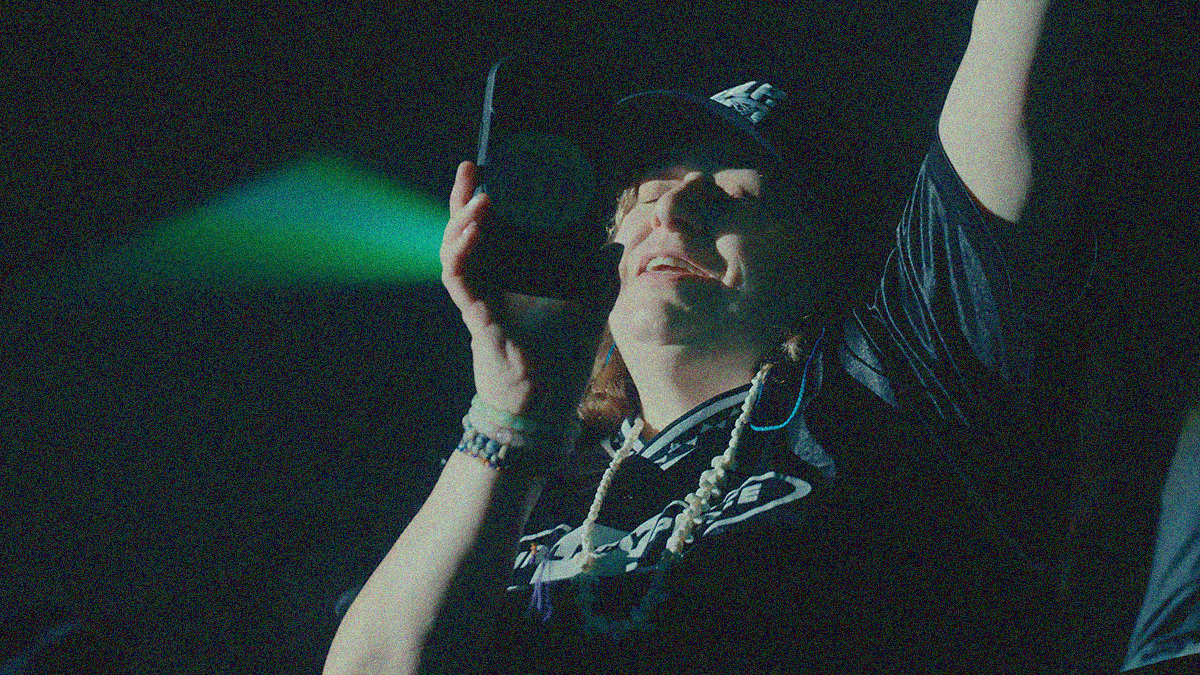
As for the music: don't expect extended glimpses of the concert performances. The camera is generally focused on Gail dancing at her seat and almost always accompanied by wonderful orchestral versions of Our Lady Peace songs rather than the performance in the background. There are a couple snippets that prove exceptions (including a climactic gift), but the band really did decide to push themselves to the side. Gail is the rockstar here.
7/10
Trees are Watching
CENTREPIECE
World Premiere | September 18 | Turkey | Kurdish, Turkish, English
_____
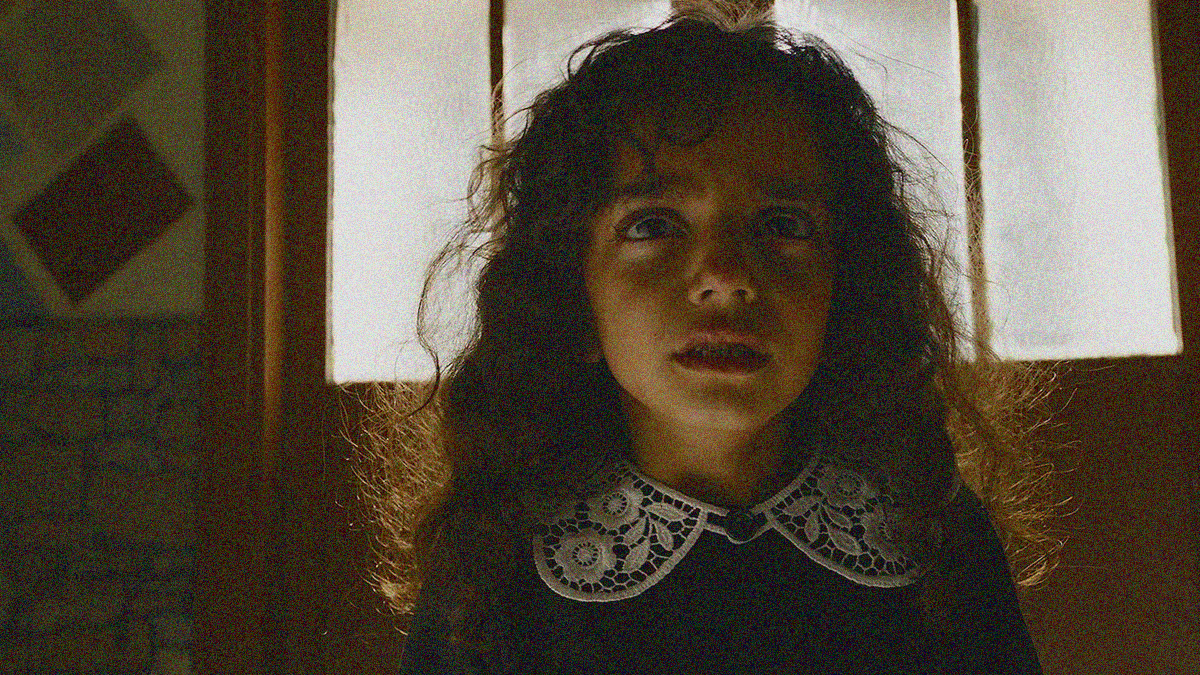
Young Nihal (Ronya Rahmani) embraces the Kurdish folklore she's heard about every person being reborn twice upon death. Once as a tree and again as whatever is made from its wood. She hopes she'll only experience the first—to remain a tree forever in their front yard with sister Spin (Sevin Ahmadpour) by her side. Dad (Aziz Çapkurt) can join them too if he'd like, but not their mother (Özlem Tas). She'll become a chair and get burned in Hell.
It's a rather dark sentiment for a child to make. One that scares their friend Darya and ultimately helps render Nihal too frightened to function. You cannot blame her, however, once we witness a couple flashbacks to what her mother does to teach a lesson. Was it out of malice? Maybe. But talk about medication points to a more complex reason. It's a similar theme with a now grown-up Darya (Eva Green) too. That desire to write women off as crazy.
As Iranian Kurdish filmmaker Bahman Ghobadi's first foray with horror and the supernatural Trees are Watching unfolds, there's a definite penchant for isolating women as vessels for evil. Don't assume misogyny is the culprit, though. I believe his intent is to hold the patriarchy accountable instead. Because who are the ones trying to dismiss them? Who is telling the women to take their pills? Who is getting frustrated with the girls when they dare to interrupt?
Is it therefore a coincidence that Darya's daughter Connie (Neva Kuş) is deaf and perhaps unable to cause the same problems as the girls in the past? Or is it simply to add some suspense when she inevitably runs off for her mother to frantically find? You could read a lot into most character choices Ghobadi makes. The same is true for his attempt to bake-in ecological messaging about mankind destroying forests. Perhaps Mother Nature is "crazy" these days too.
I say "attempt" because the metaphor doesn't really go anywhere. It's mentioned as why Darya keeps returning to her childhood home (her family moved to London and she no longer understands the language) since she's an author intrigued by the phenomenon, but I read it more as her subconscious remembering Nihal's talk about reincarnation. This idea of trees holding souls of loved ones and their destruction revealing they sinned in life.
Because what's the one narrative example of burning wood? Nihal and Spin's mother suffering for her actions. Horrific actions. Between what she does physically out of rage, the girls' teacher physically out of entitlement, and a plumber (Ayhan Taş) psychologically out of sheer enjoyment, this film is chock full of child abuse. Call it a stand-in for this place's intergenerational trauma if you want (Ghobadi speaks of exile themes), but it's literal on-screen.
So too is the fact that Trees are Watching eventually flirts with making a left turn straight into camp as it introduces a parallel thread to an older Spin (Zeynep Çamci) seeking revenge on everyone who wronged Nihal. While she wields a hatchet to chop off hands, a different entity haunts Darya. We know by way of the story that her pursuer is Spin and Nihal's mother beyond the grave, but it's tough not to laugh when the form she takes is a chair.
Yes, a large part of this film is Eva Green fighting a wooden chair. Yes, it can prove just as funny as that sounds. Enough to take you out of the film? Not for me. I've seen a lot of reactions speaking to the contrary, but many of them are also quick to accuse Ghobadi of "AI slop" despite zero evidence of that being the case (I saw nothing but VFX credits in the scroll). The fable about wooden vessels is fleshed out well enough and early enough to take it seriously.
Where I do agree with the detractors, however, is that Ghobadi is juggling way too much at once. Spin's revenge. Darya's cat and mouse with the chair. Forest fires. Mental illness. There's even a second monster by way of "evil mothers" living in toilet tanks (with some sufficiently creepy jump scares). Add the fact that he wants to have his cake and eat it too and the whole endeavor can grow tiresome as we're continuously bounced around.
That last one is the gripe I cannot forgive—one that's happening all too often of late. I love the idea that what we see might not be real because it's coming from the perspective of a broken character. Ghobadi not only leans in this direction, but he also effectively makes it canon via a successful denouement culminating in a perfectly bow-tied and bittersweetly karmic end. So, why does he then tack on an additional ten minutes to undue it by also making it real?
I won't go into detail so as not to spoil things, but the second and third endings might prove to be the campiest bits despite the prior chair antics. Maybe that's a product of me being able to accept the latter as an earnest representation of cultural horror. Or maybe audiences are just too literal to have the ability to suspend disbelief these days. Considering Ghobadi feeds that literalism with his subversion of his subversion, nuance might officially be dead.
Despite the mess, however, I do think there's one thing everyone can agree upon: little Ronya Rahmani's Nihal is fantastic. She's so good that I can't help but worry the role might end up traumatizing her. Besides the prologue, she's pretty much crying and shaking in fear without a single false note for the duration. The scene where Ayhan Taş scares her with a ghost story made more menacing by his highly expressive face is one that will stick with me.
6/10

Pulled from the archives at cinematicfbombs.com.
Hotel Rwanda screened on September 11, 2004 at TIFF.