Week Ending 5/1/26
Curbing the auto delete

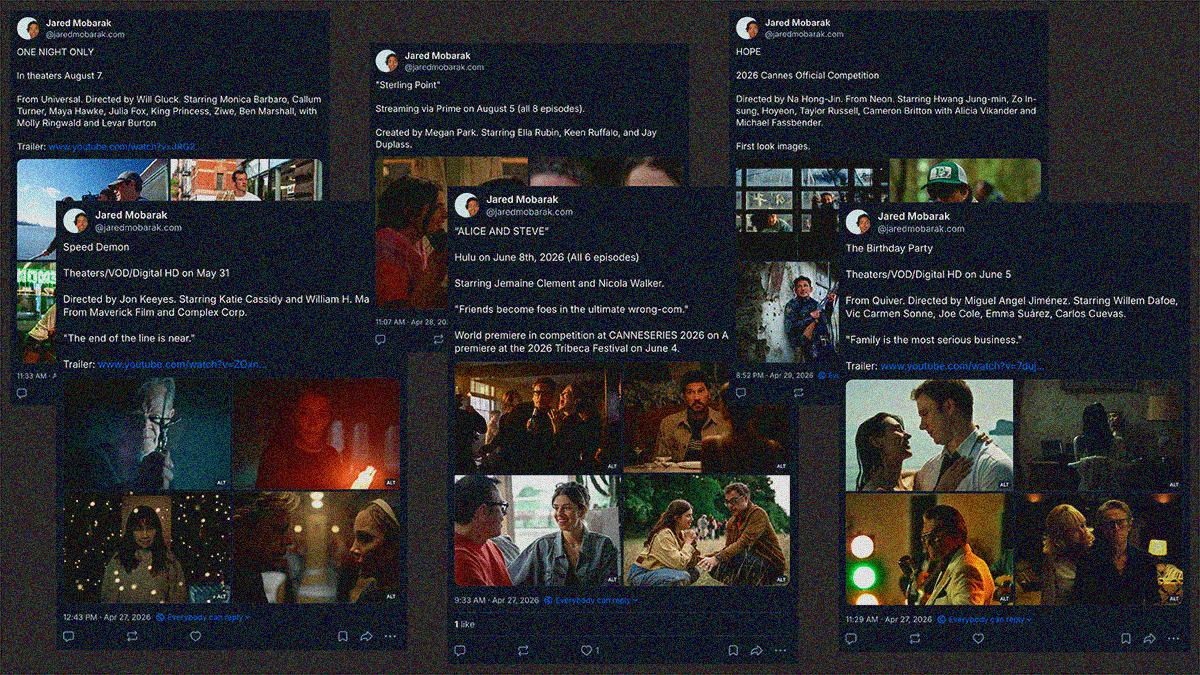
I'm on a ton of press/publicity mailing lists that often share "first look" info about images and trailers. I generally just delete them sight unseen if they don't also supply an opportunity for review. And the ones from the big studios never do.
I recently started looking at them a bit closer to find that I've probably been a tad hasty in that culling. Not because I'm feeling ambitious enough to hound the senders for access to the films and television shows themselves, but because I was seeing creator names in the fine print that I like.
A new Shudder original from Indonesia? Whatever. Joko Anwar co-wrote it? Okay. Maybe I should put Smothered on my watchlist. Another new Prime series? Sounds like a Tuesday. It's from My Old Ass director Megan Park? Okay. Could be worth checking out.
The question I then had was "What do I do with it all?" since I still don't want to clog my email. So, while none of it is necessarily being saved from the trash bin, I could share it via my Bluesky account first. Just simple posts with titles, release dates, creatives, and images/trailers. Not only does it put it out there for followers feeling the dearth of such info after leaving Twitter behind, but the act of making those posts also helps cement the title in my head for future reference. And it will now only take a quick search through my profile to find those images/trailers if/when I need access later.
We'll see how long I keep up with it, but I'm enjoying the process so far. It keeps me up-to-date, gets the word out, and prevents me from just lumping legitimate mail into my spam folder. After all, the insane number of choices this era of streaming provides doesn't seem to be decreasing anytime soon. Might as well start weeding through the mountain instead of just ignoring its existence.

Conbody vs Everybody

The stat that begins and ends Debra Granik's five-part documentary Conbody vs Everybody is insane: six hundred and fifty thousand people return home from prison each year. That's over half a million men and women being thrust back into a civilization that more than likely forgot they existed and generally has no desire to assist in their reintegration. Because despite the word "corrections," the prison industrial complex is now a for profit institution dependent on crime.
Anyone reliant upon increased incarceration looks at recidivism rates ranging from twenty percent within one year and fifty percent within five and wants those numbers to go higher because a successful prison to them isn't one that reforms. No, success to them is an overflow of inmates necessitating tented dorms to accommodate and billion-dollar real estate ventures to build even more complexes. More police. More weaponry. More funerals. More money.
It's why the work of someone like Coss Marte is important enough to earn the attention of an Oscar-nominated filmmaker like Granik to follow his Conbody venture for eight years. This is a formerly incarcerated, self-proclaimed hustler who leveraged the business acumen of running a two-million-dollar-a-year drug delivery service at nineteen into a prison-style fitness philosophy whose goal is to create community and opportunity for others trying to rebuild their lives.
We watch him right from the start as he works on sales pitches for investors with the help of local mentor programs. We witness the excitement and frustration inherent to having a great enough idea to spark interest and the background check red flag to instantly kill it. And even if he does get lucky enough to find someone willing to take the risk on him, what happens when that backer realizes they are actually taking a risk on Coss's employees too?
Because it's not just him and his story about losing seventy pounds in six months by exercising with nothing but his own body weight in a cramped jail cell. It's about the people he inspired to do the same and follow in his footsteps to use fitness as their salvation in the outside world just like they did on the inside. Sultan Malik, Ray Acosia, Shane Ennover, Derek Drescher, Syretta Wright, Jamal Campbell, Gym Star, and Tommy Morris are all along for the ride.
A lot happens in eight years professionally and personally. Coss is constantly struggling to keep the lights on as fickle landlords let external pressure dictate their decisions. He's visiting prisons as a mentor himself, reading hundreds of letters from potential trainers using him as their inspiration to hope again, and helping to raise his son Cathanial, assist his brother Chris's political career, and keep his makeshift family of employees on a path towards success.
So, Granik has a wealth of story threads to follow that both explicitly concern Conbody itself (How about a Saks Fifth Avenue pop-up location?) and just the trials and tribulations inherent to turning a new page despite the odds being so stacked against everyone on-screen. Addiction, gang violence, PTSD, public stigma, and more threaten to derail the hard work and promise each trainer prays will get them through. Those recidivism stats are high for a reason.
If I had one criticism of the series, it's a lack of keeping us aware of what happens to the Conbody staff. Ray and Sultan eventually just disappear without mention. The same goes for Jamal, Gym, and Tommy. Besides Derek and Syretta still being present at the final post-pandemic outdoor classes shown and Shane getting a brief status update, the absence of any mention of characters who played integral roles towards embodying the central themes seems wrong.
Because we hear it described as a major problem many times throughout these episodes: the invisibility of former inmates. So, why would this project add to that phenomenon regardless of intent? We can assume they all finally got their break and went on to live great lives after Conbody helped get them back on their feet, but we don't know for sure. What's stopping us from presuming they didn't, forcing the film to sanitize its message by avoiding that truth?
Distilling eight years into five hours isn't an easy task and the results will never be perfect, but I do think an omission of information like that is worth mentioning. Especially since the overall trajectory of Coss's ambitions carries such a positive energy. Finding out that some of the trainers just couldn't make it work doesn't diminish that. It only adds to the complexity of the situation and ensures the issue at-hand is taken more seriously as a topic that needs fixing today.
Give Granik a ton of credit for not shying away from the brokenness of the system, though. The constant roadblocks towards sustainability for Coss despite years of proven stability. The ways in which these men and women must toe the line between fighting for their dignity and diminishing themselves for the powers that be just to survive. The community engagement revealing as much apathy as empathy when it comes to real action above performative exploitation.
It doesn't matter if Conbody is a gimmick. A lot of customers probably did walk through that door initially wanting the tourist "prison experience" regardless of whether they bought a membership after realizing the workout was legit. Coss admits this fact too during a scene with other activists like the late Michael K. Williams. It's crucial to hear him say that people can think whatever they want because getting them through that door is all that matters.
It's only after they're inside the "jail cell" aerobics room that Coss and his trainers can prove their worth, tell their stories, and change minds. Sure, having random white people cavalierly ask "what were you in for" is demoralizing since it's generally out of morbid curiosity rather than compassion, but it sparks a needed conversation. And the dialogue that follows ultimately humanizes them in the eyes of those that too often unjustly dismiss them as unworthy of grace.
7/10
Our Land
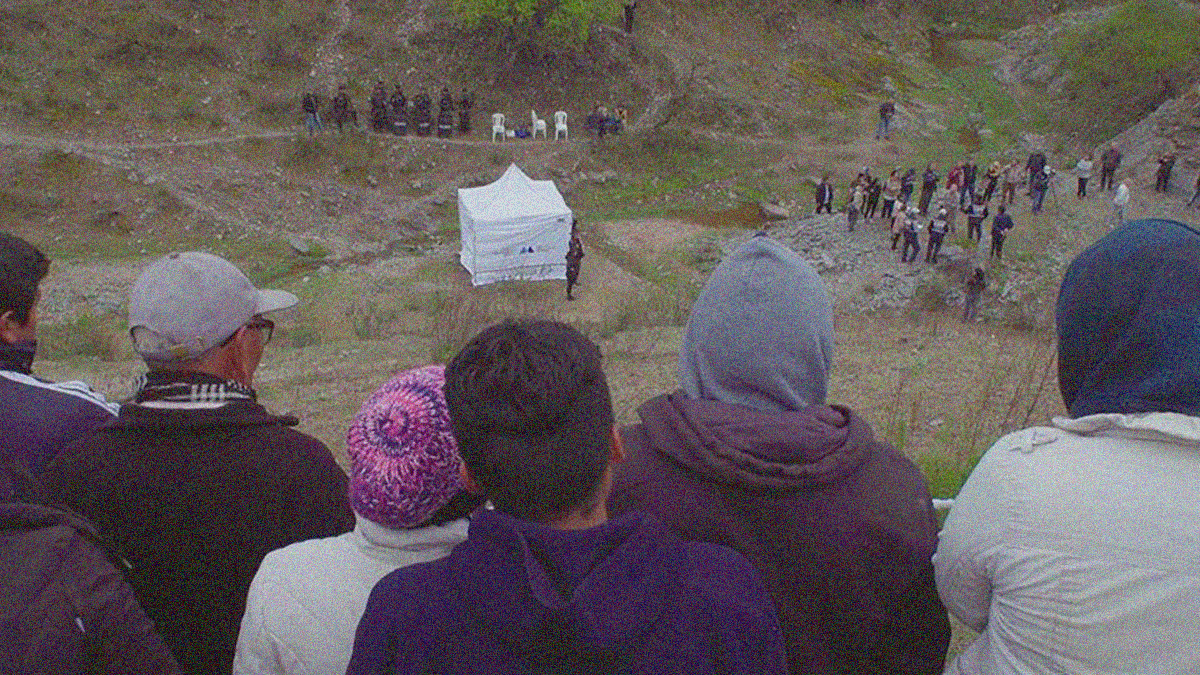
There are few better examples of the entitlement held by people in power than watching the footage captured by the defendants in the trial at the center of Lucrecia Martel's Our Land. It depicts an incident that occurred nine years prior wherein "landowner" Dario Amin and the two former cops (Luis Humberto Gomez and Eduardo José Valvediso) he enlisted to escort him confront a group of Chuschagasta community members—an event that ends in murder.
Not only does the video show this trio as aggressors when pulling a handgun and then shooting after the men present backed away, but there's also a moment when they are laughing with each other in their car about the absurdity of some Chuschagasta men filming them as well. The punch line is pretty much, "Why are they bothering?" since "The courts don't listen to them anymore anyway." The assumption is therefore that the court will agree. So, why hide it?
Sadly, in many cases they would probably be correct. When the laws and paper trails used for colonialists to steal land from indigenous inhabitants are sanctioned by the court, why wouldn't you presume the court would simply rule in their favor regardless of evidence? It's the same story everywhere. Look at how Israel uses its own courts to declare ownership over Palestinian land. These nations hide their corruption behind the veneer of justice.
As such, Martel and co-writer María Alché supplement their documentation of the trial itself with interviews and research that contextualizes the supposed "facts" being lobbed by the defense. First, we watch a wild courtroom debate between Valvediso and the young Chuschagasta man who disarmed him during the conflict and see how the former inherently has an upper hand via confidence and education. Then we learn why that disparity exists.
It's a sobering dissection of erasure and control wherein we visit the church where many Chuschagasta were baptized only to see a giant wall painting depicting how God's angels threw lightning bolts upon the "savage Indians" to get rid of them so colonialists could take over. We hear stories about how many in this community don't even realize they are indigenous until adulthood because their school curriculum teaches that indigenous people are all gone.
Talk about an identity crisis. But that's exactly the point. If the aggressors cannot force out the inhabitants preventing them from owning the land, they will look to erase them in plain sight instead. Because history is built on documentation. Yes, the government says the land belongs to the Chuschagasta, but what if the Chuschagasta can be tricked into letting themselves to be labeled something else? To them, nothing has changed. To the record, however, everything has.
What is therefore more important? That the documents have been skewed to label Javier Chocobar's ancestors as gauchos? Or that Chocobar's name is shown as a constant presence on that land for centuries? It gets to the point where Amin's attorneys attempt to completely upend the murder trial by repackaging it as an issue of ownership. If the land is Amin's, the shooting can be construed as self-defense because Chocobar had no rights to be there protecting it.
As a result, Our Land isn't just a film about this case or its verdict. It's about giving the Chuschagasta people a platform with which to reclaim their humanity and history in a country that has already taken their language and continues to paint over their heritage. It highlights their vulnerability against colonial opportunism. It showcases their struggles, joy, and pride in returning home despite success in Buenos Aries. It pokes holes in the defense via the presence of its cameras.
I love the contextual revelations that arise like discovering why the defense witnesses are all retired public officials (the people the Chuschagasta have been petitioning to uphold their rights), but the visual juxtapositions are even better. Martel uses a drone to film the land as a woman talks about property lines and says "I don't know" to a question asking how far it is from a Chuschagasta home. The camera pans fifteen degrees to show one that's literally twenty feet away.
Therein lies the importance of providing the disenfranchised and abused a voice to combat the louder and better financed lies of their oppressors. If the systemic violence behind Argentina's education and courts is so insidious that it can white wash the Chuschagasta's presence to the Chuschagasta themselves, how would they ever stand a chance fighting back alone? These countries indoctrinate their citizens at birth to rewrite reality, and it's been working for way too long.
8/10
Widow's Bay: Season One
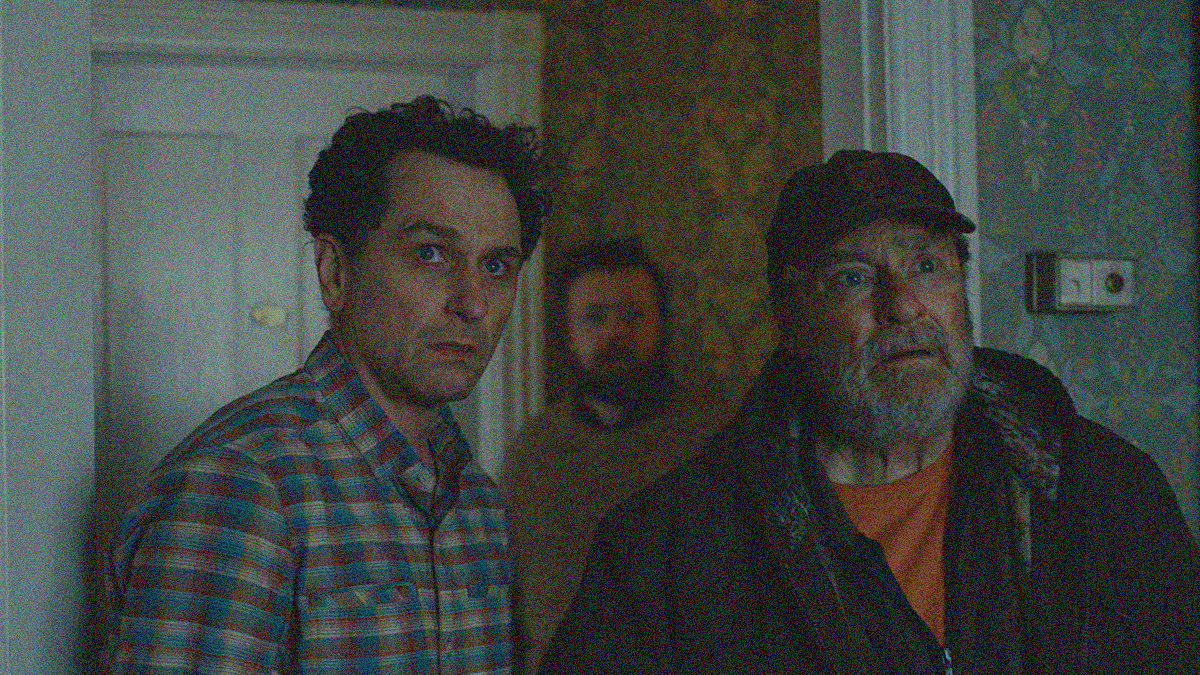
I had already watched a couple episodes of "Widow's Bay" when I explained to my partner how the character of Mayor Tom Loftis (Matthew Rhys) was ignoring all signs that the island he leads is cursed so he can coax mainland tourists over to reinvigorate the local economy as the "next Martha's Vineyard." Without missing a beat, she said, "Never compare me to the Jaws mayor!" I laughed hard because she couldn't have nailed the vibe more perfectly.
Why? Because that quote is uttered by Andy Garcia in Paul Feig's Ghostbusters, a film that was co-written by "Widow's Bay" creator Katie Dippold. And the parallels surely aren't coincidence considering Loftis' second-in-command (Kate O'Flynn's Patricia) and town paranoid (Stephen Root's Wyck) constantly implore him to sound alarms and stop playing with fire. He can't, though. He refuses with a hubristic entitlement that's ripe for an eleventh-hour comeuppance.
You can't necessarily fault him considering Tom isn't one of them. Yes, he's lived there for years raising his son Evan (Kingston Rumi Southwick) after his wife passed away in childbirth. Yes, he's been coming to the island since he was a young child of divorce made to stay with his father during the summers. But he wasn't born there. He didn't grow up with the stories of serial killers, plague, and disappearances injecting its horror into his DNA.
It makes Tom the perfect entry point for us since we aren't meant to believe them either. We're meant to laugh and scoff right along with him as Root, Dale Dickey, Neil Casey, Toby Huss, and others (the cast is littered with actors best known for comedy) relay the wildest myths with the straightest of faces. Their earnestness only makes it funnier too because Dippold and her writer's room expertly thread the needle to ensure the line between fear and irreverence blurs.
Rhys as the consummate straight man sells every interaction as such thanks to the dynamic between his initial incredulity and eventual acceptance. Because he can only survive the "monster of the week" formula of the first few episodes so long without admitting something ain't right. The thick murderous fog. The haunted inn. The stalking hag. It's one thing to brush off campfire rhetoric, but it's another to ignore the signs that the island's cycle of violence has returned.
The main cast is rounded out by Kevin Carroll's equally skeptical visiting sheriff and the rest of Tom's office employees alongside O'Flynn and Dickey in K Callan and Jeff Hiller. The former is very much just here for the paycheck before heading back home with his wife after the season while the latter group proves to be either blissfully oblivious or apathetic towards the dangers they've witnessed with their own eyes. Tom is in the middle. He should know better but doesn't.
Does "Widow's Bay" prove to be yet another anomalous mystery set in a place rife with supernatural earmarks that's detached from the rest of the world like "Lost" or "From"? Yes. Does it seek to find that sweet spot between the absurd and terrifying a la "Twin Peaks"? Check another box. I'll admit to feeling a bit fatigued by these similarities at first, presuming I was in for yet another puzzle box chock full of cool vibes and promises it might not ever fulfill.
Well, I got a lot more invested once Tom inevitably gets on board with the reality of his circumstances and the guilt of knowing he talked a bunch of innocent souls into entering Hell. Dippold and company (director Hiro Murai is listed as the second-billed creative) do a great job of filling us in with backstory at the thematically perfect moments whether it be Tom's history or that of the island itself via flashback and drug-induced hallucination.
I give them a ton of credit for not keeping everything close to the vest in hopes of securing a second season before divulging their scaffolding. You might even be surprised by how early they reveal details sans context in ways that ensure you keep the imagery and sounds in the back of your head for when they arrive again. By finale's end, you'll know the broad strokes of exactly what's happening even if the characters only know bits and pieces they haven't yet shared together.
It's not just about giving the audience the benefit of the doubt either. I'd argue it's also about leaning into the reality that this is a comedy despite its diligent horror trappings. Look no further than Dippold's credits as a writer (Ghostbusters and The Heat) or the assembled directors in Murai ("Atlanta" and "The Bear"), Andrew DeYoung (Friendship), Ti West (X and Pearl), and Samuel Donovan ("Severance"). It's a who's who of talent well-versed in pushing genre boundaries with a laugh.
Add a hilarious cameo by a comedian I'm under embargo from revealing and a couple other familiar faces I won't mention just in case, and there's as many fun surprises as there are creepy ones. And beyond Tom's poor decisions for selfish reasons, there's a wealth of authentic complexity inherent to small towns with little to do. Whether Evan and his friend's vandalizing property or Patricia's status as pariah, there's always more to the story.
And that's my favorite part of what Dippold has built. Whereas the mystery holds our interest via narrative, it's the characters and performances that stand out as our reason to keep coming back. We want to see the emotional blow-up between Tom and Evan. We crave getting a heroic moment for Patricia to shine (O'Flynn is probably the best of them all). We dread the growing certainty that impossible decisions must be made by good people who will never be the same after.
8/10

This week saw I Am Sam (2001) and Rookie of the Year (1993) added to the archive (cinematicfbombs.com).
Amy Morton getting her f-bomb cutoff to maintain a PG rating in ROOKIE OF THE YEAR.

Opening Buffalo-area theaters 5/1/26 -
• Animal Farm at Dipson Flix, Capitol; Scene One Market Arcade; AMC Maple Ridge; Regal Elmwood, Transit, Galleria, Quaker
• Casa Grande at Regal Transit
• Deep Water at Dipson Capitol; Regal Elmwood, Transit, Galleria, Quaker
• The Devil Wears Prada 2 at Dipson Amherst, Flix, Capitol; Scene One Market Arcade; AMC Maple Ridge; Regal Elmwood, Transit, Galleria, Quaker
• Ek Din at Regal Elmwood
• Gaaya Padda Simham at Regal Elmwood
• Hokum at Dipson Flix; Scene One Market Arcade; Regal Elmwood, Transit, Galleria, Quaker
• Jetlee at Regal Elmwood
• Kara at Regal Elmwood
• The Lord of the Rings (1978) at North Park Theatre (select times)
• Mistura at North Park Theatre (select times)
• Patriot at Regal Transit
• Raja Shivaji at Regal Elmwood
• RZA’s One Spoon of Chocolate at Regal Elmwood, Transit, Galleria, Quaker
• The Story of Everything at Regal Elmwood, Transit, Quaker
• That Time I Got Reincarnated as a Slime the Movie: Tears of the Azure Sea at Scene One Market Arcade; Regal Elmwood, Transit, Quaker
• Twin Peaks - Season One: Episode 7 & 8 at North Park Theatre (select times)
Streaming from 5/1/26 -
• "Wuthering Heights" (HBO Max) – 5/1
• Conbody vs Everybody (Criterion Channel) – 5/1
Thoughts are above.
• Gazer (Shudder) – 5/1
• Heresy (Shudder) – 5/1
• The Ice Tower (Shudder) – 5/1
"Whereas most would let that shared experience bond these two as protector and protected, The Ice Tower understands that the would-be protector having never been protected themselves almost guarantees they don’t know what it means to protect." – Full thoughts at HHYS.
• Lumière, Le Cinéma! (Criterion Channel) – 5/1
• My Dearest Señorita (Netflix) – 5/1
• Swapped (Netflix) – 5/1
• Hallow Road (Hulu) – 5/2
• My Dearest Assassin (Netflix) – 5/7
• Send Help (Hulu) – 5/7
• USA 94: Brazil's Return to Glory (Netflix) – 5/7
Now on VOD/Digital HD -
• Didn't Die (4/28)
"Yes, the gore factor is memorable, but it means nothing if we don’t learn to love the characters fighting off the inevitability that they’ll be next. It might take some time to get there, but I locked it as soon as it did." – Full thoughts at jaredmobarak.com.
• Forbidden Fruits (4/28)
• Good People (4/28)
• Holy Days (4/28)
• Hoppers (4/28)
• Odyssey (4/28)
• No Ordinary Heist (4/28)
• She Dances (4/28)
• They Will Kill You (4/28)
• Life After (4/29)
• The Million Dollar Bet (4/30)
• Even After Everything (5/1)
• Modern Whore (5/1)
"Werhun and Bazuin want Modern Whore to be a good time, but they won’t sacrifice emotional authenticity to do so. The over-the-top theatricality with costuming, aesthetic genre homages, and caricatured “Johns” is merely a tool." – Full thoughts at HHYS.
• Paying for It (5/1)
"Brown's book and Lee's film are meant to challenge the antiquated and oppressive norms with which our Puritanical indoctrination has branded us. It's okay to break free. There's no shame in being happy." – Full thoughts at HHYS.
• You're Dating a Narcissist (5/1)

Pieces from the The Hobbit (1977) press kit.
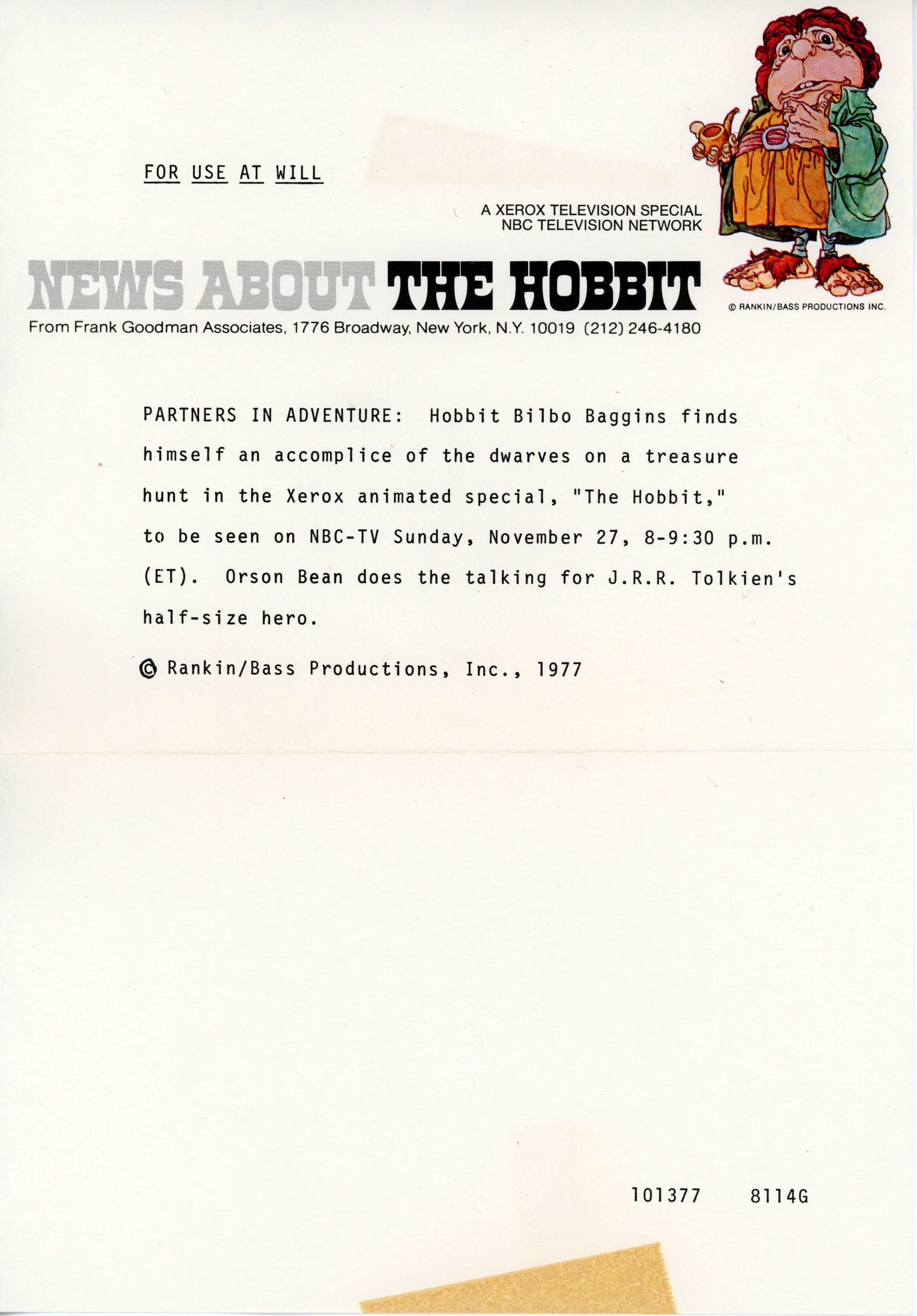
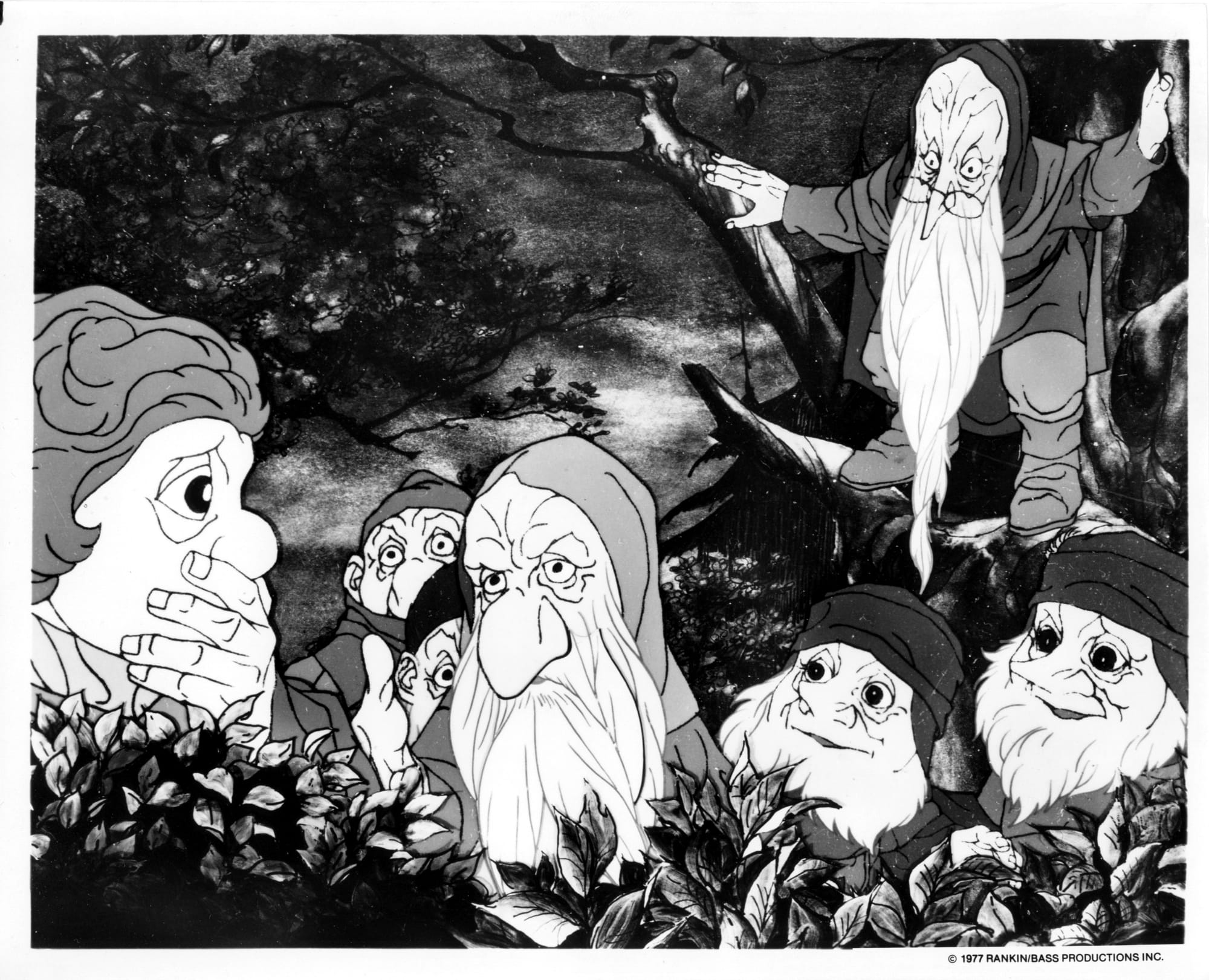
Publicity memo and photo — PARTNERS IN ADVENTURE: Hobbit Bilbo Baggins finds himself an accomplice of the dwarves on a treasure hunt in the Xerox animated special, "The Hobbit." Orson Bean does the talking for J.R.R. Tolkien's half-size hero. © Rankin/Bass Productions, Inc., 1977
Pieces from the The Lord of the Rings (1978) press kit.
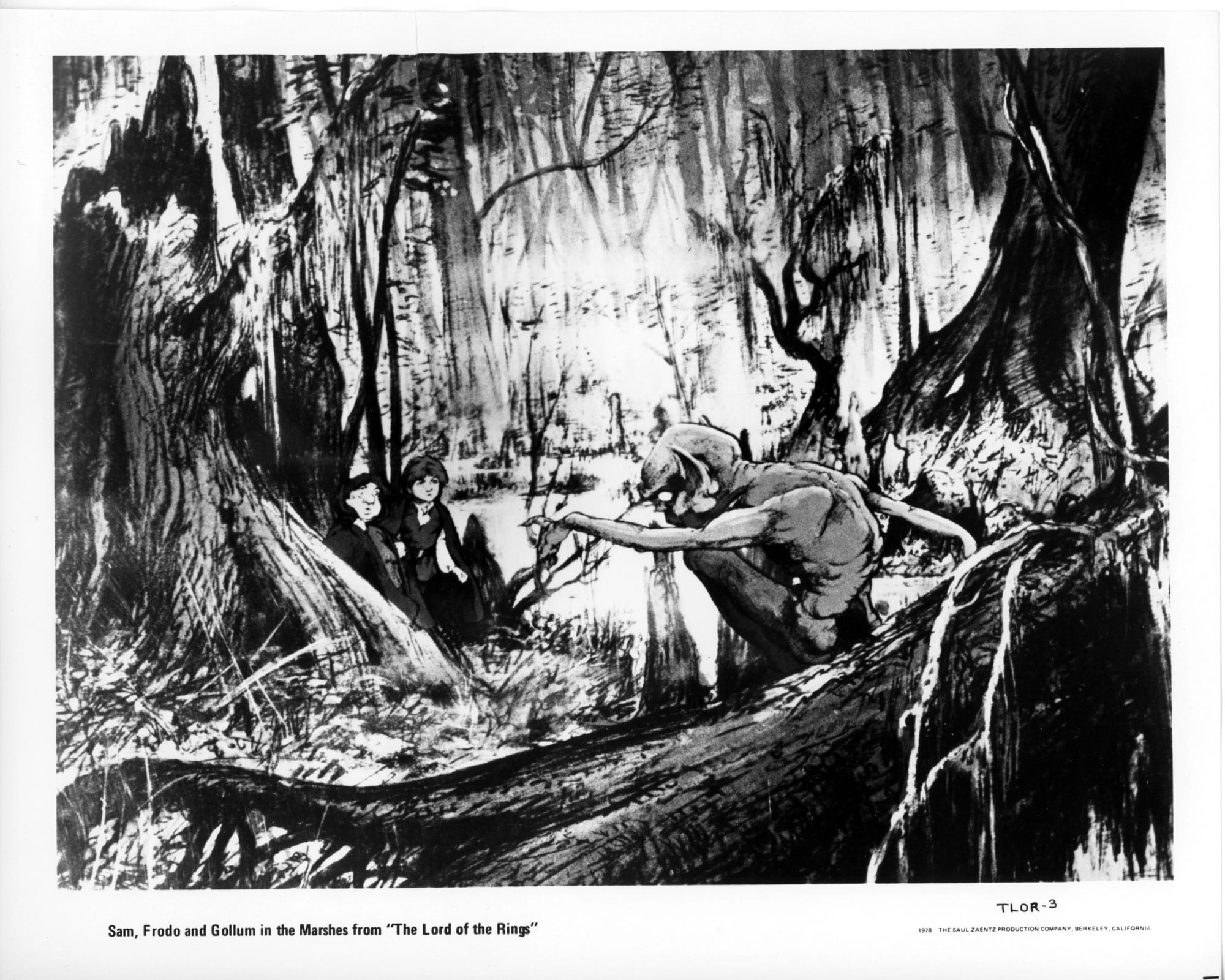
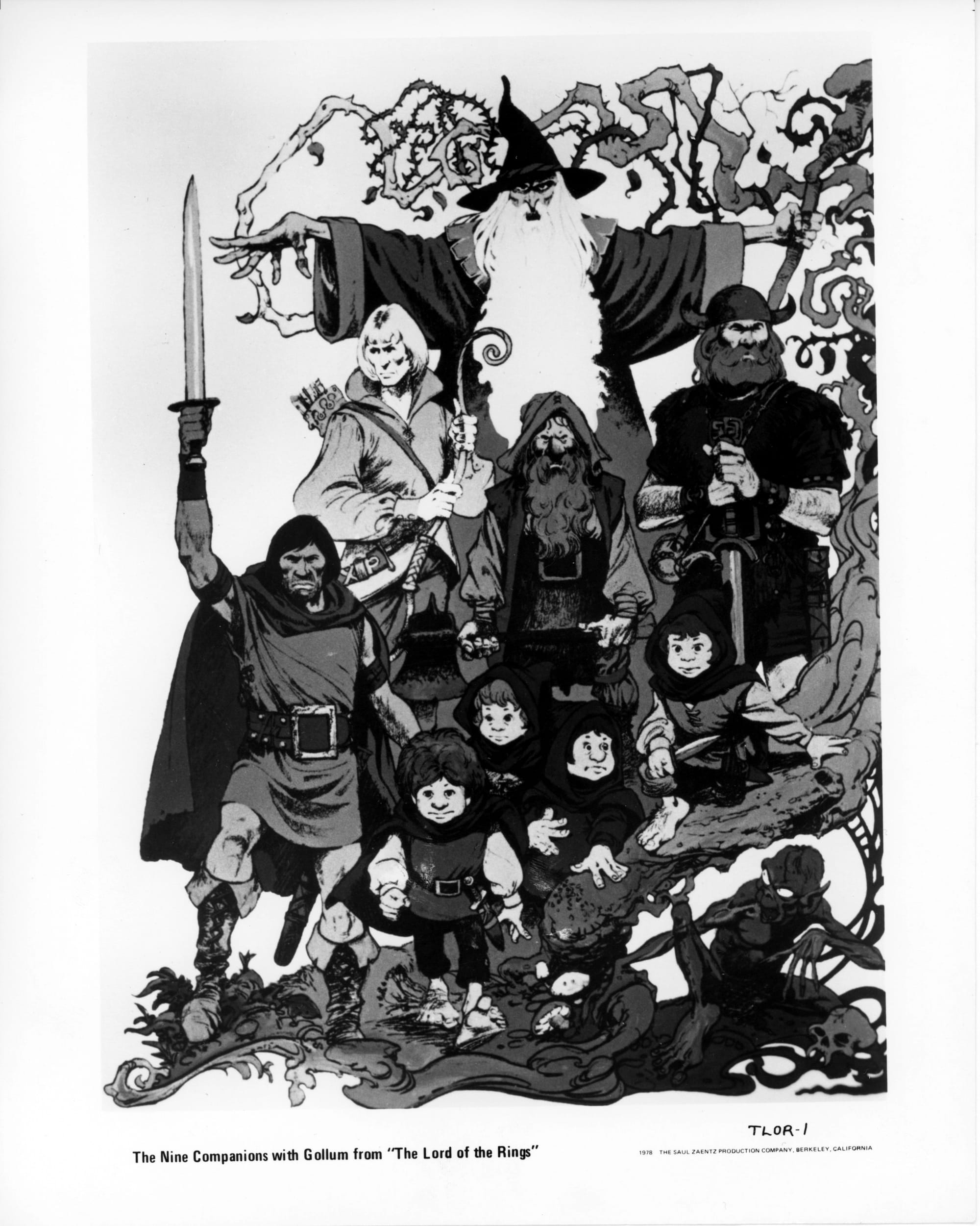
Left: Sam, Frodo and Gollum in the Marshes from "The Lord of the Rings." Right: The Nine Companions with Gollum from "The Lord of the Rings." © 1978 THE SAUL ZAENTZ PRODUCTION COMPANY, BERKELEY, CALIFORNIA