Week Ending 8/21/26
2025 rewind


It took eight months, but I finally archived my Top Ten Films of 2025 post at my website. The current header is now 2025 across the board (plus my Top 100 of the decade, but that doesn't move) for the first time all year.
The introductory text is the same as what accompanied my initial list back in January at The Film Stage. What always takes me so long to archive is laziness ... and reworking the list from US release dates to country of origin release dates. Then it's a juggling act adding any gems watched in the meantime.
For example: The Sparrow in the Chimney has now taken its place in my 2024 list due to its German debut with Hedda moving up from honorable mention into the #10 slot. Then there are two 2026 US releases that debuted in their homeland last year, so Amrum (Germany) and Decorado (Spain) retroactively find there way in the Top 25 too. It's a delicate dance that I probably think about too much.
After all, it's not like this current iteration is set in stone either. If I catch something else I missed that knocks my socks off, the order changes accordingly. The music and poster lists are locked, though. I'm not so obsessive that I'd keep them all fluid. One per year is enough.

Franz
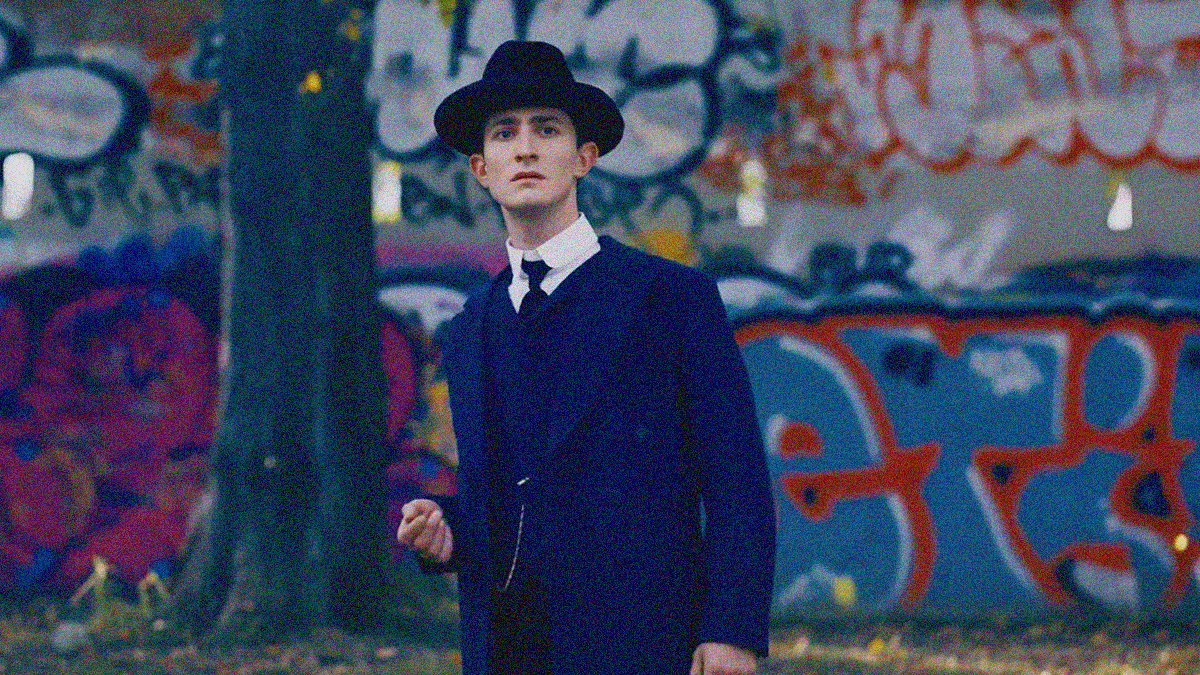
We hear the voice of a phone service twice during Agnieszka Holland's Franz. It either is or serves as an approximation of the extension list provided upon calling the Franz Kafka Museum in Prague. Do you want to buy tickets, souvenirs, or ... a personal meeting with the writer? The first instance never receives a response, but the second is followed by a "Yes" before Idan Weiss' face appears and smiles as the screen fades to black for the end credits.
It's the perfect representation of what a personal meeting would be if we're to believe the version of the artist that Holland presents. Weiss' Kafka is often found to be distracted in thought or frozen with anxiety throughout the course of the film, so maybe the silence on the other end of the phone truly is him. You wouldn't want to mess with genius by interrupting it with the demand of him putting on a show anyway. Let his mind wander. Let him cook.
This device isn't the only unorthodox moment that takes us out of the fiction of the biopic by placing us in the reality of his legacy. Holland brings us to today's Prague to listen as a tour guide leads fans from a gigantic rotating mirror bust to a restaurant serving Kafka's own recipe for "vegetarian" burgers. She shows us a group of Japanese tourists appreciating a spot by the water he used to swim (while Weiss swims it). And she even takes us into that museum.
That last moment is the one that sticks out most because it films a docent dropping the insane factoid that the ratio between words written about Kafka and his work to the words Kafka published is now ten million to one. How could you not therefore consider him one of the most influential minds our world has ever seen? Especially since he only lived forty years and was only actively writing for twenty-five of them. Well, add this script's words amongst the ten million.
Holland admits Kafka is one of the writers who inspired her most. He was the reason she studied in Prague, and she even produced an adaptation of "The Trial" for television back in 1981. He was an artist that spoke to a growing unrest around the time of World War I. His humor and pointedly bizarre metaphors still speak to the present with that same docent relaying how his prolific letter writing as a replacement for face-to-face conversation was akin to social media posts.
So, why wouldn't his biography prove just as bizarre? Yes, Holland uses Weiss and Daniel Dongres as seven-year-old Franz to tell his life story, but those sprinkles of anachronistic vignettes provide a glimpse at his impact. And rather than simply film her actors reenacting what might have been, she thrusts them into an exhilarating mix of eternalism, fourth wall breaks, and impossible interviews. Kafka begs the audience for silence as he's transported through time.
Sometimes it's with a cut that swaps Dongres for Weiss. Sometimes it's Weiss getting lost in one of those robotic-like reboots of his own system before being jogged out of it by another version of himself. Sometimes it's the character imagining a reaction that's at once more violent and satisfying than the logical one that follows. And all the while his friends and family comment and hypothesize about his state of mind in the moment and/or years later.
The latter examples often provide the most devastating results considering they all outlived him to experience even more chaos and tragedy as Europe fell into World War II and the Holocaust. Here they are smiling for the camera to talk about Franz one second and then despondent the next as their harrowing reality takes over to switch the camera from interviewer to omniscient spectator. It's some truly bold filmmaking that won't be for everyone, but I loved it.
I haven't read Kafka in about twenty years, but you can tell Holland is interested more in honoring his style and demeanor than presuming to know what it is he felt. Sure, we can approximate the facts from his letters and interpret his mindset from his work, but there's something uniquely fresh in the way she's willing to present differing possibilities as equally relevant and important to his identity. That's part of the fun. To write your version through the filter of his words.
Franz is therefore as much a biography as it is a cinematic adaptation of the process of critical commentary. Holland is showing her work by imagining what the other characters would say based on what she knows they did say. She's taking aspects from his prose and putting them into his life to infer upon his own inspirations and motives. Why did he write that? Why did he enlist to fight? Why did he sabotage his relationships to pursue unattainable women?
Weiss plays it all perfectly. The aloofness. The innocence. The inscrutability. The charm. The frustration. I really enjoyed Peter Kurth and Sandra Korzeniak as his unable to please father and empathetic mother too—two portrayals that speak to why Franz was who he was. But there's also a lot of Katharina Stark (his sister Ottla) and Sebastian Schwarz (his friend Max Brod) as the two who knew him best. Their insights always entertain ... and their ends are chilling.
In the end it's an audacious entry into the genre that wields artistic license to embody the spirit of its subject. As proven within the film itself, there are countless other resources to dive into the minutiae of facts and assumptions. So, why not use the medium's strengths to push further? Why not have fun via formal ambition while staying true to the drama and horror of the era and the context of the characters being Jews in Prague during Hitler's rise?
8/10
How to Divorce During the War
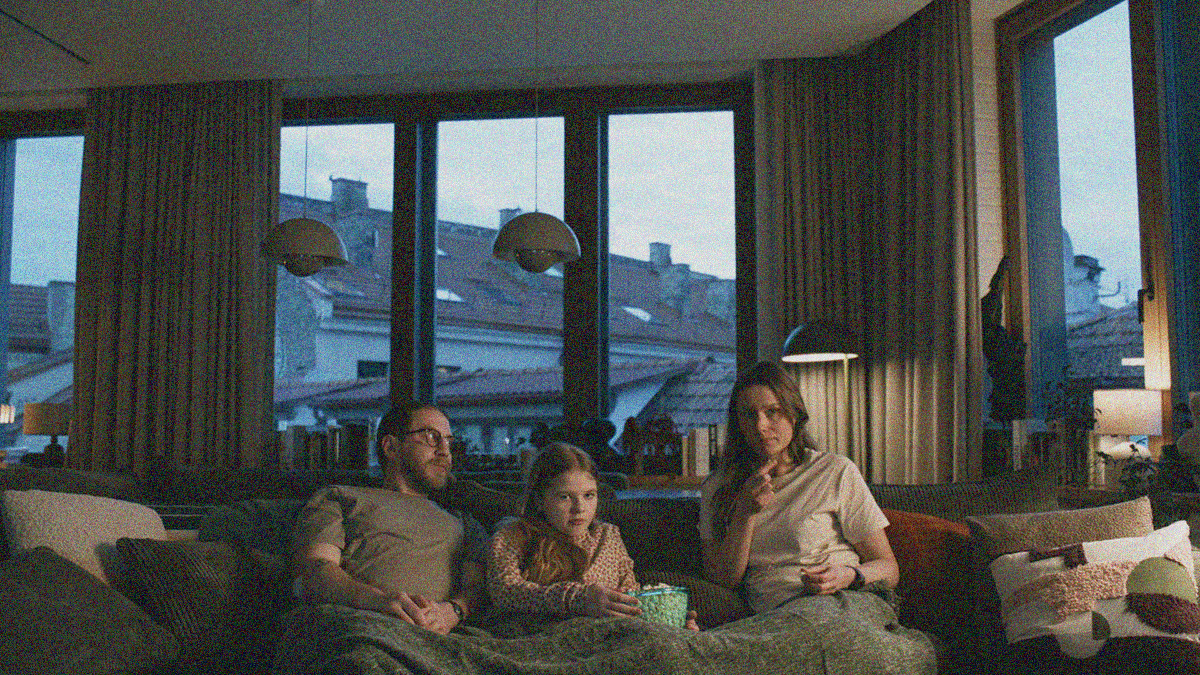
"It’s a messy situation all around, though. And Blaževičius’ point is less about our impulse to advocate for others in the midst of unspeakable violence than our penchant to always let apathy settle back in."
–Full thoughts at The Film Stage.
It Ends
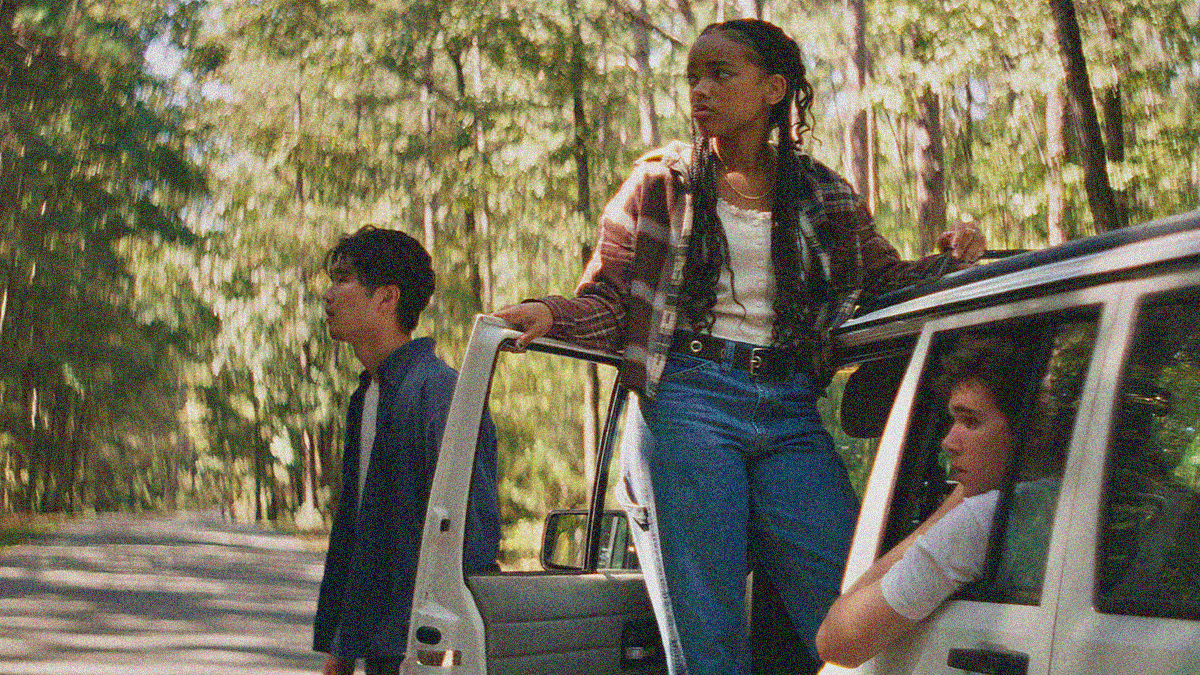
I don't think it's just a throwaway gag when James (Phinehas Yoon) tosses a couple logs into the road and declares that they'll know they're in a loop if they see them again. Yes, it's funny because of the earnestly serious way this character does everything while trying to solve the puzzle of their endless asphalt path through a forest of trees. But it's also a means from which writer/director Alex Ullom can ensure we understand that's not what's happening.
The name says it all: It Ends. Maybe it means the nightmare James and his three best friends from high school (Mitchell Cole's Tyler, Akira Jackson's Day, and Noah Toth's Fisher) are now enduring with no way off the ride. Maybe it means the road itself. Either way, however, it tells us that they won't somehow run into another version of themselves. They won't discover that the same day is being repeated. No. Whether it ends or you end it first, escape is possible.
What we must figure out ourselves is the definition of "escape." Not in a mortal sense where suicide is concerned. Not through a desire for a rebirth to life with a different trajectory of choices either. I'm talking about the contrast between literal and figurative. Escaping patterns. Escaping expectations. Escaping malaise. Because when you start to consider what it means to be stuck on an infinite road to nowhere, stopping isn't quitting. Continuing forward is.
Or is it?
We are not all the same. Whether by nature or nurture or both, no two people share the same wants, motivations, or purpose. No one is wrong to say they want to leave the car and walk into the woods. No one is wrong for deciding to stick it out no matter how long it takes or where it takes you. Ullom hasn't concocted this film to tell us which answer is correct. He's using it to remind us that both are valid. What makes you tired is exactly what excites me to keep going.
And he sets it all up perfectly with an inane question that itself holds no correct answer. Which two of fifty hawks, ten thousand rats, five gorillas, or 1 gunman with a rifle would you choose to defend you from the other two? James is fully invested in the experiment to the point where anyone who doesn't agree with his choice is wrong. Fisher is desperate to prove he is by getting the others on board. Day enjoys the chaos. Tyler just wants the stupidity to stop.
The only thing this quartet would agree on is that the prospect of coming up with an answer is edifying. It gets them talking. It gets them thinking. It even inevitably gets the ball rolling for them to talk about pieces of their lives they wouldn't have otherwise. Because this is a reunion of sorts since Tyler enlisted while the others went off to college. They're catching up on lost time, busting each other's chops, and pausing their routines.
So, why can't the mystery road they find themselves on that has inexplicably closed its entrance and holds feral people in the woods who attack their car while screaming "Help me!" whenever it's parked longer than ninety seconds provide the same? Sure, it's scary at first. Sure, it's confusing to wrap their heads around time standing still since their gas never depletes and they feel no hunger or fatigue. But it's one helluva riddle to get those synapses firing.
Until it's not.
Because everything eventually loses its luster. The thing that broke your routine eventually becomes a routine too. These friends' desire to help each other through the anxiety and depression soon makes way for them to realize they must also help themselves through the reality of their own existential demands. That which was living soon becomes death. That which seemed like death soon becomes a fresh path towards life. Perspective is everything.
That goes for the characters on-screen (each actor embraces their role's identity well to set themselves apart and stay true to who they are within the group and as individuals) and the crew off it. Ullom shot an initial version of the film in 2022 that he knew wasn't working before continuing to edit and shoot pickups. He'd eventually find financing to dig even deeper before reshooting about seventy-five percent of what he already had en route to locking a final cut.
Which choice did he make to do so? Did he finally conjure perfection by driving thousands of miles without an off-ramp until reaching the end? Or did he get out of the car knowing there was as much potential for things to start getting worse as there was for him to make it better? You'll have to ask Ullom. Just like you'll have to ask yourself what you'd do on that road. Dig in with determination or veer away with the courage to try something new?
You might not know which at the start. None of these characters did. Each finds their breaking point (or moment of clarity depending on your read) as the days add up. Regardless of whether they are correct, however, none of them regret their choice. And that's truly all you can ask. To keep going until you know in your heart what your next chapter must be. Maybe this is a nightmare you must escape. Maybe it's the escape you didn't know you needed.
8/10
The Marching Band
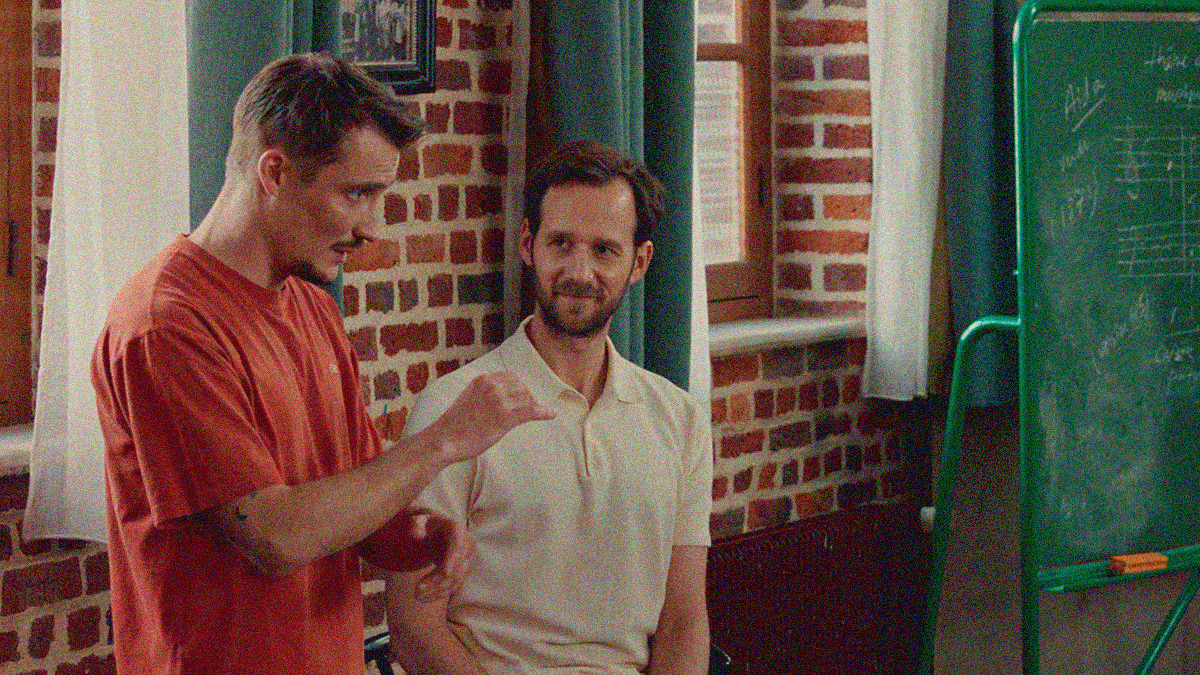
Director Emmanuel Courcol and co-writer Irène Muscari could have made a film about a renowned conductor who discovers he has a brother he never knew while searching for a marrow donor after being diagnosed with Leukemia. They could have also written a script about a small factory town on strike joining together through the communal magic of music via their "miners band" to keep spirits high and hopes higher. But why choose just one when you can do both?
More than simply combining these ideas, however, The Marching Band proves to be a third entity all its own that uses them for its foundation. Thibaut Desormeaux is the conductor (Benjamin Lavernhe) who finds Jimmy Lecocq (Pierre Lottin) to ask him to save his life. Jimmy is the trombone player of that miners band when not serving food at the local school cafeteria. The two men couldn't be more different on the surface nor more alike beneath.
Music struck both in their younger years with a formidable potency. Thibaut had the means to pursue it thanks to the posh family that adopted him. Jimmy could only enjoy it from afar via his record collection after having been adopted himself once their mother passed away. Neither the former's silver spoon nor the latter's poverty allowed or prevented them from both having perfect pitch. Those things merely inferred upon what they could do with it.
So, while the cancer and strike color the worlds set on this collision course, they don't really play a major role in the plotting. Yes, they each come back into focus to augment the drama that unfolds, but our intrigue lies in the relationship these men cultivate. Thibaut's guilt for having "drawn the long straw" and his fury for having missed the chance to know his brother. Jimmy's anger at having had the "short straw" drawn for him and the proof he could still aim higher.
These are the sort of knee-jerk emotional impulses that ensure both ultimately get themselves in trouble. Thibaut projects his ire onto his mother for daring to give him this life and not extend it to Jimmy. Thibaut's sister Rose (Mathilde Courcol-Rozès) is sadly placed in the crossfire as though she's a consolation prize despite having literally grown up with him as his sibling. I would have loved a bit more meat on this point, but the film spends its time elsewhere.
It's for good reason considering Jimmy's dynamic to this revelation is the more interesting half. His attempts to shoot for the stars inherently demands that the life he has now (and the friends and family who share it) is disparaged as "less than." That leaves his romantic interest Sabrina (Sarah Suco) in a similar position as Rose once the haves and have nots come into conflict. And since she and the miners are crucial to the story beats, Courcol must devote his time there.
So, while Rose and Thibaut's mother are often positioned as afterthoughts to the whole, Sabrina, Clémence Massart-Weit's Claudine (the woman who raised Jimmy), and the band are never far-removed from the action. They are just as much connective tissue between the brothers as the music itself, so we learn more about the factory and the strike while we all but forget the cancer even existed. As such, it's ultimately Jimmy who becomes the star.
Is he the lead? No. Lavernhe is the focal point. He's the one in need of saving to spark everything that follows. He's the one who was nominated for Best Actor at last year's Césars. He's the established face of the film. But that doesn't mean he isn't very quickly pushed into a mentor role generally reserved for a supporting cast member guiding the true lead. Thibaut endures an ordeal, but who he is never really changes. Jimmy, on the other hand, experiences a transformation.
Lottin is fantastic in the role. He's been working for almost fifteen years and yet his César nomination was for "Male Revelation." Newcomer. It's a necessary distinction to ensure the veterans and faces everyone knows don't blind voters from looking elsewhere, but he deserves a lot more credit. His Jimmy has his entire life upended by Thibaut. He's forced to run the gamut of emotions as his expectations catch up with his ambitions. It's not an easy part.
Not only must he deal with the potential to better his lot and learn that doing so doesn't mean becoming someone he's not in the process, but he's also confronting the ways in which he has contributed to the mess his life has become. Thibaut can be used as evidence for the possibility of where he can go, but he shouldn't be used as a crutch to believe he can introduce a hard reset without acknowledging the straws can't be redrawn. He already has everything he needs.
Now it's a matter of accepting that. Accepting he's good enough to be a father, husband, and brother. Accepting the work he puts in now to pursue a new career or relationship isn't beholden to the mistakes of his past. Yes, Jimmy steps up to save his brother from disease, but he's the one who needs saving from himself. In many respects, Thibaut proves a guardian angel of sorts. For Jimmy and the town itself. Because it's never too late to dream.
Can The Marching Band get schmaltzy at times? Sure. But it never detracts from the authenticity of the characters or performances. The same goes for the heavy drama on the periphery as far as a potential relapse or the strike getting busted. Both can punch us in the gut, but only to push Jimmy and Thibaut forward rather than usurp our attention. This is a film about brotherhood, first and foremost. It's about love, vulnerability, and letting your truth sing.
8/10
Nirvanna the Band the Show the Movie
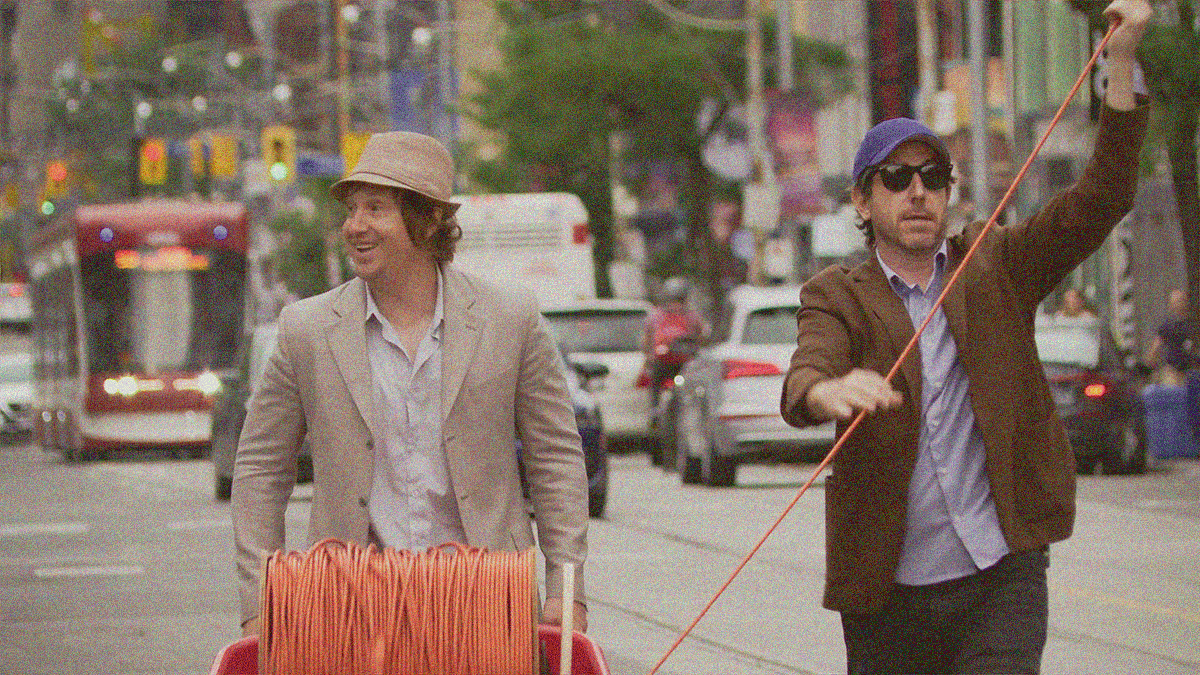
Matt Johnson turning to the camera to tell the audience that the film is going to be a copyright nightmare that will never screen in theaters again after its premiere might be the best fourth wall break in cinematic history because that was the exact thought I had while watching "Nirvanna the Band the Show" in preparation for Nirvanna the Band the Show the Movie.
Seriously. Their fair use expertise is astounding. Give Neon full marks for leveraging Johnson and Jay McCarrol's charm into giving the show and movie an official release with no edits beyond the in-world joke that Bird must be bleeped every time he swears. Fingers crossed that they jump through the logistic hoops necessary to bring their elusive third season into the light of day too.
You truly cannot ask for more from a cinematic adaptation of a television show than this. It's literally a supersized episode of its predecessor that ups the ante financially, creatively, and strategically. It's one thing to be impressed by their ability to composite together a Joe Johnston homage episode, but it's another to be blown away by their ingenuity to pull off this film's CN Tower "stunts."
The mix of authentic in-camera buffoonery, candid street reactions, and believable extras posing as the latter has never been better. Interacting with 2008 footage a la Forrest Gump (and bringing "Never Come Down" back into public consciousness) is inspired. And I love that they didn't just break reality by traveling through time—they unwittingly stole the identity of Ben Petrie, Ethan Eng, and Michael Scott's characters. The layers of fun are infinite.
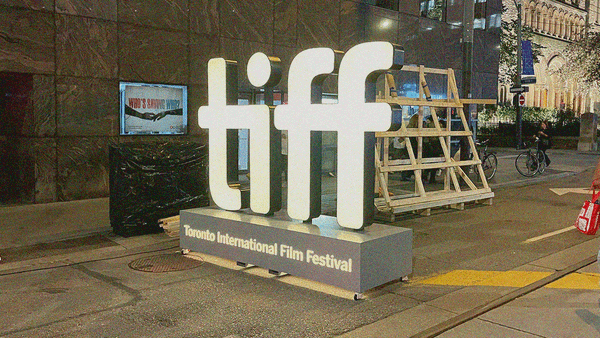
Will it be for everyone? No. But it doesn't need to be since the cult following is rabid enough to give it the legs earned after its TIFF debut. I am admittedly much more fascinated in the behind the scenes engineering that makes it all happen than the result (although Matt and Jay's embellished selves did grow on me during the show), but the bit remains strong. So, keep it going.
7/10

This week saw Deepwater Horizon (2016) added to the archive (cinematicfbombs.com).
Brad Leland dropping an f-bomb in DEEPWATER HORIZON.

Opening Buffalo-area theaters 8/21/26 -
• Bethlehem Kudumba Unit at Regal Elmwood
• The Fast And The Furious: 25th Anniversary at Regal Elmwood, Transit, Galleria, Quaker
My thoughts from 2009 at jaredmobarak.com.
• Insidious: Out of the Further at Dipson Flix, Capitol; Scene One Market Arcade; AMC Maple Ridge; Regal Elmwood, Transit, Galleria, Quaker
• Irumudi at Regal Elmwood
• Khalifa at Regal Elmwood
• The Magic Faraway Tree at Dipson Capitol; Regal Elmwood, Transit, Galleria, Quaker
• Modha Rathiri at Regal Elmwood
• Mutiny at Dipson Flix, Capitol; Scene One Market Arcade; AMC Maple Ridge; Regal Elmwood, Transit, Galleria, Quaker
• Spa Weekend at Dipson Flix, Capitol; Scene One Market Arcade; AMC Maple Ridge; Regal Elmwood, Transit, Galleria, Quaker
• Teenage Sex and Death at Camp Miasma at Dipson Capitol; Scene One Market Arcade; Regal Elmwood, Transit, Galleria, Quaker
• Tony at North Park Theatre; Dipson Amherst, Flix, Capitol; Scene One Market Arcade; Regal Elmwood, Transit, Galleria, Quaker
• Yeh Lamhe Judaai Ke at Regal Elmwood
Streaming from 8/21/26 -
• Buffet Infinity (Shudder) – 8/21
"I’m certain someone will break it down in chart form to try and figure out all the references and connections at the back of its manmade evil vs. supernatural evil drama. Others will merely enjoy the fun bits." – Full thoughts at HHYS.
• Facing El Chapo (Netflix) – 8/21
• The Fence (AMC+) – 8/21
• Mother Mary (HBO Max) – 8/21
• Rosebush Pruning (MUBI) – 8/21
• She Dances (Peacock) – 8/21
• The Wizard of the Kremlin (Hulu) – 8/21
• I Swear (Netflix) – 8/22
"It’s a delicate subject handled with great sensitivity, humor, and intelligence by Jones. Bringing this film into the world only helps expand the reach of [John's] quest to educate, inspire, and protect." – Full thoughts at HHYS.
• The Christophers (Hulu) – 8/22
"Eighty minutes of a woman stoically staring as a man loquaciously and often inanely vomits dialogue to no end. The other twenty are some of the most unforgettable and legitimately heartfelt moments of human connection you’ll see all year." – Quick thoughts at HHYS.
• Untold: The Testimony of Vince Young (Netflix) – 8/25
• The Last Sunrise (Prime) – 8/26
Now on VOD/Digital HD -
• Curse of Crom 2: Crom's Fury (8/15)
• Dementium (8/18)
• Forever Mia (8/18)
• The Message (8/18)
• Rose of Nevada (8/18)
• Toy Story 5 (8/18)
• Yellow Eyes (8/18)
• Boundless (8/20)
• The Legend of Juan Jose Mundo (8/20)
• Atlas King (8/21)
• Blood Shine (8/21)
• Bouchra (8/21)
"It’s an inventive approach turning the whole into a meta film for Bouchra to exorcise demons and reconcile emotions. That sense of personal attachment is apparent as you can tell this subject is close to the filmmakers’ hearts." – Full thoughts at The Film Stage.
• Bury the Devil (8/21)
• The Man Who Saves the World? (8/21)
"Kudos to Polsky for somehow wading through it all with a straight face and open mind because it means we can too. Something we forget in today’s world of celebrity “geniuses” is that actions always trump image." – Full thoughts at HHYS.

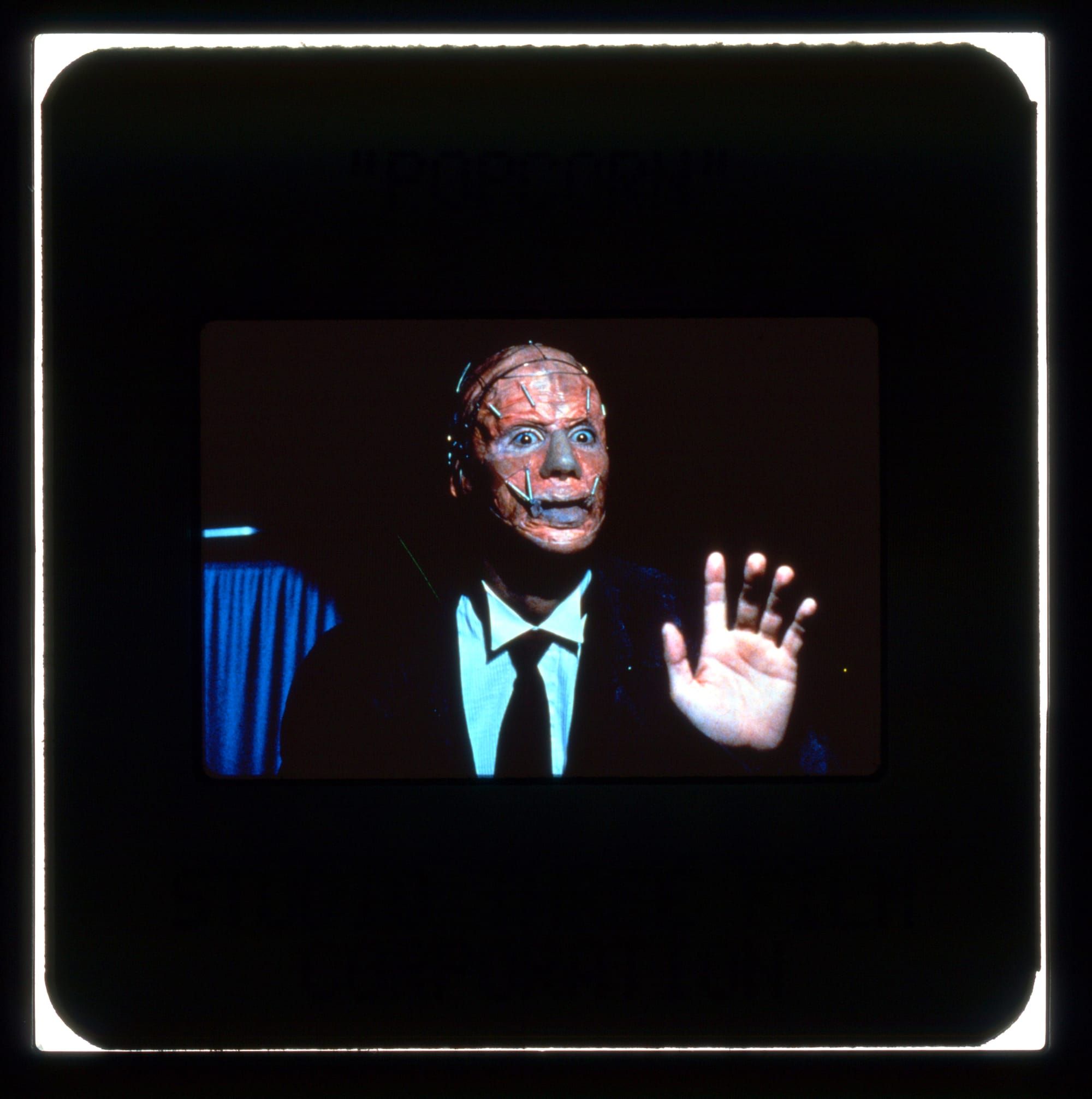
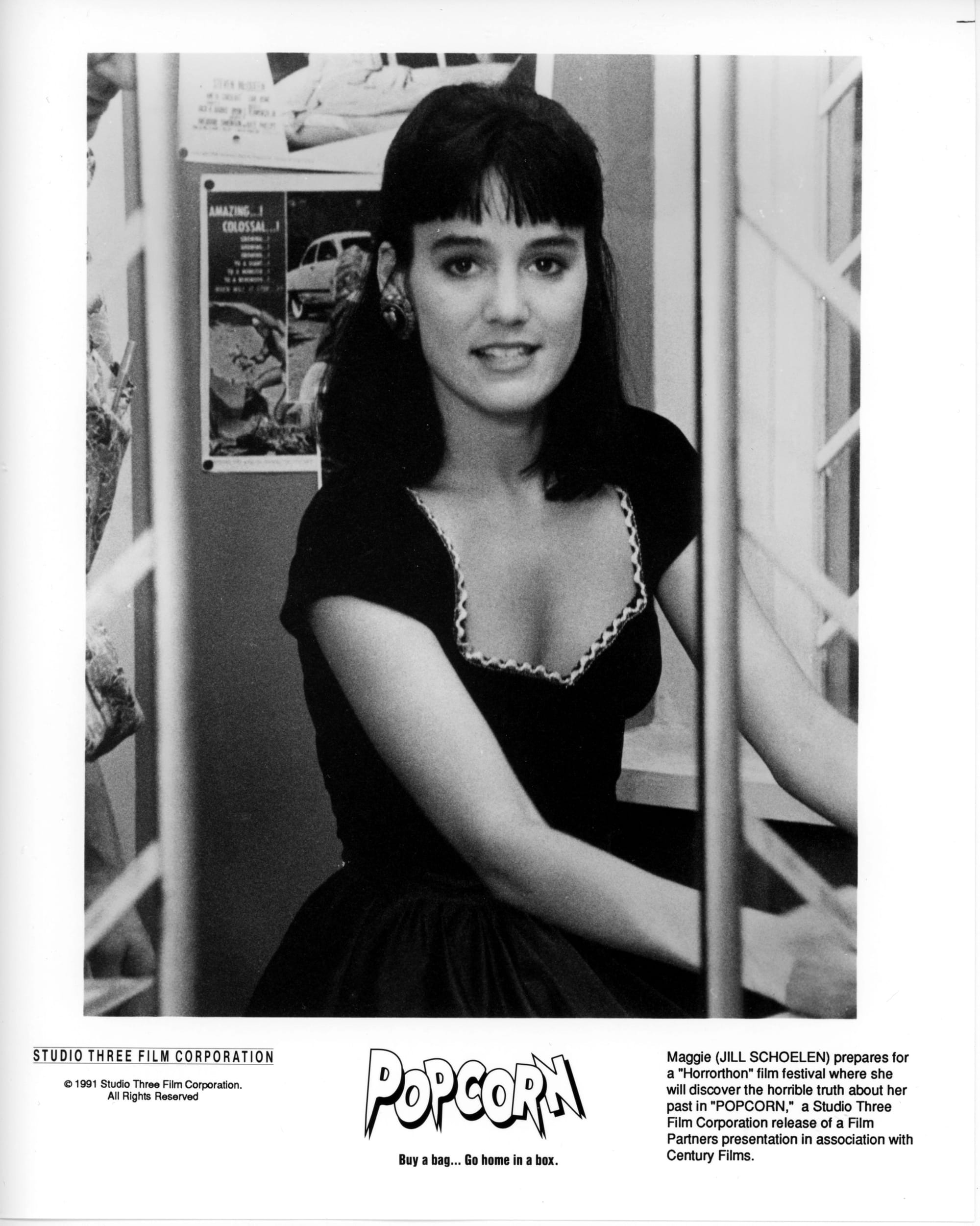
Pieces from the Popcorn (1991) press kit.