Week Ending 11/6/26
Remix!!!


The NHL's Hometown Remix jerseys have finally been revealed after months of leaks, speculation, and cringey social media "clues." Each is meant to celebrate the "local culture" of its respective market to varying degrees. Some are obvious (Pittsburgh leaning into Andy Warhol pop art). Some need the explanation provided by the league to truly understand their meanings.
Beyond the hyperlocal appeal, however, are also some cool effects like debossed elements in the sleeves, funky fonts, gradient coloring, and interior band details on the waist and collar. It's a nice change of pace to the throwback campaigns that generally just merge past and present logos and colors rather than start anew.
That Penguins jersey is definitely my favorite, but I also really like the Panthers, Avalanche, and Hurricanes. It's rare that the NHL dares to put effort into something fresh, so hockey fans should celebrate when they do—even if the price point is crazy high due to supply being intentionally low.

Now the teams wearing them just need to figure out how to win. The first night saw all three teams donning the new threads losing, and things didn't get much better with Montreal coughing up a 4-goal lead to Winnipeg the next day and Buffalo losing their 1-goal lead with ten minutes left to come up empty the day after that. Three wins last night does help the record, though.

What I Watched
Fatherland
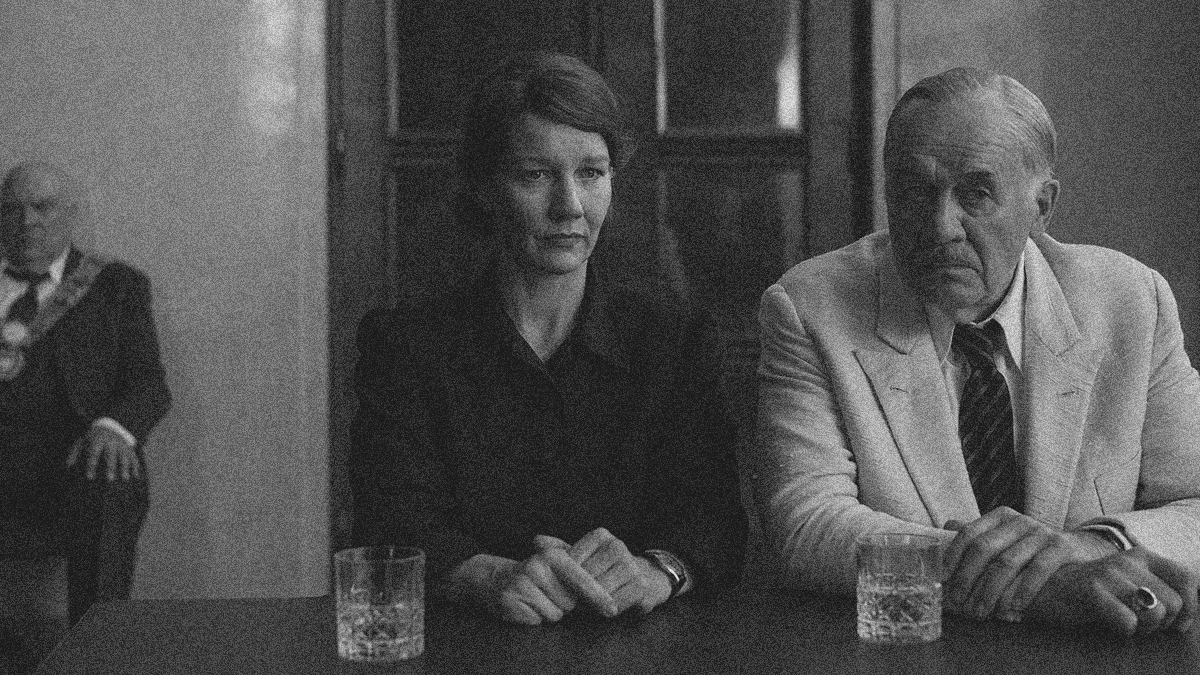
IN THEATERS (LOCALLY AT THE LITTLE IN ROCHESTER STARTING 11/20) | STREAMING ON MUBI TBA | POLAND'S INTERNATIONAL OSCAR SUBMISSION
_____
There's a scene in Paweł Pawlikowski's Fatherland where Thomas Mann (Hanns Zischler) politely listens to Richard Wagner's grandsons as they proposition him for support before quietly eviscerating them and bidding them farewell with a smile that will live in my mind forever. Couple it with Erika Mann (Sandra Hüller) enduring an unexpected reunion with her ex-husband Gründgens right after and you can see why Pawlikowski was drawn to this specific moment.
Because he was approached to adapt Colm Tóibín's biography of the Nobel Prize-winning writer and declined before enlisting Henk Handloegten's help to flesh out a fictionalized version of this one event within. Its complexities are hard to ignore considering what Germany was post-WWII. The idea that accepting a Gothe award in one part meant accepting it in both. The reality that the country that exiled him suddenly hoped to fete him as an icon.
There's the political dance of playing that role while instilling some of his hope for the future. Mann is depicted here as an optimist who truly believes his words via these speeches can change minds and spark a rebirth. It's in stark contrast to his daughter Erika whose pragmatic realism sees it as little more than a charade. Is reality somewhere in the middle? Of course, but that push and pull allows for some excellent juxtapositions leading to unforgettable drama.
It's all augmented by a familial tragedy looming large above the proceedings with Thomas resolved to keep going regardless. There's the emotional cost of his decision where it concerns Erika reconciling her devastation with her duty to continue chaperoning him across Germany in their Buick, but also the thematic through line of broken people to a broken nation—each trying to put themself back together in a way that moves them forward without ignoring the past.
That's why that aforementioned scene is so great. It truly distills everything from their love of their homeland to their hatred of what it became to the justified skepticism towards what comes next. One cannot answer a simple question about "home" when that place was corrupted to the point of needing to find another. And when that corruption is as vile as the Holocaust, you cannot pretend there aren't any scars. That those who stayed wouldn't let it happen again.
So, even though Klaus Mann (August Diehl) receives far less screen time than his father and sister, his inclusion is crucial to the whole as the third leg of this unit being forced to confront what Germany is now. Thomas might not be willing to be on the ground to rebuild what was lost, but he does believe it possible. Erika might be cynical about that potential, but she doesn't feel the need to be invested in it. Klaus, however, cannot cope. Hitler stole Germany from his identity.
Pawlikowski is therefore using this family as a conduit to speak about the war rather than the other way around. What they're going through in this moment on a national and personal level is as much about the narrative on-screen as it is a metaphor for what so many went through in the aftermath. It's about legacy and shame. It's about pride and vitriol. And it's about the privilege of choice—to have been able to leave in the first place and to bear the pain of returning.
With gorgeous black and white, full-frame cinematography by Łukasz Żal once again, this might be my favorite of Pawlikowski's recent trio of acclaimed dramas about life post-war. It has a breeziness about it that allows for laughs even as the subject matter finds itself wading through sorrowful waters of grief and introspection. Thomas and Erika have a mission to fulfill and thus are very rarely not shown holding back their anguish to keep soldiering on.
Hüller is allowed a cathartic outburst towards a fitting target, but she's at her best when Erika must quietly escape the moment. Zischler is at his when responding to those escapes via a realization that his brave face has a cost. That the work he's putting into this trip might be better served on his family. Only when it's done can they both finally lament what's been lost and never coming back as Bach is played on a church organ ... one last symbol serving a dual purpose.
8/10
Hen
Kota
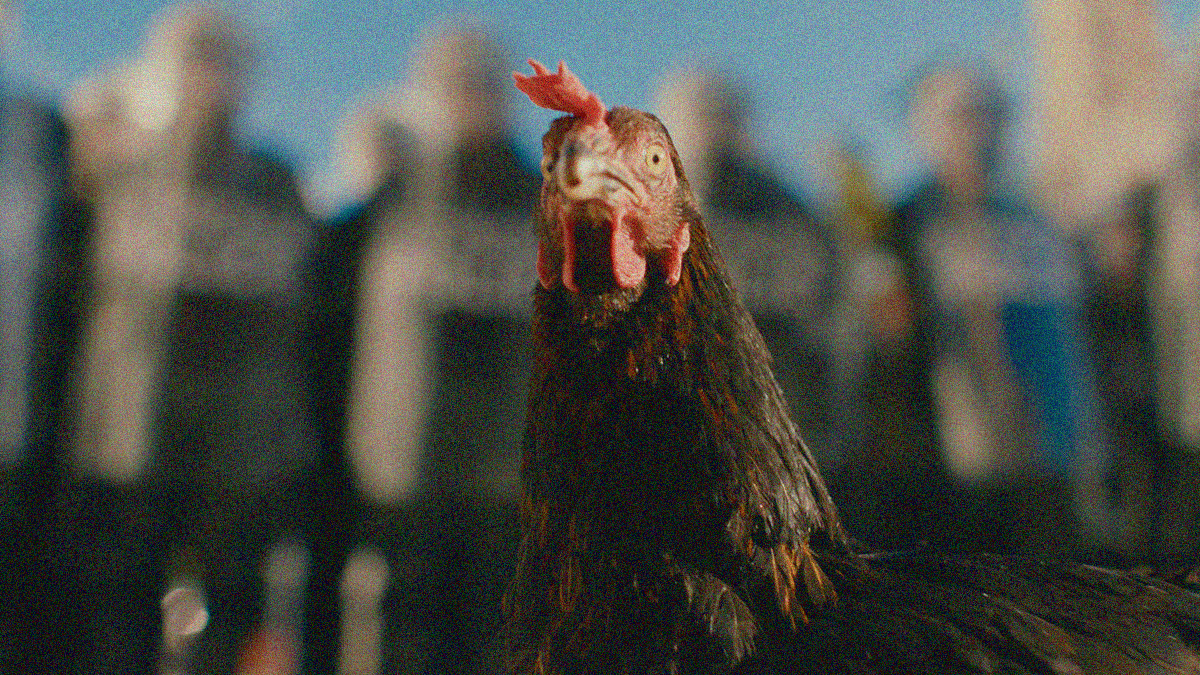
IN THEATERS (LIMITED)
_____
I was lukewarm on both EO and Good Boy (as well as Au hasard Balthazar). I applaud the ingenuity and concept, but the struture just isn't for me. So, I was surprised to find I mostly enjoyed György Pálfi's entry into the "animal as star while the human world turns" pantheon. Don't get me wrong—I still struggled with the pacing and repetition of Hen. He and co-writer Zsófia Ruttkay's wry sense of humor merely kept me engaged despite it.
The dual narratives concern a hen (played by Eszti, Szandi, Feri, Enci, Eti, Enikő, Nóra, and Anett depending on which of their strengths were demanded by the scene) traveling from the egg farm of its birth through Greece and the family (Ioannis Kokiasmenos' restauranteur, Maria Diakopanagioti as his daughter, and Argyris Pantazaras as her boyfriend) residing at the home where it ultimately lands. The parallels between them are literal and metaphorical alike.
Give Pálfi credit for whatever movie magic was necessary to earn the "No hens were harmed during filming" disclaimer because his protagonist goes through the wringer. We're talking the general callousness of owners being rough with animals, nature itself (with the hen both seeking "love" to a thematically chosen soundtrack and being mounted against her will throughout), and the inherent violence of existence whether by predator (mauling) or circumstance (fire).
As the animal reconciles survival with freedom, so too do the humans once their involvement in a smuggling ring escalates from goods to refugees with the risk proving too much for some to handle. That the hen plays a part in those crimes is another fateful bit of humor that inevitably leads to tragedy until we begin to see the point of this adventure as the cold hard truth that we're all pawns to those in power. We try to steal it sometimes too, but the consequences are often worse.
7/10
Mouse
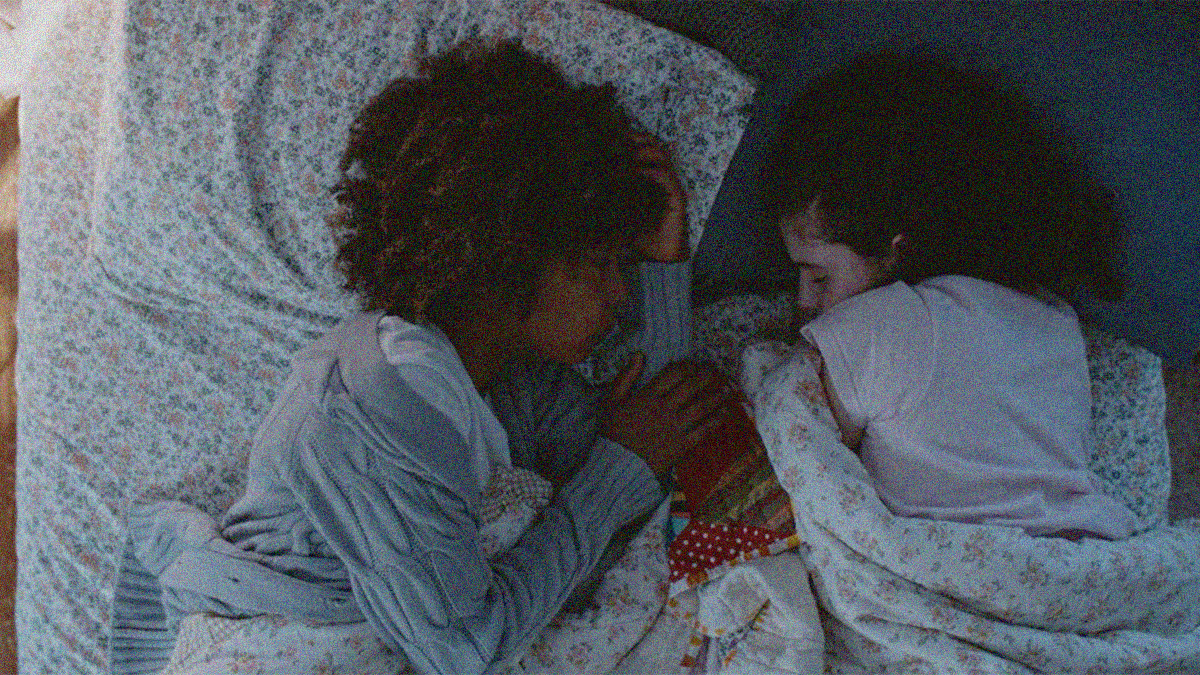
IN THEATERS (LIMITED; EXPANDING 11/13)
_____
With someone as full of life as Callie Bell (Chloe Coleman) beside you, it's easy to fall prey to the belief that your own identity is better suited to being a byproduct of theirs. A lot of that comes from admiration, but there's no shortage of jealousy too. A mother (Sophie Okonedo's Helen) living out the life she might have led if she hadn't had children through her daughter. A best friend (Katherine Mallen Kupferer's Minnie Dunn) finding fulfillment in being her support.
So, what happens without her? When that infinite joy and potential are suddenly replaced by a bottomless well of grief? Add outsiders who didn't mean as much to Callie as she did to them exploiting (performative or not) this loss for their own benefit and it's enough to drive a person insane. All their hollow platitudes and awkward pity as they go back to their lives only proves their anguish isn't the same. They lost an accessory. Minnie and Helen lost a piece of themselves.
What makes Kelly O'Sullivan and Alex Thompson's Mouse so good, however, is that they understand the complexity of this scenario enough to callout this truth while also never forgetting the others' pain remains real regardless. That distance might allow them to move forward and talk about it without an issue, but their reaction being construed as flippant doesn't automatically mean they are being flippant. We all deal with death in different ways.
This reality leads to messiness because our intrinsic impulse is to judge when someone goes too far or not far enough. Because it's easier to be angry at the reactions of others than it is to be sad about your own feelings. But it's also messy because a desire for normalcy often sees us blurring the line between what was and what is. We are so desperate for the distraction of routine that we don't recognize when our actions are making things worse.
That's where the real meat lies here. Yes, it's fun to watch Minnie seethe as Cara (Audrey Grace Marshall) tries to rewrite the history on who was Callie's BFF, but it's the devastation of Helen and Minnie finding themselves returning to the roles they served for Callie that resonates. The former is able to lose herself to her maternal urges for the latter's benefit and the latter can pretend her best friend is still there by filling the space she left by herself.
It's an intense dynamic that's brilliantly written by O'Sullivan and performed by Kupferer and Okonedo (with crucial assistance from Tara Mallen as Minnie's mom Barbara—this real-life family that were so good in O'Sullivan and Thompson's Ghostlight are made whole with a Keith Kupferer cameo as a giant poster in an early video store scene). For every bit of calm being together brings them, there's an exponentially worse reminder of their pain lying in wait.
Because Minnie isn't Callie. One could say their bond was so strong precisely because they were complete opposites. To try and forget that (unconsciously or not) is a disservice to her memory, but also a disservice to who Minnie and Helen are outside of her shadow. They need the time to find themselves in this new world. Not by forgetting what was or by refusing to acknowledge what is, but by allowing themselves the room to shatter the illusion of Callie's perfection.
This aspect astounds throughout Mouse by mostly arising via rage. Too many films dealing with grief find themselves lost in a desire to provide comfort without diving into the pain first. I think the part I'll remember best is a wordless moment when Minnie sees Callie's handwriting on the drama room's wall and angrily rises to deface it before being interrupted. There's nothing more honest than this urge to erase her friend completely in hopes of erasing her torment.
That it's followed by an unforgettable exchange with David Hyde Pierce's Mr. Murdaugh only makes it better. Because he isn't written to chastise her. He doesn't even realize what she was doing. No, O'Sullivan and Thompson let their supporting characters talk in ways that relate to a given situation rather than call attention to it. Same with a funny and heartbreaking moment of Brad (Beck Nolan) breaking down in tears or Cara constantly lashing out.
Everyone on-screen is a raw nerve and they are given the humanity to allow that vulnerability, selfishness, and insanity impact their actions in horrible ways. Not to judge them, but to understand. There's no better example than Minnie's romantic interest Kat (Iman Vellani) having just lost her mother. It's not a trait to impart wisdom or become her therapist. It's so Kat has the tools to know when to walk away. Because there's no state of being healed. Only a perpetual healing.
The journey towards that clarity is what Helen and Minnie are traveling. It's a bumpy road that sees them depending on each other for more than they should and lashing out upon realizing they've gone too far or, worse, that the other isn't giving them what they need. Barbara, Murdaugh, and Kat (amongst others) see it, but they can only do so much. Helen and Minnie must find their own way forward. Towards acceptance, help, and rebuilding themselves.
10/10
Possible Love
가능한 사랑
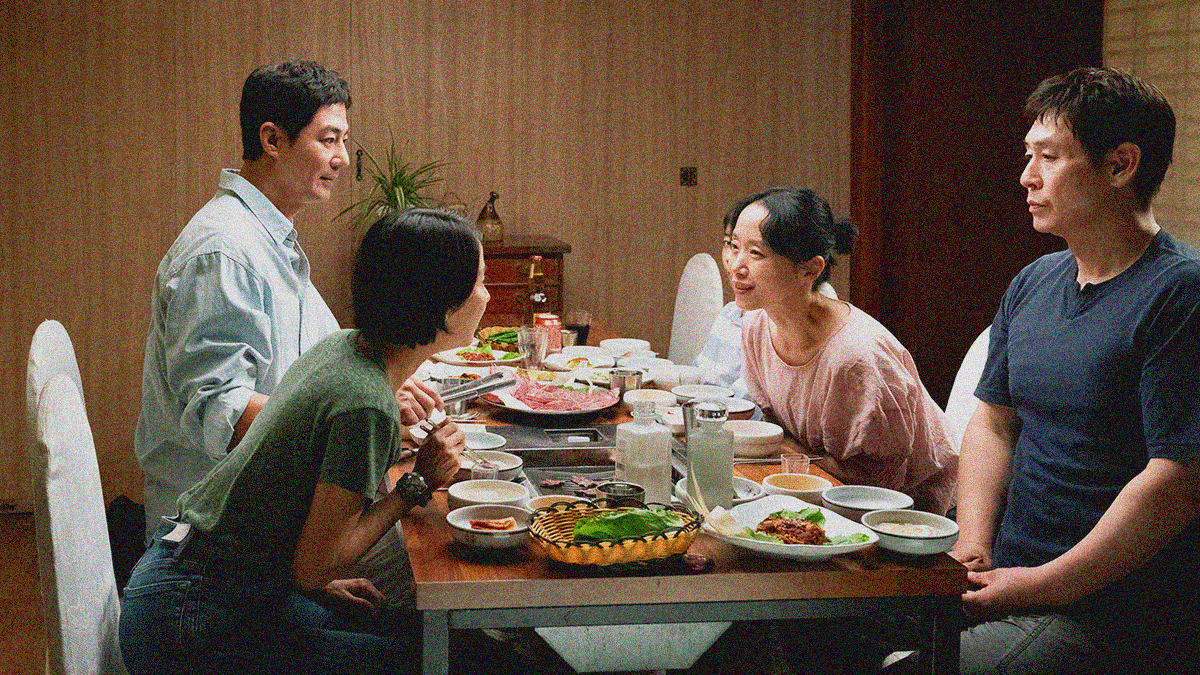
STREAMING ON NETFLIX | SOUTH KOREA'S INTERNATIONAL OSCAR SUBMISSION
_____
The easy interpretation of the title Possible Love points to Mi-ok (Jeon Do-yeon) and the enigmatic Sang-woo (Zo In-sung). They meet by happenstance at a funeral for a former co-worker of her husband. She's there to pay respects with him (Sul Kyung-gu's Ho-seok) and their son (Jung Seol's Cheol). Sang-woo is there to pick up his wife Ye-ji (Cho Yeo-jeong) who attended to film the event as part of her new documentary about labor rights in South Korea.
Lee Chang-dong and co-writer Jungmi Oh build the blossoming relationship between these two couples slowly through the friendship between its two women. Ye-ji sees Mi-ok as a way to secure the linchpin to her story. If she can open her up to understand what happened during the strike that has left her husband unemployed and drove others to suicide, maybe Ho-seok will finally go on the record too. Sang-woo admires his wife's initiative and agrees to help.
His kindness shown towards Mi-ok puts a glint in her eye as a result. We can't begrudge her either since Ho-seok is drowning in depression and refusing to help himself out of it. So, she takes to Ye-ji's attention and familiarity. Having a new friend excites her and pushes her closer to the freedom she used to imagine as a young girl. This newfound enjoyment of life sparks Ye-ji's own burst of energy that in turn leads Sang-woo to want to hang out with them all more.
What we see before Mi-ok can, however, is the cost of that freedom. Because what she desires from Ye-ji's life isn't merely the money, time, and husband. It's also the sense of entitlement that comes from the superiority it affords. We want to believe those airs are involuntarily because Ye-ji genuinely loves hanging out with Mi-ok despite their proximity always revolving around the film. I think she believes it is too considering the ease with which she talks about her.
And that's where the first sign of trouble arises. It's where I began to realize Ye-ji might be the most intriguing character of the whole considering her wish to keep one foot in two worlds—the one she came from and the one in which she now resides. She's not so naïve to think her friendship with Mi-ok is more important than the footage, but she desperately wants to trick herself into it. Sang-woo won't let her, though. Not intentionally. Simply because he loves the game.
That's what this all is to him. He's telling the truth when he says he enjoys how Ye-ji is around Mi-ok. It's just not the reason either of them hopes. They presume Sang-woo adores their candor and laughter. What he actually adores is his wife's pivot (unintentionally) to the dark side of morality and humanity he embraced from a young age. Ye-ji's tactics to ingratiate herself in Mi-ok's life aren't altruistic to him. They are ruthlessly cutthroat. He's proud of that.
The "possible love" of the title therefore concerns Ye-ji and Mi-ok. It concerns the potential love between many different platonic dynamics that include Ho-seok and his fellow strikers too. That necessity for implicit trust via an unspoken contract wherein vulnerability and loyalty place you on equal footing. Where words like justice are baked into the fabric of a relationship and not dictated by signatures on a contract. A union devoid of artificial constraints.
Lee and Oh place many such examples of the opposite spanning various levels of intent whether Mi-ok holding Ho-seok to his promise of not drinking outside the confines of their house or a later revelation that a character used to blow a whistle to demand a subordinate his own age play with him. How Ye-ji and Mi-ok met their husbands start out like cute stories of fated love, but future details tend to reconfigure things in positive and negative ways.
It's not about these women attempting to break down the walls between their two disparate worlds. It's about that sense of entitlement and how yearning (Mi-ok) and ambition (Ye-ji) sees them forgetting their own morality. What began as a mutually beneficial partnership soon reveals those walls have been reinforced instead. Privacy is erased. Honesty is stolen. Survival and success always have a way of turning good people into monsters.
The journey is long at just under three hours, but the slow burn is crucial to drive home the psychological ebbs and flows of desire, greed, and fear in play. We figure out the big connection (that remains unspoken yet implied) pretty early upon learning Sang-woo's job, but it's just one of many truths that force us to better understand the characters. Don't therefore get caught up in any narrative hypotheses. Plot is secondary to personal growth and/or stagnation.
I fell prey to it myself. All the talk about Ho-seok's temper. Sang-woo's steady decline into proving he'd love Ron Livingston in Dinner for Schmucks. I was bracing for fireworks when the obvious and best way to go was a quieter sense of self-revelation. And it does prove the perfect route since it reveals the nuance to these types of power imbalances. To let Mi-ok reclaim her identity and have Ye-ji wondering how anyone could ever leave her on read.
The moment I won't forget, though, is a shot of Min-sik (Kang Chang-gwon) looking up into the sky as if he heard what he couldn't possibly hear. It's such a great callback to a damning bit of knowledge that truly shows Lee and Oh are steering this ship with two hands firmly on the wheel. They walk the line between humorous and vile with expert precision to prove the dedication to Krzysztof Kieślowski's Dekalog is very apt.
8/10
Raise the Red Lantern
大紅燈籠高高掛

4K RESTORATION IN THEATERS (LIMITED)
_____
You can't help laughing every time The Master (Jingwu Ma) mutters how his concubines should act better with one another considering his familial "customs" are what drive them to continuously lob snarky responses when not also sticking knives in each other's back. Because it's not just the red lanterns being lit to publicly show who will have him in their bed that night. It's also the decision to give the winner a foot massage with the loudest hammers possible.
Zhang Yimou's Raise the Red Lantern (adapted by Ni Zhen from Su Tong's novel Wives and Concubines) is "Big Love" on steroids as far as the lengths taken to secure one's place within an insular world devoid of escape beyond death. The learned indifference from Yuru's First Mistress (Shuyuan Jin). The perpetual grin on the face of Zhuoyan's Second Mistress (Cuifen Cao). The overt games played by Meishan's petty Third Mistress (Saifei He).
It's why we can never quite get a handle on how Songlian (Gong Li) will respond upon her arrival as Fourth Mistress at nineteen. Will she enjoy the fact that the others are willing to take their Master's attention away from her? Will she fight to steal him back? What's interesting here is that sex is almost inconsequential beyond its ability to sway favor. Conceiving a male. Earning the foot massage. Dictating the lunch menu. Lording themselves above the others.
He wants them at each other's throats. He merely abhors dealing with the fallout of what that means in the moment. Not that he isn't willing to just swing over to another's room until they cool down. What he doesn't see, however, is how that competition has turned these women into ruthlessly conniving lords themselves. The way they treat their servants. The way they use information as bargaining chips. The way human life becomes disposable.
The main dramatic thrust is therefore whether Songlian will see through the ruse and be better than the others or if she will succumb to that same malice. In some ways she acknowledges how wrong it is to use others as pawns—enough to curb her own frustrations with her servant (Lin Kong's Yan'er) knowing someone else is pulling the strings. In most cases, however, her anger takes control until she can no longer recognize the consequences of her actions.
And looming above them all for the duration is a locked "haunted" room atop the roof of this large estate. A room people don't talk about because it is the place where two different women from past generations hung themselves. The direr things get once Songlian's tactics to wrest away some control leave her punished, the more she wonders if that's a route she will ultimately take to escape the cruelty she's embraced too easily over a single year.
Each new day brings a new target for the women's ire. Who is mad at whom? What new secret has been discovered to hold over their heads as blackmail? Sometimes things get worse when The Master is gone because there's nobody for his mistresses to perform for. Suddenly their deceptions don't need to be shrouded under false pretenses. They can just walk up to each other and be frank about their intent.
The whole is gorgeously shot and acted with every wide lens waiting for a character in the distance to notice they're being watched and every smile holding an ulterior motive that's purposefully visible just below the surface. It's fun to watch older films through a contemporary lens (this 4K restoration is astonishing) because I get to wonder if Belinda Bromilow was borrowing from Cao with her performance in "The Great" or if it's just the archetype.
Cao is fantastic as the most obviously interesting character of the group. That doesn't mean you should sleep on He or Kong, though, since their less elegant machinations are just as effective due to their tortured souls. Even so, it's Li who shines brightest. It makes sense since she's a perfect mix of the three—smart like Zhuoyan due to a university education, manipulative like Meishan, and emotionally fragile like Yan'er. Being cognizant of this makes her haunted too.
Those moments are the most memorable. The ones where Songlian is pushed to the edge of sanity, acts on the impulse of rage, and inevitably reckons with the guilt that results. She understands the nature of this poisonous ecosystem well enough to know it's to blame for most of the horrible things that occur. But you can only use your surroundings as an excuse so long before accepting you've become a part of the problem. Do you embrace it or do you crack?
That Zhang and Li keep us uncertain towards the answer for the duration is a testament to the storytelling because it would be just as effective both ways. We either relish in the villainy of Songlian becoming the ultimate puppet master or lament the fact that she's yet another victim of oppression forced to uphold her own oppression. Neither is a happy ending (few women in this position ever found one), but "happy" is a poor substitution for authenticity in cinema.
9/10
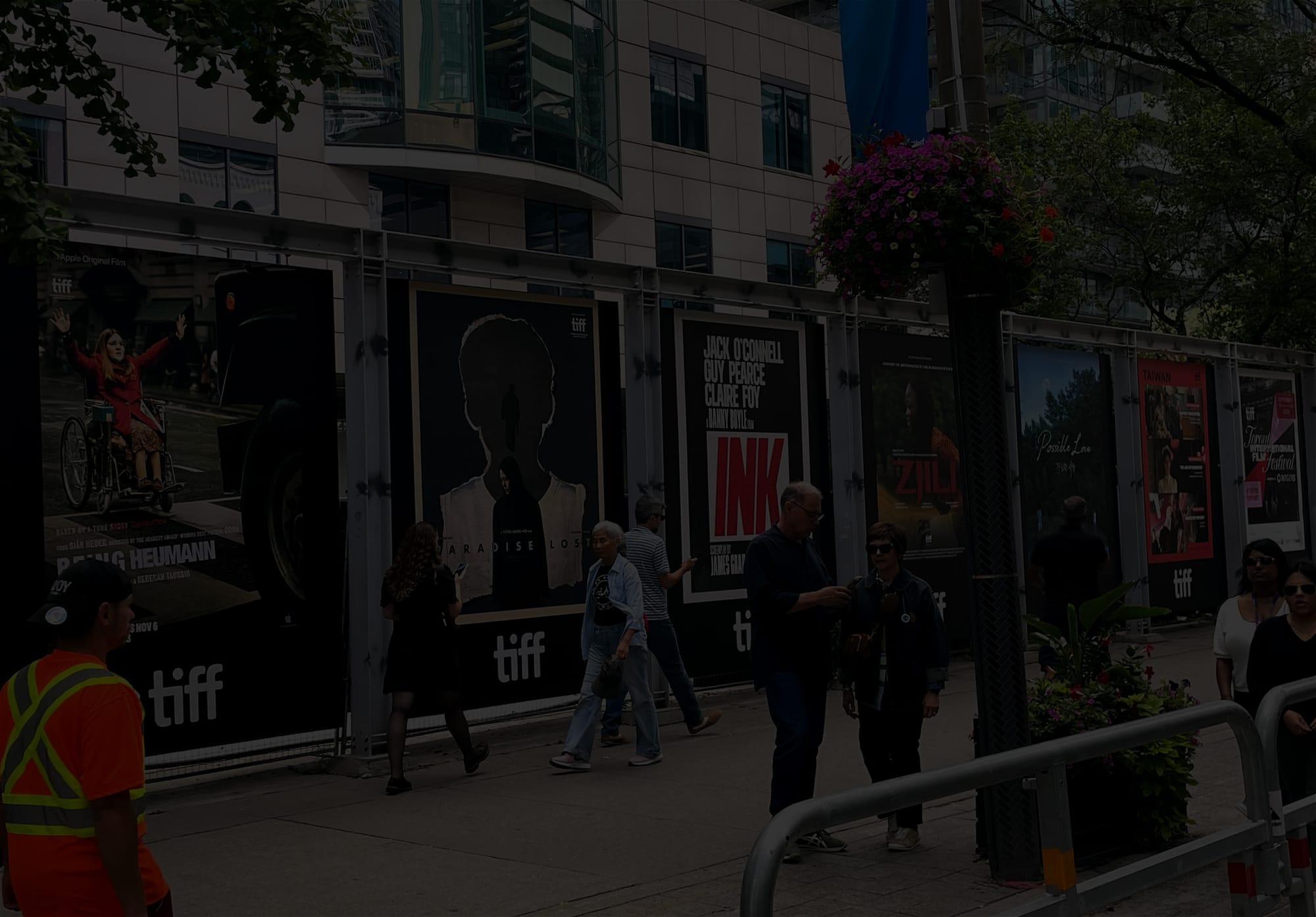
Posters of Note
My weekly roundup of ten posters that caught my eye on the Instagram feed. Compiled on Blusky via #postersofnote.
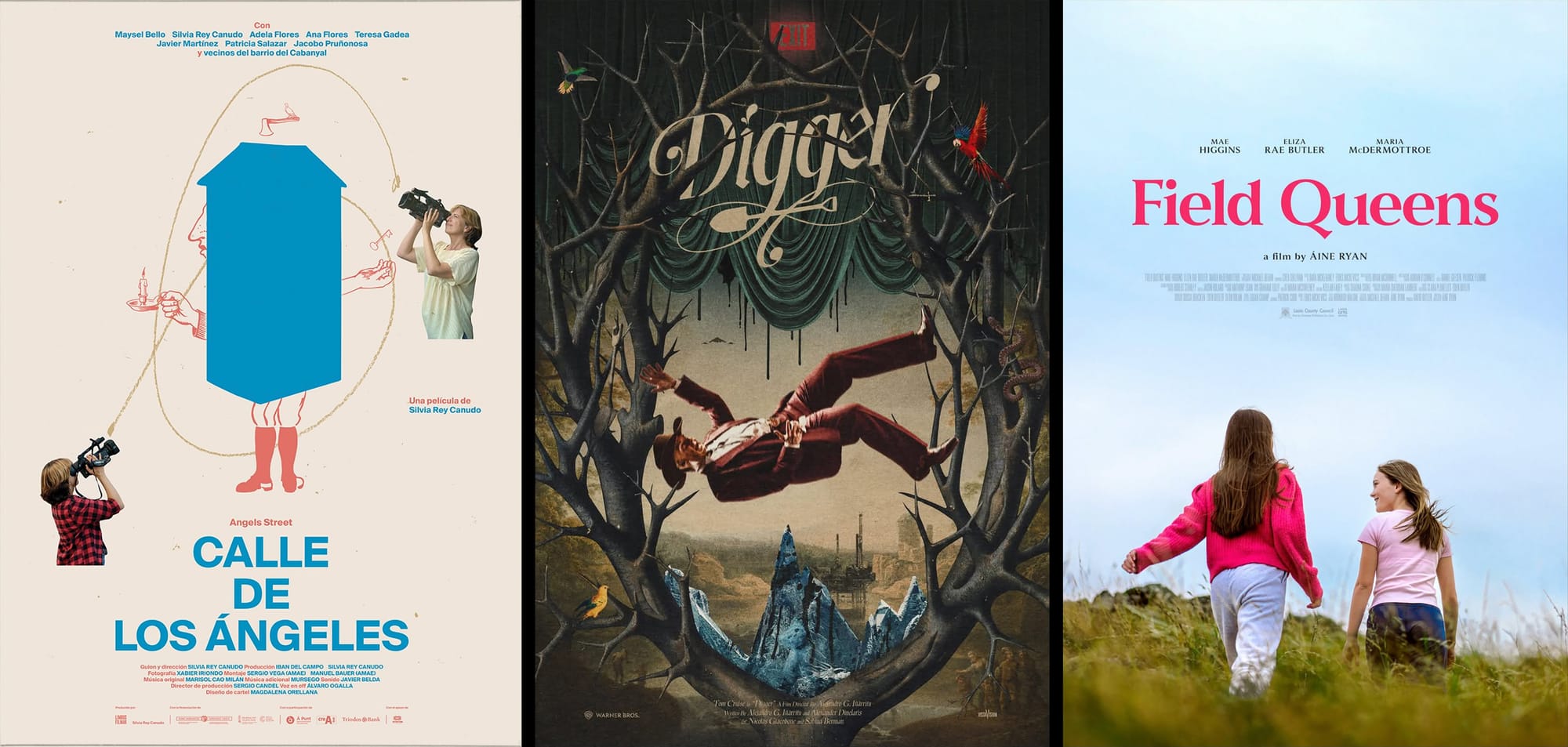
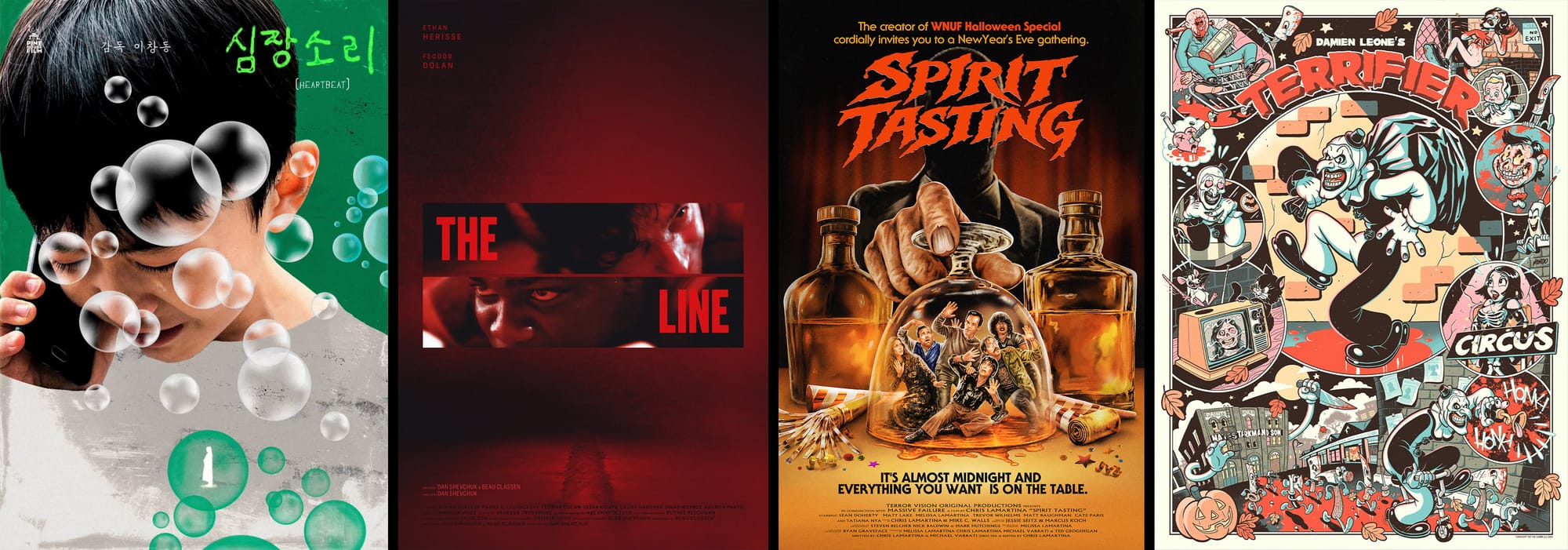

This week also saw my latest Posterized Propaganda feature go up at The Film Stage with designs from November 2026 US releases.
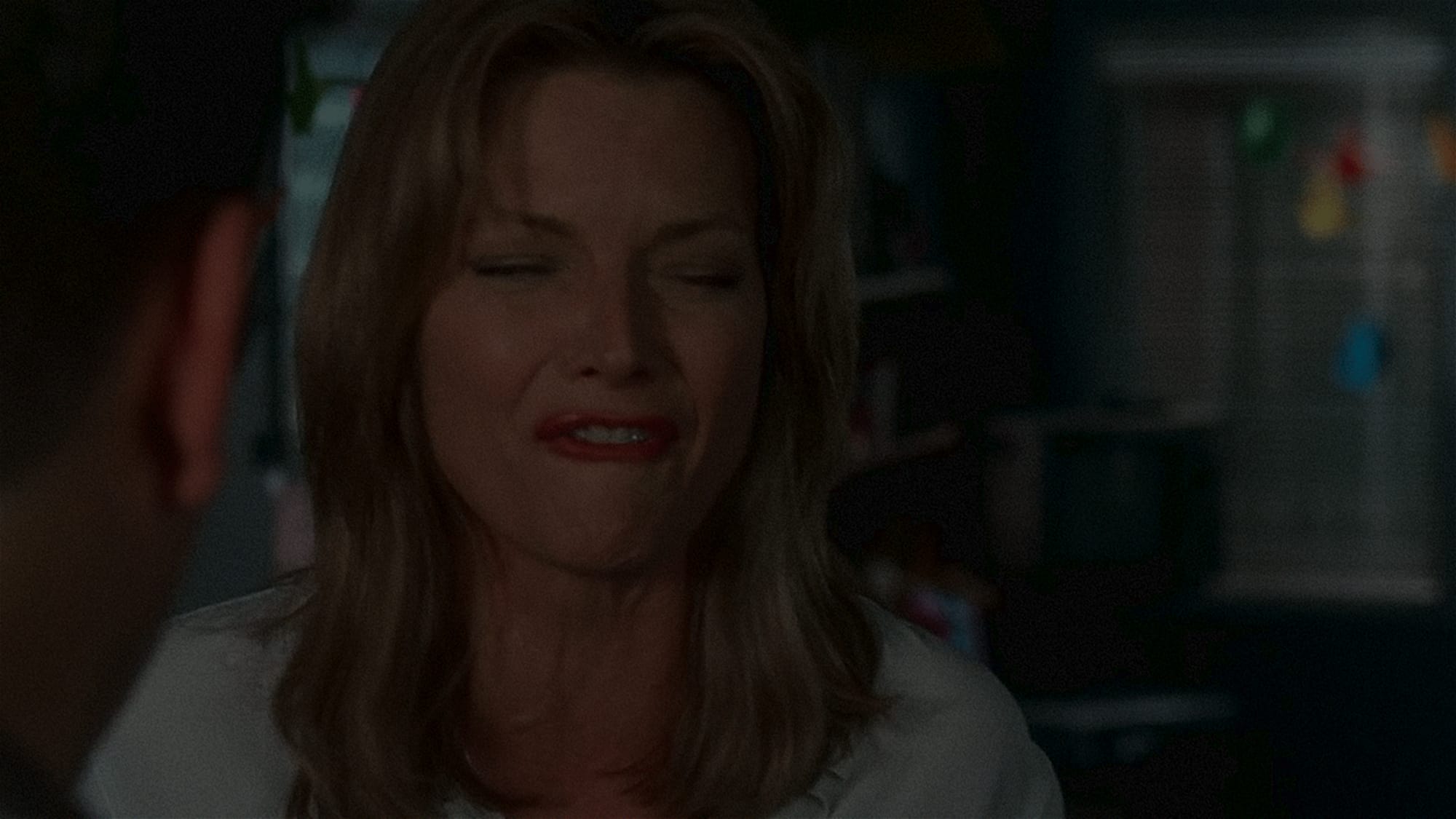
Cinematic F-Bombs
This week saw Freaked (1993) added to the archive (cinematicfbombs.com).
Derek McGrath dropping an f-bomb in FREAKED.

Movie Listings
Opening Buffalo-area theaters 11/6/26 -
• The Cat in the Hat at Dipson Flix, Capitol; Scene One Market Arcade; AMC Maple Ridge; Regal Elmwood, Transit, Galleria, Quaker
• Drummer Boy at Dipson Flix, Capitol; Scene One Market Arcade; AMC Maple Ridge; Regal Elmwood, Transit, Galleria, Quaker
• Godzilla Minus Zero at Dipson Flix, Capitol; Scene One Market Arcade; AMC Maple Ridge; Regal Elmwood, Transit, Galleria, Quaker
• Jimmy at Dipson Flix, Capitol; Scene One Market Arcade; AMC Maple Ridge; Regal Elmwood, Transit, Galleria, Quaker
• La Bola Negra at North Park Theatre; Dipson Amherst
• Once Upon a Time in Harlem at Scene One Market Arcade
"Shot on 16mm via multiple cameras that surely captured hours of footage between all the rooms of Ellington’s home despite unfolding in one afternoon, I would have been just as engrossed at triple the runtime." – Full thoughts at HHYS.
• Ramayana at Dipson Capitol; Regal Elmwood, Transit, Galleria, Quaker
• Scene at Regal Elmwood
• Wild Horse Nine at Dipson Amherst, Flix; Regal Transit
Streaming from 11/6/26 -
• Carolina Caroline (Netflix) – 11/6
"Cue the road trip crash course in grifting and the electric chemistry of their tandem running amok with such expert precision that their crimes might somehow exude more sex appeal than their sex scenes." – Full thoughts at The Film Stage.
• Making Marie Antoinette (MUBI) – 11/6
• Motor City (AMC+) – 11/6
"Potsy Ponciroli’s Motor City is extremely my jam. Pure style over substance that delivers a viscerally absorbing, sensorial experience." – Quick thoughts at HHYS.
• New Group (Shudder) – 11/6
• Possible Love (Netflix) – 11/6
Thoughts are above.
• Unprotected: Murder in Galicia (Netflix) – 11/6
• The Uprising (Peacock) – 11/6
• Gail Daughtry and the Celebrity Sex Pass (Netflix) – 11/7
• The Good Lawyer (Netflix) – 11/9
• Misty Green (Netflix) – 11/9
• Avedon (Netflix) – 11/11
• Tyler Perry’s The Gospel of Christmas (Netflix) – 11/11
• Allen (Netflix) – 11/12
• The Christmas Switch (Netflix) – 11/12
• Never Surrender (Netflix) – 11/12
• Paw Patrol: The Dino Movie (Paramount+) – 11/12
Now on VOD/Digital HD -
• April X (11/3)
• Bad Apples (11/3)
• Beware Boiúna (11/3)
• Charlie Harper (11/3)
• Daniel and the Fiery Furnace (11/3)
• Do You Love Me (11/3)
• The History of Concrete (11/3)
"The film is therefore using concrete as the impetus for Wilson to make a film about his current emotional, psychological, and artistic state of being. If he can do it with concrete, he can do it with anything." – Full thoughts at HHYS.
• Marrow (11/3)
• Merry Friendsmas (11/3)
• Orion (11/3)
"Orion delivers worthwhile commentary via a lo-fi, one-set sci-fi conceit that leans into its production design and performances rather than stretch its admirable special effects beyond their means." – Full thoughts at HHYS.
• Please Don't Feed the Children (11/3)
• Primetime (11/3)
• Resident Evil (11/3)
• Sense and Sensibility (11/3)
• Without Blood (11/3)
• Your Mother Your Mother Your Mother (11/3)
"The humor is what hooked me. That said, however, this remains an emotionally impactful film. It’s a quest that sees this father realize he was worried about the wrong fight." – Full thoughts at The Film Stage.

Press Kit Archive
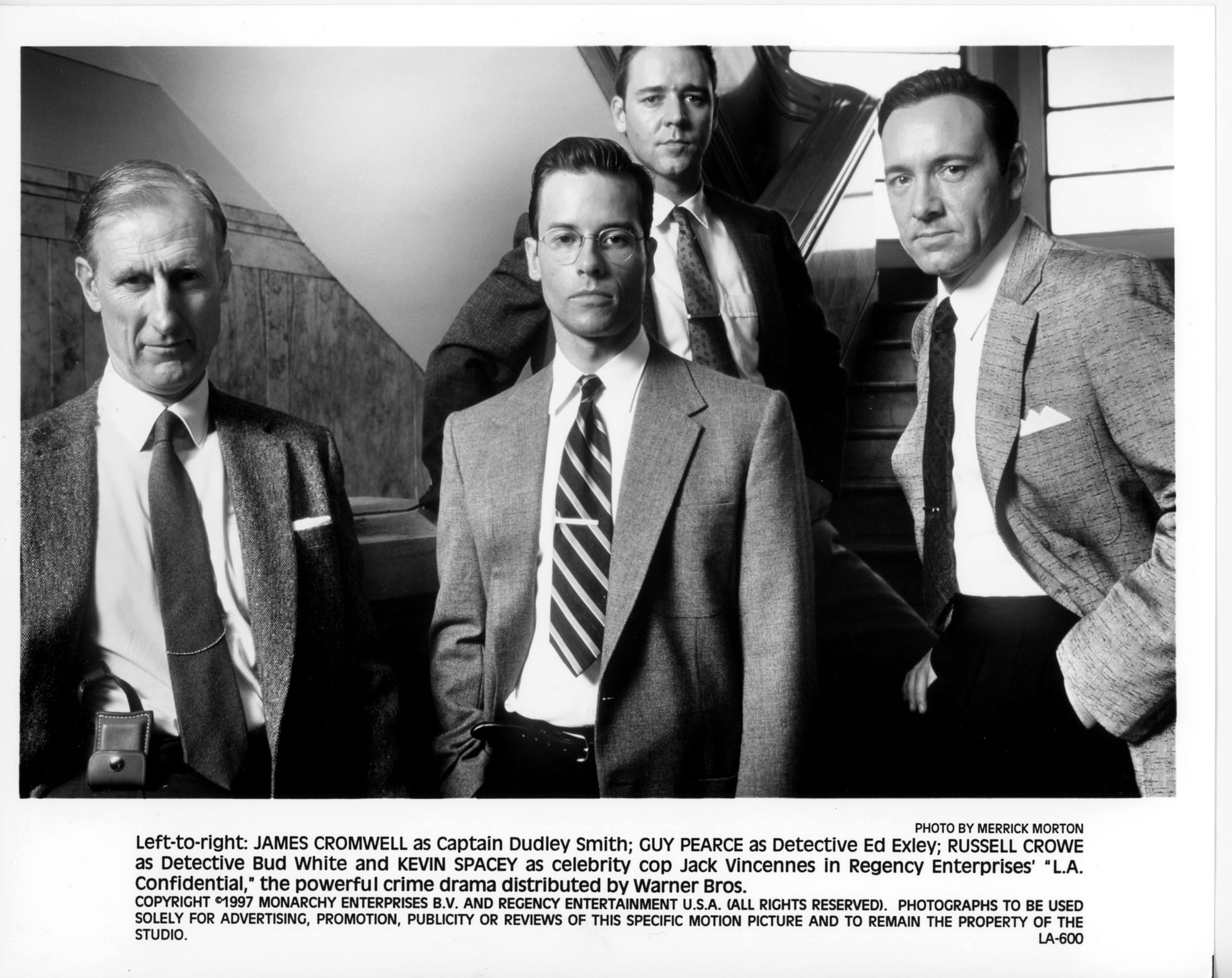
Pieces from the L.A. Confidential (1997) press kit.