TIFF 2026: Day Three
Telling lies

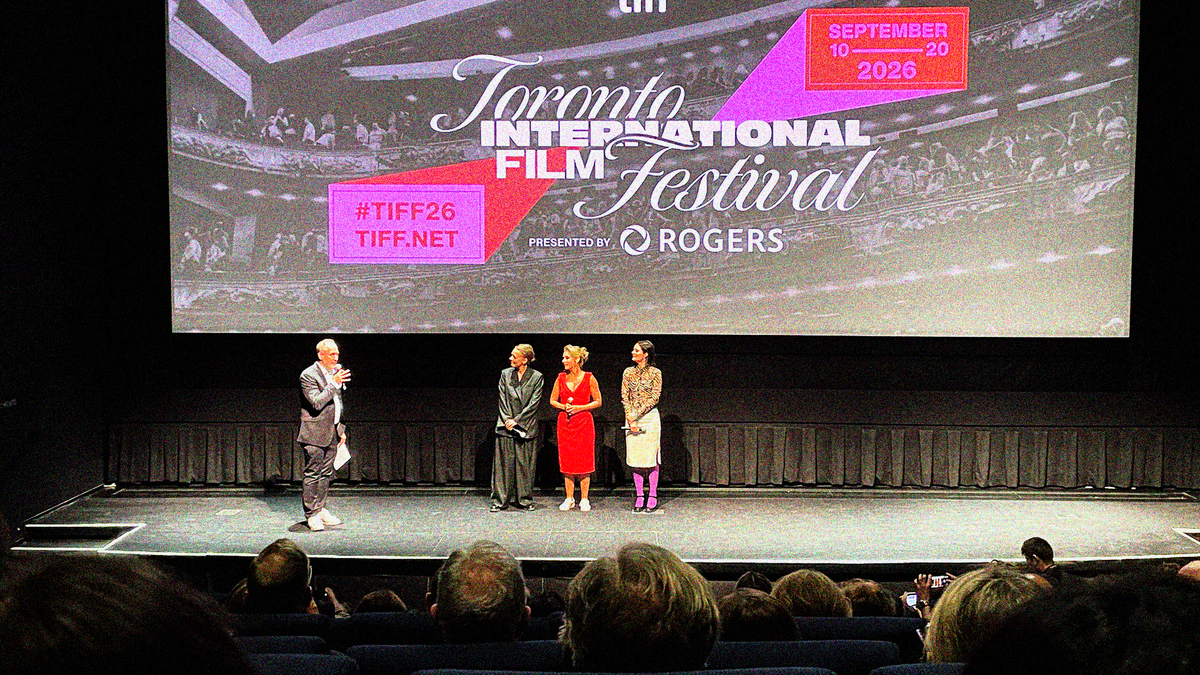
Another day is done and TIFF is officially in full swing. The crowds were huge (I've learned to avoid King Street in front of Princess of Wales and Royal Alexandra since that's where the people pack in like sardines to snap a photo of celebrities), the artist and food markets were hopping (just one more food truck, but a bunch of tents too), and the DJs were spinning.
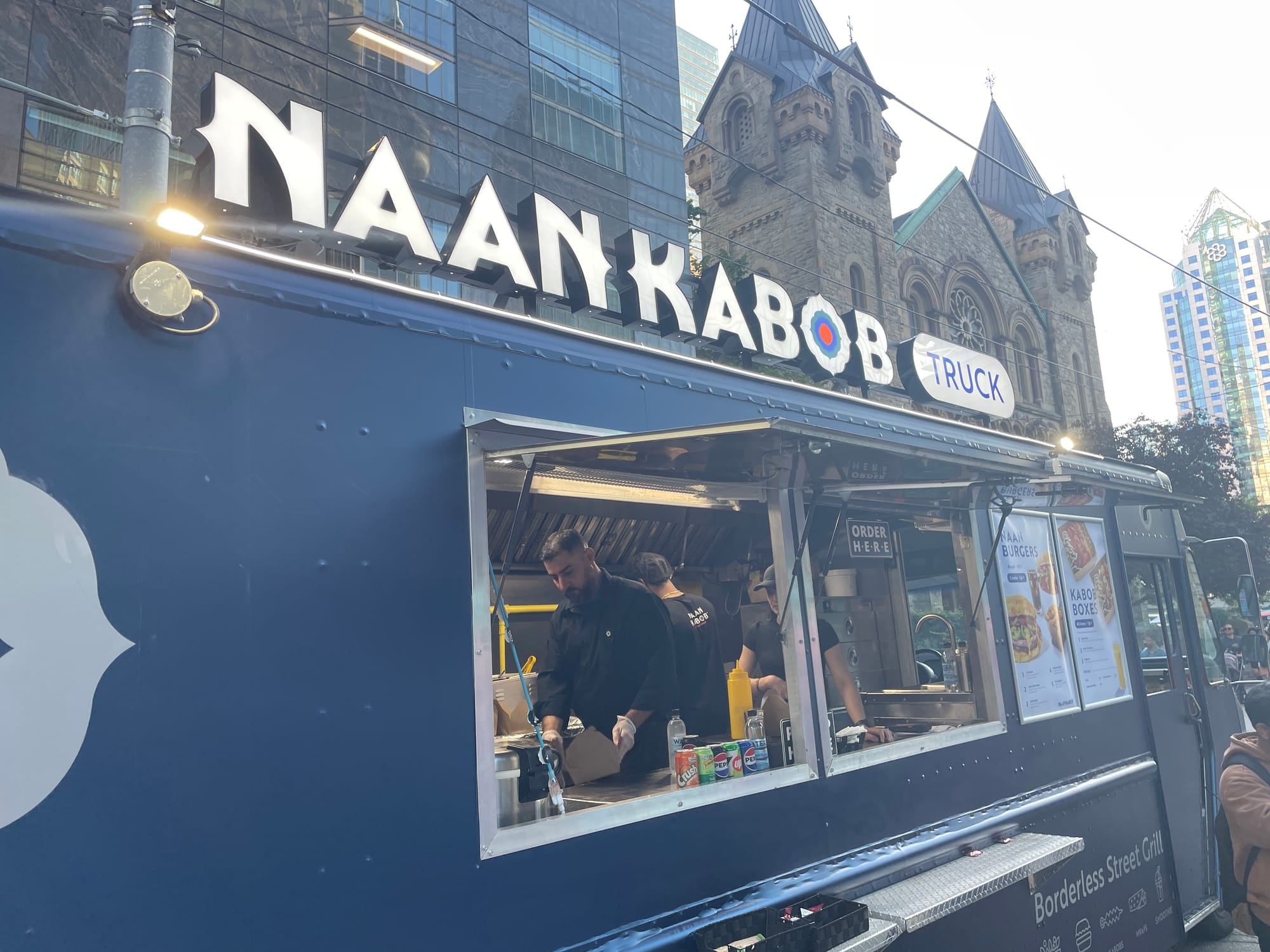
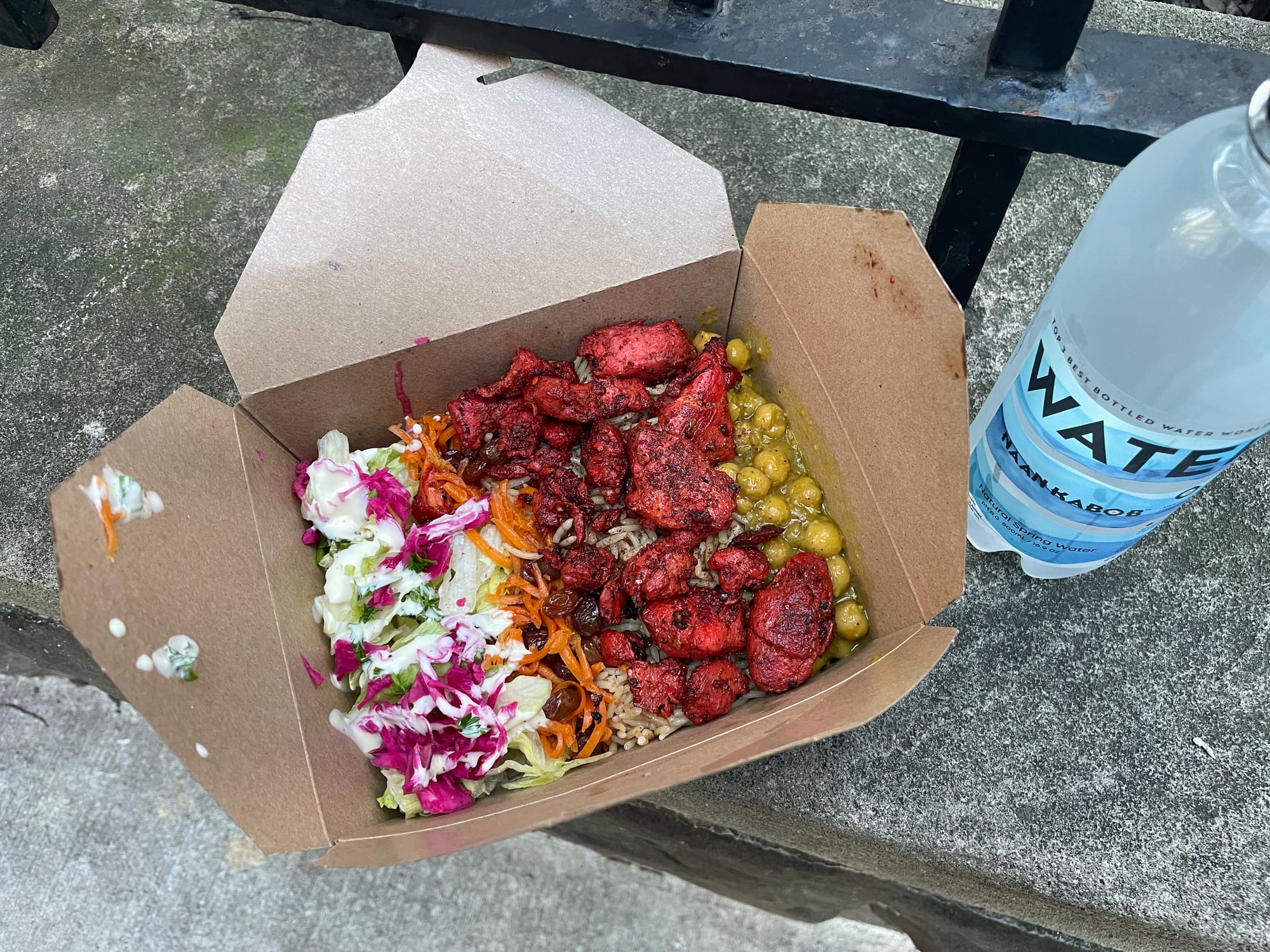
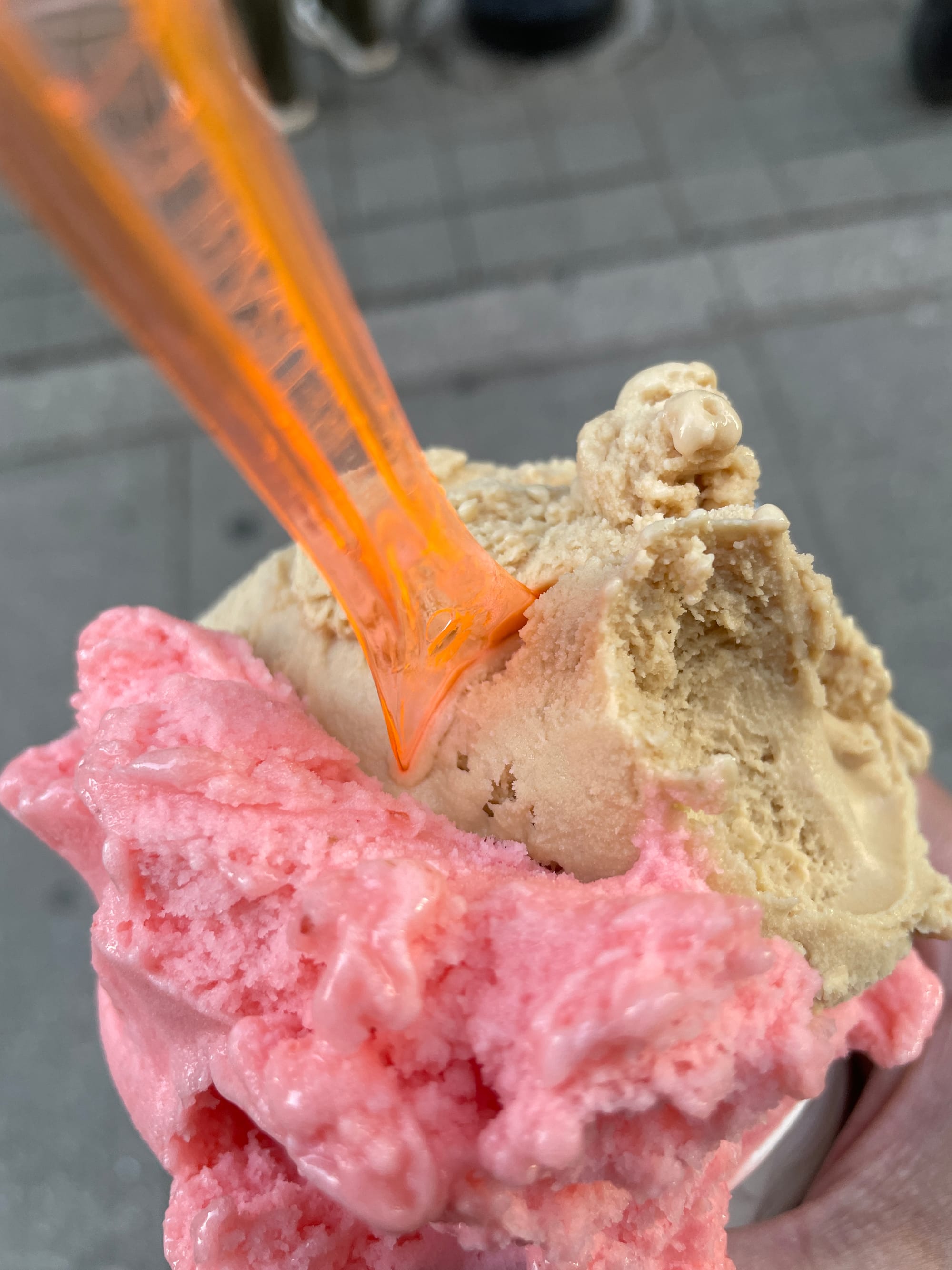
I finally got my Naan Kabob bowl for dinner and hit 00 Gelato for some strawberry lime and salted caramel as dessert. I tried to visit the new press lounge at the Sutton Place only to discover they close shop at 5pm (insane), so I went to my usual place at the bottom of the Hyatt instead. I haven't been kicked out yet.
As for the movies: the River press screening filled up, the Iron Boy press screening did not (I guess everyone saw it at Cannes), and the world premiere of What Lies Between saw director Amalie Næsby Fick and stars Sidse Babett Knudsen and Asta Kamma August take the stage. I regret going to a movie that didn't end until 11:00pm, but I don't regret seeing the movie. It was very good.
Today's schedule:
• Your Mother Your Mother Your Mother, d. Bassam Tariq | Special Presentations | United States | English
• Trash Mountain, d. Kris Rey | Centrepiece | United States | English
• Furies, d. Rami Kodeih | Centrepiece | Brazil, Lebanon | Arabic

Idda

PLATFORM
World Premiere | September 11 | Italy | Italian
_____
We see a mischievous glint in Sofia's (Romana Maggiora Vergano) eye when speaking out of turn for Adele (Tecla Insolia). They've just reunited after years apart to find themselves having drinks with a sound recordist working on a piece about orality. Sofia mentions Adele is an artist too, coaxing out a description for her new photography project on the effect of disappearance on one's memory and reality. How a person is here one moment and then ... poof.
It makes a ton of sense considering we first meet Adele dreaming of Mount Etna via grainy images of a rolling fog and falling rocks. These thoughts (and a heavy rain) lead her to uncover a photo album of her late mother to reminiscence about the past. We recognize her desire to remember since that's all she has left to do. And that feeling segues perfectly to the airport where Adele awaits Sofia's arrival with the promise to replace old memories with new experiences.
Irene Dionisio's Catania, Sicily-set Idda (co-written with Marco Borromei) was inspired by the director's own sense of loss when her best friend passed away many years prior. With it came a reconciliation between the contrasts of life and death—presence and absence. Add her impending motherhood with connections to the titular volcano's own myths around fertility and the setting becomes just as much a character as the two women she sets upon its trails.
While climbing "Idda" (a local nickname for Etna translating to "She" in Sicilian) was always the plan growing up, this wasn't the time Adele and Sofia meant to accomplish the goal. Now in their thirties, they've never been more apart in ways both physical (Adele stayed on the island while Sofia left) and spiritual (Adele's penchant for caution versus Sofia's unbridled risk-taking). Tragedy (and perhaps selfishness) derailed their original plans. Avoidance might derail this one.
Theirs is a complex dynamic. Dionisio might let this adventure unfold through Adele's vantage point in a way that ensures her long-gestating anger is justified when it seems Sofia might be blowing her off again, but she's also quick to inject a bit of secrecy courtesy of something as innocuous as a series of unanswered phone calls. Between the Sofia's refusal to confront that issue and desire to keep conjuring distractions, we know something is wrong.
Adele attempts to discover what it is, but an edginess born from a complicated history they've yet to fully acknowledge causes her to push in a way that forces Sofia to retreat even further. What should be a fun reunion (and is at the start with dancing on the train and camping amidst the fireflies) soon devolves into a series of provocations once an old acquaintance who lives on the mountain (Giuseppe De Domenico's Salvatore) enters the equation.
What really resonates, however, is their ability to let that anger wash away. At times it's almost as if they dare each other to finally say enough is enough before ultimately smiling at their silliness for potentially letting something so foolish get in the way of their undying love. Until, of course, that opportunity to turn around suddenly stops being available. Because everything has a limit—less a result of action than fate. Their greatest asset was always time.
And they're losing that precious resource with every second of the day and year apart. Time drives everything whether as a series of checkpoints to follow forward or an abyss to gaze into and freeze in place if not cause you to fall backwards. Is this the moment to escape stagnancy? To start a family? To climb that volcano? Salvatore warns them that tremors have made the trek untenable, but what if this is Adele and Sofia's last chance?
Dionisio splices in more of those shots of Etna with escalating tumult as emotions run higher between the two women. It's not that their conflict wakes the mountain up, though. It's more that its scars become visible as a metaphor that can simultaneously comfort them in knowing they aren't alone in their pain and serve as a harbinger for what comes next. Cue the cinematic fissure set to the song "A Luce Tua" while their two histories merge for a powerful reveal.
While this epiphany superficially changes everything we've seen, Idda unravels in a way that proves nothing did. Regardless of timelines or dream states, the emotions remain the same. The maternal connections and themes pertaining to mortality stay preserved. All Dionisio has done is present her story through the poetic structure of its central idea that memory is as impactful and real as life itself. Because time is infinite within our minds.
Both Insolia and Vergano impress in the lead roles. The infectious joy when they are on the same page and the heartbreaking ache that arises when they aren't. They epitomize the notion of two halves making a stronger whole while also illustrating the failings of that concept due to our innate ability to still suffer through our most difficult decisions alone. Rather than keep regretting what wasn't said, however, the choice can be made to embrace what was.
8/10
Low Lies the Land
La Terra è Bassa
TIFF DOCS
World Premiere | September 11 | Denmark, Italy | Italian
_____
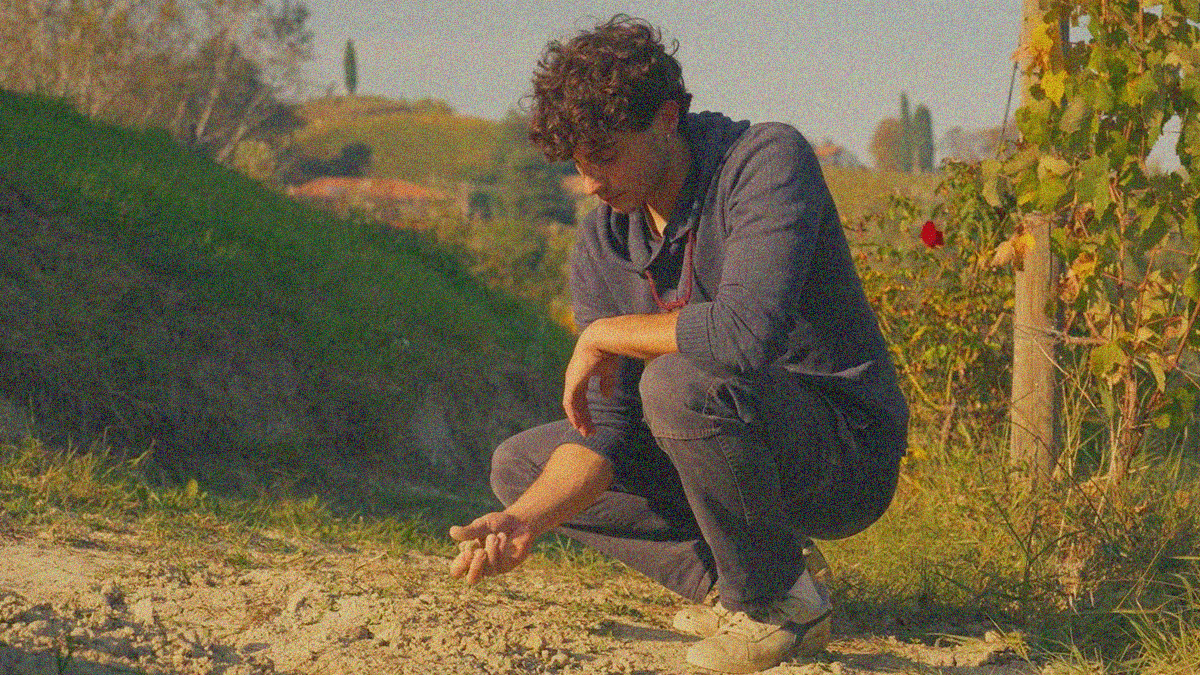
As climate change ravages the water supply for Northern Italian vineyards, four families must continue the work they've inherited from past generations to stay alive. They prune the vines, set new lines, and pray for rain to help fill their wells and reinvigorate the dry soil. And they mostly do it all by themselves until the harvest. Father and son with the Chiappones. Husband and wife with the Adamos. Lorenzo Agatiello's one-man show and Dino Bertolino's staff.
Director Emanuele Gerosa films their land with a voyeuristic eye to catch their daily routines with a serene vérité style. Low Lies the Land is composed of static set-ups that either dictate where the subjects stand to talk or simply capture them as they come and go to supply a wealth of coverage with which to cull from. Franco chides his son Daniele for daring to ask if he's tired. The Adamos await son Paolo's return home. Lorenzo works the fields and Dino tests the wine.
And looming in the background beyond the threat of another drought is a local broker named Roberto Garberoglio. He's quick to tell a potential investor that he's from this area and therefore understands the wine business well, but his pitch to three of the aforementioned families (he either doesn't visit Lorenzo or Gerosa doesn't show it) is about "once in a lifetime" money. He's a salesman who understands his audience and caters his words accordingly.
I assumed we'd be seeing a lot of Garberoglio as the season unfolds, but he mostly disappears after initial visits. Would it have been compelling if the Chiappones, Bertolino, and the Adamos weren't so loyal to their heritage that they declined outright or agreed to consider without ever being shown on-screen seriously doing so again? Yes. Could Gerosa have probably dialed back on making it seem this broker was of equal importance to them? Yes again.
While the offer to end their current struggles is a crucial plot point to these parallel tales, it's on par with the rest. Daniele's distributor reneging on a prior agreement. Everyone's grape yields being almost half what they hoped. Lorenzo having too much work to spend time with anyone but his grandmother (to which she says his girlfriend should break up with him because of it). Dino finding love. The looming question of whether Paolo will take over.
The documentary's success is therefore less about any inherent drama (there are no defined targets that must be hit to avoid bankruptcy of anything similarly crazy) than its ability to capture the humanity and work ethic of these families. I love the humor and camaraderie (Lorenzo supplies the others vegetables, Dino borrows Daniele's tractor, etc.) that shines through. It's also intriguing to watch their processes unfold as growing progresses to harvest and manufacturing.
We find ourselves pulling for each of them as the thunder roars and they look out the window hoping for a deluge. We get excited when it becomes time to prepare the vines again a year later because it reveals how this isn't just a job—it's their whole life. Whether Garberoglio succeeds in his foreign investment goal becomes but an afterthought delivered in passing conversation. Gerosa didn't get his potential bloodbath. He captured a determined optimism instead.
7/10
The Remotes
WAVELENGTHS
World Premiere | September 11 | Philippines | Tagalog, English
_____
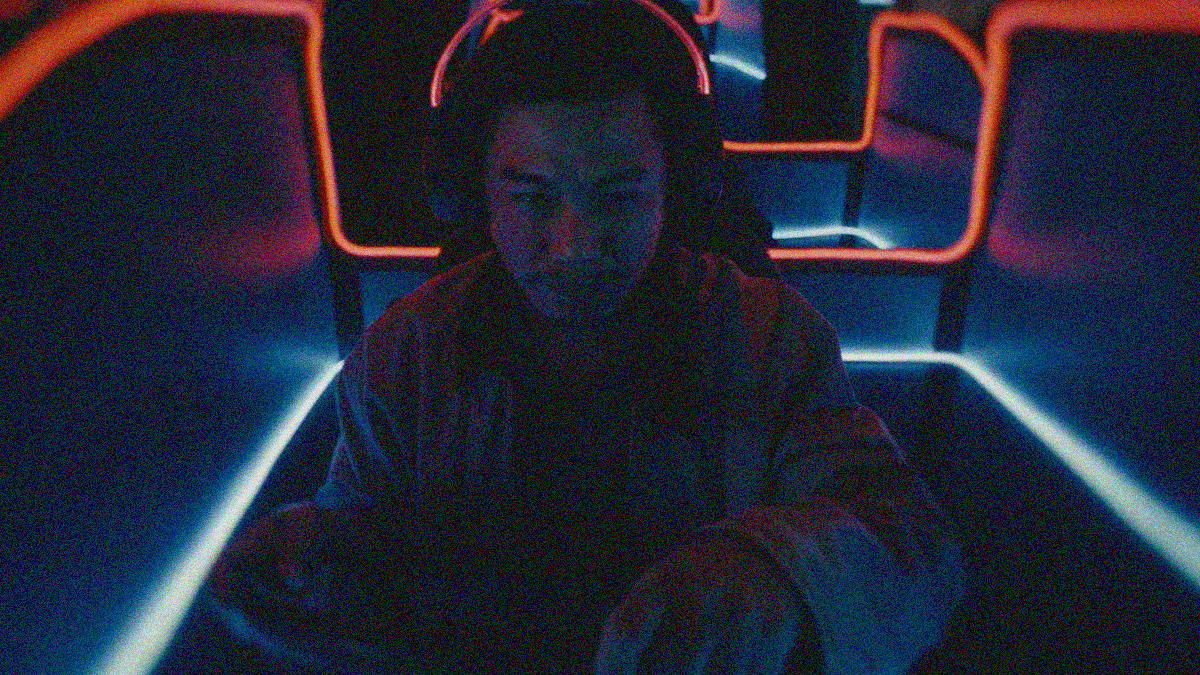
"I’d like to believe that’s Torres’ goal. That the film’s dream-like formal qualities are meant to act as scaffolding for the audience to project their own thoughts, feelings, and ghosts upon it."
Full thoughts at The Film Stage
River
MIDNIGHT MADNESS
World Premiere | September 10 | United States of America | English
_____
Before we meet Lucy (Jane Levy), David (Max Mattern), and Carla (Jessica Rothe) as they reunite for the first time in years to spread their father’s ashes by his favorite part of the river near their childhood home, writer/director Joshua Giuliano treats us to an unforgettable cold open wherein he lets the camera float over a murder scene while the sounds of the struggle can be heard. We’re seeing the aftermath yet listening to the event itself. Every scream matches a stain of blood. Every sound effect played above its visual source.
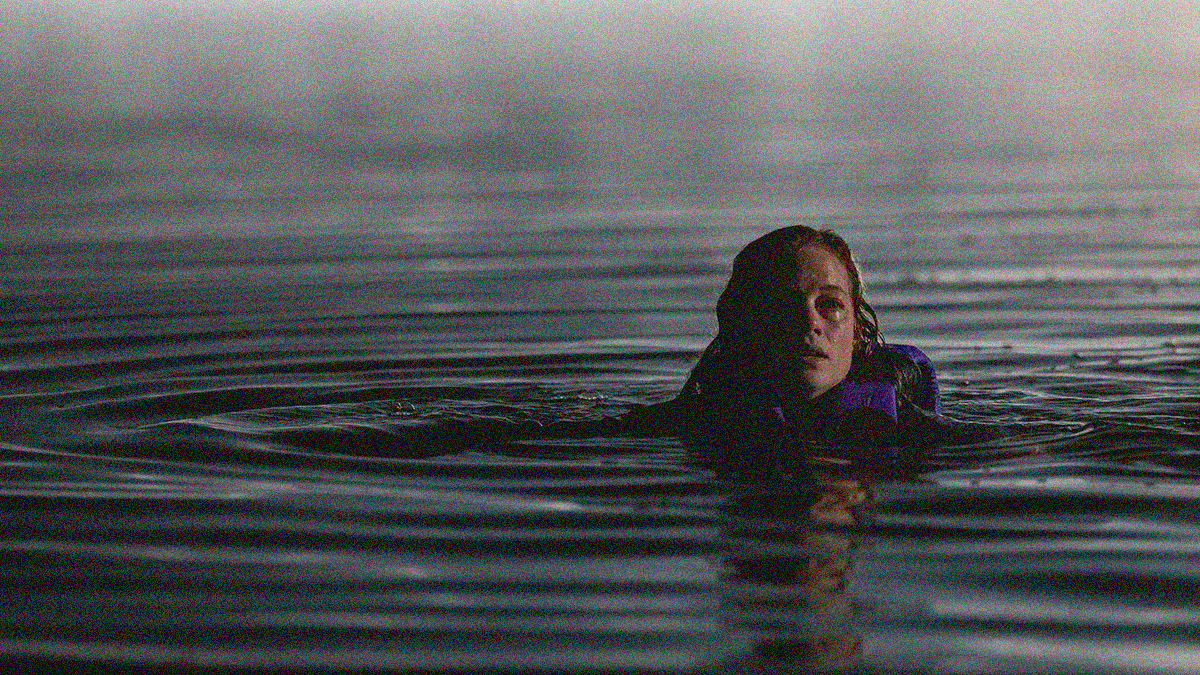
This is a sensory representation of the killer (Dane DiLiegro) we won’t truly meet until these siblings find their way underneath a metal bridge on the water. Rather than simply show his blood-stained torso and creepy mask right away, we become enthralled by the violence. So, when we do finally see him staring at Carla as she tries swimming ashore, we know what to fear. Because this isn’t a monster that toys with its prey. It’s presumably over the moment he puts his hands on a victim. This trio’s only hope is praying he finds a new target.
With a title as succinct as River and a locale as site-specific as a boat out of gas … we can be certain he’ll spend the rest of the evening terrorizing them. He’ll go for one while the others are forced to helplessly watch, picking them off individually because he does toy with the viewers. Unless, of course, they can somehow give him the slip. That they can use what he (and the audience) knows about them against him. It’s a nice thought and holds the potential for effective surprises once the suspense ratchets up. Sadly, execution leaves a bit to be desired.
The first two-thirds of the film is played mostly straight. It’s very dark, steeped in the trauma of surviving an abusive parent either through leaving or accepting, and really leans into the animalistic cruelty of its slasher. So, when things are inevitably forced to evolve from its titular location, we assume the result will be equally as serious. It’s not long, however, before we realize the opposite is true. Giuliano decides to highlight the inherent humor of what’s happening instead—for better and worse.
The better: expanding on who this killer is without going so far as meeting him. Giuliano directs Lucy’s evacuation path with people and places that will just as feasibly help them as their stalker. The worse: intentionally playing into the laughs by making it seem as though we’re suddenly watching a completely different movie. There’s this great shot where Lucy and Carla are fleeing on a bicycle only to implausibly see the killer running right behind them—appearing out of nowhere. It’s funny. It works. But why wasn’t there more at the start?
There’s also an instance of violence that I still can’t wrap my head around. I’m not sure I could without being able to pause and rewind to go through frame by frame. Whether a product of the edit or my own inability to parse the information, the scene goes from the relief of a narrow escape to the brutal whiplash of false hope. And while going through a series of false endings shows Giuliano understands the genre’s campy appeal on top of its savagery, doing it with a rigid tonal split rather than a consistent marriage of those tones is tough to ignore.
Thankfully, the pieces are great. I liked the complex history that feeds into the dynamic between Levy, Mattern, and Rothe. I liked DiLiegro’s weirdly surreal actions such as raising his bloody hands to the sky. I enjoyed the no holds barred kills and the goofiness that follows. I merely wish it all came together into an intentional whole. Either do an homage to John Carpenter’s Halloween or do a spoof. Trying to touch on both simultaneously demands a lot more than hoping the audience suspends its disbelief upon the pivot.
6/10
Salvation
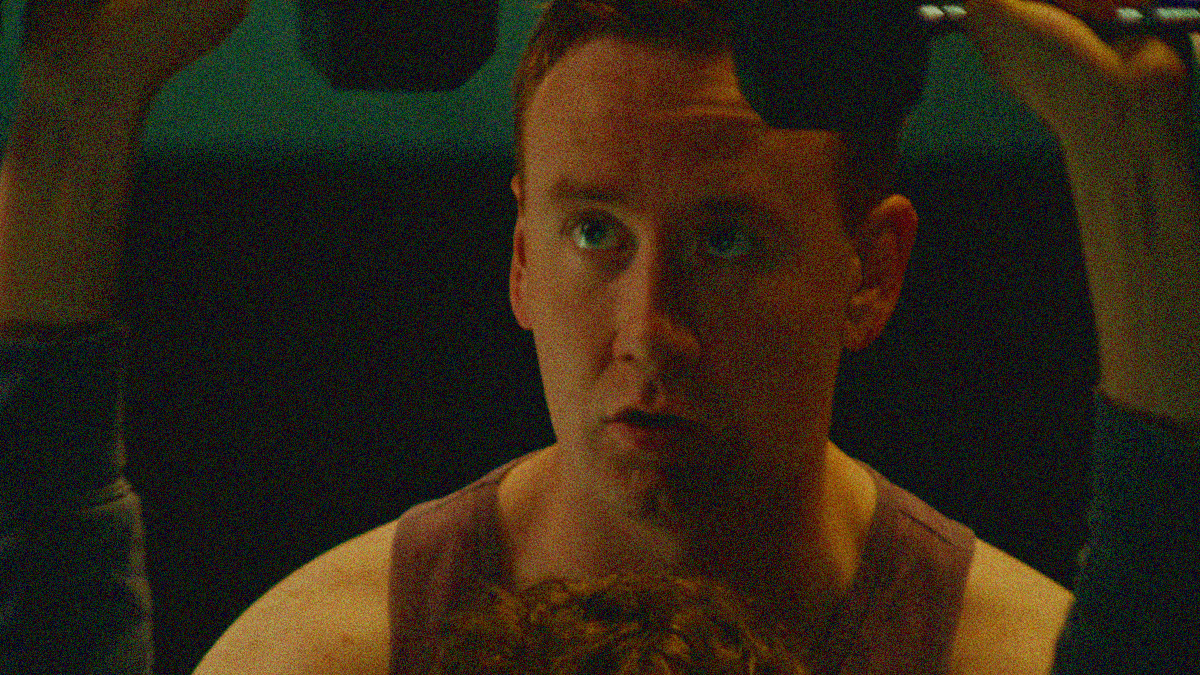
DISCOVERY / UNHIDDEN GEMS PRESENTED BY REDBREAST
World Premiere | September 11 | United Kingdom | English
_____
Lost and adrift for too long, Danny Carlton (Liam Harkins) uses the opportunity afforded to him by renowned life coach Marshall Allison (Kevin O'Loughlin) to take back control. He took the leap to join the latter's STAND program and augmented his confidence to become the person he always wished he could. This rebirth is so profound that Danny realizes he wants others to experience it too. This will be his purpose now. He will save others like he was saved.
It's not an act either. Writer/director Tom Nicoll ensures we know this from the start of Salvation by having Danny push back when his seminar classmate tells him his monetization plan is lacking. James (Ronan Doyle) is Marshall's favorite because he understands the vision and knows exactly how to utilize it to create a successful business in its image. Why? Because he understands the game. That the product they're selling is their own image. Results are inconsequential.
Here are the two ends of the spectrum of people who gravitate towards the Marshalls of this world. One side sees him as a guru with the tools to drag them out of their self-made abyss. The opposite side sees him as a con man with the charisma necessary to make money off the work of others. Danny wants to make a difference. James wants to get rich. There's no better evidence that life coaching is a scam than discovering which of those camps triumphs.
We feel sorry for Danny from the get-go because we can see where this is all heading. His bottomless wealth of optimism as he takes out loans to set up shop in the spare room of an apartment he shares with someone else (Daniel Cameron's Connor). The excitement with which he films his video diaries on social media explaining his desire to reinvigorate his declining community. The earnest compassion he speaks with when meeting his first client.
Scott Hammond (Stephen McMillan) is lost just like Danny was. He fumbles his words. He struggles with eye contact. He's susceptible to Marshall's tricks. The difference, however, is that they aren't tricks to Danny. They are honest promises he intends to uphold no matter what. As long as Scott does the work, Danny will be right there by his side. There is genuine love in this relationship. Genuine friendship. Unfortunately, friendship isn't meant to be transactional.
There are hundreds of Marshalls and Jameses for every Scott and Danny. They either want to learn the angle or hope for an overnight fix without doing any of the work. And since Danny is neither operating to advance this pyramid scheme nor carry along dead weight just to cash their check, enrollment is nonexistent. So, he's forced to take out more loans. He's forced to get into bed with local heavy Liam (Conor McCarron).
It's therefore only a matter of time before the wheels come off. How long will Danny still think Marshall is looking out for him? How long before he's forced to do what Marshall did to him to the people who actually care (like his mother, Kathleen McDermott's Jackie)? This character is unraveling at such an extreme speed that even Scott knows something is wrong. The guy Danny is supposed to be looking out for is suddenly looking out for him.
Harkins is great in the lead role. Whether authentic in his sense of immortality or still attempting to maintain the façade while its cracks grow too large to ignore, we never lose sight of his heart. There's a moment where his desperation leads him to push way too hard way too fast and he legitimately pauses in his tracks to take stock of the trust he's beginning to lose. He doesn't want to be like this, but he's backed himself into too dark a corner to stop.
It's an even more complex character than that, though. He's neither a rube nor a charlatan, but he still inherently operates as both. Yes, he wants to help others find their purpose, but only on his own terms. Yes, he doesn't want to think about the unseemliness of money's role in allowing him to do so, but he's also too well-versed in the manipulation to not perpetuate the scam. The hope is that his inevitable fall will strip him back down to rebuild again.
And it's the uncertainty of whether that's even possible that saves Salvation from just being a familiar riff on addiction narratives. Our knowledge that there is a snake hiding beneath all that empathy. That when push comes to shove, he will let it out to save himself. Does that prove what Marshall taught him worked? That he now has the confidence to stand tall? Or does it prove the opposite? That his intrinsic selfishness is always what got him in Marshall's pocket?
You might find an answer in Scott. We are told by Danny himself that this young man is who he was before Marshall took him under wing. But they aren't the same. As we quickly discover, their differing economic situations ensure their sole commonality is low self-worth. Marshall seized it to mold Danny into a shark. Danny's heart prevents him from doing the same to Scott. I won't soon forget the look McMillan gives upon realizing it's Danny who needs him.
6/10
The Smell of Apples
Die Reuk van Appels
PLATFORM
World Premiere | September 11 | South Africa, Netherlands, Chile | Afrikaans, English
_____
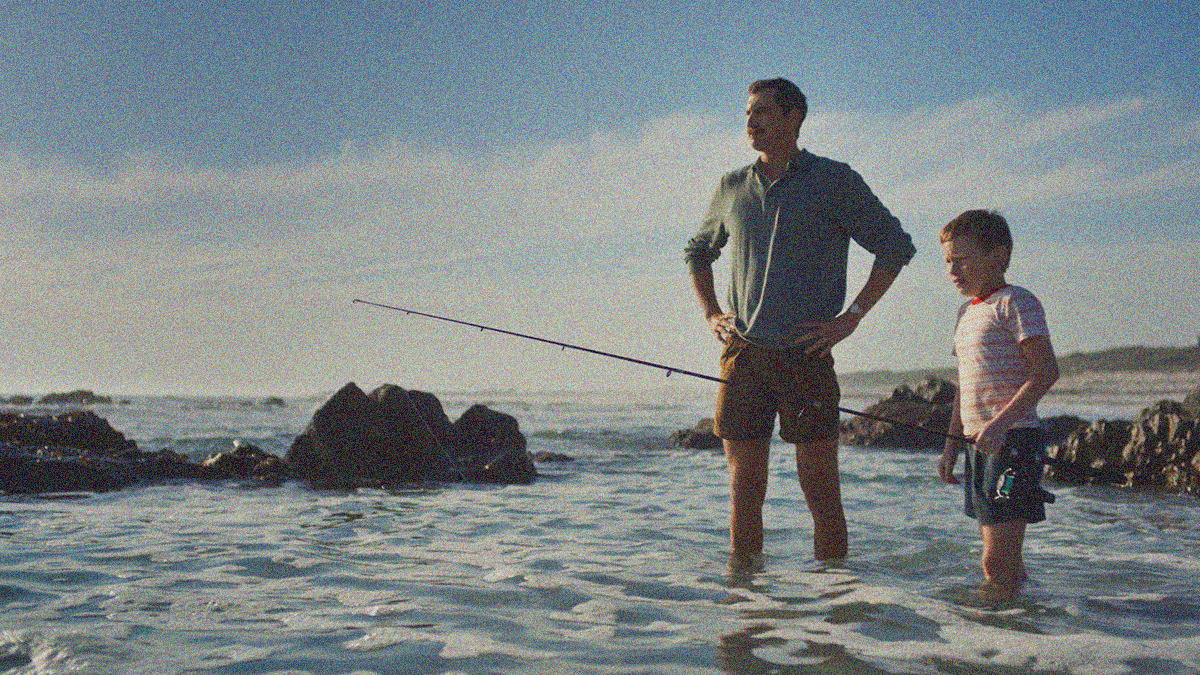
"With wonderful cinematography by Lennert Hillege and impeccable direction from Trengove, we become embedded into this contrast of hopeful summer optimism and the nightmare making it possible."
Full thoughts at The Film Stage
The Stunt Driver
SPECIAL PRESENTATIONS
World Premiere | September 11 | Canada | English
_____
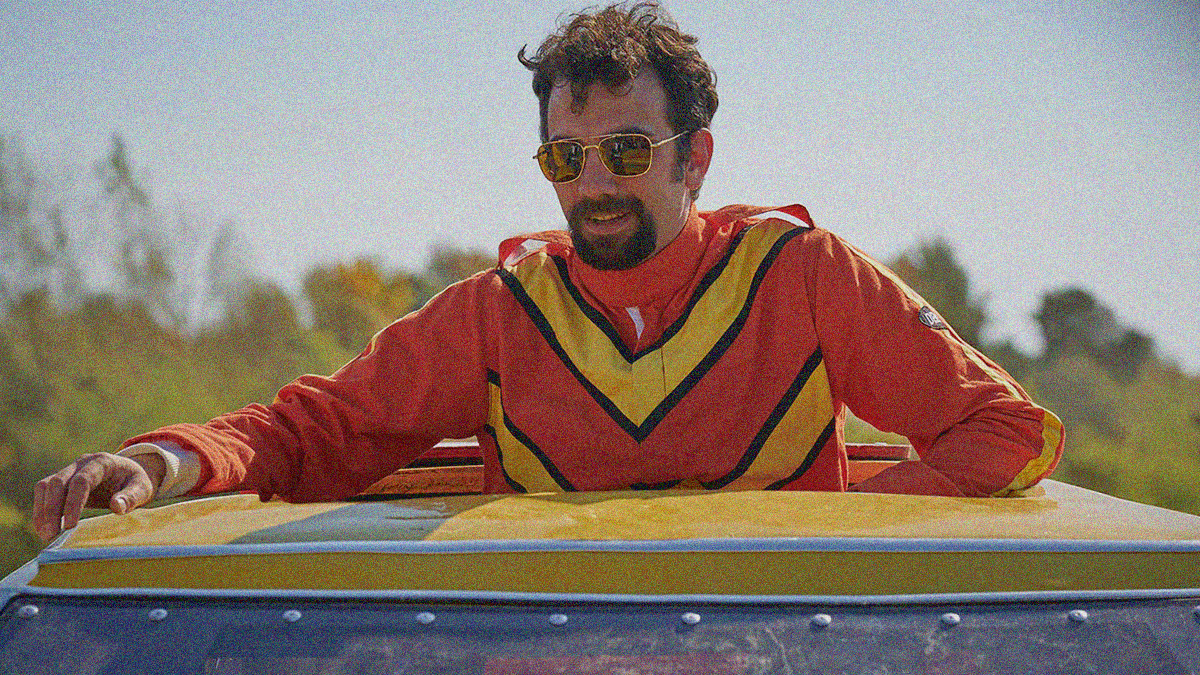
Inspired by Robert Fortier's documentary The Devil at Your Heels, writer/director Michael Dowse and actor Jay Baruchel bring the infamous Ken "The Mad Canadian" Carter to the big screen for a global lionization. The Stunt Driver, ("Daredevil makes it seem like this is all luck."), focuses on the seemingly unending journey to accomplish the impossible: jump a rocket car over a mile stretch of water separating Canada from America.
It’s a too-fast trajectory from Carter talking big ideas with his wife Gloria (Laurence Leboeuf), enlisting a reluctant Dick Keller (Ed Helms) to work out the logistics, and pitching the whole thing to ABC via promoter Dick Wilkins (Dan Bakkedahl) for a payday large enough to let him retire. The years keep adding up with each misstep, though, and the pressure keeps rising until everyone involved—including Ken—wonders if it’ll ever happen.
The aspect ratio shifts between widescreen (reality) and full-frame (Fortier’s, played by Joe Cobden, documentary lens) as we watch the entertaining bickering that ensues whenever all parties come together. Wilkins demands it to happen. Keller needs Ken to be safe. Carter hopes to get it done quickly so he can’t talk himself out of it. And everyone inevitably clashes in a fascinating collision of toxic ego, welcome relief, betrayal, and reluctant understanding.
It’s a pretty by-the-numbers period piece that works because of its eccentric characters rounded out by Marc Beaupré’s Danny Lafortune (Ken’s cocky protegee) and Ben Foster’s Evel Knievel (Ken’s nemesis despite the American never giving him a second thought). Baruchel swings from unwavering confidence to the undeniable fear Ken refuses to fall prey to unless an external force can take the blame. We champion his panache while hoping he quits.
But this is an industry driven by the threat of catastrophe. Even back in the 70s and 80s, the appeal of what men like Carter and Knievel did was partially knowing how it could go terribly wrong. That’s why the preparation proves so crucial. It’s why everything must be planned to the letter before you even announce it just in case the pieces unravel. Because once you paint yourself into that corner, there is no backing out. Only fate can intervene.
And that’s where The Stunt Driver finds its pained catharsis. What begins as a farce populated by brash buffoons (save for Leboeuf playing everything honest to wonderful effect) becomes about the drama inherent to the process behind this runaway train coming to fruition. The resulting psychological toll is what stands out most. That inability to live beneath a self-imposed shadow and always be left wondering, “What if?”
I also must mention the intriguing choice to put Fortier into the film. Unlike Benny Safdie’s The Smashing Machine attempt to infuse the fiction with the aesthetic of the documentary it was based on, Dowse is making a behind-the-scenes fictionalization of his source as much as a biopic about their shared subject. It’s a welcome bit of layering that injects some necessary context for his role in the ordeal as a true friend and objective observer.
6/10

Pulled from the archives at cinematicfbombs.com.
Ford v Ferrari screened on September 9, 2019 at TIFF.