Week Ending 10/2/26
BIFF begins Oct 8th

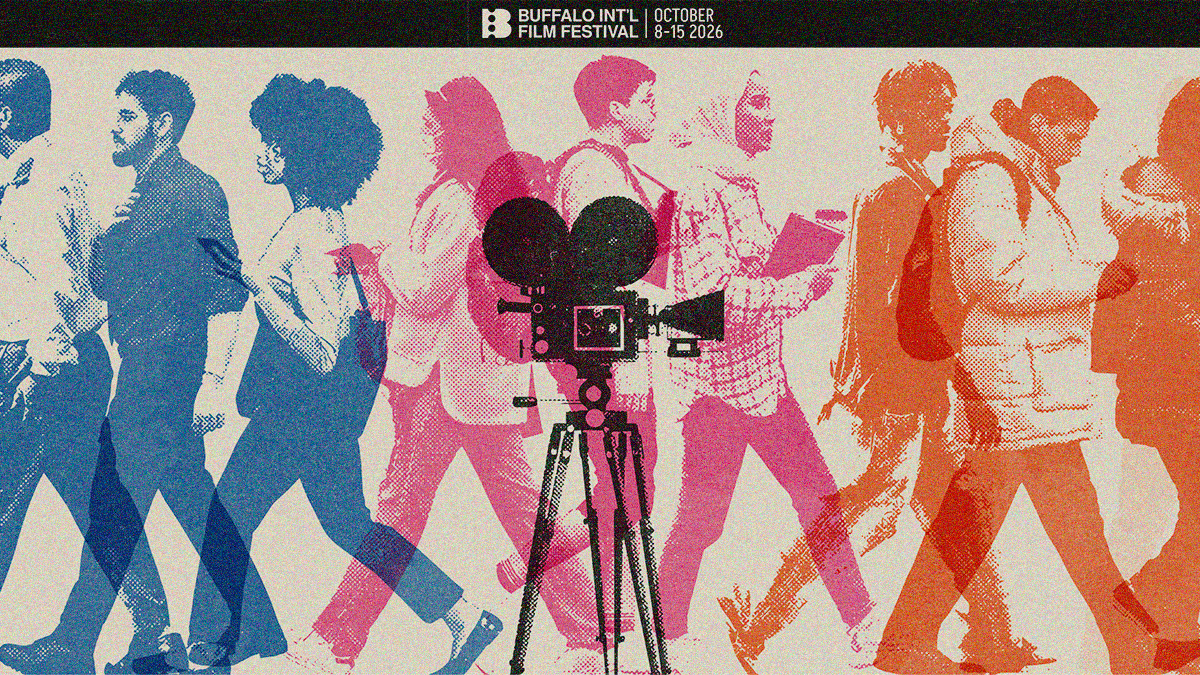
The 2026 edition of the Buffalo International Film Festival begins next Thursday, October 8th and runs through the 15th at North Park Theatre, Hallwalls, and Scene One Market Arcade. They are once again offering a $90 Bison Pass that grants access to all screenings and events with a few bonuses like a free drink at BIFF parties, one admission to the AKG Art Museum, and no service fee when reserving tickets in advance.
Things kickoff with a great legacy title earning gala status on opening night. The 4K Restoration of Jim Jarmusch's wonderful Dead Man hits North Park with a discussion and live Q&A with actor (and BIFF 2026 Lifetime Achievement Award Winner) Gary Farmer ... who I had no clue grew up in and around Buffalo/Niagara Falls until now. It boggles my mind that someone as prolific as him isn't talked about in the same breath as William Fichtner and Christine Baranski.
The new release festival opener is Michael Mailer's Little Audrey (Mailer and producer Jeff Thomas in attendance) and the closer is Chris Levitus and Zane Rubin's Doc Meets World (Rubin in attendance). John Fink, Anna Scime, and company have also curated a ton of great titles screening in-between including one that I've reviewed below. You can see what I thought about seven such selections here.
Definitely take a look at their website for more details (general admission tickets are $13 each without the Bison Pass) and peruse the full line-up to see when and where these gems are playing.
What I Watched
Carrie
Season One
STREAMING ON PRIME 10/7
_____
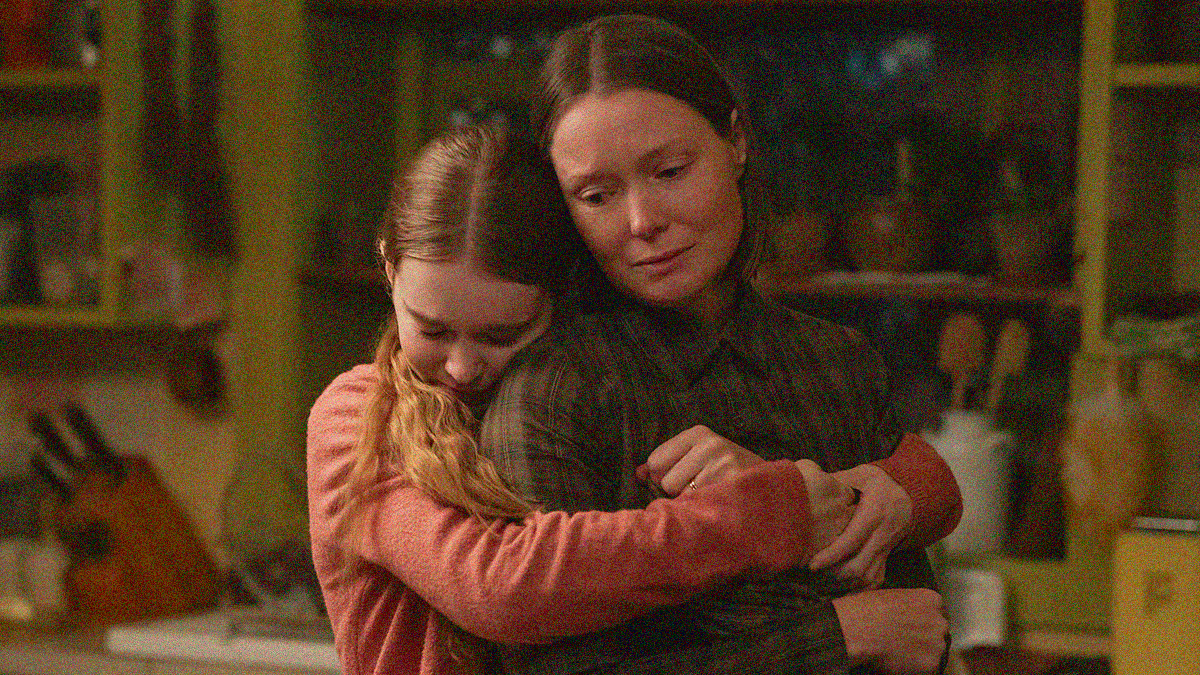
The crux to why Mike Flanagan decided to adapt Stephen King's Carrie can be summed up by something Sue Snell (Siena Agudong) says in an interview after everything you remember from the book occurs at prom. She's talking about the first day she met Carrie White (Summer H. Howell) and how the word that kept coming to her through the experience was "kind." Because kindness is what this new student exuded with every bone of her body. And they all just laughed.
The goal wasn't therefore to do what had already been done by Brian De Palma. Flanagan explains that there are two kinds of adaptations: those that look to preserve the source material through the transition to a new medium and those that look to distill the source down to its basic tenets before building something new from its foundation. This is the latter. It's an attempt to speak to its themes of bullying, isolation, empowerment, and zealotry in a fresh way.
So, while the familiar fire consuming a school gymnasium opens the first episode via a filmed debriefing of the survivors before rewinding to the start of the semester, the how and why behind it won't be quite the same. The beats are there (like Carrie's first period, Amber Midthunder's Miss Desjardin running Alison Thornton's Chris ragged, Joel Oulette's Tommy inviting her to prom, and the bucket of pig's blood), but the pain is no longer just one character's to bear.
The biggest and most ingenious shift is in Carrie herself. Yes, she is out of her depth and "strange," but the last thing she wants to do is fade into the background. On the contrary, this Carrie yearns for social interaction. She yearns for friends with the innocence of an extroverted child walking onto a playground and telling the first kid she meets that they're going to be best friends. Why? Because this Carrie has never existed outside her home.
While not entirely true (shoutout to Naika Toussaint's next-door neighbor always being a treat whenever she pops up throughout the season), this was her parents' goal. Dad (Tahmoh Penikett) was a crackpot conspiracy theorist who believed the "deep state" was out to get them, so Mom (Samantha Sloyan's Margaret) homeschooled Carrie while he worked. Her entire life was prayer, education, and reading until her father's untimely death changes everything.
Was she a prisoner in her own home? Yes. Did she know it? Not quite. She did, however, wish to see the world. When a social worker demands that they assimilate into society to prove Margaret is capable of maintaining custody, part of the stipulation has Carrie enrolling in school. It's like a dream for her. Born from a nightmare of her father being gone, but a dream to experience the things she only read about in books. She was ready to finally exist.
What Flanagan and company (I believe the other writers and directors are all women or non-binary in the case of Jamie Flanagan, so don't fear this project is another man telling a young girl's story like it was with King and De Palma) do differently here is flesh out how that earnest enthusiasm is absorbed in a twenty-first century marred by school shootings, social media, and political tribalism. How does Carrie's innocence turn a mirror onto a cynically jaded populace?
The only way to truly dive into the reverberations of that question is to ensure everyone on-screen is a three-dimensional character. So, while Margaret and Chris remain unsympathetic due to their actions, neither has become a villain in a vacuum. Both are driven by fear and a loss of control. A mother's entitlement over her daughter and a teenager's entitlement over her "perfect" life. It's through the punishment of their newfound realities that they seek to punish others.
Thornton's Chris might be the most compelling piece to this puzzle as a result since she is very much a hybrid of the Whites. She is suffering through the pain of a domineering parent (Michael Trucco) like Carrie and throwing a tantrum about her drastically altered circumstances like Margaret. She's also feeling her way through a newfound "power" too. Whereas Carrie becomes a God with telekinesis, Chris becomes one with Instagram.
It's an extremely timely subject with social media bans being passed in many countries and misinformation ultimately corroding the reality of adults by erasing their critical thinking ability. What happens when a meme account that begins as a cruel joke to defame one student becomes a haven for spreading bile about the entire school (students and faculty alike) with total anonymity? Carrie isn't alone here. The entire district is on the brink of exploding.
That means everyone has their moment in the crosshairs. Adults, whether school employees (Midthunder, Matthew Lillard, Rahul Kohli, and Tim Bagley) or parents (Trucco and Heather Graham), and kids, whether bullies (Thornton, Josie Totah, Arthur Conti) or allies (Agudong, Oulette, and Thalia Dudek as the former "new kid" trying to let Carrie know she isn't alone). How do they traverse this chaotic moment? How do they hope to take control of their lives?
It's a welcome update to the material that adds some gray to the mix while also dragging its problematic story points through a more modern lens (see Tommy asking Carrie to prom with intent rather than a prompt). And it looks to open the world in ways only a King fanatic like Flanagan could as far as expanding the scope of what Carrie's powers mean outside this one specific scenario. But I'm embargoed from giving any more detail than that.
I'm embargoed from many things, including identifying two Flanagan regulars: the narrator (many episodes start with an anecdote about the persecution of women with gifts) and a brief cameo. The former is a vague demand too since it could mean the actor (despite their recognizable voice and guaranteed inclusion) or the character's place in the story. I'm not, however, embargoed from revealing that Trucco and Penikett aren't the only "Battlestar Galactica" alums in the cast.
The rest pop up in the penultimate episode with Katee Sackhoff having the only role that appears again. While I love the nostalgia of seeing Tricia Helfer, Aaron Douglas, and Rekha Sharma together, however, I hate that it took me out of the moment because I couldn't help laughing at the gimmick. But I do get it. What better correlation for the internet's insidiousness than a sci-fi show that saw its heroes strip their spaceship down to its "vintage" analog functionality?
Many characters on-screen wish they could too. But it's not about hiding in a bunker to avoid the technology or hiding behind the technology to avoid facing consequences. It's about the capacity to find the room for empathy and shame in an era where people have been emboldened to believe both are a weakness and target for abuse. Pay close attention to Sloyan's fantastic portrayal of Margaret and how quickly she falls prey to the allure of the internet's power.
It's not surprising considering who has the loudest voices and platforms today. The prerequisite seems to always be a willingness to weaponize fear. The fear of one's own obsolescence driving them to lash out and deflect their insecurities onto others as a means of self-preservation. Carrie faces it from all sides and it's a testament to Howell for never letting her lose the desire to be good anyway. To strive to be better. Until she's finally pushed too far, of course.
Here's hoping for a renewal because there's truly no guessing where Flanagan goes next. These eight episodes cover the book. Everything afterwards will be brand new ... unless, like his other examples of that second form of adaptation ("The Haunting of Bly Manor" and "The Fall of the House of Usher"), he somehow folds in another King story. Who knows? Maybe "Carrie" will ultimately prove to be a covert entry into his planned "Dark Tower".
7/10
The History of Concrete
IN THEATERS (LOCALLY AT NORTH PARK THEATRE)
_____
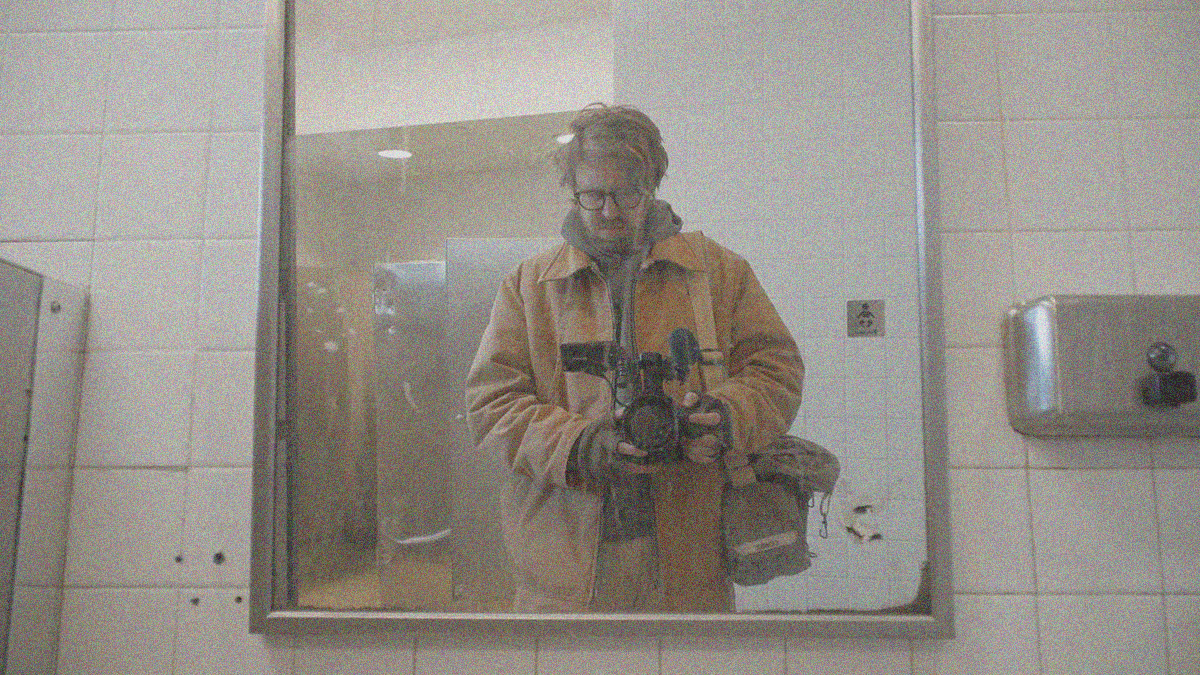
What do you do when your Emmy-nominated HBO series finishes its run? Do you rest on your laurels and become a landlord for your friends in a slowly deteriorating building? Yes. Do you attend a WGA strike-era seminar on how to write a successful Hallmark movie? Yes. Do you get ambitious enough to simply film everything and everywhere until you realize the subject of a new project no one thinks can be stretched to feature length has been staring you in the face?
John Wilson doesn't know it until he can't stop seeing it, but he cannot escape concrete. Whether the damage in that building that he attempts to fix with the wrong compound or the nondescript structure housing Hallmark's barebones studios or crack-filled blocks under his feet wherever he walks, this mixture of cement, water, sand, and rock is as prevalent as oxygen. So, why not delve into the subject? Why not give this ubiquitous material its cinematic due?
The easy answer is money. No one wants to finance The History of Concrete. No one except someone who took his "rock documentary" joke seriously. Maybe they would he if actually was Ari Aster (an aspiring actor working on a short film with a current concrete salesman thinks he's the spitting image), but this horror—the one inherent to decaying infrastructure and being the third highest contributor to climate change—isn't starring Joaquin Phoenix.
Not that this meandering enterprise with more segues than a scooter store (I think Wilson would appreciate the imagery considering his voiceover talks about "shuddering" while images of house "shutters" are shown on-screen) doesn't have its fair share of celebrity sightings courtesy of an inexplicable invitation to GQ's Man of the Year party for Kim Kardashian. She's sitting at his table next to Jacob Elordi. Tom Ford is behind him. Tim Robinson clinks his glass.
What's their connection to concrete? None. It's all part of a journey taking Wilson to relevant subjects (contractors whose accents beg for a sex joke anytime they say "cement") and non-relevant asides (the enigmatic Jack Macco who might just be the most interesting man alive and a compulsive liar). One topic leads to the next with concrete tangentially connecting them all to varying degrees. It's the springboard towards metaphor, humor, and nonsense.
I must admit I wasn't familiar with Wilson's work before watching, so I can only say fans have been raving about what they're calling an extended "How to" episode if not three episodes in one. He speaks in second person about himself with the word "you" while recounting and describing the situations he finds himself in by choice and/or at random. He interacts with his subjects in a way that takes them seriously, but the edit always augments the absurdity anyway.
It's an intriguing space to exist in as a viewer because you are in fact laughing at these people rather than with them. Yet we still see them as three-dimensional human beings who deserve our respect. So, it's not cringe comedy as much as it is anecdotally situational. Rather than having someone tell you the story, though, we're watching it unfold for ourselves. We're therefore able to appreciate the humor without also dismissing the target. It's quite brilliant.
Because truth is always stranger than fiction. You can't make-up a guy whose livelihood is pressure-washing gum off the pavement that gifts his friends and customers with bottles of wine wrapped in a "gum buster" label. These are real people surviving a deteriorating world like the rest of us. Those whose financial solvency is predicated on concrete's pervasiveness and those who see it as the bane of their existence (runners and victims to its dust when recycled).
Beyond these people as authorities, punch lines, and mirrors unto ourselves, however, The History of Concrete is also an auto-biographical account of how impossible it is to make a film these days without compromising your artistic ambitions for an immovable set of rules investors believe to be necessary to make a profit. The cracks in walls signal the inevitability of change. Patches and fills signal the desire for bland homogeneity over singular boldness.
So, think of this documentary as one man pushing back against the inevitable drab gray of a content mill like Hallmark. Sure, concrete is the epitome of the mundane, but only if you refuse to engage with its historical utility and inherent impermanence (planned or otherwise). What happens within those concrete buildings? How much fun can you have blowing your budget in Italy asking strangers stupid questions about concrete? How does it parallel humanity?
The film is therefore using concrete as the impetus for Wilson to make a film about his current emotional, psychological, and artistic state of being. I have a feeling all his work does the same, but, unlike Hallmark repeating the same plot in different packages, he's repeating the same schtick with different subjects that in turn hit upon different parts of his own existential yearning for purpose. If he can do it with concrete, he can do it with anything.
8/10
Knife: The Attempted Murder of Salman Rushdie
IN THEATERS (LIMITED) | SCREENING AT THE BUFFALO INTERNATIONAL FILM FESTIVAL ON 10/13
_____
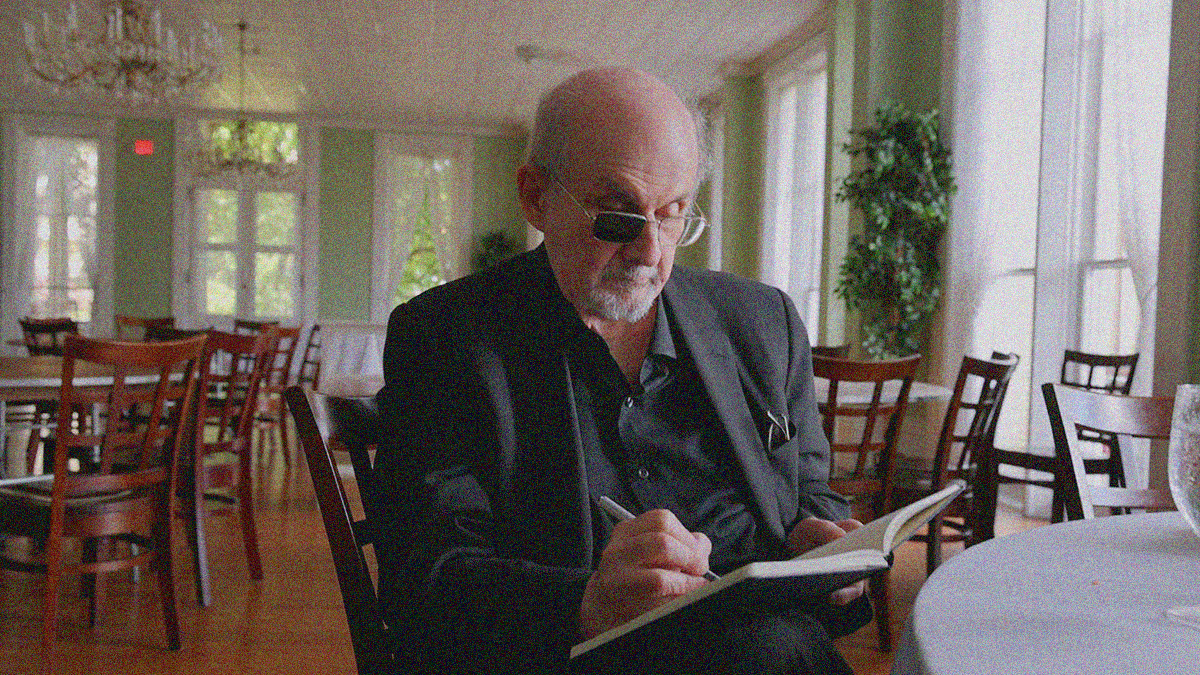
When Salman Rushdie came to Buffalo in 2010, the fatwa placed on his head twenty years prior had become fodder for jokes. After twelve years of isolation in London before Iran's leader lifted the kill order in return for economic relations with the UK, he would spend another decade getting his life back to normal. To live freely, attend galas, and laugh with our audience about his dictator removal service—since three coincidentally died shortly after publicly denouncing him.
Then, in 2022, a man who wasn't even born when that fatwa was announced, walked on stage at the Chautauqua Institution before the author could even began his scheduled talk. Rushdie's attacker (who he dubs "The A" as a more civilized stand-in for "The Ass") stabbed him fifteen times before being forcibly restrained, leaving his victim in a hospital bed in Erie, PA fighting to recover from a lost eye, severed hand tendons, and many other gruesome lacerations.
As stated during Alex Gibney's Knife: The Attempted Murder of Salman Rushdie, (compiled mostly from video footage Rushdie's wife Rachel Eliza Griffiths took once they agreed the injuries and recovery needed to be documented), however, "victim" was the last thing he ever wanted to become. It's why he ultimately ended his exile before that kill order was rescinded. He wanted to take control of the narrative and show how he wouldn't let them silence him.
It's this thought that led him to write Knife: Meditations After an Attempted Murder once his recovery was as complete as one could be after such a traumatic event. We hear Rushdie via narration throughout the movie, presumably reading from it to find clarity within the many thoughts he had lying in pain. Ideas that included the duality of the "knife" as a physical object used by his assailant and a metaphorical one that would force him to rebuild himself a fourth time.
Because we do go back into his past and the travels taken from Bombay to London for boarding school. How he rebuilt himself as a Brit before then needing to accept a life as a figurative hostage in hiding to terrorism. His third mode of rebirth was then becoming a free man in New York City before now having to regain his ability to walk and bend his fingers again. It's a journey marked by violence, but also one filled with love.
It's that love that the film looks to center above everything—especially via Griffiths on the other side of the camera cheering her husband on or in front of it to deliver tearful confessionals while he sleeps. Rushdie talks about his close relationship with his sister and the other wives he had and children he raised. There's even a speakerphone conversation with Wes Anderson saying they'll get a Blu-ray movie festival going for when he finally returns home.
That stuff is cute and endearing and a nice contrast to the bruised, stitched, and maimed figure before us. Not only must we deal with the brutality by seeing his injured eye bulging from its socket before they can trap it behind his eyelids, but there also comes a time where Gibney shows the assault itself. Rushdie isn't kidding that everything must be experienced if we're ever to learn from it. This is the violence people inflict on others simply for being offended.
Between the snippets of prose from his novels to read on-screen to the words Rushdie speaks about his thoughts, dreams, and fictional dialogue with his attacker, the real draw is simply listening to a genius wrestling with the imperfections of the world around him. How did it come to this in his mind? How can he overcome it and heal emotionally as well as physically? What has he learned and how can he use that to educate others?
So, while the film itself is hardly groundbreaking in its editing of archival interviews and photographs into Griffiths' candid account of the murder attempt's aftermath, it doesn't need to be. This is neither a biography nor a blow-by-blow account of the inciting event. It's a companion piece to a book written as a means to contextualize those things together and find the purpose and hope to keep moving forward. To exist outside the chaos foisted upon him.
7/10
Lady
IN THEATERS (LIMITED)
_____
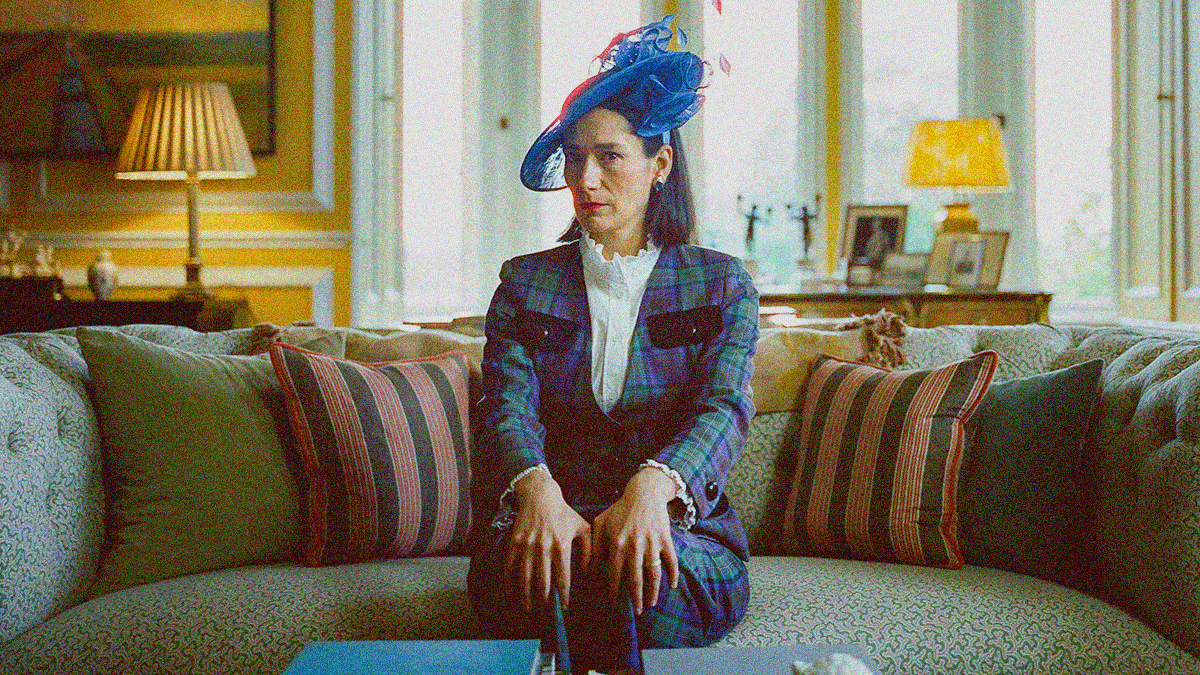
Shot at the 5,000-acre estate of Somerleyton Hall in Suffolk, England, Samuel Abrahams' Lady unfolds as a documentary shoot born under false pretenses. Sam (Laurie Kynaston) has been sold on the fact that the project already has financing secured via Netflix, but it's not long before he realizes his subject, Lady Isabella (Sian Clifford), has manipulated his participation in a desperate attempt to combat a past trauma that has her feeling like she no longer exists.
Rather than only follow that metaphoric loss of identity, however, Abrahams and co-writer Miranda Campbell Bowling make it literal. What starts with her hands and feet soon works its way inwards and upwards to risk Isabella disappearing altogether ... and Sam has it all on film. Suddenly this joke of an assignment following a deluded and sad woman around the grounds becomes a potential "once in a generation" story not even Netflix could ignore.
It's a fun and heartfelt journey that quickly sees its camera operators realizing they can no longer follow orders—not when Sam's own desperation for success leads him into becoming as integral to the overall narrative as Isabella. How do they interact? How does the line between professional and personal blur? How can an artist ever be objective when their vision of a triumph demands intentionally subjective manipulation?
Clifford is a delight when her Isabella is in control and bending everyone to her absurd whims. Her shamelessness pushes everyone to the brink of awkward uncertainty as far as whether to call her out or go along. When the cracks begin to show, however, she's as good or better portraying the anguished fear of being alone. That's why it's crucial for Kynaston to be just as self-absorbed in his own mission for relevance. They must become each other's mirror.
The special effects turning Isabella invisible are effective visually and comedically once wardrobe is involved. The documentary style never feels false thanks to the camera operators not letting Sam sabotage their need to capture everything. And the laughs are memorably marked by knowing smiles and dumbfounded silence as events devolve to show two terrified souls searching for external validation instead of finding it from within.
7/10
On a String
IN THEATERS (LIMITED)
_____
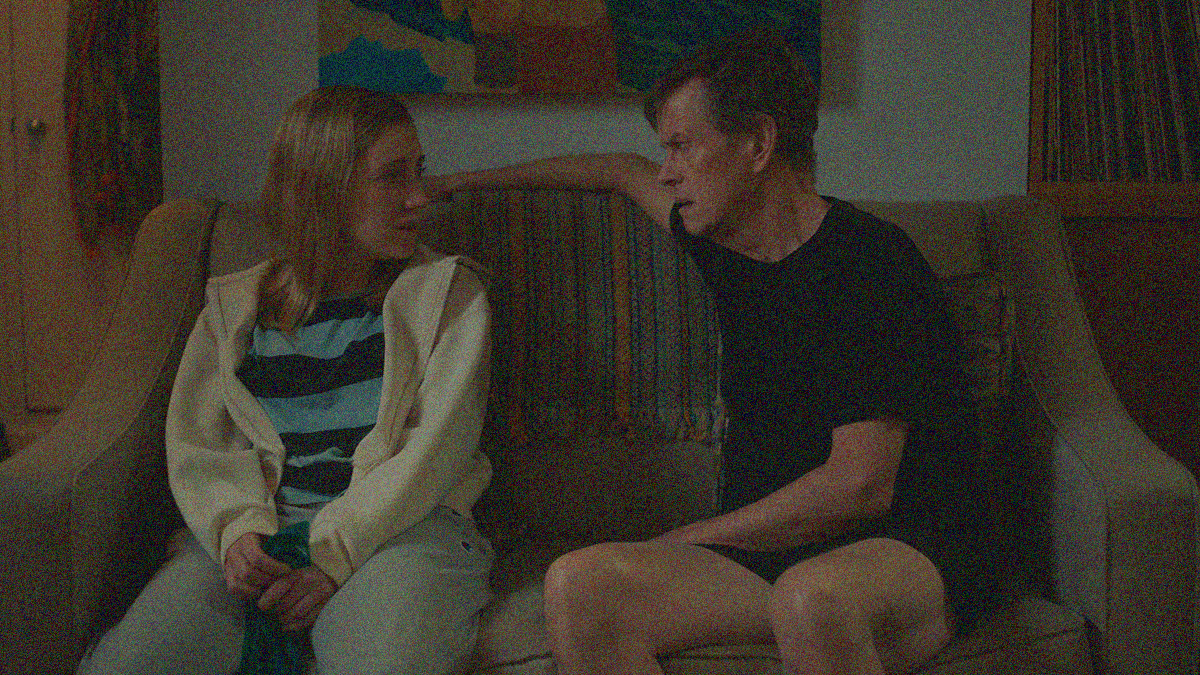
Juilliard-trained violist Isabel Hagen's decade-plus of freelancing across New York City for weddings, parties, sessions, and intimate celebratory moments becomes excellent comedic fodder for her debut feature film On a String. From an opening scene of her awkwardly playing while her client's engagement to his girlfriend implodes to an unforgettable gig for a "patron of the arts" that sees her quartet fleeing from the scene, truth is always wilder than fiction.
It's an assured debut that shows Hagen's handle on the jokes as well as the emotions inherent to them. One could reductively describe the film as a series of skits stitched together, but it all feels natural thanks to her character's consistent uneasiness within each situation. Nothing is out-of-place because everything is equally absurd. And every unique scenario is born from a prior one. It allows for a solid through line that can then support the one-off gags.
That main thread is built around Isabel's decision to audition for an opening at the Philharmonic despite everyone who knows her best (real-life brother Oliver Hagen as fictional brother Owen and Ling Ling Huang as her BFF and quartet counterpart Christina) knowing she's never aspired to be in an orchestra. This choice infers upon everything due to the strain it places on her wrist and anxiety—two ailments that ultimately bleed into the other parts of her life.
There's her family and the laughs inherent to a robotically serious brother and supportive parents (Dylan Baker and Karen Blood). Her quartet and the devolving sense of chill that arises from Isabel and Christina treating the other two (DeLaney Harter Rosenthal and Jacob Yates) like afterthoughts. Her crush Dave (John Kroner) and his inability to see her as an entity outside of his own needs. And her young student's parents (Frederick Weller and Jamie Lee).
You can add a cameo from Eric Bogosian as an overzealous film director micro-managing the score Isabel has been hired to help perform along with many other seemingly random figures who help heighten the chaotic nature inherent to accepting work from strangers (including Charlotte Ray Rosenberg's very funny Vybe), but those close relationships are what linger since she can't simply walk away knowing she'll never see them again.
Weller and Lee are the standouts from that category thanks to a nuanced dynamic that carries as much potential for the former to make an adulterous move as it does for the couple to solicit her together. They aren't the only case of a people whose motives are hidden to create tension, comedy, and disappointment (Dave and Christina toe that line too), but they're the most unpredictable since they enter Isabel's life transactionally.
The protagonist is therefore put through a gauntlet of all the worst experiences someone in her position can endure in a very short timespan. Some can be laughed off and never thought about again. Some leave lingering guilt that must be acknowledged if not solved. And all the while Isabel is trying to figure out how to exist in a world that simultaneously demands and dismisses her talent—one that took thousands of hours to master at the expense of living.
Look no further than Hagen herself. All that time spent getting proficient at playing the viola only to get burned out and pivot to stand-up before now merging the two talents into a feature film and comedy special (Isabel Hagen at the Bitter End). Sometimes you do things because you love them and sometimes you stop loving them because they're all you do. Unless you're Oliver answering the question "Do you love music?" with "I choose to excel in it."
There's a definite lived-in authenticity that's a testament to Hagen having the chops to bring it to life on both sides of the camera. An obvious comparison is early mumblecore Greta Gerwig and that messy quality of not knowing what you don't know mixed with the confidence to take control when you do. This character is driven by as much vulnerable jealousy as self-assuredness to create a believable person doing her best to survive the universal unknown.
7/10
Cinematic F-Bombs
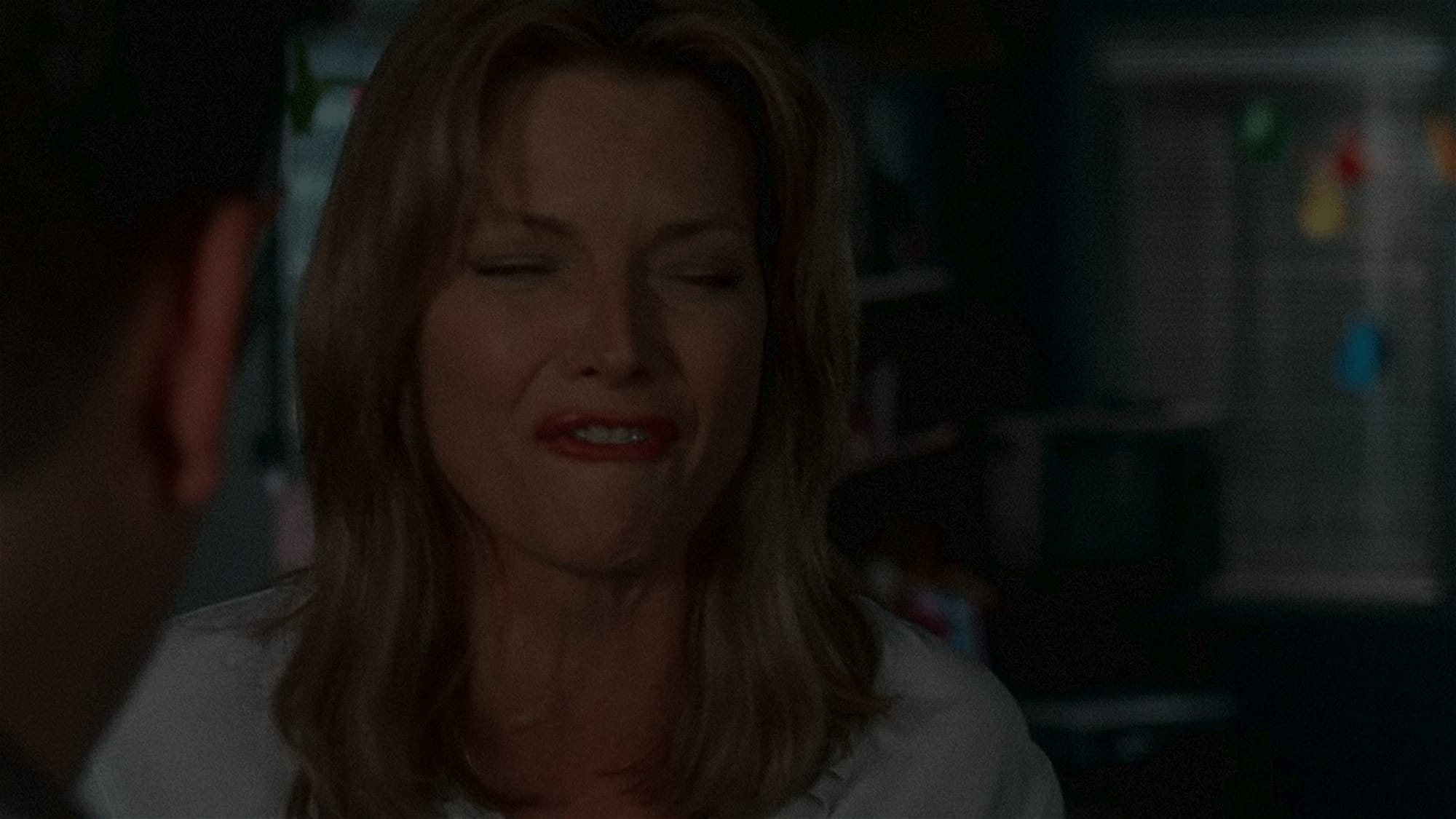
This week saw 20 Feet from Stardom (2013) added to the archive (cinematicfbombs.com).
Dr. Todd Boyd dropping an f-bomb in 20 FEET FROM STARDOM.
Movie Listings
Opening Buffalo-area theaters 10/2/26 -
• Acharya at Regal Quaker
• April X at Regal Transit, Quaker
• Baththa at Regal Elmwood
• Beware Boiúna at Regal Elmwood, Transit, Galleria, Quaker
• Digger at Dipson Flix, Capitol; Scene One Market Arcade; AMC Maple Ridge; Regal Elmwood, Transit, Galleria, Quaker
• Don't Trouble The Trouble at Regal Elmwood
• Drishyam - The Conclusion at Regal Elmwood
• The History of Concrete at North Park Theatre (select times)
Full thoughts are above.
• The Incomer at North Park Theatre (select times); Regal Transit, Quaker
"And while Gleeson is wonderful, this is Rankin and O’Rourke’s show. Whether in curiosity or violence, they’re always centering innocence. Their hopes and fears are all driven by love." – Full thoughts at HHYS.
• The Influencer Project at Scene One Market Arcade; Regal Elmwood, Transit, Galleria, Quaker
• Last Shot at Regal Transit
• Moonlight 10th Anniversary Remastered at Regal Elmwood, Galleria
My thoughts from 2016 at The Film Stage.
• Prem Keetanu at Regal Elmwood
• Rolling Loud: The Movie at Dipson Capitol; Scene One Market Arcade; Regal Elmwood, Transit, Galleria, Quaker
• Sigma at Regal Elmwood
• Thellakaagitham at Regal Elmwood
• Verity at Dipson Amherst, Flix, Capitol; Scene One Market Arcade; AMC Maple Ridge; Regal Elmwood, Transit, Galleria, Quaker
Streaming from 10/2/26 -
• Evil Dead Burn (HBO Max) – 10/2
• Infirmary (Shudder) – 10/2
• The Last First: Winter K2 (Apple TV) – 10/2
• Teenage Sex and Death at Camp Miasma (MUBI) – 10/2
• Tyler Perry's Doing Life (Netflix) – 10/2
• Worldbreaker (MGM+) – 10/3
Now on VOD/Digital HD -
• Coyote Vs. Acme (9/29)
• Funny Money: The Dane Cook Story (9/29)
• PAW Patrol: The Dino Movie (9/29)
• Re-Creation (9/29)
• The Sheep Detectives (9/29)
"The Sheep Detectives was very cute in premise and execution. Great tone. Great cast. Great absurdity. And an entertaining mystery that satirizes the genre’s “rules” while also abiding by them." – Full thoughts at HHYS.
• Strung (9/29)
• The Uprising (9/29)
• Kim Novak's Vertigo (10/1)
• Holding Liat (10/2)
• Stranglehold (10/2)
• Union County (10/2)
"Being kept at arm’s length doesn’t diminish the performances, though. Poulter is at his quiet best with a superficial posture of anger that can’t help but make way for the sorrow he’s so desperate to hide." – Full thoughts at HHYS.
Press Kit Archive
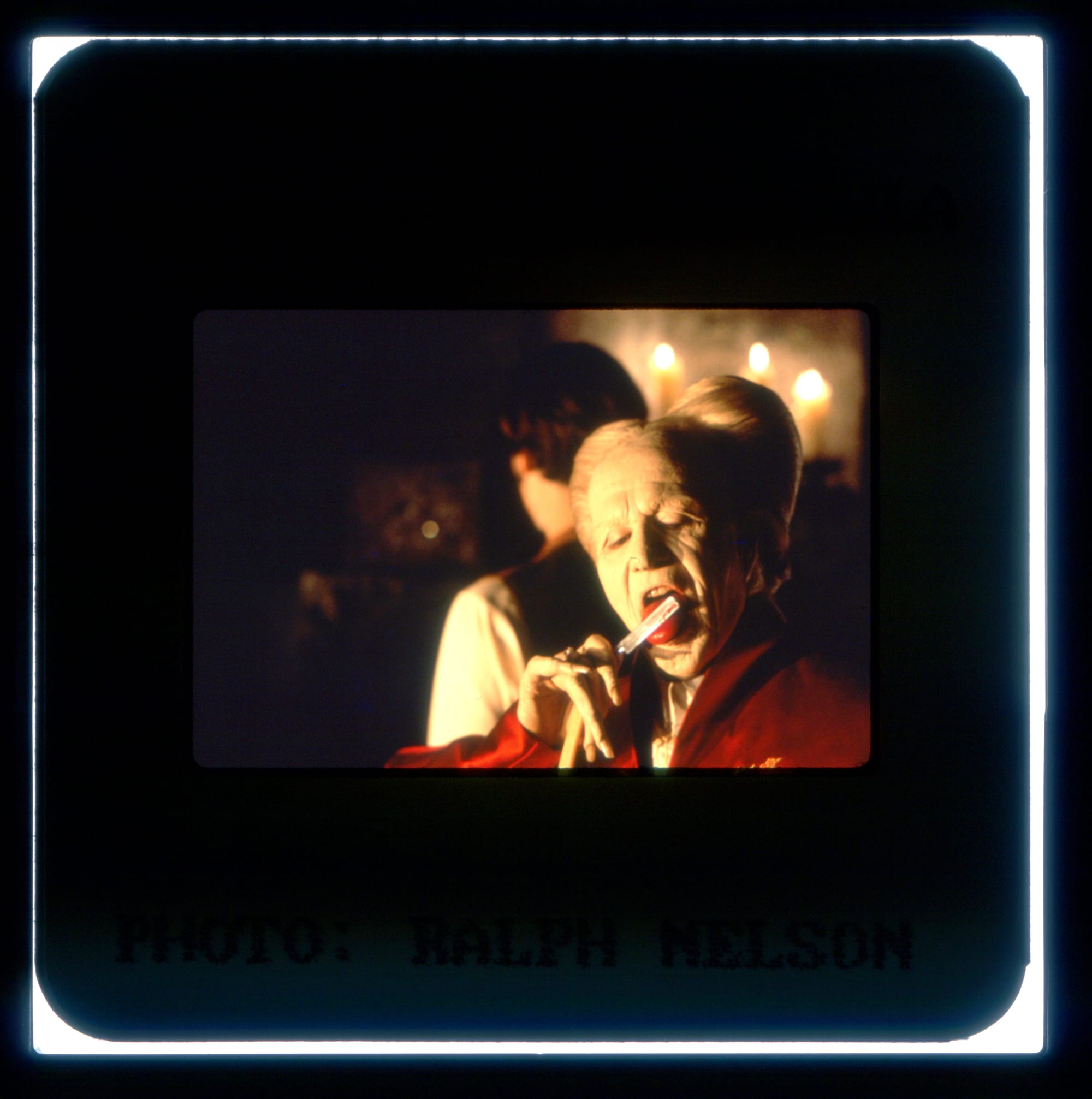
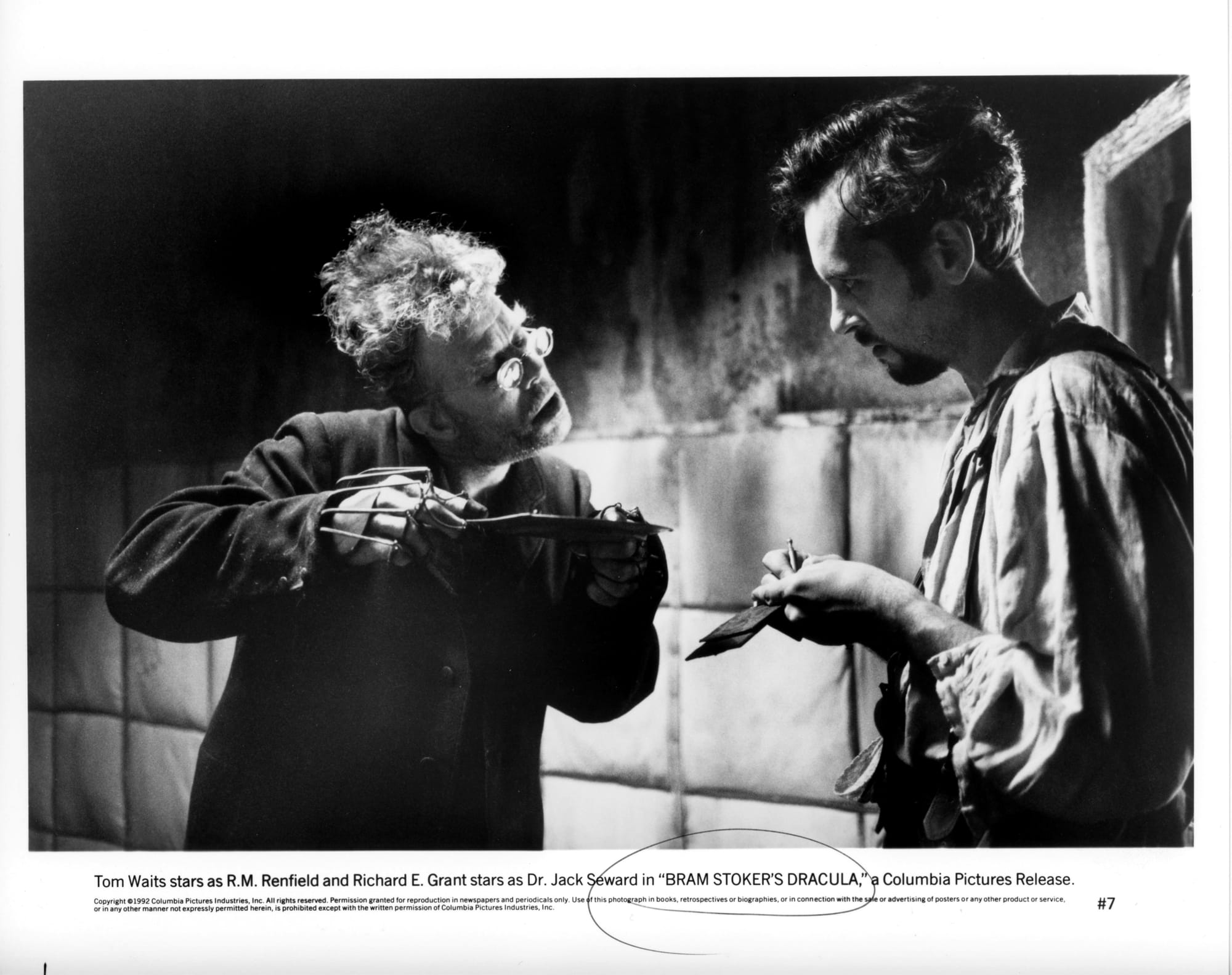
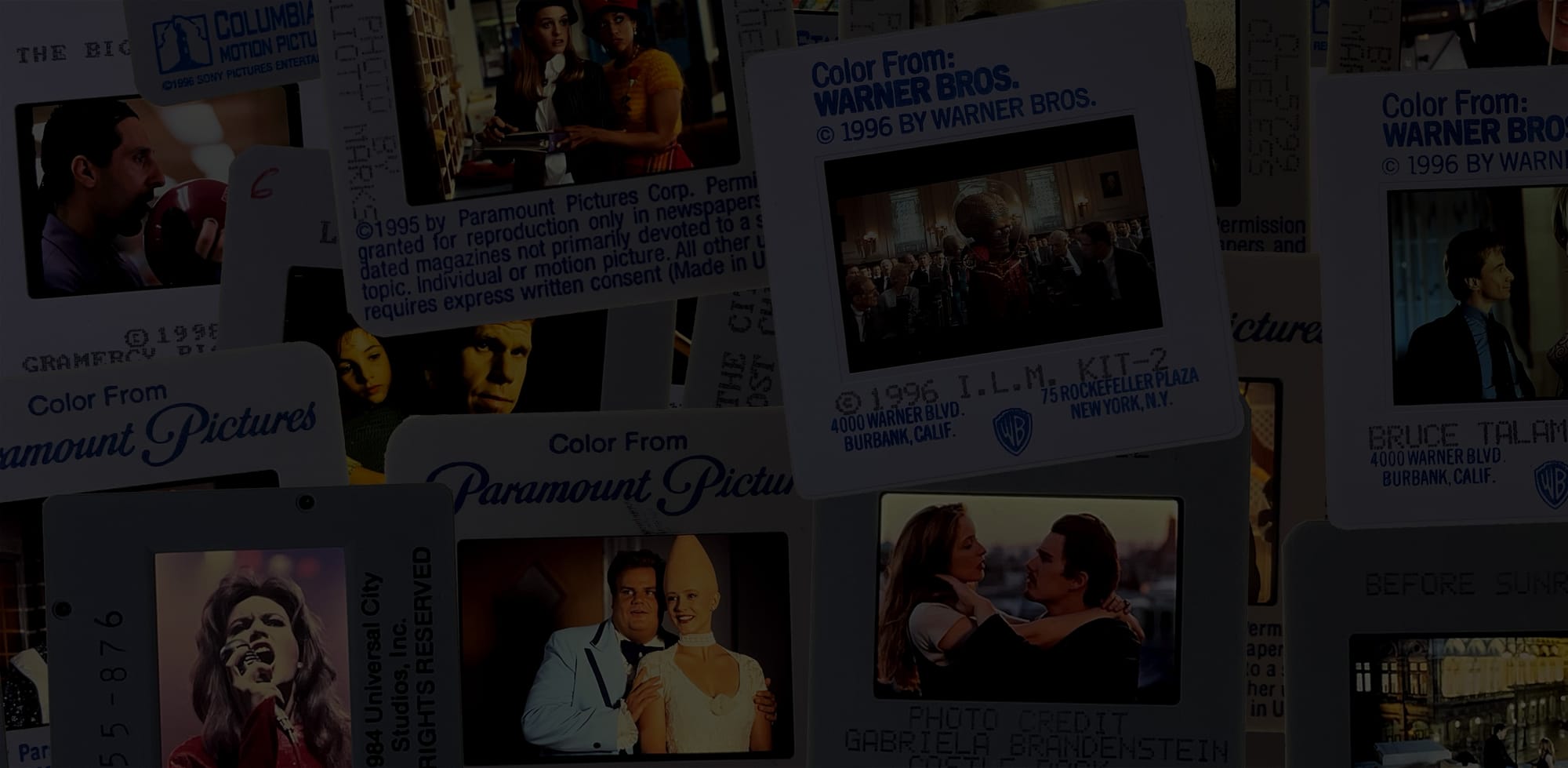
Pieces from the Bram Stoker's Dracula (1992) press kit.