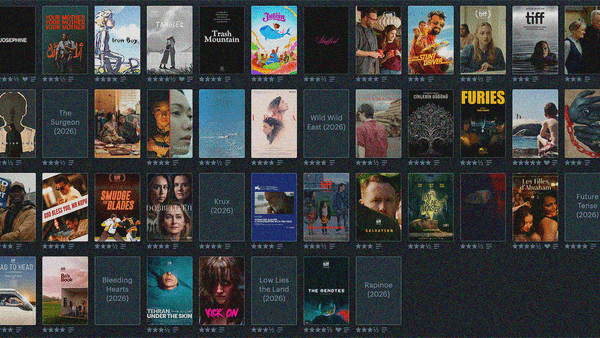
TIFF 2026: Day Twelve
That's a wrap!

That's a wrap on the 51st installment of the Toronto International Film Festival and it was another great year with no outright stinkers within the 52 titles I saw.
I once again avoided most of the big name titles everyone else is putting on their lists and am wondering if the best films truly are those that already secured distribution or if the industry is so broken that few critics bother to see titles that don't since their paychecks rely solely on championing those that do.
It's one of the reasons I try to stick to Discovery and Platform. Get a voice out there for the little guys since my voice surely isn't moving the needle on the other stuff that doesn't need it. That's how you find the real surprises.
My Top Ten:
1) Die Reuk van Appels [The Smell of Apples], d. John Trengove
2) Josephine, d. Beth de Araújo (seen at Sundance)
3) Tangles, d. Leah Nelson
4) Les Filles d'Abraham [The Daughters of Abraham], d. Hanaël El Yousfi
5) The Remotes, d. John Torres
6) Empat Musim Pertiwi [Four Seasons in Java], d. Kamila Andini
7) Cinlerin Düğünü [Djinn Wedding], d. Ferit Karahan
8) Union Town, d. Barbara Kopple
9) Dziki Dziki Wschód [Wild Wild East], d. Jan Holoubek
10) Future Tense, d. Jenna Cato Bass
All reviews can be found at my "TIFF 2026" tag on Letterboxd.

Arne Goes to Space
DISCOVERY | UNHIDDEN GEMS PRESENTED BY REDBREAST
World Premiere | September 11 | Sweden | Swedish
_____
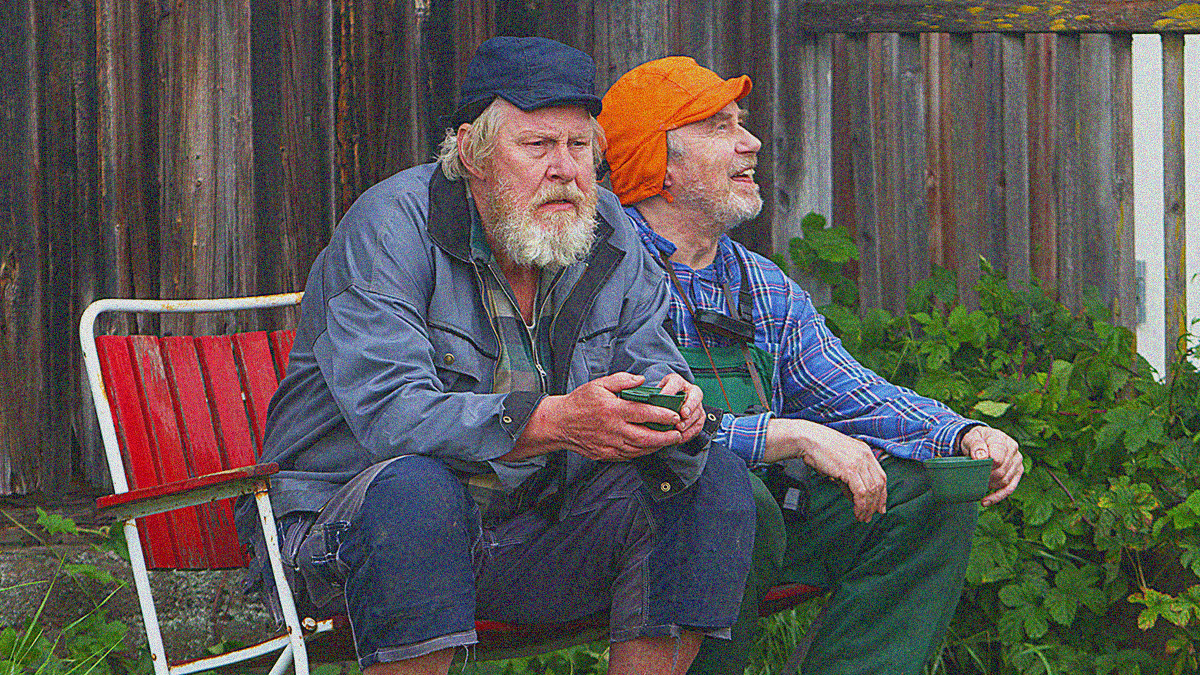
When we meet Arne (Lennart Jähkel) at the hospital, he can't help but smile despite the bad news. Why? Because he's "Happy" Arne. He enjoys the simple pleasures in life like firewood, a comic book he reads every night, and TV time with his brother Stefan (Rolf Lassgård). The doctor knows it's probably a sign of other issues that he's either masking or oblivious towards, so he's worried this diagnosis won't be taken seriously. Arne assures him it will.
So, the assumption is that he'll return home and tell his brother everything so they can prepare next steps. What happens instead is that Arne gets chastised for being late. Stefan calls him "idiot" and "gay" (the character is extremely homophobic) before reminding him they must hurry to ensure all the wood is cut before July 31st. It's an interaction that not only affirms the townsfolk's nickname "Sour" Stefan, but also why Arne doesn't mention what's wrong.
Lars Vega's Arne Goes to Space (co-written with Theodor Österberg) leans into the brothers' adjectives for a good portion of its runtime, using it for comedic purposes both when the two are at home and when they are interacting with the equally eccentric characters in their small rural town. Stefan is surly to a fault, refusing to let Arne drive their four-wheeler to the store and always quick to be mean to "Smarty Pants" Pettersson (Bengt Öhman).
Arne is a kind teddy bear of a man who can't help himself from saying "Hi" to Pettersson by impulse before the others give him the stink eye for doing so. Whether he his disposition is a symptom (his memory is hit or miss and his ability to comprehend simple concepts is lacking) or embraced as a coping mechanism is unsure, but I'd wager it's a bit of both once certain revelations are made. Either way, that cheerful demeanor makes him an easy friend.
So, of course, he brings the alien who crash lands in the forest home. What else is he supposed to do? Leave poor Roland (Kiran Shah) out in the cold? He knows Stefan will be angry, but he has a way of getting what he wants if he says "please" enough times to wear his brother down. The funniest part of the ordeal is that Stefan barely registers this new guest is from space. He gets it and says it, but there's no shock. He's only mad that it's another mouth to feed.
It's this dryly funny, easy acceptance that stands out because it's not just Arne and Stefan. The entire community is like this. No one has a second thought about the hunting party committee's second-in-charge being face down drunk at every meeting. Nobody wants to be a gossip, but they all freely talk about affairs and drama like it's part of their salutations. Anything that is just is. They process the information and move right past it to the next task.
You therefore must wonder why the brothers don't just introduce Roland to the town straight away. The answer is simple: it's none of their business. Because they aren't intentionally hiding him. They merely have no reason to parade him through town. Stefan hopes he'll just walk over to someone else's house to become their problem instead, but Arne finds purpose in the friendship. He finds someone who will listen without callous judgements.
Now, there's a reason for the way Stefan acts with his brother ... and everyone else for that matter. These two have never processed the trauma they endured at their father's hand, so his words and demands linger from the grave. It's why Arne wants to hide bad news. It's why Stefan is so quick to lob particular insults (although you can't quite brush off the gay slurs as unavoidable once his unlikely romantic interest, Katarina Lundgren-Hugg's Ingrid, uses them too).
The obvious plot progressions occur as far as Arne not being able to hide his illness forever, Roland revealing powers, and Stefan finally allowing himself to unwind. These are the sort of developments this type of character study demands to touch hearts while still providing its deadpan laughs. There won't be any surprises, but there also aren't any false notes. Because, despite falling into caricature, these stoic men are still capable of feeling remorse.
Lassgård shines as a result since he harbors the most. Remorse and regret. He doesn't regret his choice to protect Arne, though. It's not a matter of wishing he reversed course as much as wishing he could have had both. Does it feed into the way he treats his brother? For sure. It's all he knows. He can soften it and promise not to physically harm Arne like Dad did, but the regimented routines from their youth prove a warm yet damaged blanket of comfort.
Roland almost becomes an afterthought. They try so hard to assimilate him as a means of "teaching him about Earth" that he becomes another small-town Swede wearing the same jacket and hat as the brothers. The only difference is that he can only say, "Blub Blub." It's another perfect source of off-kilter comedy since we never truly know if Arne and Stefan learn to understand or if they just project the dialogue they want onto him. It works either way.
7/10
The Hummingbird Paints Fragrant Songs
TIFF DOCS
World Premiere | September 12 | Peru, United States of America, Qatar | Spanish
_____
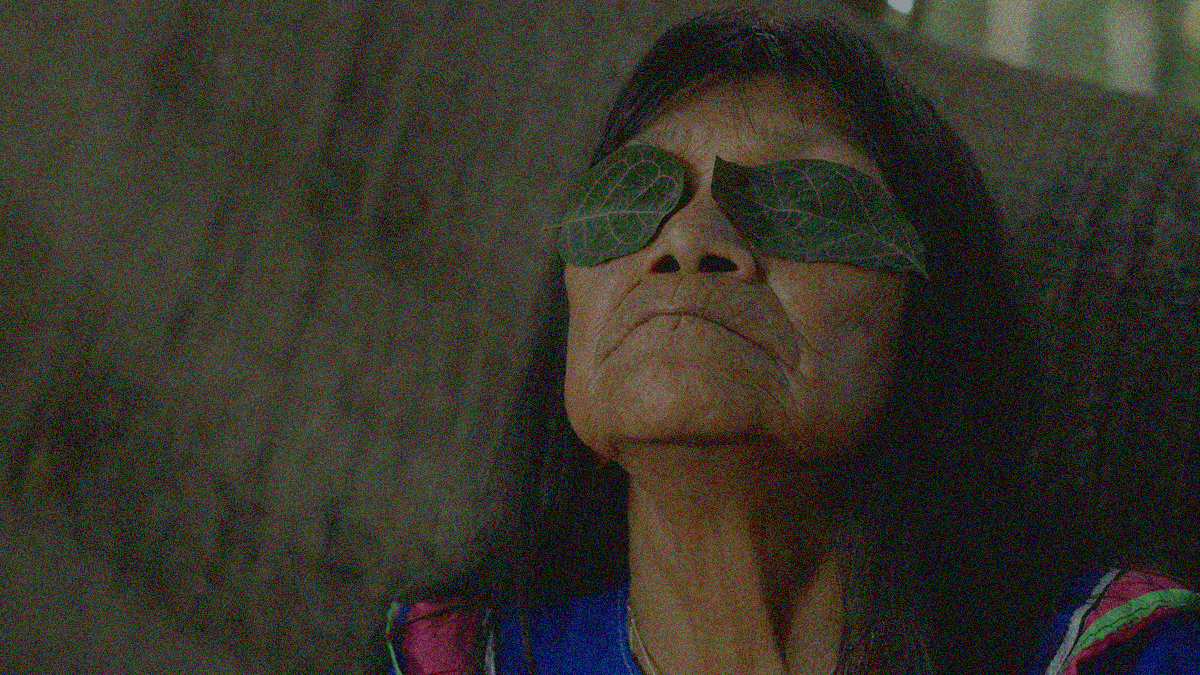
After decades spent practicing the Shipibo People's art of kené, Sara Flores is finding success and pain at the ripe old age of seventy-five. With invitations to galleries in Europe and a brand partnership with Christian Dior to redesign their iconic handbag, the world is finally taking note. With that recognition (including her first ever show in her home country of Peru), however, comes jealousy from outsiders who want a piece of the capitalist pie coming her way.
Is that why Sara's hand has begun to go numb? Or is it simply a matter of getting older? A spiritualist says her family's belief that a neighbor has put a curse on her is correct, but that its hold is nothing compared to the cosmic connection between the artist and the earth. She makes all her dyes from natural sources including the bark of the rainforest trees that settlers have illegally been chopping down. Its pain is her own and leads to an epiphany.
Èlia Gasull Balada and Matteo Norzi's film The Hummingbird Paints Fragrant Songs traces Sara's journey from the Peruvian Amazon to places she never dreamed of seeing as well as her pivot towards activism for the land she holds dear. Yes, she's the sole breadwinner for the entire family now that her husband can't work, but this is more money than her art has ever pulled in. So, after purchasing a TV for the grandkids, she starts bankrolling the resistance.
It culminates with a trip to the UN alongside leaders of a group fighting to have the sovereignty of their Shipibo ancestral territory recognized in a way that will allow them to stem the tide of rampant deforestation. Sara becomes almost like a mascot, traveling with the group to wield the newfound celebrity that sees her at numerous aristocratic circuses made accessible through her gallery tours for good. She's using colonial money against colonialists.
Rather than dig into these issues, they're presented as equal stops along its subject's travels—no differently than when Sara has her hands in a pot of leaves to make new ink or when her daughter massages her body or when she's smiling at those glitzy parties while everyone chitchats in languages she can't understand. The filmmakers use zero external narrative tools beyond the edit. No interstitials. No captions. No talking heads for context.
Every second of the film is just Sara living in the moment and dealing with its impact financially, culturally, and artistically. She speaks to the camera a bit about her mother telling her to keep practicing kené until she became a master, but most dialogue comes from conversations with family members or spilling her secrets to pet monkey Aminish. Think of this as more of a moving portrait of this very specific time than any definitive sort of biography.
Nothing is therefore held as more important than the next—especially since we don't know if her activism has any real shot of making a difference beyond calling attention to a runaway freight train. As such, I must admit my favorite sequences were those where Sara is painting. The meticulous process that creates these gorgeous geometric tessellations is crazy to witness because she's doing it all freehand with a flat chisel-like brush.
How she can simply unfold a piece of fabric and go while still maintaining the math necessary for complex symmetrical mirrors not yet drawn is amazing. Sara isn't lying when she says the patterns come to her in dreams and visions. The entire picture is set in her head before putting ink to canvas, and that's where it remains for the duration. No rough drafts or projections or grids. She draws two lines, connects them, and moves onto the next.
7/10

Pulled from the archives at cinematicfbombs.com.
Women Talking screened on September 13, 2022 at TIFF.