Week Ending 7/24/26
Fantasia 2026 – Week One


The first week of Fantasia 2026 has come to an end and I was able to catch thirteen titles that screened in Montreal during that time. A lot of good ones. A couple I was mixed on. Nothing I outright thought was bad.
Snuck in a couple quick hits for new releases too before I return to more genre offerings from the festival this weekend. Next week won't be this long, but I am hoping to have between 5-8 more titles reviewed by then. We'll see if I'll be able to get a third week of coverage out afterwards or just call it a day.

July 17
Blaise

Low self-esteem runs in the family. From Jacques (Jacques Gamblin) finally realizing everyone around him knows he's a mama's boy with zero aspirations to Carole's (Léa Drucker) desire to be liked by her subordinates to the point of letting herself fall prey to their misunderstandings so they stop being victimized by hers, it's a wonder they were able to raise a child at all without second-guessing whether his existence took too much oxygen away from the world.
It's therefore unsurprising that Blaise (Timéo) followed suit. He saw his father's ability to walk over himself before others could and his mother's constant need for admiration and decided to simply retreat into the background. No friends. No ambitions. No disruptions. Lucille Bluth would be proud as he's everything a Milford man should be: neither seen nor heard. Except that human interaction is crucial to social development. He must escape his shell.
Based on his own comic strip (which was previous adapted into a television series too), Dimitri Planchon enlists the help of co-director Jean-Paul Guigue to bring Blaise to the big screen with a unique brand of animation that marries a cutout feel with the contoured aesthetic of a MAD Magazine. It's a world of Alfred E. Neuman-like characters with big noses who move through their detailed environments via a polished "South Park"-esque assembly. All in a good way.
Beyond these refreshing visuals, however, the real draw is the infectiously dry wit of the script. Watching Jacques bare his soul to his therapist only to have the camera reverse to show Blaise's school counselor wondering where the boy is. Smiling as an innocuous phrase like "I wish I could come over" forces Carole to backtrack and ultimately double-down by crashing an employee's date. Relishing the inevitable fallout of Blaise's compulsive lying to his new girlfriend.
The latter is the main thrust considering the film bears his name. Blaise's knee-jerk reaction to being flirted with is to fall into the same patterns as his mother with his false reasons to extricate himself from the interaction only making Joséphine (Nina Blanc-Francard) latch on further. It doesn't help that she's doing the same from the opposite direction. Blaise doesn't want her to know he's a kid. Joséphine doesn't want him to know she's rich.
Planchon's goal is to put as many anxieties on-screen as possible so his characters can respond in insane ways. Like when a revolutionary pivoting too hard into violence to compensate for his material lifestyle offers a young woman a grenade and she takes it because it's the only thing she can think to do in the moment to be taken seriously. Or when a CEO accidentally implies he dated the country's president and realizes it's a cool rumor he'd love to go viral.
Every person is so preoccupied by what everyone else might be thinking about them that no one can actually hold an honest conversation. When Blaise presumes Joséphine is about to do something wild, he presents that wild thing to her as a question rather than an accusation so that she subsequently presumes he's about to do it. She doesn't want to let him down. He doesn't want to seem lame. They're ostensibly peer pressuring themselves.
Impulse rules the day with assumptions riding shotgun. It's a merry-go-round of thinking "I need this person to like me, so I'm going to do what they want" except their awkwardness is what plants that "want." They're a bunch of sycophantic lemmings without anyone in power with whom to debase themselves. The punch line, however, is that the shared excitement of everyone surprising themselves might just make them realize they like it after all.
Like how Joséphine’s attempts to be chaotic to not let Blaise down eventually have her reveling in the chaos when all he wants is to go home. Or Carole trying to beat her employee's (Nathalie Kanoui) accusation of sexual harassment by putting herself in positions that maintain the possibility causing her to wonder if maybe there is an attraction. So, it might be less about liking these new things than thinking they should want to like them.
Is that better? Worse? That's up to you. Because Blaise isn't trying to provide answers. It's merely holding up a mirror onto our collective insecurities and the ease with which we can be manipulated into doing something we don't want to do because it seems cool, moral, risky, or necessary. We trap ourselves in so many corners that we eventually stop being able to tell if we've escaped or just gotten so used to the fear that resignation has taken over.
It all boils down to our penchant to do stupid things to not look stupid. To embrace sin instead of appearing too virtuous. To overcompensate rather than save face by taking an out when it's presented. The regret that oozes from every character is overwhelming enough to talk yourself out of whatever hair-brained idea you have in real life even as they dig themselves deeper on-screen. So, let their absurd choices entertain you, but also learn what they won't.
7/10
Dance Freak
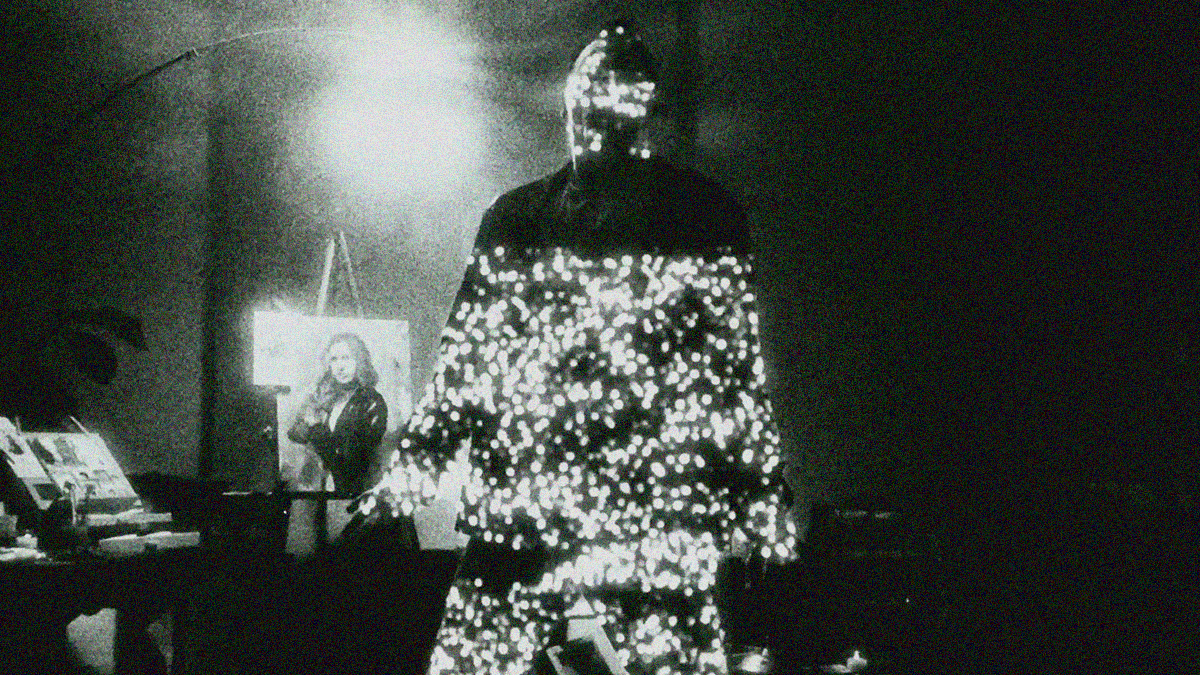
"All that time might not have conjured comprehension, but my goodness it facilitated an awesome aesthetic. Would I watch it again? No. Should you watch it once? As long as you’re prepared to wonder whether you’ve had a stroke."
Full thoughts at The Film Stage.
July 18
Godhead

A set of twins walk into a small church in search of an objective eye. God has spoken to them with a revelation that one embodies the Holy Spirit and must be released from their corporeal form before morning. Firstborn (Sarah Coffey) craves the position but believes her brother's (Kimball Farley's Secondborn) innocence earns it. He fears the position because he desires earthly pleasures he's yet to experience. So, the decision shall be left to a priest.
The thing is, however, that the priest they've chosen (Al Warren) is mired in a crisis of faith. Yes, he rejects the premise of the task they've given him on the basis of scriptural anomalies despite admitting he believes in miracles, but he also harbors a secret we've discovered before the twins arrive. Well, it's more like two secrets. One: he's locked a boy (Luke Speakman) in his house to raise him away from the sins of the world. Two: he's done so because God is gone.
So, more than just a debate about whether the Holy Trinity (or Godhead, the film's title, as the twins call it) should include an innocent with impure thoughts or a sinner with pure hopes is only one part of what Mark H. Rapaport has created. There's also the potential for that debate to reignite this priest's faith in the divinity. Because whether the mission is real or fantasy doesn't excuse the fact that its questions and answers can wash the father's cynicism away.
To get there, though, means discovering this trio's motivations. Why has the priest sequestered his adopted son (found on his doorstep as a baby) from the glory of the life he sermonizes to his parishioners? Why have Firstborn and Secondborn chosen him to pull the trigger of the gun that God has prevented them from pulling on each other or themselves? Was the former right to preserve the boy's innocence? And, if so, does it prove Secondborn's right?
It's easy to presume to know the answers to these questions if you believe the premise of the film is authentic. You weed out the selfishness and cowardice. You find the kindness and compassion that reveals itself in troubling circumstances. The priest still strives to save a soul like Maude (Mila Middleswarth) from her abusive father despite his own crimes against the boy. Secondborn still holds onto his faith despite having the ability to save himself instead.
What if the premise is fake, though? What if we're meant to see through the illusions of empathy to mark them as evidence of deceit? The priest helps Maude to alleviate his guilt from a selfish act. Firstborn speaks about Secondborn's innocence to steer him and their mediator away from her true desire: to live free from the burden of a disabled brother. And Secondborn goes along with it all not because of his inability to comprehend, but because of his need for purpose.
Rapaport therefore has many options to supply Godhead a meaningful conclusion of either hope or despair. So, it means something that he toes the line to deliver a mixture of both instead. It makes sense since the whole concept of faith being based on knowing what cannot be known is somewhat false. It's often only through the proof miracles that nonbelievers are converted. And since this priest has lost his way, only a miracle will ensure he becomes what the twins need.
The real question becomes whether that miracle will be bathed in the light of God or the sweat of violence? Will the twins talk this priest into accepting his place in their divine game despite how they try his nerves and flippantly disregard the sanctity of his church? Or will they push him so far off the edge that his sins will force him to act on impulse? There's something to letting reaction trump action that gets to the heart of fate above chance.
This is especially true when you consider the gray area of fate due to Firstborn's penchant for intentionally raising the temperature of everyone around her. Coffey is a lot of fun here as she smiles and pokes at the priest and her brother to position herself as the one to be released from her human form despite believing Secondborn is the true Holy Spirit. There's as much truth to her manipulating the board as there is to her being an unwitting tool for the priest to flip it over.
Warren and Farley (who co-conceived the story with Rapaport) are the focal points as a result. How do they respond to Firstborn's antics? How do they trick each other (intentionally or not) to go against their own desires? Whereas Firstborn calmly needles away at them, they both succumb to their resulting rage until only God can quiet the storm. In the end, they're all sinners being shown a path to enlightenment that isn't quite what they expect.
It's the darkness of that path that entertains us. The deception, horrors, and possibilities that connect these flawed souls together to not only fulfill a prophecy, but also ensure the lessons learned are passed to the rest of the world. Because freeing a twin's soul is only half the goal. Giving the priest his love of God and himself back is the other. Does he deserve it? Maybe not. But no one said redemption was simple or that God's lessons were perfect.
8/10
Our Effed Up World
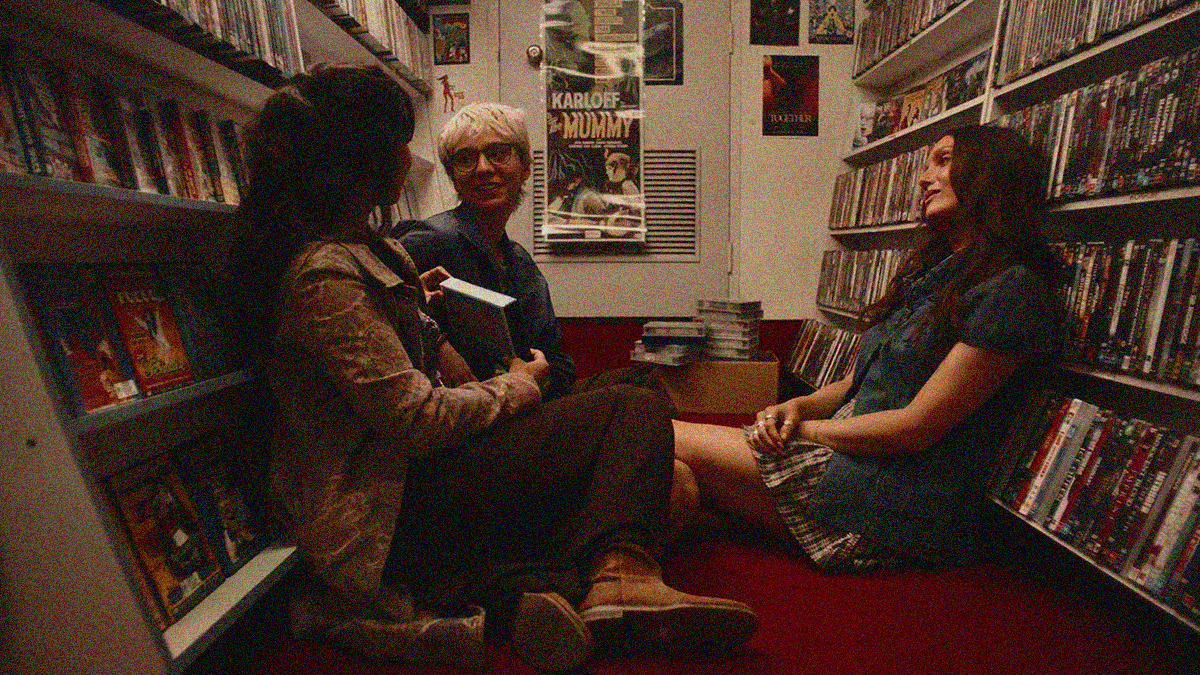
Death isn't a stranger to Sheri (Sara Thompson). She and her father (Scott Major's Hank) moved after her mother died to put down roots with her grandmother (Kerry Armstrong's Grace) at a place where he could better focus on meteor patterns for a secretive job funded by the Australian government. It's not long before Grace passes too, leaving Sheri in a combatively nihilistic funk. She loses her filter for kindness, punches strangers, and prays for the apocalypse.
When she isn't hanging with BFF Poppy (Annapurna Sriram) and watching bootleg VHS tapes rented from their friend Finn (Jess McLeod), of course. So, some things do still put a smile on Sheri's face long enough to take her mind off so much loss. It's just not Harry's (Jordan Dulieu) wham-bam-thank-you-ma'am sexual prowess or her father's usual avoidant tendency to bury himself in work. Maybe an alien invasion is exactly what she needs to pull herself out.
The latest feature from prolific filmmaker Alice Maio Mackay and her regular writing partner Benjamin Pahl Robinson, Our Effed Up World is definitely their leanest of the three I've seen. After Serpent's Skin pushed the potential for complex storytelling in her oeuvre forward, this quick and dirty script skews closer to Carnage for Christmas insofar as pacing and a lack of excess. Introspection isn't the goal. It's about reaching the next beat.
So, that first glimpse of an alien creature is all we need to confirm its existence. There's no "maybe it's a mass delusion" or "maybe there will be an explanation later." It's an alien. It's killed the character we just met for the sole purpose of providing someone to kill. And the connection between that victim and Sheri has irrevocably changed its identity to all but ensure it won't kill her too. Convenient? Sure. But it's also exactly what's needed to keep rolling.
Then and only then do we finally get some context via flashbacks of Hank's college days to show us that there's precedent for an extraterrestrial predator and reason to not alert the authorities and Grace's illness to let us into Sheri's emotional state and better understand her death wish. These two things are crucial as far as letting us invest in father and daughter beyond the fact that the movie tells us to by revolving around them. There's a reason to care.
Because Poppy's "tough love" cues are fun but hollow when their conversations always progress plot above telling us who they are. Finn's obvious crush on Poppy is one of the few aspects that feels purely character-driven and endearing as a result. They are the best part of the whole thanks to McLeod supplying a welcome dose of pragmatic sensibility opposite Sheri's impulse to run into danger. Finn epitomizes Grace's hope that Sheri stops fighting alone.
And Hank finally stepping up to protect Sheri when she needs it most. Not because he hasn't before, but because she selfishly blames him for her grandmother's death despite knowing it was out of his control. It's a case where an implicit truth sometimes needs an explicit example to remind us that we can rely upon it. That we don't have to go it alone. That z-grade movie-loving pot smokers in a nowhere town can save the world.
So, while the plot does wear its microbudget on its sleeve more than the actual production value (Our Effed Up World looks good—including the creepy tentacle egg and side-mouth humanoid creature), Mackay and Robinson still find ways to empower their characters with enough spunk and pathos to protect each other. I personally would have loved to see the friendships fleshed out more (the runtime is only sixty-eight minutes), but we get the necessary broad strokes.
The theme is less about living in the moment and more about knowing when a problem can be solved. You can't cure cancer, but maybe you can use a loophole inherent to mankind's flawed construction to turn a predator into prey. You can't fix a friend's depression, but maybe you can lend an ear and make them laugh enough times to help ease it. Because even if you don't think preserving your own life is worth the trouble, preserving theirs still is.
6/10
July 19
Attack on Paradise
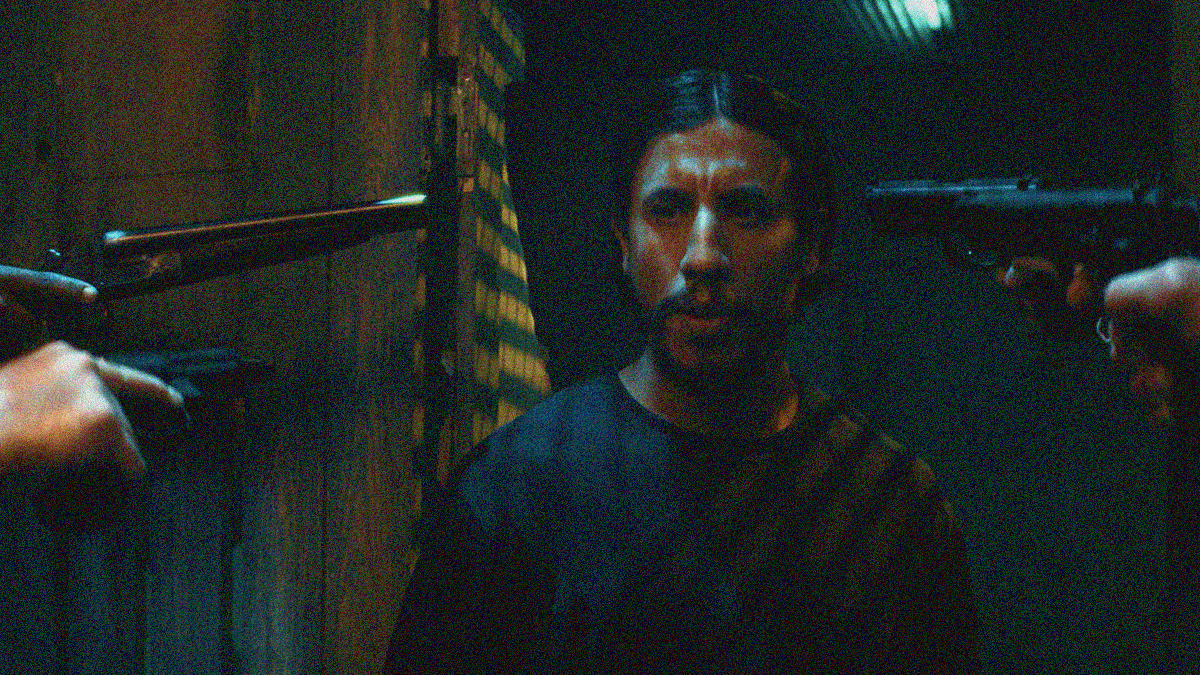
When a medication run for his mother goes wrong after running into a couple of racist cops, Suleyman (Saïd Boumazoughe) finds himself serving seven years in prison (an inexplicable number considering neither the police force nor justice system generally take "involuntary homicide" into account when the victim is an officer of the law). A lot changes in that time with his old housing complex now being run by a notorious gangster (Achmed Akkabi's Prince).
The only thing that's stayed the same is Suleyman's mother (Fatima Khanfour) still needing his assistance. Yes, to procure a shot of insulin before she passes out, but also to protect her from the violence that ensues once a full-scale SWAT assault interrupts their reunion. Because there are few civilians left in this high-rise now that Prince has populated it with his captains and foot soldiers. No one is safe from flying bullets on either side of the fight.
Created by Boumazoughe, co-written by him, Sven Huybrechts, and Salahdine Ibnou Kacemi, and directed by Bob Colaers, Attack on Paradise unfolds like the numerous other castle siege examples throughout the last couple decades. Whether Attack the Block, The Raid, or Dredd, it's a genre format that promises high octane action amongst an easily delineated contingent of good versus evil. Whereas the hero/antihero is usually alone, however, Suleyman gains allies.
Musa (Kacemi) is the obvious one. A friend from before his stint in prison, he runs a convenience store with a backroom surveillance center that taps into the complex-wide camera network Prince has installed. He's not the only person who recognizes Suleyman by appearance or reputation, but he is the only who hasn't either drunk the Kool-Aid or been duped by the building's new overlord. If you need an escape route or a Turkish care package, he's your man.
An unlikely partner comes in the form of a rookie SWAT officer named Yasmine (Clara Cleymans). Unlikely because he's hardly a fan of the police, but not unsurprising since we meet her and her daughter before all hell breaks loose. If only one other character besides the lead gets their own cold open intro, you can bet they will become our secondary focus. No one on the force thinks she has what it takes, so she's ready to prove her worth regardless of who's by her side.
Yasmine wants Prince's head. Suleyman wants to save his mother. Both paths lead upwards to the penthouse with assault weapons, knives, and the brute force of Prince's boxer brother "The Lion" (Jamal Ben Saddik) coming from opposite directions. A lot of blood is spilled. A lot of bodies fall. And the action is always ready to deliver in its close-cut kineticism. Most of the latter is familiar in scope, but a couple fights on the "prostitution floor" add some ingenuity.
The only real variety during the ascent is therefore connected to the disparate "bosses" on each level. The ex-lover in Niki (Imanuelle Grives), explosives psycho in Tchuko (Soroush Helali), sex trafficker Minza (Rudy Mukendi), and, of course, "The Lion". They come with different physicality and weapons so the kills can find their own unique flavors, but there aren't really any stakes considering the safe assumption is that Suleyman and Yasmine both make it to the top.
So, Colaers relies upon the gimmicks at his disposal. We get a scene in night vision. An elevator shaft shortcut. A pool hall arena. And ... a waterbed. He's having fun with the potential "weapons" every room holds, and it shows in the final product. You must still suspend your disbelief when it comes to the decision to give his protagonists some gnarly injuries that their adrenaline seemingly make feel like paper cuts, but that's par for the course.
Boumazoughe and Cleymans do well selling their fatigue while finding ways to prevail, but I think both shine brightest during the downtime talking about Suleyman's mother and Yasmine's daughter. This partnership isn't therefore solely based on convenience (although each inevitably saves the other) since they cultivate a shared humanity beyond the superficial assumptions that could divide them. And the film never loses focus to sloppily inject a romantic subplot either.
That isn't to say there isn't sloppiness involved, though. Characters are often allowed to pop-up in places with ease when the story demands it despite things seeming like a war zone with no exits the rest of the time. And I'm still wondering why Colaers spends so much effort making sure we know a young boy watches Suleyman escape through a window over his dead mother's body for never bringing him back into the plot with a mistaken play at revenge.
It happens with these types of films. Some threads get cut and some bids for coverage allude to possibilities that don't actually exist. You learn to let it go and enjoy the energy, violence, and unavoidable humor inherent to displays of over-charged machismo (the captains all have their cartoonish moments, but my favorite is Akkabi's reaction whenever Ben Saddik destroys someone making it seem like he did the destroying instead). Take a seat and have fun.
6/10
You Are the Film
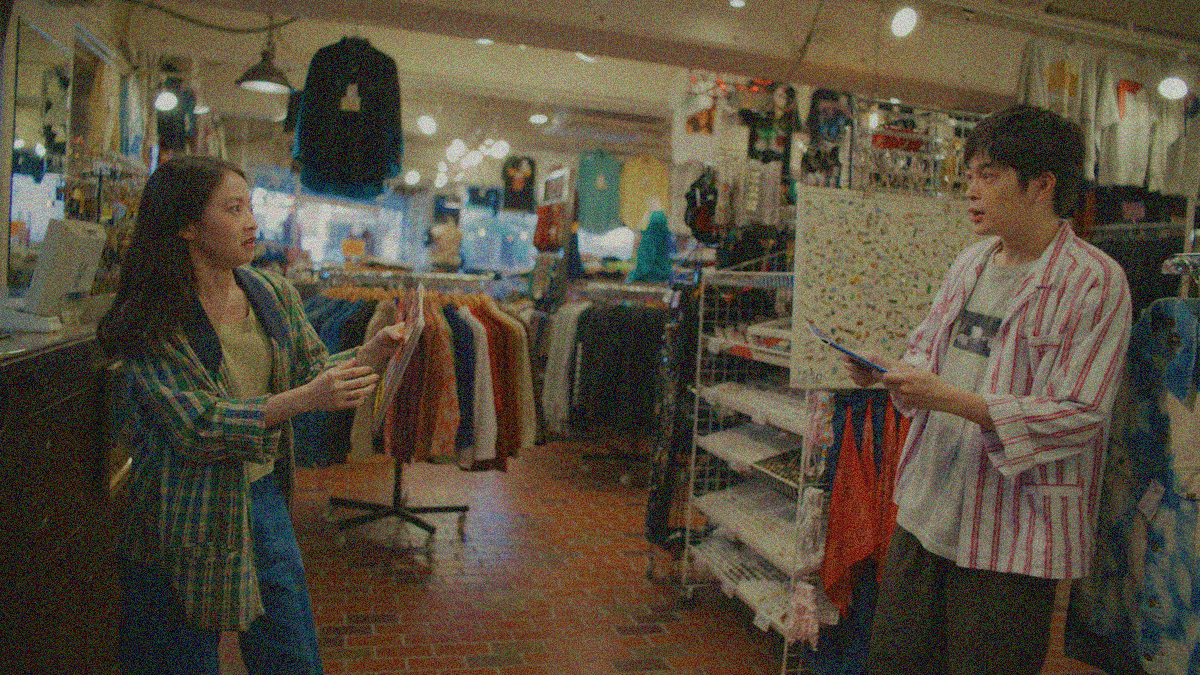
"Ueda has therefore left the time loop behind to play with the mechanics of the medium itself. Sure, there’s some multiverse theatrics and a meta 'repairman.' But the real draw is how they each use film language to uncover secrets."
Full thoughts at The Film Stage.
July 21
Permanent Damage
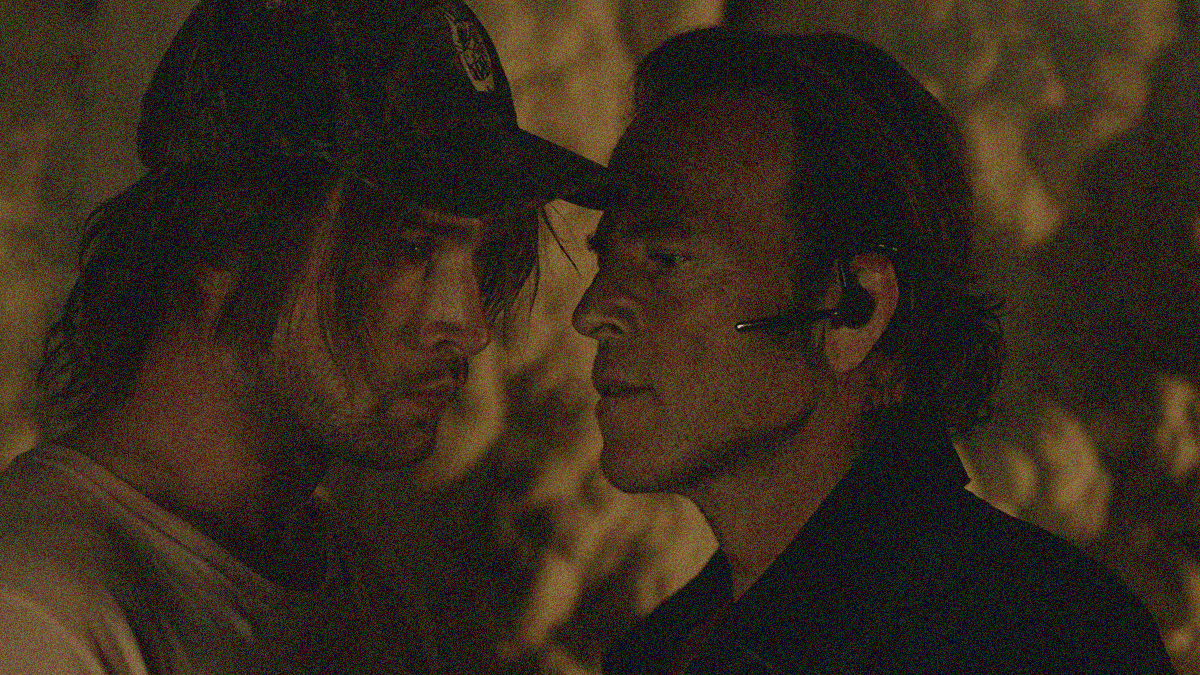
Luck shines on Tommy Gods (Calem MacDonald) after an inventive jailbreak lands him in a nearby town still wearing prison orange. Not only does he shadily duck into a convenience store and swipe a trucker hat in front of a security guard (Eugene Sampang), but he runs straight into an old woman's cart during his attempted escape. It all could have ended there if Mrs. Whynot (Clare Coulter) didn't stare that guard in the eye and tell him to stop harassing her son.
Director Seth A Smith and regular co-writer Darcy Spidle could have played it off as a middle finger to law enforcement. That Mrs. Whynot saw Tommy start to pick up the groceries he dumped instead of running away and chose to do him a solid. But that's not these filmmakers' way. Those familiar with their marbleized horror The Crescent and claustrophobic sci-fi Tin Can will know this, but they still might not anticipate the comedic potential of revealing it's not an act.
No, Mrs. Whynot truly believes Tommy is her son Donnie. It's not an inherently funny twist considering dementia is no laughing matter and the circumstances she finds herself in as a result are extremely tragic, but Smith and Spidle understand how you can simultaneously treat serious topics with authenticity while also having fun with the world around them. Because Tommy is too sweet to let her suffer alone. He's too sweet to simply save himself.
This virtue of his doesn't initially lead to comedy, though. Yes, there are some strange details in this world like a neighbor kid (Woodrow Graves's Lawrence) maiming people with a Super Soaker full of bleach and a barely intelligible drug dealer who's inexplicably glued to a chair (Chik White's aptly named Chair), but they serve as intriguing color in an otherwise dark thriller pitting Tommy against a ruthless property owner known as LL (Stephen Dorff).
A series of blackmail situations unfolds once Tommy's identity is revealed. Add a love interest in Joe (Olivia Scriven)—who's also LL's niece—and the friction that began with the threat of forcibly evicting Mrs. Whynot grows to a fever pitch as both sides become more willing to use violence as a means of getting their way. Soon a double-cross comes into play too courtesy of a mystery benefactor in Mr. Freeman (Stephen McHattie) and a dream to leave this life behind.
It's all pretty straightforward for a while there. I enjoyed the flirtations with surreal humor, but I won't lie and say I wasn't disappointed there wasn't more to the narrative itself. Smith and company are on top of it, though, because they flip that switch pretty much as soon as the thought crossed my mind. What it is LL is selling is shown, characters from before are reintroduced in goofy ways (How many jobs does Sampang's guard have?), and new ones enter the fray.
Whether it's Generous' (Quancetia Hamilton) sing-song cleaner (take that term however you like since she dabbles in multiple definitions) or Silverman's (Jonni Shreve) gentle-yet-bizarre giant, the surprises come in quick bursts of incredulous looks as even Tommy and Joe often find themselves shaking their heads at what's happening. You'd be forgiven for thinking you pre-gamed some "brown dot" yourself that suddenly kicked in for a wild second half.
Just because things get absurdly comedic, however, doesn't mean the drama loses its bite. Dorff is playing it straight from the get-go and is no stranger to asserting his will upon allies and foes alike. MacDonald falls prey to the temper that led Tommy to jail in the first place (although his innocence always ensures his rage is much tamer than expected). And Scriven toes the line between Joe wanting to be better than her uncle and embracing the greed that makes him a monster.
So, while Permanent Damage meanders into tonally disparate sequences that have you trying to stifle a chuckle, its overall trajectory remains towards a collision course that will inevitably leave bodies on the ground. It's the sort of film that takes its heightened sense of entertainment seriously and its dark drama with a dash of mirth so you aren't left wondering whether you're laughing with or at it. You should be having as much fun as McHattie in his blow-up pool.
With some cool flourishes (I've never seen spray foam insulation used like that) and a game cast throwing itself into its quirky characters, this is definitely Smith's most accessible film. That doesn't mean self-serious viewers won't bristle at the humor or those enjoying the fun won't squirm at the blood, but it's a blast for someone who loves a self-aware and genre-fluid film that keeps you on your toes. So, get Donnie a new hat, save Goose, and protect Mrs. Whynot at all costs.
7/10
Someone's Daughter
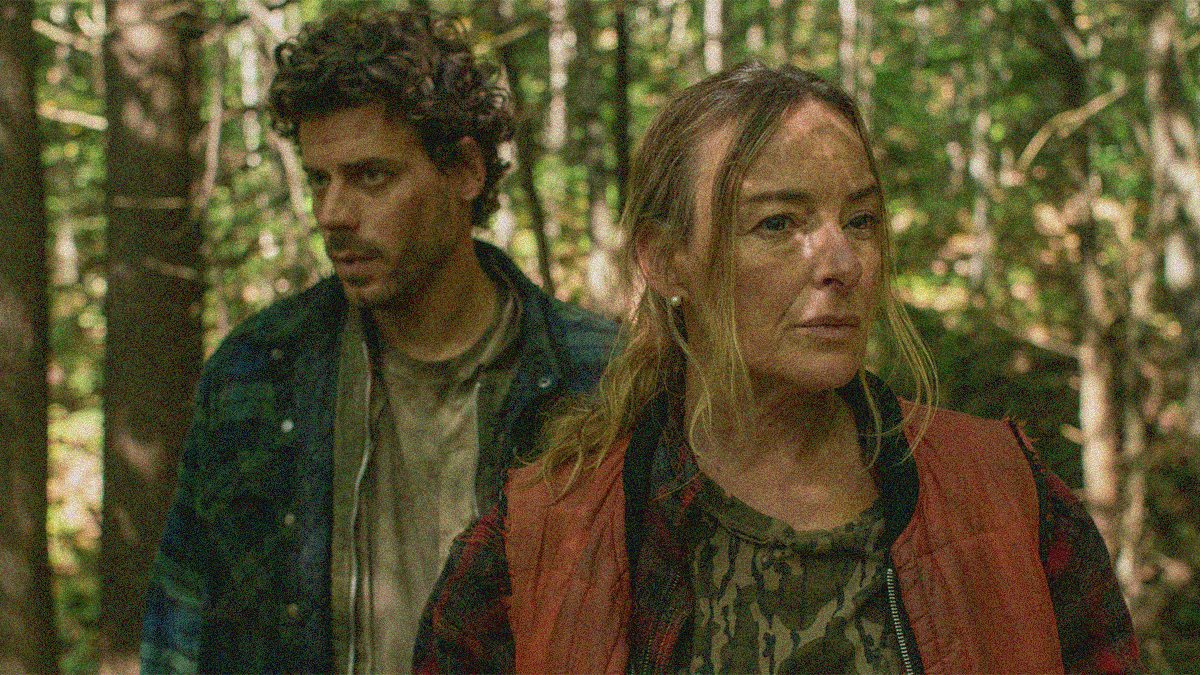
Fifteen years after earning an acquittal for her alleged rapist client (François Arnaud's Paul), defense attorney Sam (Pascale Bussières) finds herself waking in the backseat of a vehicle with her hands tied. The driver (Peter Outerbridge's Borden) is the father of the accuser. The latter has since died and he's hatched a plan to desert the two people who contributed to her mental spiral into drug addiction onto a small Canadian island with nothing but a knife and gun.
Wiebke von Carolsfeld's Someone's Daughter (co-written by Doug Taylor) is thus set-up for us to potentially discover the truth of that crime. Sam is quick to hide behind the notion that doing her job effectively trumps any presumed guilt her clients might possess. Paul had a story that she believed she could defend. That's all that mattered. Sure, the system can be cruel and tragedies can occur, but you can bet Sam never really thought about the trial since.
She has no choice now. The only person who can help her survive is a man she can't trust in isolation outside the courtroom. Sam was his protector in that venue. She set the boundaries. Here? She might just become his next victim if she lets her guard down. Unless Paul has grown and this is his chance at redemption. Or that we find out he truly was innocent after all. I'm just not sure this film gets made if it's the latter. Its suspense is born from "when" not "if."
As such, the suspense is often lacking since consciously waiting for that shoe to drop isn't the same as wondering what the shoe will be. von Carolsfeld more or less hopes we'll set aside this inevitability and invest in their mutual survival first. Can they get off the island? Can they find higher ground to chart a course home? Can they procure water once they go too far ashore to turn back? Is there even a road and/or civilization within walking distance?
All these questions swirl in ways that demand we worry about their health when we really only care about whether their inherent frustration will drive one of them to act on impulse. Will Paul be able to control himself knowing there's no one to witness what he might do? Will Sam's benefit of the doubt run dry to force her to shoot the moment things start going south? Borden didn't give her the gun just to kill Paul. He presented Sam with her own shot at redemption.
We never really get the sense that she's willing to do it, though. Yes, Sam often refuses to let him carry the pack even when it's obviously slowing her down, but it's always presented more as a symptom of her wanting control than a lingering fear. Paul has a couple moments where his temper comes out, but nothing to make us afraid for her safety either. The first two-thirds of the film is conversely constructed for them to become genuine friends.
Why? To get us to let our guard down. To lull us into a false sense of security before pulling rug. But it's impossible for it to hit with as much potency as hoped when the entire point of the movie is to eventually get there. It's not that we start to forget that fact because Sam and Paul find a kinship through shared trauma. It's that we grow tired of waiting. So, I will give the filmmakers a lot of credit for delivering the moment in a subversive way when they finally do.
Unfortunately, they don't carry that subversion through to its mirrored outcome. Any excitement that arises from the possibility that the endgame will actually surprise us evaporates once the scene flips back to its regularly scheduled programming. Is it a disappointment? Yes. But that doesn't also mean its orchestration isn't effective. Someone's Daughter does make good on the promise of its conceit. It simply isn't quite enough for success.
Bussières and Arnaud are up to the task of knowing their roles and sticking to the present regardless of the audience's inability to stop waiting for the future. They create normal tension from the imbalance of her being woodsy and him not having a clue, but I wonder if adding more of the tension from their past could have augmented that drama. They never really push each other's buttons to test that history. Not until the script runs out of time.
So, it's a serviceable thriller in that it achieves its superficial goal of surviving Mother Nature, but it leaves a lot on the table insofar as achieving its foundational goal of mining the psychology of why these two characters are forever bound together. You might even say its conclusion's decision to turn the tables how it does proves a reductive misstep by way of creating a narratively satisfying yet no less problematic false equivalency.
5/10
July 22
Ancestral Beasts
It's easy to misconstrue the opening scene to Métis filmmaker Tim Riedel's Ancestral Beasts since the resulting presumption is the point. Because regardless of the entity's origins (external from the victim as a demonic force or internal as a manifestation of trauma), it sticks solely to its target. It neither attacks Max (Josh Strait) as he watches from outside nor Adèle (Gail Maurice) when she rushes in to see what's happened. Only one body is left in its wake.
Except, of course, that these tragedies don't stop at one death. They can't since they also didn't start with it. When you're talking about the generational trauma alluded to by the title and known to be a large factor in the lives of indigenous people throughout the world, every casualty is a product of and catalyst for many others. Mathilde's pain was inherited and her suicide subsequently impacts her daughters' ability to withstand its ever-growing weight.
We see it the moment they're introduced. Elyse (Morgan Holmstrom) is literally vibrating with frustration and rage. Nikki (Morgan Holmstrom) suffocates every living soul inside any room she enters. The pain they've endured since birth is present in their DNA and has been the source of pretty much every bad choice and self-destructive tendency they've unleashed. It's gotten so toxic that the sisters can't even turn it off for each other. It might actually be worse.
That's why Elyse needs to get away. Not just from work after yet another incident with a customer that sees her boss ready to fire her, but from Nikki too. Between the latter's insistence that the former would be lost without her and that stir from deep within that cannot be shaken, it's time for space if only to recalibrate with calm before an inevitable return. Is the house where her mother killed herself the best landing spot? Probably not.
It's what she has, though. Once Adèle disappeared, it became their last familial connection. So, Elyse drives to the country, discovers Max can't help but be creepy, and unwittingly sparks two reunions: one with her cousin Shay (Shannon Baker) and the other with the entity still lingering in the darkness of that home. It's less a matter of which reaches her first than which she'll let in. And don't assume "love" is an easy choice when she feels destined to destroy it.
Why do so many push away the people who care most? It's not because they don't want the help. It's because they don't want their suffering to spill over and let their demons latch onto innocents who've done nothing but find themselves in the wrong place at the wrong time for the right reasons. It's why Nikki should be the perfect partner. She knows the struggle. Just because trauma is shared, however, doesn't mean they haven't each tweaked the recipe.
The result makes it so they become scarier to each other than the demon. Nikki's domineering attitude warped from a sense of duty is more oppressive than anything the beetle-like hand crawling under the floorboards could do. That's not to say Elyse doesn't love her or attempt to reach out when things get bad. These are complicated issues and Ancestral Beasts is a complicated horror film. Because there is no good versus evil here. It's just survival.
So, while things seem to get a bit shaky during the middle act as new characters are introduced like Asivak Koostachin's Cody and the action turns generic with Elyse trying to escape the creature hunting her in the night, it's just because we don't yet understand the full picture. We don't know the source of the entity or the power dynamic between it and her. What if it's not attacking at all? What if its purpose is to protect her even if that means from herself?
Everything comes together during the third act as answers are revealed and more blood is shed. The characters caught in the crosshairs may not be who you expect either since none of this is an exact science. When anxiety hits and the fight or flight impulse kicks in, controlling the fallout is a fool's errand. Part of the reason why it's so difficult to get help and confront the root cause is because of the fear that those you confide in will inevitably become your next victims.
Riedel takes us to some tough places as a result. His script demands that his characters understand the no-win situation they are in insofar as revealing how protecting yourself might mean letting someone else go. There's a lot of regret on-screen that's either been earned or passed down. A lot of guilt that they must learn to live with to not lose themselves too. Despite the creature feature tropes, this is complex subject matter handled in an extremely mature way.
7/10
Nightborn
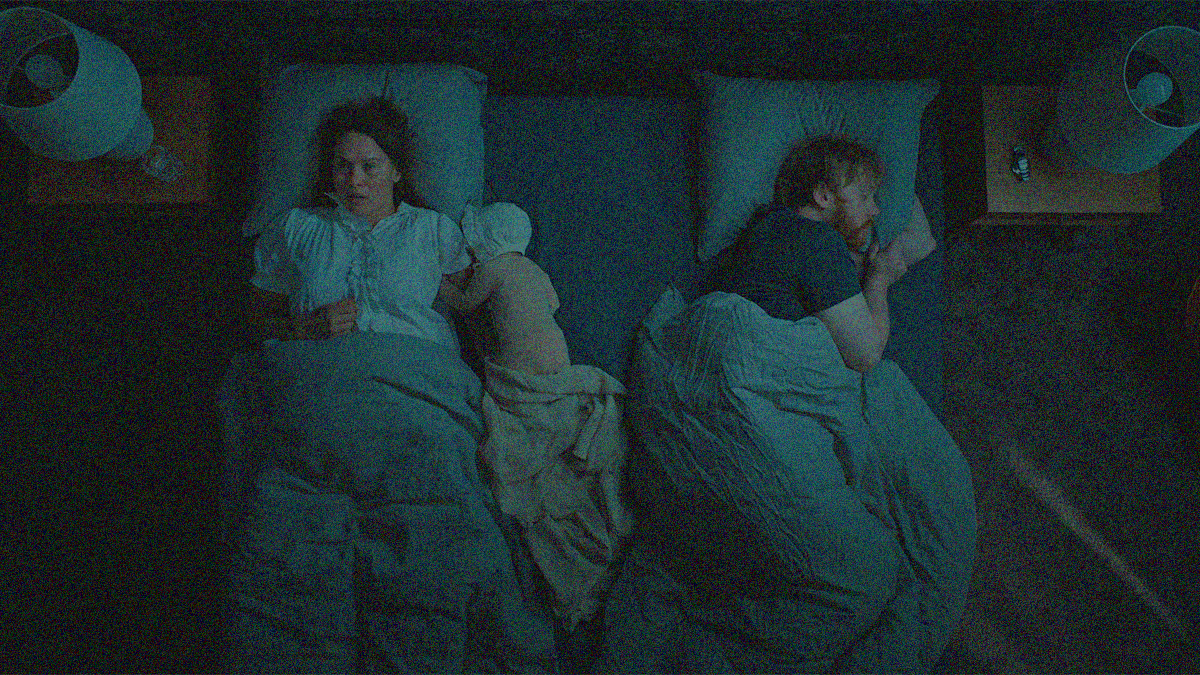
Jon (Rupert Grint) sees the human-ish trees in the forest behind the dilapidated Finnish home he's agreed to start a family in—the former house of his wife Saga's (Seidi Haarla) grandmother—and decides it's a good idea to conceive the couple's first child in the dirt while they watch. That right there should have been a red flag as far as whether this Londoner had the survival skills for what comes next. One look at those trees and he should have run back to civilization.
Hanna Bergholm's Nightborn (co-written by Ilja Rautsi) fast-forwards to the birth of their son instead. So much screaming. So much blood. So much ... hair. People try to tell the new parents that everything they are experiencing is normal, but we see the way children look at the baby. We see the weird tailbone growth. We realize Bergholm is intentionally shrouding the child's face from the camera. So, we know nothing about this is normal. We just don't know what it means.
The film isn't looking to bludgeon you with its mythology, though. Whereas some stories about motherhood use genre trappings to serve as a metaphor of the experience by way of simply making a horror film about parents, Bergholm does the opposite. She teases notions of Finnish trolls and monsters, but never in a way that removes the potential for everything weird on-screen to simply be in Saga's head. Parenthood is the nightmare.
All the fantastical things we see might therefore be a means with which to make it make sense. Because Jon, Saga's sister Taru (Pamela Tola), and their mother (Pirkko Saisio) don't interpret what she (and we) believes to be obvious in the same way. They laugh off the chaos. They look for ways to force normalcy onto these abnormal situations because they "know" a baby holds no power. It's their job to help it get used to a healthy routine and boundaries.
Logically they're correct in this thinking. Babies don't crave raw meat and blood. If they end up eating those things, it's just that those things are what's being presented to them as food. The whole script is built on similar chicken vs egg conundrums. Is the child crying in sunlight because it truly burns or because you whisk him into the shade? Is he calling the trees to wrap themselves around the house or does your fear of him project intent upon coincidence?
The point of the narrative is therefore less about solving the mystery of what's occurring and more about whether love's bond can overcome that fear. When everyone tells Saga that she was just as bad when she was a child (some say she still is), they are trying to get her to exit her head and relieve pressure. But what if they are actually confirming what she thinks? That her son isn't a troll by chance. That she's one too. That maybe it's time to embrace it.
Nightborn proves the opposite of most postpartum horror tales by having its dark and violent moments make mother and child closer. It turns from patronizing Saga into opening her eyes onto a rosier truth to villainizing her as a bad mother, wife, and human being. So, she stops hiding the "fixes" that quiet her son and stops being scared of the harm he appears to inflict. She allows herself to join him in escaping society's constraints. To prove it's the world that's wrong.
The result is often humorous in nature merely because it chooses to filter events from an uncommon side. Rather than show a last-straw fight between Saga and Jon as an emotionally dramatic attempt to save her from herself, Bergholm shoots it like a wildlife documentary with Haarla and Grint growling as they bare their teeth. Instead of playing its supernatural implausibility as something to defeat, the film asks if Saga's grandmother was wrong to suppress them.
Go crazy. Drink blood. Run into the woods naked. Stop trying to change who you are to fit a mold of boredom and laugh in the faces of those who cannot fathom having a unique thought of their own. Similar to Bergholm's previous film Hatching, she seems keen on making us think one thing before pulling the rug to reveal the other. She lulls us into the comfort of yet another "Mom is losing her mind" story before coaxing us to stand and cheer Mom on further.
Haarla is fantastic throughout this transition. We feel her pain and fear at the start. We sympathize with her refusal to call the baby anything other than "it" while Grint expertly huffs to correct her each time. But we also admire her turn towards feral aggression at the end. We aren't laughing when she growls because she's the joke. No, those growls work to quiet the baby. It's a legitimate form of communication. We laugh because it angers everyone else.
So, Nightborn won't be for everyone. It's not as polished as Hatching despite holding the same psychological depth nor as clichéd as you might expect from the straight-to-streaming marketing materials despite having those same tonal earmarks. It's a sort of hybrid that uses its conventions as a means for subversion. Yes, its superficial packaging can hurt it at times, but the undercurrent of non-conforming empowerment still shines through.
7/10
No Rest for the Wicked
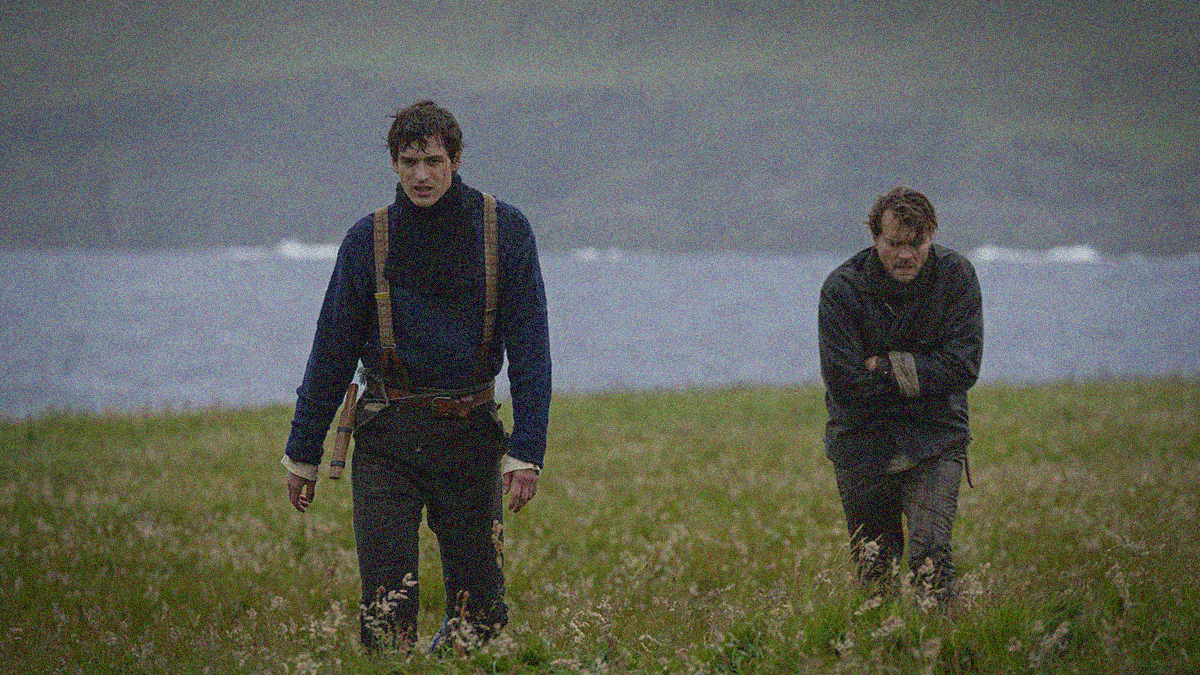
Director Kasper Kalle calls Karl Heinrich Ulrichs' 1884 short story Manor "one of the first unapologetic stories about gay love" and "a cornerstone in the history of queer people" that "few people know exists." Well, thanks to him and writer Rasmus Birch ushering us back to the Faroe Islands circa 1862, that's about to change as No Rest for the Wicked brings the story's dark, forbidden sexuality to life right when its small fishing village is pushed to the brink of its piety.
The film begins with a prayer for safety uttered at the meal table by young Baldur (Egor Venned). His mother (Sofia Nolsøe's Ásla) helps finish it with him because she knows the potential dangers that await once he goes out to sea. They've already lost Baldur's father and she cannot afford to lose him too—even if he's simply rowing through the rocks to collect a couple fish just for them. All it takes is one thick fog to change their lives forever.
You must wonder from the atmospheric mood that brings Baldur to hear a man calling for help in the distance is already setting the stage for evil to take hold. Is the voice a ghost? A demon? Our minds wander because we know the genre and anticipate what comes next. Except that our assumption is wrong. Helge (Pilou Asbæk) is just a man. A Dane between whaling ships who lost his way in the fog. A man in need of saving who ends up saving Baldur instead.
We aren't the only ones with expectations, though. The characters do too. We see the way Baldur looks at this newcomer, but even he knows reality will surely have Helge entering his flirtatious mother's room. Ásla is hardly subtle and Helge volunteering to assist Baldur in repairing his boat provides the cover necessary to consummate her signals. Unless, of course, Helge is interested in someone else. But is it for love or hunger? Could it be he's not a man after all?
The ambiguity isn't a mistake. Kalle knows the intrigue inherent to this one-hundred-and-fifty-year-old story is the universality of the extreme isolation so many gay people endure. Baldur is quite literally alone on this island of God-fearing folk who would never accept his lifestyle as anything but a product of evil. So, the film plays with this notion. It uses the tropes of vampire and ghost tales to instill fear on the island inhabitants despite there being no ill intent.
Well, not yet at least. Because even though we can acknowledge the supernatural feedings that take place are a metaphor for consensual romance, Ásla and the town elder (Jóhannes Haukur Jóhannesson's Jákup) surely do not. No, once tragedy strikes, the simple act of witnessing any consorting between Baldur and Helge calls your own godliness into question. To give the unspeakable life through words is akin to fanning the flames. You become a pariah too.
And therein lies the rub. That's where the mirror to today's world enters the fray since bigotry and hate only ever prove your own deficiencies. The more this town refuses to let Baldur and Helge's love exist, the worse their own lives become. It's not a punishment, though. What happens may take the same form of revenge that horror films wield, but it's never to hurt the people affected. It's merely to satisfy love's undeniable force by any means possible.
The least these residents can do is mind their own business. To not let God give them the freedom to destroy love simply because they don't understand it. I love that No Rest for the Wicked leads towards an almost begrudging allowance rather than a full embracement because it proves how someone else's gay relationship doesn't alter your life. No, it's not letting them be happy that does. That hate will harden your soul to the point of distorting your faith to fit it.
That this message is delivered via impeccable performances and Jacob Møller's gorgeous cinematography amidst the mossy rocks of this treeless country only augments it. Venned's longing. Asbæk's desire. Nolsøe's love for her son overriding her church's demands. The rest of the town might do what they do to return to normalcy, but we know Ásla does it to right a wrong. Because it doesn't matter where or when it's set, a parent's acceptance transcends both.
8/10
July 23
Rubberhead: The Life and Monsters of Steve Johnson

How did Steve Johnson go broke? He'd say it was the advent of computer graphics cutting into the bottom-line of practical effects makers in Hollywood. His protégés (including Jason Hamer and Bill Corso) and ex-wife (Linnea Quigley) would say it was his drug-addled and self-destructive nature. The truth lies somewhere in-between since one didn't help the other. Not going sober or embracing CGI twenty years ago ended his career ... but what a career it was.
Spring-boarding off Johnson's own book, director Nick Taylor's Rubberhead: The Life & Monsters of Steve Johnson takes us through those highest highs and lowest lows via a large collection of interviews cobbled together in linear and thematic order. So, while Johnson's wardrobe and locale are constantly shifting from one scene to the next, his narrative through line isn't. We move from his idolatry of Dick Smith growing up in Texas to his self-imposed exile in Costa Rica.
It's quite the journey connecting those two places. One that saw him learning under the tutelage of Rick Baker on American Werewolf in London, being shipped off to Ghostbusters to lead his own team with Boss Films, getting fired off Predator to spread his wings as the captain of XFX, winning Emmys for Stephen King adaptations, and working with the likes of James Cameron, H.R. Giger, and Guillermo del Toro before it all crumbled down.
Johnson is a fantastic storyteller in large part because he's full of himself enough to know he's a genius in his field while not being delusional enough to deny that many of his problems were self-inflicted. The way he talks simply exposes that he wouldn't change a thing. He loved the drugs. He loved the parties. He loved pouring whatever profit he did earn right back into the company to keep his stable of artists inventing regardless of having a film needing invention.
His tales of burning through myriad iterations of Slimer and the trial and error of doing the unthinkable on The Abyss and never quite getting the chance to do the same on Where the Wild Things Are prove as entertaining as they do insightful. The footage of him putting his puppet creations onto his genitals or saying he'd sleep with the alien form of Sil from Species proves just how much the industry was a hedonistic playground of nerds living like jocks.
While you could definitely question Johnson's business acumen and ability to evolve in an ever-changing landscape at a moment when everything changed overnight with Jurassic Park, don't conflate his unprofessionalism for the camera with the same at his job. Quigley is the first to admit that it didn't matter how much cocaine or meth he was on, Johnson was always one hundred percent devoted to the work when engaged with a new problem to solve.
The finished products speak for themselves. Successful branches sprouting from his XFX studios to continue the tree that Dick Smith began speaks to the level of creativity and freedom Johnson fostered. And his desire to work a no budget creature feature with genre stalwart Tom Holland proves his excitement to keep making art remains. The "rubberheads" are a dying breed, but their rockstar legacy lives on. Johnson, despite his faults, earned his place as one of its pillars.
7/10
Home Bodies
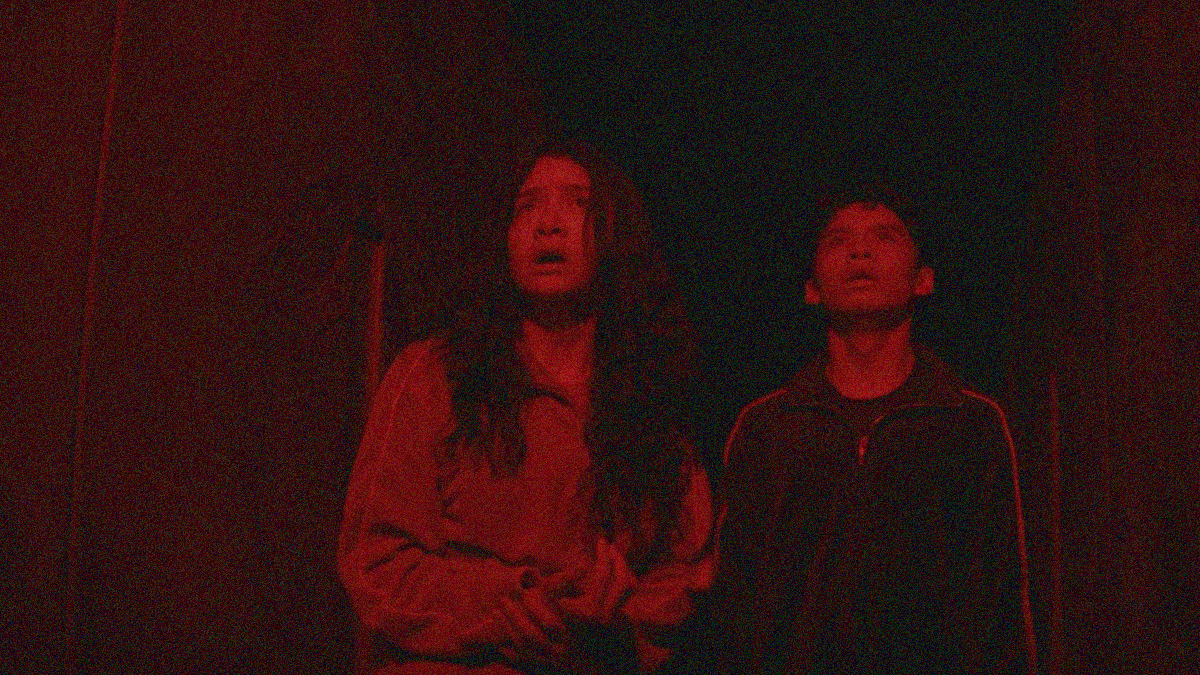
I half thought a Remedy logo would pop up at the end of Casey Walker's Home Bodies considering how many parallels there are between Adrian Murray and Marcus Sullivan's script and Control. A triangle as a logo with the disembodied voice of an entity in power. Two siblings raised in a carefully orchestrated setting for experimentation. Puppet shows teaching them about the world. It's definitely not a one-to-one mirror, but the similarities are uncanny.
So, while things do ultimately work towards a reveal of "Old House" magnitude, don't actually anticipate a crossover. This automated domicile that has raised Red (Emma Ho) and Blue (Ian Ho) since they were babies possesses its own mythology for them to gradually expose now that they are "of age." What that age is (they celebrate a forty-second Noël despite being tweens) and what it signifies is left to interpretation. All we know is that change can be painful.
Stagnancy can too, though. We see that from the start with Blue's unwavering enthusiasm for the exact same routine he's followed for what seems like an entirety to Red. She's desperate for something new even if that just means having a couple hours to herself without needing to entertain Blue's whims. She doesn't want to watch an episode of "Barn" for the umpteenth time. She doesn't want to play "catch ball" again. She just wants some peace and quiet alone.
It's as though "Papa" (the disembodied computer-like voice that emanates from a door they cannot open after the sound of keyboard clacking) sees this shift and wants to push things further. Because introducing a foreign entity into the equation via Pal (Ess Hödlmoser's androgynous, robotic-like mute) is hardly a means to calm these choppy waters. No, Pal's insertion is meant to provoke. Naturally via jealousy and unnaturally via a forbidden VHS tape.
The vibes Walker instills are impeccable. From the innocence of sibling rivalry testing resolve and patience to the horrors of the unknown when faced with realities these siblings have previously been shielded from experiencing, we can feel the tension rise as Red all but replaces Blue and Blue hatches a plan to win Red back. Give the kids a lot of credit too. Ian's emotional reset from fear of abandonment to smiling aloofness is legitimately creepy.
Questions abound as we hypothesize Pal's role in what had otherwise been a closed-loop system augmented by an automated home whose science-fiction infrastructure instantly replenishes the fridge, prints food in the microwave, and fills its cabinets. Is Papa trying to keep them in line? Teach them responsibility to quell their descent into boredom before they start testing this prison's boundaries? Actively push them to find an escape?
The sheer number of possibilities creates intrigue because there's no telling what Red and Blue will do in response. They fear Papa's wrath despite our assumption that they've never "met" him, so there is a built-in system for caution. But they also fear obsolescence insofar as Red feeling trapped and Blue feeling invisible. It becomes a matter of which they're scared of most: making Papa mad or losing whatever identity they've created under these regulated conditions.
I love the escalation that comes with the potential for change. We move from Red letting her anger get the best of her to break a window during a game of catch to Blue discovering the psychological trauma of committing an act he cannot take back. We are literally watching their entire worldview evolve faster than they can comprehend. With one secret screening, they go from thinking pigs and chickens are fluffy friends to being scarred by the finality of slaughter and death.
Why, though? Why are they here and who is "Papa"? Red and Blue's interactions create the film's central dramatic function, but the mysterious unknown at their back are what keep us engaged. Because watching how far they're willing to go to either reclaim normalcy or erase it from ever returning is at the behest of someone or something else. We're just as engaged in Red and Blue's devolving equilibrium as we are in them finally opening that locked door.
I'm not familiar with Murray's previous work alongside Sullivan (Retrograde and Withdrawn), but Walker's position as executive producer on Jeremy Gillespie and Steven Kostanski's The Void definitely makes sense in hindsight here. An otherworldly atmosphere, claustrophobic sensory overload, and silently malicious force are all present en route to a reveal that expands the scope of everything you thought you knew.
Just don't expect all the answers. I won't go so far as to say they're banking on franchise potential since Home Bodies works well on its own despite any new questions asked once things cut to black (stay after the credits too), but the room to keep going is here. Why not? The whole point of meeting Red and Blue at this moment is to watch the inevitable awakening "Papa" orchestrates for observation. It's not about the past or future. It's all about right now.
7/10

The Dink

I think Ed Harris' Chuck said it best: "This is stupid."
Director Josh Greenbaum and writer Sean Clements build The Dink as a pop culture pickleball primer while simultaneously excoriating the game at every turn whether it's Chuck branding it the "COVID of racket sports" or Andy Roddick saying, "This isn't a real sport." But doesn't that actually mean it's lambasting the tennis establishment's refusal to give its new offshoot any credit for breathing life into derelict courts? I guess.
Here's the thing, though. Above any of that debate, this film epitomizes the slop formula that streaming has adopted wherein everything is explained to the finest detail so there can be no mistaking what themes were shoehorned in to pretend it's anything more than an excuse to pay a lot of familiar faces some of that good Wall Street cash now that Hollywood is consuming itself. Harris channels his ire perfectly. Mary Steenburgen looks to be having actual fun.
It's never better than when her Candace and Jake Johnson's Dusty are together—even with they stumble into The Graduate territory while literally watching The Graduate. The Ben Stiller stuff is bad. The Aaron Chen stuff is tired. The John McEnroe stuff ... no, that landed for me. And while trying to Dodgeball the finale erases all tension while Dusty's "growth" instantly reverses as Daddy shows pride in the wrong thing, at least we discovered Roddick is a Pete Weber fan.
Oh, and you gotta love a parent giving their blessing to let a child deliver a PG-13 f-bomb. It's the film's biggest laugh ... and it happens two minutes in.
5/10
Motor City
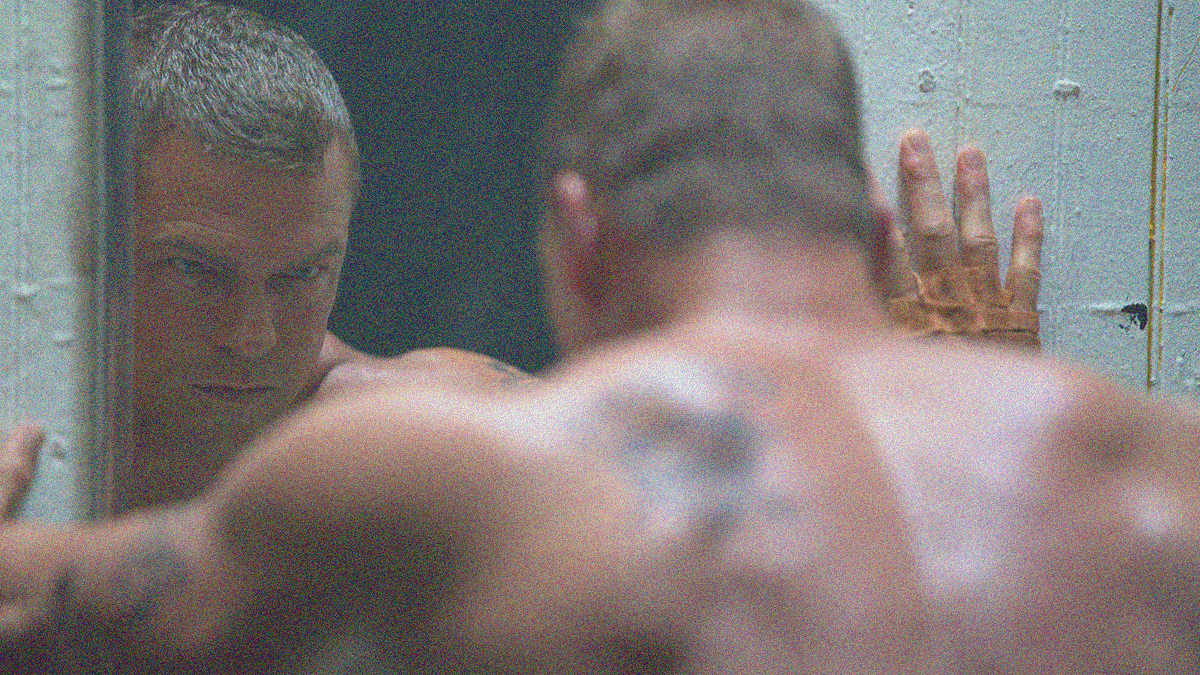
Potsy Ponciroli's Motor City is extremely my jam. Pure style over substance that delivers a viscerally absorbing, sensorial experience. It's like a dialogue-free jukebox musical wherein almost all lines delivered by actors are blocked or muffled. Whether trapped behind glass, sent via morse code, or replaced by intuitive glances and expressions, we don't need words to understand. All we need is the propulsive soundtrack and action to lock-in our attention.
Because the story is little more than a catalyst. Man (Alan Ritchson) loves woman (Shailene Woodley). Man is framed by the woman's domineering ex (Ben Foster) with help from a corrupt cop (Pablo Schreiber). Man recruits his former Rangers squad (Lionel Boyce and Amar Chadha-Patel) to enact his vengeance. It's perfect fodder for overwrought melodrama, music video-esque slo-mo sequences in the rain, and heart-pounding close-quarters fisticuffs.
The 1970s vibe is top-notch with Foster wearing the hell out of those oversize frames and a soundtrack consisting of extended cuts that include The Moody Blues' "Nights in White Satin", Bill Withers' "Lovely Day", and Fleetwood Mac's "The Chain" (to really mimic the similar experience "The Americans" often pulled off). It's so period-specific that you'll find yourself lamenting the fact a certain pianist cameo can't provide a song too ... until the end credits, of course.
A cinematic journey that was a long-time in the making (with Greg Friedman apparently commissioning the script from Chad St. John in 2006), Ponciroli, cinematographer John Matysiak, composer Steve Jablonsky, and editor Joe Galdo were up to the task alongside a cast that embraced its physicality and expressionistic style. Credit the stellar makeup department too for the epilogue's old age looks. I thought the Star Child was about to appear.
The film is also a good reminder of just how huge Schreiber is. Sure, he towers over Ben McKenzie and Foster, but he's got two inches on Ritchson too. Add Boyce and Chadha-Patel to the mix and this is quite the imposing line-up.
8/10

This week saw Captain Ron (1992) and Chinatown (1974) added to the archive (cinematicfbombs.com).
We have officially reached 1,000 titles live in the database. I honestly never thought it would get that high when I started. Partially because I had no clue I'd still be doing it. Mostly because I didn't think there were that many.
Yes, I have some R-rated (since it's fun to find ones with a single use and to commemorate Oscar nominees) and Unrated entries. Yes, there are a bunch of censored examples. But there are just so many PG-13 f-bombs, regardless.
Between my bad memory, not realizing it was said, and a plethora of movies I simply never knew existed, I might get up to 2,000 by the end.
Here's the full breakdown thus far (1,203 confirmed examples including some I clipped but have yet to add):
Approved - 1
G - 1
PG - 62
PG-13 - 1,022
TV-14 - 6
R - 99
NR - 12
It's truly an insane number.
Kurt Russell drops an f-bomb in CAPTAIN RON.

Opening Buffalo-area theaters 7/24/26 -
• Bad Counselors at Regal Transit, Quaker
• Chennai Love Story at Regal Elmwood
• Gauthali at Regal Quaker
• Hadestown: The Musical at Dipson Amherst; Scene One Market Arcade; AMC Maple Ridge; Regal Elmwood, Transit, Galleria, Quaker
• Haunted Heist at Regal Galleria
• Her Private Hell at Scene One Market Arcade; AMC Maple Ridge; Regal Elmwood, Transit, Galleria, Quaker
• Ishqnama at Regal Elmwood
• Jana Nayagan at Regal Elmwood, Transit, Galleria
• Motor City at Dipson Capitol; Regal Elmwood, Transit, Galleria, Quaker
Thoughts are above.
• Pinocchio Unstrung at Regal Elmwood, Transit, Galleria, Quaker
• Reading Lolita in Tehran at Regal Elmwood
"The film is allowed to be just effective enough to give life to the overall journey while also sparking your interest to dig into the text and experience the historical and emotional details left behind." – Full thoughts at HHYS.
• Rose of Nevada at Regal Transit
Streaming from 7/24/26 -
• 72 Hours (Netflix) – 7/24
• Chum (AMC+) – 7/24
• The Dink (AppleTV) – 7/24
Thoughts are above.
• Mortal Kombat II (HBO Max) – 7/24
• Nirvanna the Band the Show the Movie (Hulu) – 7/24
• Pressure (Peacock) – 7/24
• Saccharine (Shudder) – 7/24
"This is very personal to [James]. You can feel it in the details and examples of silent struggles throughout the film. And you must give Francis a ton of credit for portraying it with complete authenticity." – Full thoughts at HHYS.
• The Truthers (Netflix) – 7/24
• The Devil Wears Prada 2 (Hulu) – 7/29
• The Devil's Mouth (Prime) – 7/29
• A Private Life (Netflix) – 7/29
• The Super Mario Galaxy Movie (Peacock) – 7/30
Now on VOD/Digital HD -
• Disclosure Day (7/21)
"Disclosure Day plays like a re-imagining of Steven Spielberg’s Close Encounters of the Third Kind fifty years later rather than a companion piece. [It's] less about the wonder of discovery than the reality that our humanity has been lost." – Quick thoughts at HHYS.
• Gregg Allman: The Music of My Soul (7/21)
• The Mandalorian and Grogu (7/21)
• Scary Movie (7/21)
• The Voices of Our Mother (7/21)
"Its “happy ending” feels like a threat instead. Because this isn’t about unyielding love. It’s about the burden of truth. It’s not perfect messaging, but I applaud the conviction." – Full thoughts at HHYS.
• A Mosquito in the Ear (7/23)
• Cruel Hands (7/24)
• Kill Code (7/24)
• Lars Shrike Walks the Night (7/24)
• Newborn (7/24)

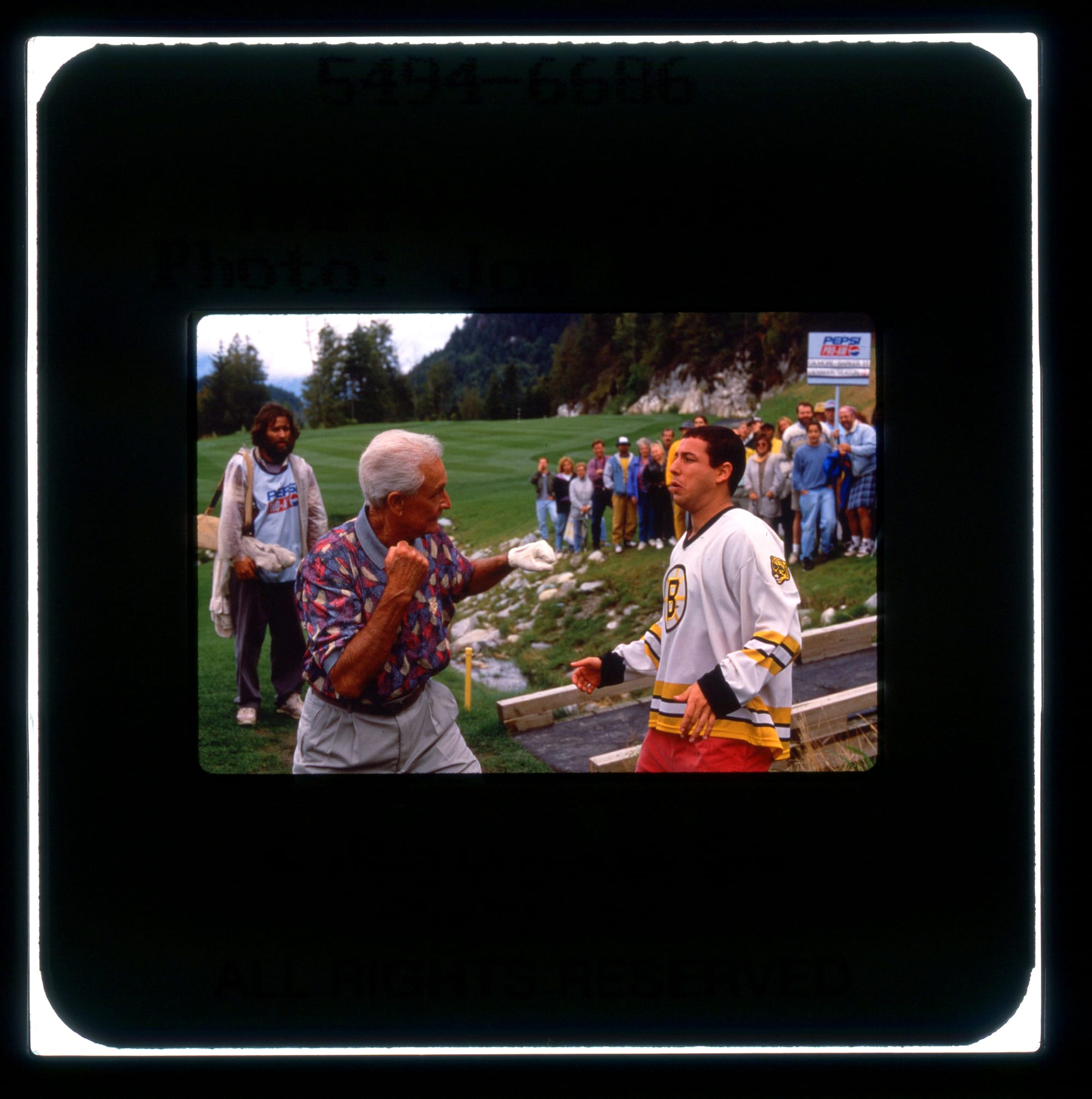
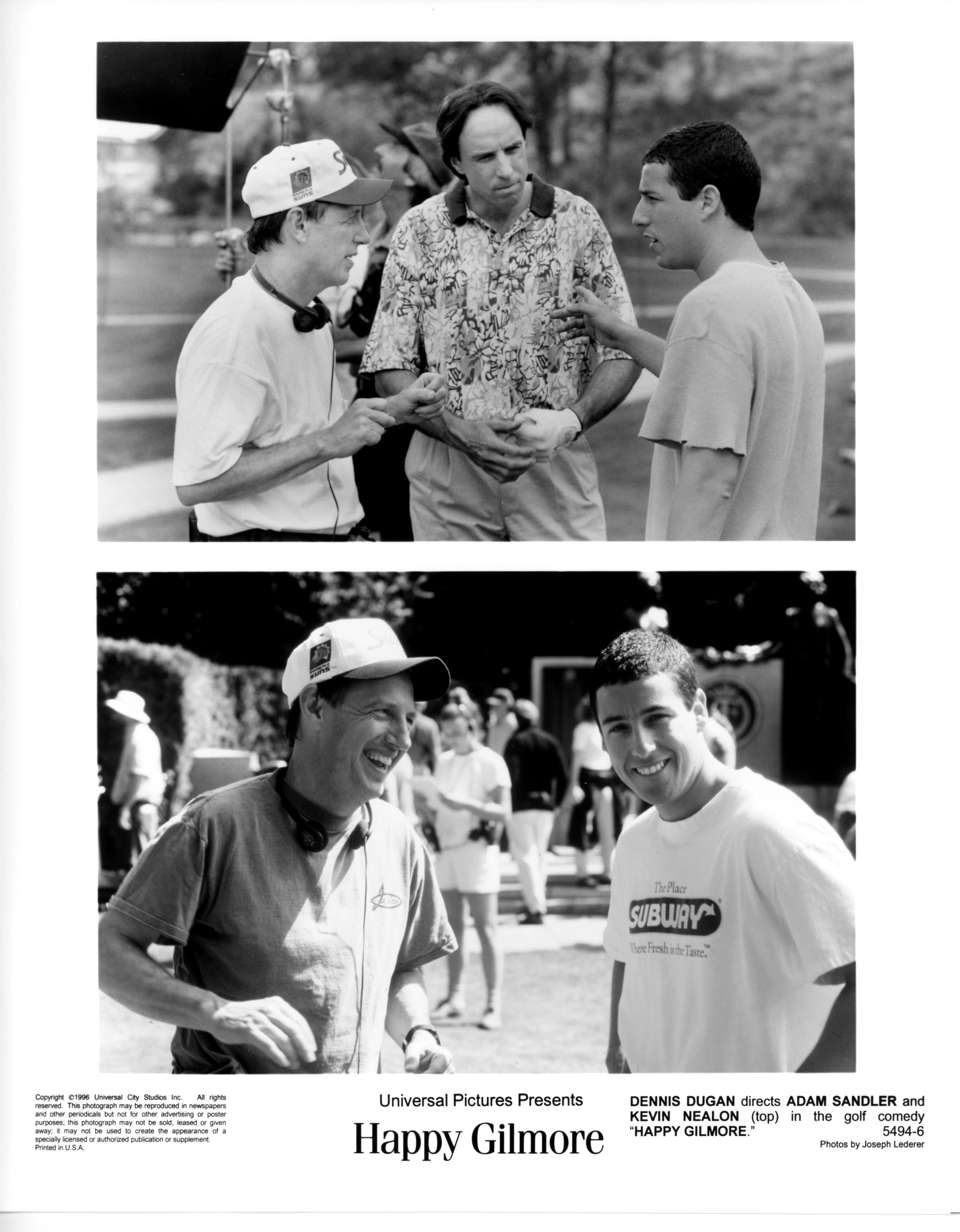
Pieces from the Happy Gilmore (1996) press kit.