Week Ending 8/28/26
RIP Dolly, Curry, et al.

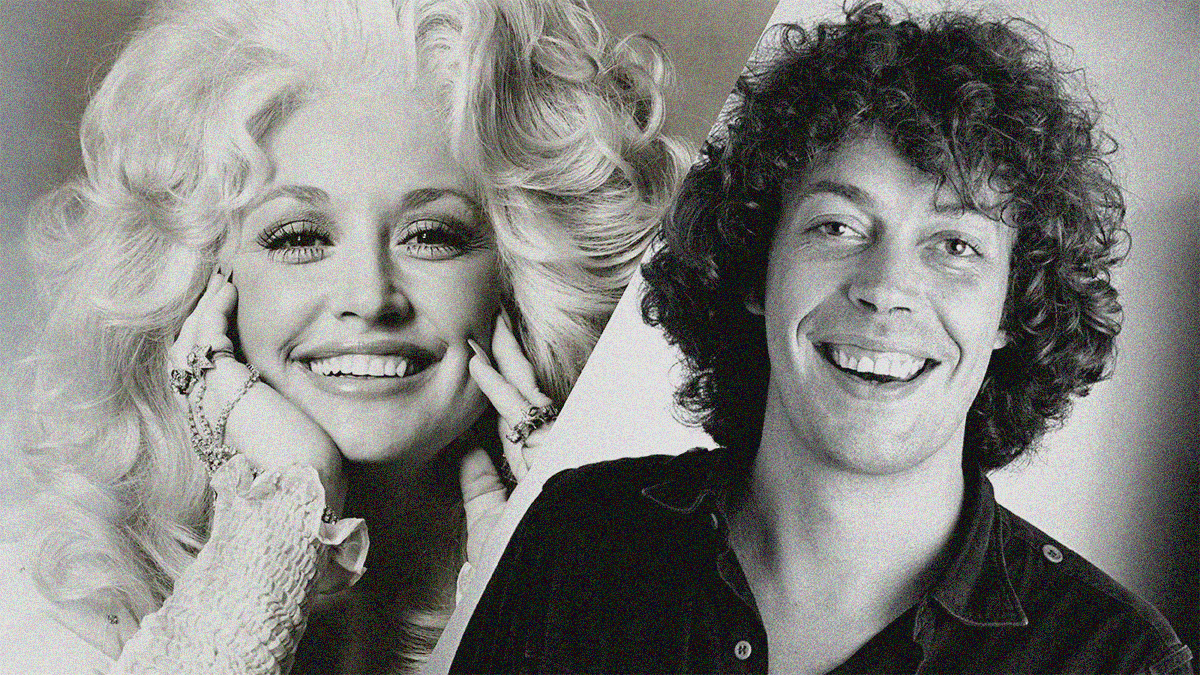
Every month includes the passing of meaningful artists, but August 2026 has been especially harsh when it comes to Hollywood.
Whether the big names like Dolly Parton, Tim Curry, and Hayden Panettiere or the "that guy" actors like Reggie Bannister, Vincent Pastore, Peter Cullen, Michael Wright, Shelley Fabares, James Lew, and Ben Jones or the crossover appeal of singer Glen Hansard and artist Yayoi Kusama (despite the problematic histories of both), the hits kept coming.
Those first three definitely hit hardest due to their impact in the field (Curry), on the world at-large (Dolly), and age (Panettiere). And while each loss carries its own tragic reverberations, there remains room for inspiration and, yes, humor.

American Dream
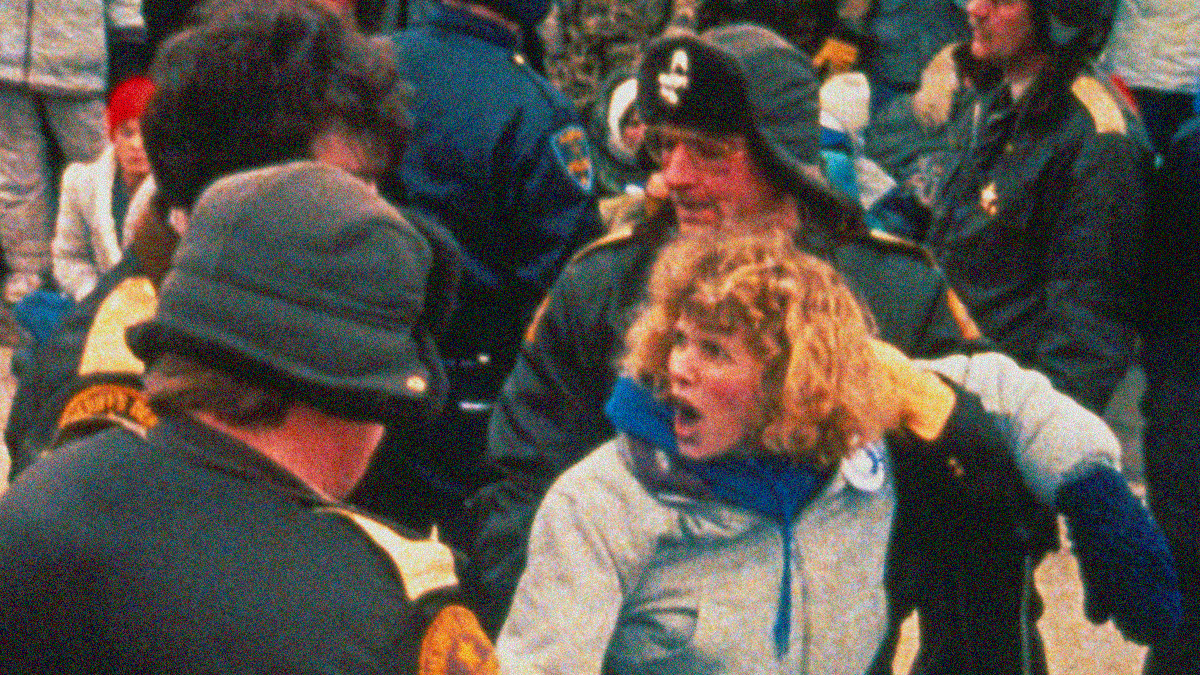
You're ignoring the subject matter if you see Barbara Kopple's name on another strike film and wonder about diminishing returns from a well run dry. The labor movement's fight against capitalistic institutions isn't one-size-fits-all in the abstract or in practice—especially not with a decade or more between examples. American Dream is not Harlan County USA. It's a different beast altogether.
I don't even say it because the conclusions are different. No, my reasoning stems from the fact that the former isn't operating from the same or better position as the latter. You'd think the opposite since the coal miners' victory should have laid a foundation for the future, but the workers aren't the only ones learning a lesson. The rules of engagement shift on both sides of the equation.
Between Ronald Reagan giving corporations the go-ahead to do anything they can to diminish union power (if not destroy them) and brash talk from outsiders hired by workers to adopt an aggressive all or nothing mantra that may not suit their needs, the stage has been set for a proverbial bloodbath. Kopple isn't just documenting a dispute. She's exposing a world broken beyond repair.
Because it's gotten worse. If Harlan was a watershed moment for community organization, Dream is one for individualistic greed. Lewie Anderson puts it all on the table: You either fight for everyone or lose everything. This is especially true under a system that evolved to realize it can pit workers against each other and simply watch them destroy themselves without lifting a finger.
It's a heartbreaking reality in the moment and via hindsight due to the ruinous ramifications of what occurred. Rather than become a template for workers to take control, these men and women all but confirm what the executives thought to be true. By taking over the government and dismantling its ability to give its citizens agency, someone else will always be willing to work for pennies.
There's no better form of union busting than poverty. Ray Rogers and Jim Guyette excite their members with lines like "I'd rather live fifty years as a tiger than one hundred as a chicken," but that only expedites the extinction rate of tigers if you don't factor in the desperate vultures circling above. It's not about fifty or one hundred years to them. It's about getting to tomorrow.
Sorry, Christopher McQuarrie. The greatest trick the Devil ever pulled wasn't convincing the world he didn't exist. It was getting them to believe he was God and their neighbor was the Devil instead.
10/10
And Her Body Was Never Found

At one point during And Her Body Was Never Found, when Keren (Mor Cohen) is trying to explain the fear she felt having to sleep alone in the woods with a husband she thought might kill her in the night, Jeff (Polaris Banks) jokes that he wouldn't have waited until sundown. He would have waited until morning, apologized, placed all the blame at his feet, invited her on a mountain hike, and simply pushed her off a cliff. It makes sense ... too much sense.
Why? Because that's exactly where they're going. Jeff has leveraged an overnight epiphany to get Keren out of her tent and onto a path that could conceivably be her demise. So, why is he surprised when she refuses to go near the edge? Because, after all his talk about realizing his actions have consequences beyond personal satisfaction, he still cannot grant her agency. And for a guy so desperate to be right, he hates that this is the one time she finally takes him at his word.
Beyond the psychological case study that ensues from Jeff's flippant remark about Keren's wellbeing and how it ignites what follows, the moment also proves to be a blueprint for what this entire film ultimately accomplishes. This thing is quite literally built (seriously or not) to serve as an alibi to a crime. Not murder, since Banks and Cohen are alive and well (they both attended the SXSW premiere). I'm talking about attempted murders. Plural. With intent.
I'm obviously joking, but it's a testament to their handle on the medium and their ingenuity to weaponize its use in a court of law. Because And Her Body Was Never Found isn't going meta solely by calling attention to the fourth wall with "Banks" and "Cohen" breaking character to reveal Jeff and Keren are fictional representations of them. It's smashing through it to make us wonder if Banks and Cohen are breaking character to reveal "Banks" and "Cohen" are too.
The layers in play are so numerous that I might have feasibly been implicated in those crimes too. What if Banks emailing me to see if I wanted to review the film is another step on his and real-life wife Cohen's plan to sweep what happened under the rug? It's not enough to turn their arguments and vulnerable truths into cinema. Or to then turn the arguments resulting from that attempt at therapy into cinema too. They must also play the industry game.
After all, they've even injected a line about Green Cards and fraud should anyone believe what they saw on-screen is authentic. Just like you must prove to the court that a marriage is real by doing all the little things married couples must do over the span of many years, one would presume you should do the same to prove your "film" is real too. Debut it at a festival. Get a Rotten Tomatoes score. Secure a distributor. Send it out into the world.
Have I pushed the gimmick too far? Definitely. But that's part of the fun. It's further proof of how airtight their formal handling of the structure is visually and narratively. I tried poking holes. When things flip to vertical phone footage of them filming each other, I prepared for everything to fall apart as "found footage." But it never does. Not even during an epilogue that adds one final layer courtesy of the only other person shown on-screen: Grae Drake as herself.
It's also a fantastic example of DIY panache. Banks and Cohen did everything themselves prior to post-production—a crazy undertaking considering the set-ups necessary to make the first act of the film feel professionally produced with edits to coverage they probably had to map out well in advance to ensure the repetition to acquire it all wasn't wasted. Things surely got easier after devolving to two people filming each other's vitriol for posterity's sake alone.
Their bickering recalled Kevin Smith's Clerks insofar as its use of yelling to connote frustrated passion. That's not an insult to the acting. The yelling here is crucial to the argument because Jeff and Keren inevitably argue about who is and isn't yelling. And it all feels lived in because it was. I hope the toxicity on Banks' part was embellished for both their sakes (Mor, run if not), but it works perfectly for these characters, their motives, and their shared trajectory.
It's not easy to find ways to breathe fresh air into a microgenre like found footage, but they've done it by intentionally blurring every line that separates reality from fiction. Suspension of disbelief is easy when a premise hinges on the characters on-screen not being able to refute what occurred. Not only are Banks and Cohen here to do exactly that, but they also refute it inside the movie. It's precisely those refutations that make the film work so well.
7/10
Buddy
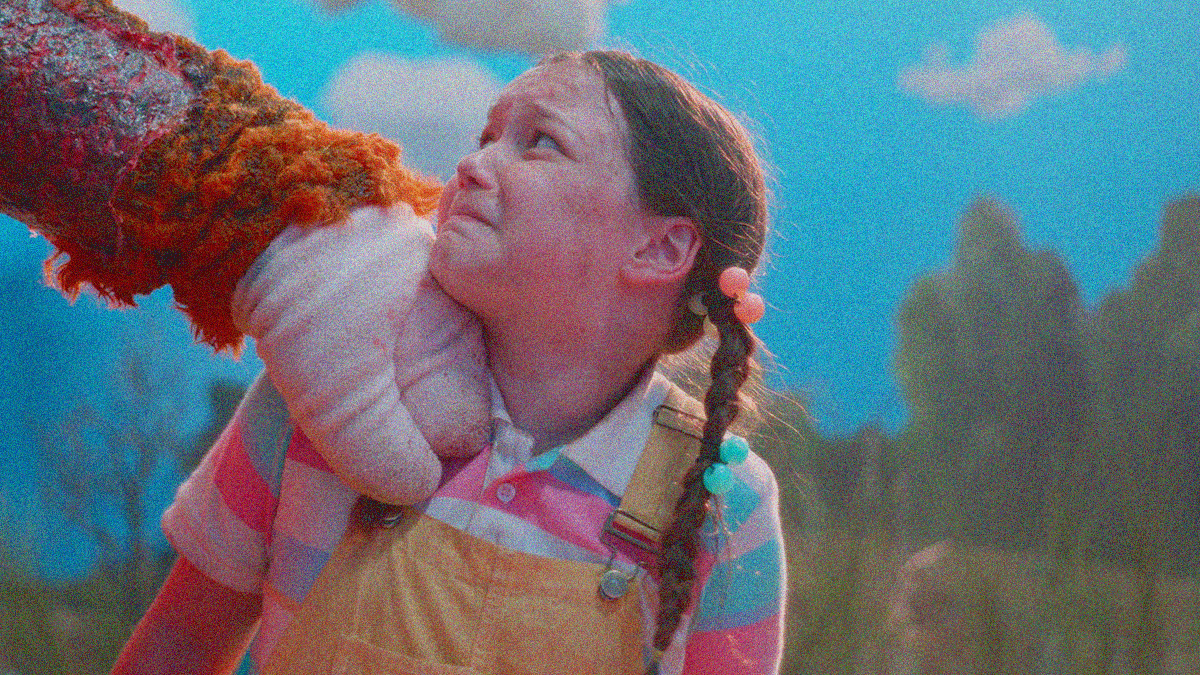
If you didn't know Buddy director Casper Kelly was behind the viral sensation Too Many Cooks in 2014, you will after watching its opening prologue. Not because the fuzzy 4:3 framed kids show inexplicably contains a murder off-screen once one of its magical orange unicorn's "friends" dares to stop playing along, but because the whole thing restarts after the group sings their sign-off song about love. It's a nightmarish loop we know all too well.
In many ways it seems as though this is the film Kelly has been working towards since taking Adult Swim by storm. Between the fourth wall-breaking Cooks that plays with the science fiction manifestation of the real-world trappings behind a fictional television reality to the surreally meta zoom out of evil tidings hidden on the fringes of a Yule Log feed, his whole brand has been tapping into the inherent horror of nostalgia and presumed innocuousness.
Co-written by Jamie King, Buddy leans into this ethos from the first frame as we witness the gradual awakening of children caught within a "Barney"-meets-"Pee-wee's Playhouse" type variety show that unfolds as if the movie theater has been transformed into our old living rooms complete with CRT monitors dialed to our favorite channel. We laugh at the detail of its pervasive optimism while relishing Josh's (Luke Speakman) defiance to reject it.
It's the perfect subversion of the format. Kelly is operating from a premise wherein the child actors on these shows are actually living in the fantasy that we the viewer wish could experience too. He strips away the need for scripts and cameras by treating it like a contained dream with expert comedic blocking so Buddy's (voiced by Keegan-Michael Key) altercation with Josh occurs off-screen while Mr. Mailbox is left alone to try and pretend everything is okay.
But it's not. He knows it. We know it. Young Freddy (Delaney Quinn) knows it too. Because Buddy isn't as careful as he should be when disposing of his crime's evidence. Once Freddy sees the truth, it's only a matter of time before she gets Wade (Caleb Williams) and the others on board too. Those perma-smiles turn to paranoia and fear as the curtain drops. Replacement cast members start to take on a sinister context. Eventually, survival depends on fighting back.
That's when the perspective shifts. Much like when the sitcom credit spoof in Cooks devolves so rapidly that it demands a formal switch into real world fidelity removed from its vacuum glass tube divider, Freddy, Oliver (Tristan Borders) and Hannah (Madison Skyy Polan) suddenly find themselves in widescreen as they run through the forest beyond Buddy's "set." More than that, however, we also find ourselves removed completely from their world and into 16:9.
Enter Grace (Cristin Milioti), Ben (Topher Grace), and their two young sons. It's a disorienting transition due to the aspect ratio change itself, but also because this family is obviously living in the present day. So, where is the connection? You can't watch the "Buddy" credits three times without clocking the copyright date is 1999. So, have we been watching reruns? Is "Buddy" even a real show considering how its kids revolted? Is anything on-screen real?
Without giving too much away, there is something supernatural in play. Perhaps even demonic insofar as how Buddy's magic works. Is it a pocket universe? Or purgatory? Kelly and King know that whatever they've created initially works best devoid of explanation. Their goal isn't to impress us with their world-building. The point is to let the terror and uncertainty of those trapped within its hellscape take us on an emotionally resonant journey of survival.
So, the very cool moment where we watch someone from the real world enter this illusory soundstage is allowed to exist on its own surreally freaky merits. The introduction of two bygone souls in ventriloquist dummy Willie (voiced by Michael Shannon) and his very old friend George (Clint Howard) stands on its own psychologically messed up feet too. It's all a provocation that seeks to dismantle the corporate sponsored safe havens we've been sold.
Because it's not all true, right? All the stuff that's come out about the turmoil and abuse that ran rampant on the sets of Nickelodeon's hit shows of the 90s and 00s. The childish impulse to cynically turn hopeful messages into vile parodies as a means of proving you're cooler than the babies who still watch. Our inability to separate those messages from the fascistic capitalist machine that bankrolls them and thus dictates how they're disseminated.
Add a bit of twenty-first century frustration about screen-time siphoning off the souls of our youth and Buddy is firing on multiple levels that speak to people of all ages—those who have an unhealthy relationship with the media they consume and those who had one years ago. There's also bloody gore for horror fiends and the heady science fiction of our devices instantly rewriting memories and identities. And a young girl finding the courage to protect those in need.
Things can feel shaky at the start as Kelly eases us into these dual worlds since the show's artifice is often subverted by real stakes while reality is often undercut by embellished caricature, but there's little to complain about once the narrative hits its stride. Because even apparent non sequiturs like Willie and George hold crucial historical value to what's happening. Same with Strappy the backpack (Patton Oswalt) and Eric Bauza's many personified objects.
Fans of Adult Swim and Kelly's work with them will be satisfied by the ingenuity and aesthetic. I wanted to rewatch with a pause button right away to take notes comparing the multiple instances of "Buddy's" end credits to see if they change with each new plot development. And don't get me started on the breadth of this "fake" world once we travel through its many doors. Just because we aren't forced to process its dense mythology now doesn't mean it hasn't been teased.
8/10
Dark Matter: Season Two
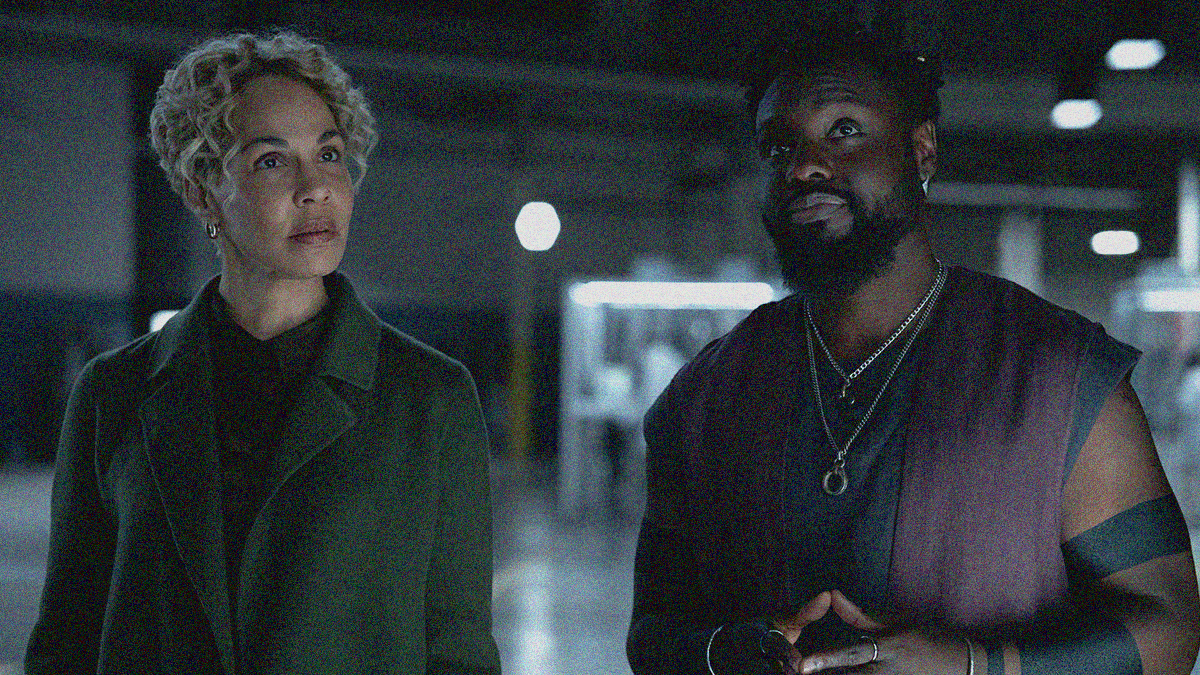
Jason Dessen #2 (Joel Edgerton) meets his former physics professors on the cusp of putting his "box" online. They talk about unintended consequences. They talk about the responsibility of scientists to push forward. They talk about blame taking a backseat to progress since mankind will pursue its thoughts to the end ... always. So, if you don't bring your idea to fruition, someone else surely will. It's therefore less about mitigating the consequences than living with them.
Well, after the insanity that closed out the first season of Blake Crouch's adaptation of his own novel "Dark Matter", there are plenty of consequences to accept. Paired with co-writer Jacquelyn Ben-Zekry (the tandem is credited on all ten season two episodes with the order of their names switching depending on who, presumably, took point), this show could have simply devolved into a redux thriller to find safety. It proves so much more instead.
That's not to say it doesn't start that way, though. Jason #1, Daniela (Jennifer Connelly), and their son Charlie (Oakes Fegley) are embroiled in a chase plot to outrun the result of Jason #2's treachery. They must combat the problems inherent to whatever world they choose next as well as contend with logistics of existing alongside its doubles of them and fending off the dozens of Jasons who might follow them. It's fight or flight with a nightmarish PTSD chaser.
Give Crouch a lot of credit for that last part. He never shies from the emotional and psychological toll taken. There's Jason always wondering if another version of himself is coming to steal his family. Daniela reckoning with Jason #2's assault and being unsure if that same darkness resides in her Jason too. Charlie dealing with the effects of uprooting his life and losing his friends and bearings multiple times before high school even ends.
Crouch leans into all of it. Jason's obsessiveness to figure out how the "box" works because he now knows he was capable of inventing it. Daniela's fear and paranoia setting in every time Jason enters a room because she can't be sure which he is. Charlie's isolation preventing him from fostering real connections because he knows he might be whisked away tomorrow. Their only salvation would be figuring out how to destroy the "box" once and for all.
But this show isn't just about the Dessens. Heck, it's not even just about those Dessens. What about Amanda (Alice Braga) and Ryan (Jimmi Simpson) in Cascadia, as teased at the end of season one's finale? What about Jason #2's Leighton (Dayo Okeniyi) willing his way through the gauntlet of trial and error as Jason #1's Leighton joyrides the waves of possibility? What about Blair (Amanda Brugel) finding the fortitude to leave her murder hornet Hell?
Every one of these characters is given room to grow into three-dimensional human beings. It's not just about good guys and bad guys or sidekicks providing emotional support and sage wisdom as the plot demands anymore. No, Jason #2 yearns to atone. His Leighton still dreams of using the "box" to save damaged worlds. Ryan wants to return home, and Amanda begins to realize she might too. Stripped of the central deception, they're striving to reclaim their identities.
The other Jasons that Daniela didn't pick are too. What are they left with now? Who are they without their family? These are quantum entanglement questions that demand their own episodes away from the main trajectory to focus on life prevailing and/or failing against the odds. Don't therefore be surprised to find your eyes welling with tears as we rewind and fast-forward to learn their motives while they all use the "box" to better contextualize their choices.
"Love and Be Loved" is a heartbreaking vignette proving as much a palette cleanser as a glimpse into the hopeful future of this fractured multiverse. "The Basic Oneness of Everything" introduces a stranger (Margo Martindale's Laurel) that feeds into the metaphor of the systems surrounding us via a "help desk" of sorts. The characters meet lost loved ones and interact with variations of themselves outside the original race against time. And we see ourselves in them.
Running through everything is the overarching theme that our lives are a war between regret and acceptance. How do we look at our choices as reasons to rejoice rather than reasons to wonder? Just as Daniela fears her Jason could become Jason #2, Jason #2 prays he can become more like Jason #1. But it's not about flipping a switch. It's not just about one's own actions. The people those actions invited into your life matter too.
Don't worry, though. While this truth feeds into the entanglement, Crouch isn't trying to alienate his audience by speaking down to or confusing them. When he does delve into these concepts, he provides a surrogate for us to have Jason or Leighton or Blair personalize the lesson in a way that allows us to understand its application in the given scenario. He and Ben-Zekry are using the science as scaffolding to augment the relationship drama on top.
In that vein, despite there being a lot going on with multiple characters to follow and jump cut with at any given time, you don't need cork board and string to stay current. Where they go generally connects with one or more of the others either narratively or tangentially (like a near miss in the same world) and those breathers to meet Martindale, Gil Birmingham, Linda Bove, or Angela Sarafyan supply space to reset. It's a very intuitively written arc.
With that also comes a showcase for performance. Edgerton, Connelly, and Braga are wonderful as always—better than the first season now that we're going deeper into the impact of their experiences. Simpson and Fegley are great too as their parts get fleshed out beyond secondary support. If I were to pick favorites, though, it's Okeniyi and Brugel (now a series regular). No longer pawns to the Dessens' tale, these episodes finally know how to make them shine.
It's not all perfect. I thought I had a stroke when Blair figures something out, says it aloud, and then watches Jason say the same thing with supplemental drawings as though it was different. She calls him out on a similar incident later, so it wasn't necessarily unnoticed. And, while fun, newcomer Chris Diamantopoulos does prove to be a one-dimensional antagonist. It works, though, because his presence in that role allows the others to flourish.
I think this season really gave Crouch the chance to move beyond the borders of his novel and expand the scope of his themes via a different medium. Much like Tom Perrotta's "The Leftovers" evolved on-screen into something new off the page, "Dark Matter" has advanced from a cool playground where one specific storyline is set to a world all its own. The book was the "box", the show expanded into the "corridor", and the potential for what's next truly is infinite.
9/10
Filipiñana

"The message is therefore simple: Everything has contextual value. That this social commentary is also packaged within a gorgeous visual style almost seems unfair. Not a single second, word, or shot is wasted—including the end credits."
– Full thoughts at The Film Stage.
Harlan County USA
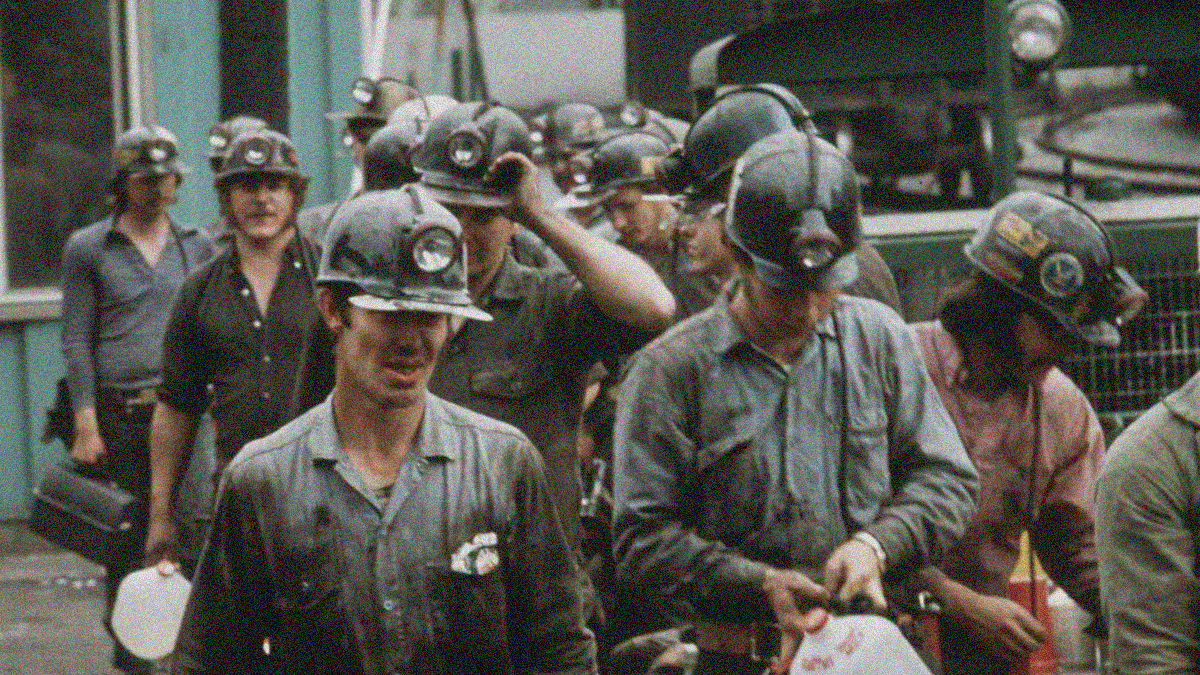
It's truly an astonishing piece of documentary cinema that not only captures a watershed moment for the country, but also the real-time context to fully comprehend the stakes. Barbara Kopple never shies from the fight, embedding herself beside the coal miners and their wives as their struggle to interfere with scab workers escalates to gun-toting threats with each passing month.
You must remember too that these men in Harlan just voted to join the union before being forced to strike when a Duke subsidiary refused to ratify the contract. For them to stick with this battle for thirteen months as chaos erupts via a union election, assassinations, and cross-state picketing all the way to New York City is nothing short of impressive. It's the epitome of American solidarity.
Harlan County USA puts us on the lines, in the mines, and at the assemblies for a first-hand look at an issue that still faces obstacles today. That shouldn't be a surprise, though, when many on-screen talk about their "bloody" strike of the 1930s. Little changed in Kentucky after forty-five years and not much changed nationwide in the fifty years since this film. Capitalistic slave labor remains.
It speaks to how this Oscar-winning classic is as important now as it was then to show the violent and coercive lengths CEOs go to preserve their astronomical profits gained off the backs of exploited workers. From lies that unions rather than executive bonuses increase retail costs to the intense imagery of Basil Collins waving his gun with impunity, it's impossible to look away.
Add a rousing soundtrack of protest songs sung by those who wrote them and a steady stream of interviews moving across generation, gender, and race to prove the issue is purely about morality and fairness and you really catch that human wave of emotion and purpose. Kopple gives a voice to the rank-and-file miners desperate for justice from their corrupt employers ... and the union itself.
10/10
Idiots
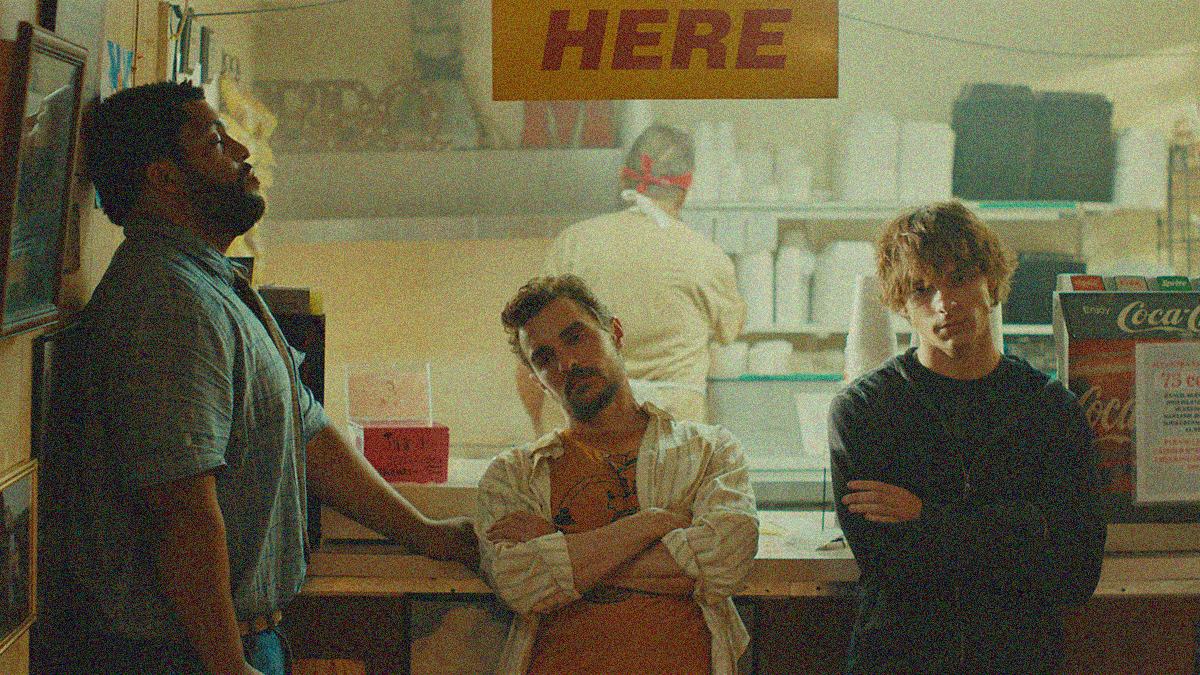
When Davis (O'Shea Jackson Jr.) is forced to relinquish the keys to the church van after chaperoning a group of teens to see more of Willem Dafoe than they bargained for and Mark (Dave Franco) is finally laid off from a job he probably should have been fired from months ago, fate sets them on a collision course in Macon Blair's (co-conceived by Alex Orr) Idiots (formerly known as Shitheads). Their task upon meeting: escort a wealthy teen heir to rehab.
Sparked by Orr's suggestion to write a script on the controversial topic of "teen transportation," Blair fashions a buddy road trip comedy with three men who are anything but buddies. The well-meaning yet devoid of sound judgement Davis is just trying to keep the one job he has left when Ms. Dorindo (Grace Junot) sticks him with Mark's drug-addled boor of a screw-up simply because the latter has a car. They might not like each other, but they're contractually bound.
That contract states that they are now the temporary legal guardians of one Sheridan Kimberly (Mason Thames)—a troubled rich kid they presume is being sent away to kick a narcotics habit. Neither looks into who he is or what he's done because Davis genuinely believes he's acting as God's shepherd to heal a troubled soul and Mark is only interested in joking that none of his friends ever had to go to rehab despite doing a lot worse when they were his age.
The Kimberly family attorney (Lee Eddy) who all but breathes a sigh of relief upon transferring guardianship to these obviously under-qualified escorts warns them to be careful, but we sometimes must experience the pain before we can learn to expect it. And these two men are in for a world of hurt once Sheridan susses out a series of schemes with which to incapacitate both with ease. This isn't a survival technique for the teen, though. It's a game.
While the resulting chaos can be entertaining (more so due to the suspense, dark undercurrent of violence, and potential for two helpless rubes finding the mettle to save the day than its broad cringe comedy), it unfolds in an often detached and episodic way. Act one has the introductions. Act two brings along a stripper (Kiernan Shipka with an unnecessary accent) for a revenge caper. Act three wields a deranged gang of amateurs to repeat the same.
Rather than craft a narrative that weaves these plots together, Blair takes them one at a time to find a resolution before igniting the next drama. This choice leads to some tedium as we're stuck in each subplot too long knowing Davis and Mark will luck their way out for no other reason than to move onto the next set-piece. Thankfully, some bright spots do save us from the monotony (Daniel Kelly's dryly stoic desk clerk is fantastic).
Sure, that aforementioned gang is fun too considering Peter Dinklage, Nicholas Braun, and Melanie Loren are enthusiastically turning up the weird and goofy dial, but things get muddied once we're also supposed to fear them. That's not a tough sell for Davis and Mark considering their ineptitude and cowardice often has them pleading for their lives on reflex, but it is for Sheridan. Yes, this is the one time he isn't in control. But you don't just turn psychopathic apathy off.
I was therefore forced to wonder what the goal was a few times during the film. Was Idiots supposed to be a stupid comedy they decided to write action into? Or was it a thriller they shoved laughs into? We're always stuck in the middle tonally, unsure whether to take anything seriously despite it definitely seeming like their goal. While this fact leaves the whole too messy for me to ever want to watch it again, I don't necessarily regret this initial look.
Franco is mostly doing his usual douchebag schtick (think "The After Party" with a side of unearned sympathy that the character seems hellbent to sabotage himself). Jackson is pretty effective as the gullible straight man doing his best to keep cool in increasingly terrible situations. And Thames steals the show with a devilish grin whenever his Sheridan is able to revel in his drivers' too-late realizations that he's ruined their lives yet again.
It's enough to maintain investment from one skit to the next even if I grew listless multiple times along the journey. Blair and company try to bring out some social commentary insofar as the capitalistic bounty hunting racket that is "teen transport" and the immorality of wealth as a destroyer of human empathy, but it's tough to champion either angle when there's no character growth in the process. It's all nihilism as entertainment, for better and worse.
5/10
The Sun Never Sets
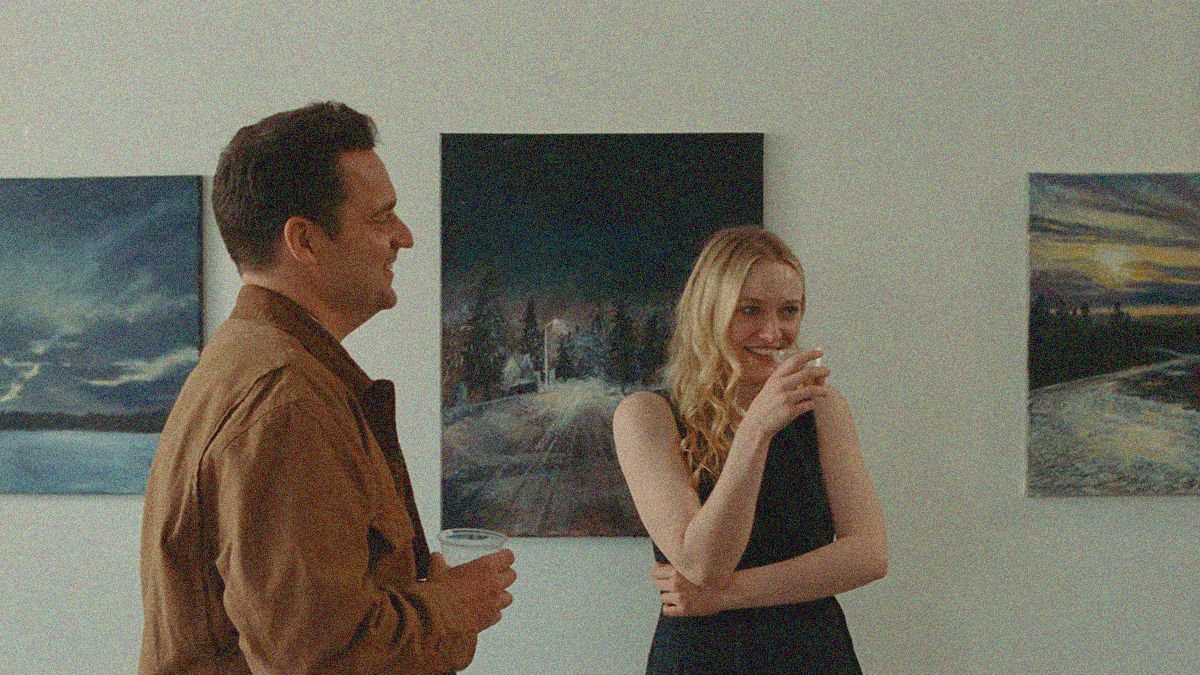
Wendy (Dakota Fanning) is content with life. She's not happy, though. And her boyfriend Jack (Jake Johnson) sees it. Not in the way she acts with him and his two kids, but in the way she talks about herself. Whereas he can get her anything she wants financially (his work is based in NYC despite living in Anchorage), he's made it clear he's not interested in the things she's always wanted. Re-marrying. More kids. A boat. A life that dares to embrace nature.
So, when she comes home after meeting with some old friends and hearing the news that her BFF Lindsay (Debby Ryan) is pregnant, the sadness inherent to that contentment becomes obvious. Jack, being a sensible guy who understands his shortcomings insofar as letting her be his "other half" without ever really trying to be hers, tells Wendy she needs to take the summer and truly figure out if compromising her dreams for him is what she desires. He hopes it is.
It's a crazy demand that writer/director Joe Swanberg never shies from. Whether Wendy's incredulity at her boyfriend telling her to take space after she devotes herself to him or Jack's remorseful disbelief upon realizing he sabotaged his own happiness by creating a plan for her to serendipitously rekindle a bond with her ex (Cory Michael Smith's Chuck), there's a lot of loud conversations and confusion stemming from their mutual complicity to their own demise.
The question at the center of The Sun Never Sets is therefore which of its three possibilities will result. Will the time apart and ensuing chaos bring Wendy and Jack closer? Will their two years together position them to appreciate when someone better suited to who they are arrives? Or will they realize their entire union was based on a knee-jerk impulse to not be alone after having not been previously and thus discover that's what they both really need?
We're talking about pretty universal themes being processed through a sort of reverse romance wherein the perfect couple separates at the beginning before noticing all the mistakes they made rather than two people tired of repeatedly making the same mistakes coming together to become the perfect couple. This fertile subversion helps to bring relatable comedy into an awkward emotional landscape that arises when you realize love isn't always enough.
And while the film is a two-headed monster as far as giving Fanning and Johnson ample time to prove themselves as flawed, three-dimensional characters, its focus does point more towards the former's Wendy. This is partially because Smith is a de facto third lead and thus demands we spend more time with her, but it's also because these men are lunatics who either learn their lesson too late or not at all. In some ways, their ineptitude might save her from herself.
Because what does Jack mean he doesn't care about the outdoors? Seriously? You don't have to love camping to see the woman you love does. So, you take her camping. You let her introduce your kids to her passions and further allow her to embed herself into the family. That he only sees this fact in hindsight as a means to "win her back" proves he might not be worth her compromise. It's great he's learned how to be a human but put it into practice with someone else.
Chuck is even worse, though. Wendy broke up with him for a reason—one that he knows is true enough to avoid spending any time with her friends despite his attempts to make this second chance work. His idea of growth is agreeing to settle down, but he still refuses to do so unless it's on his terms. And yet he still finds the entitlement necessary to call her out when his selfishness gives her the room to bring Jack back into the fold. Run, Wendy. Run.
Yes, I say this in jest since she isn't perfect either. But while their imperfections affect her life, hers don't impact theirs. Wendy's issues stem more from self-destructive tendencies that have her constantly putting others' wants in front of her own. Because she doesn't want to go back to the dating scene. She doesn't want to start over when she's willing to put these men first. But seeing their antics through the lens of a competition for her heart is a bridge too far.
Now it's all in the open. Now she can see how they try to manipulate things and scream "hypocrisy" when she's pretty much just doing what they said she should do. Wendy's contentment gave them the power to never need to feel jealous. The reason Jack suggested the separation was because he presumed there were no viable candidates in Alaska to usurp him. And since she's always honest with both, their petty responses are all she should need to get her answer.
Even then, however, it's not easy to pull the trigger and intentionally choose to embrace that alone time and figure things out before jumping back in. Wendy loves both these men and doesn't want to let them go, so the cycle continues to frustrate her while entertaining us. It's not a funny situation when you look at it practically or are one of the parties experiencing it, but it definitely is when you're standing and watching the carnage from afar.
Johnson and Smith are great in similar roles from opposite sides of the spectrum exposing the complexities of relationships a lot of men refuse to accept until it's too late. We laugh at Jack's epiphanies and Chuck's impertinence while feeling Wendy's plight. And we do feel it because Fanning is at her very best. The joy. The rage. The uncertainty. The fear. Her sincere vulnerability is only bested by the courage to finally say enough is enough. Not to them, but to herself.
7/10

This week saw Miss Bala (2019) added to the archive (cinematicfbombs.com).
Matt Lauria dropping an f-bomb in MISS BALA.

Opening Buffalo-area theaters 8/28/26 -
• Bethlehem Kudumba Unit at Regal Elmwood
• Beyond Belief at Regal Transit, Quaker
• Buddy at Scene One Market Arcade; Regal Elmwood, Transit, Galleria, Quaker
Thoughts are above.
• Colony at North Park Theatre (select times); Regal Transit, Quaker
"It’s a nice message delivered with a great cast, a wealth of viscous fungal slime, and some of the most memorable “zombies” yet courtesy of acrobatic extras climbing atop each other before striking." – Full thoughts at HHYS.
• Coyote vs. Acme at Dipson Flix, Capitol; Scene One Market Arcade; AMC Maple Ridge; Regal Elmwood, Transit, Galleria, Quaker
• The Dog Stars at Dipson Flix, Capitol; Scene One Market Arcade; AMC Maple Ridge; Regal Elmwood, Transit, Galleria, Quaker
• Finding Emily at Dipson Amherst; Regal Transit, Quaker
• Idiots at Dipson Capitol; Scene One Market Arcade; Regal Elmwood, Transit, Galleria, Quaker
Thoughts are above.
• Legend of the White Dragon at Regal Galleria, Quaker
• Once More at Regal Elmwood
• Toxic: A Fairytale for Grownups at Regal Elmwood
Streaming from 8/28/26 -
• Barreda (Prime) – 8/28
• Desert Warrior (Hulu) – 8/28
• Penny Lane is Dead (Shudder) – 8/28
• The Whisper Man (Netflix) – 8/28
• The Gentleman Thief (Hulu) – 9/1
• Romería (Criterion Channel) – 9/1
"The film itself looks great thanks to Hélène Louvart’s cinematography and the aesthetic choice to merge past and present with words and visuals via the diary, Marina’s Aughts-era digital videos, and that dream sequence." – Full thoughts at HHYS.
• Untold Raygun: Breaking Badly (Netflix) – 9/1
• The Runner (Prime) – 9/2
• Star Wars: The Mandalorian and Grogu (Disney+) – 9/2
• Turning Point: Generation 9/11 (Netflix) – 9/2
• Fito Páez: The World Within a Song (Netflix) – 9/3
• The President's Cake (Netflix) – 9/3
"We’re talking one hundred minutes of pure desperation, exploitation, sexual abuse, indoctrination, and authority overreach. These kids might not fully understand the scope of what’s happening around them, but we certainly do." – Quick thoughts at HHYS.
• Scary Movie [2026] (Paramount+) – 9/3
Now on VOD/Digital HD -
• Above & Below (8/25)
• Batman Knightfall: Part 1 (8/25)
• The Deb (8/25)
• Esta Isla (8/25)
• Hadestown: The Musical (8/25)
• Her Private Hell (8/25)
• Ida Who Sang So Badly Even the Dead Rose Up and Joined Her in Song (8/25)
• Motor City (8/25)
"Potsy Ponciroli’s Motor City is extremely my jam. Pure style over substance that delivers a viscerally absorbing, sensorial experience." – Full thoughts at HHYS.
• Reading Lolita in Tehran (8/25)
"The film is allowed to be just effective enough to give life to the overall journey while also sparking your interest to dig into the text and experience the historical and emotional details left behind." – Full thoughts at HHYS.
• Spider Island (8/26)
• Dead Janitors Club (8/28)
• Gaskins: The Hitchhiker Killer (8/28)
• The Observance (8/28)
• Threshold (8/28)

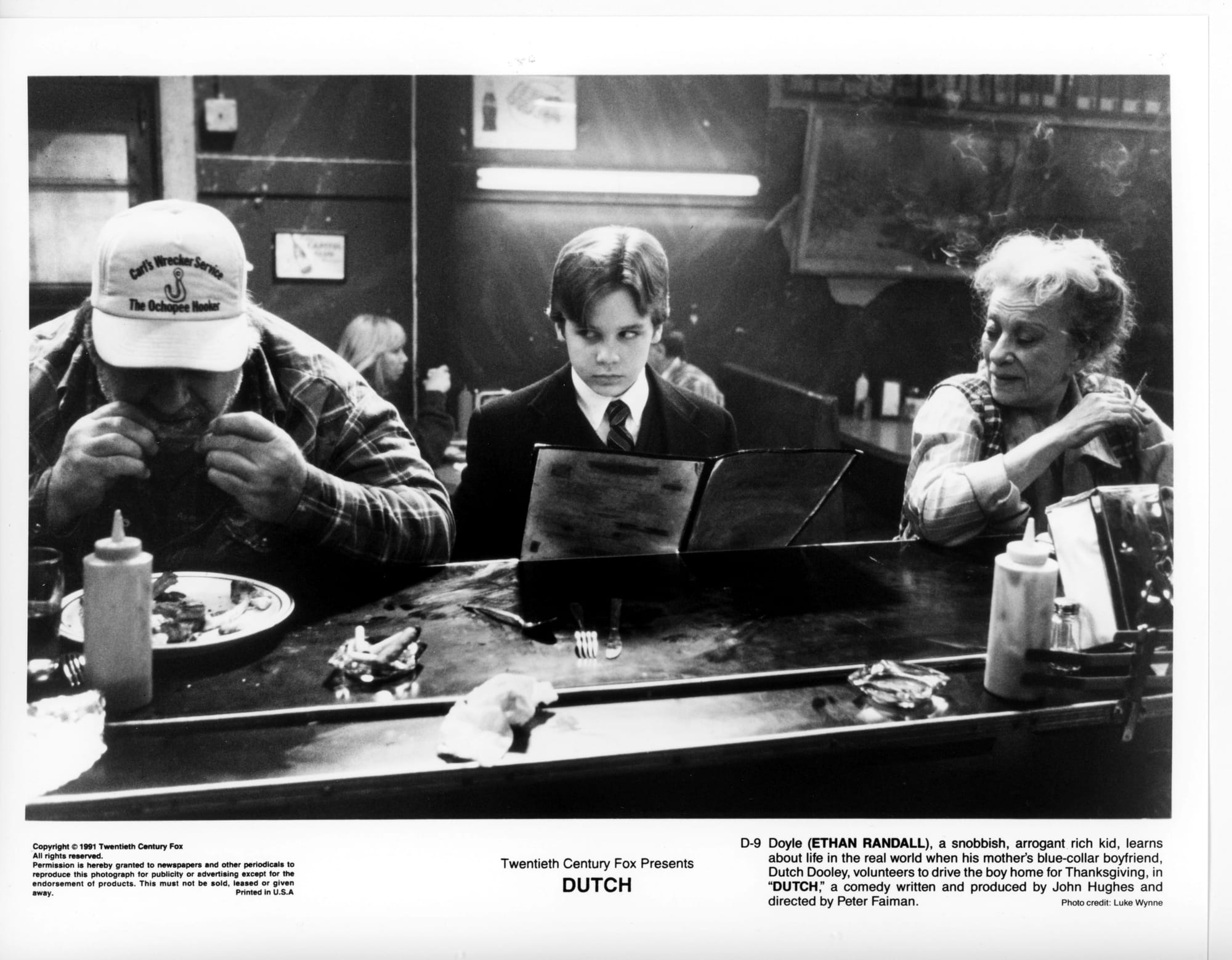
Pieces from the Dutch (1991) press kit.